
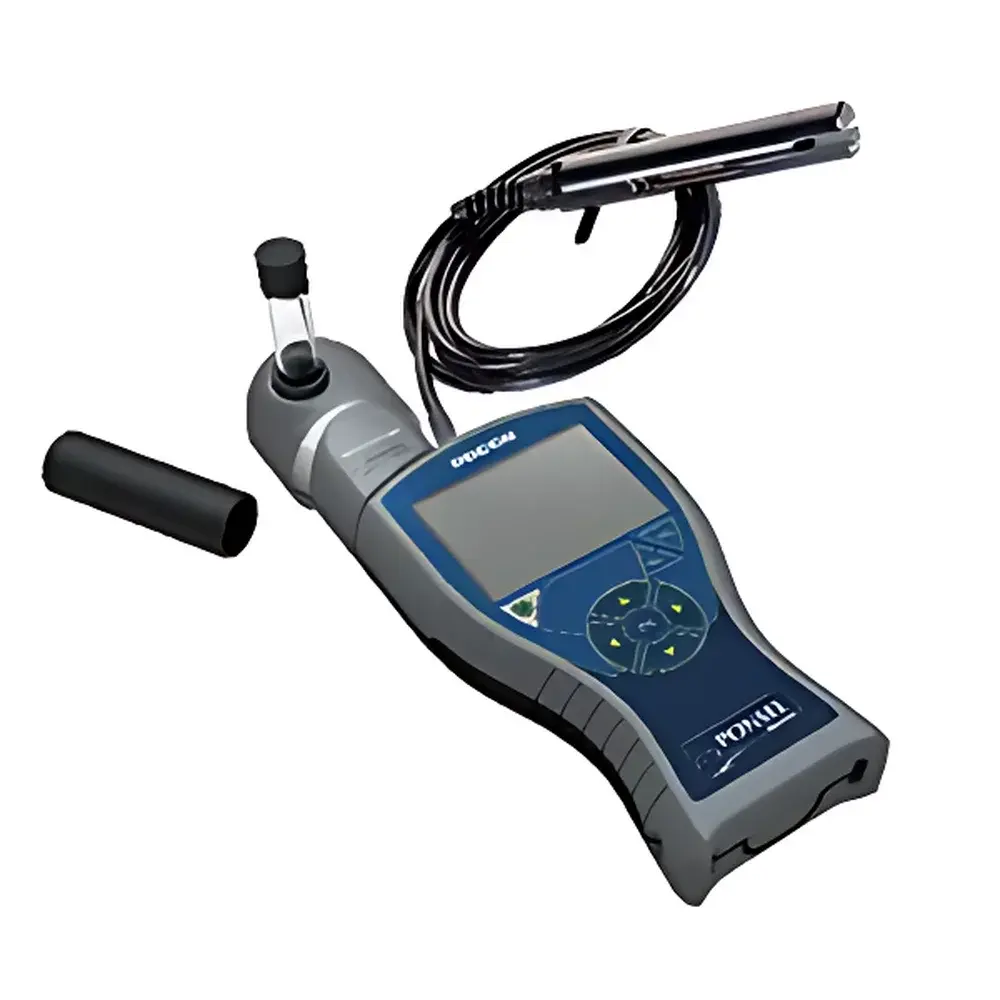
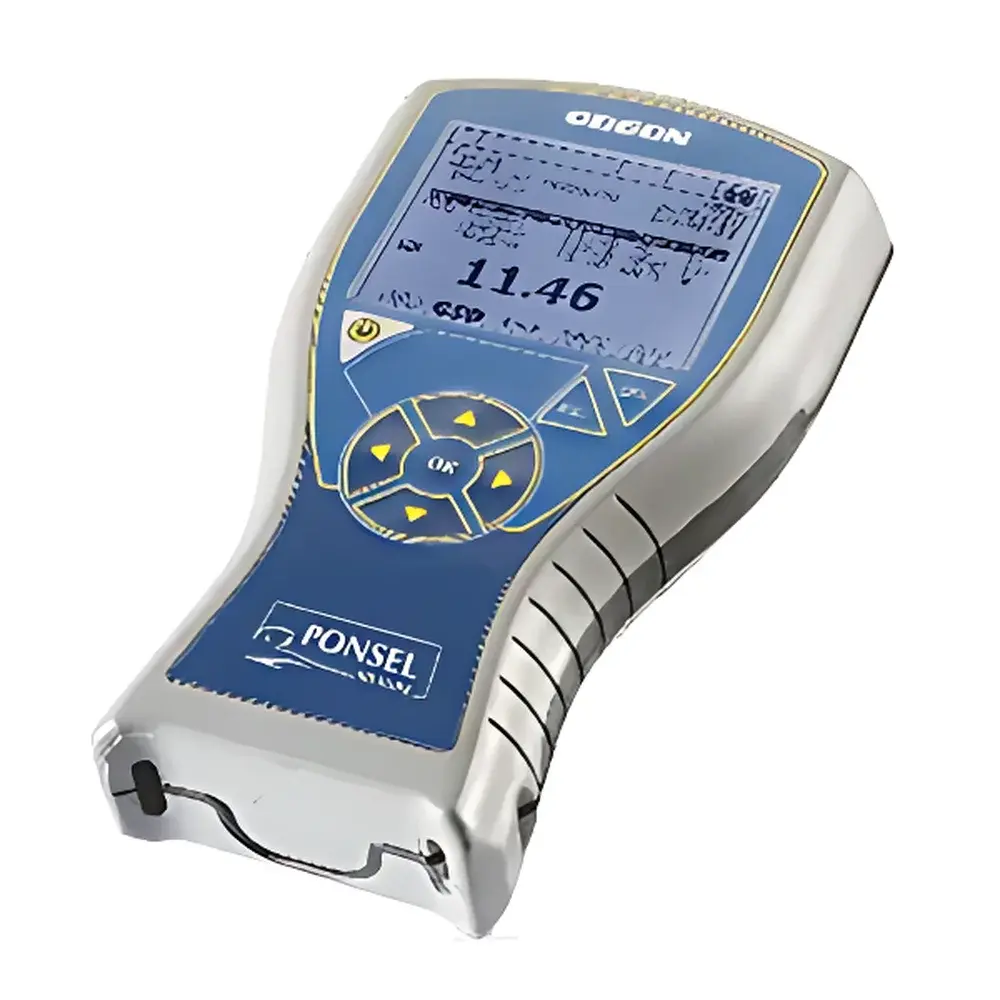
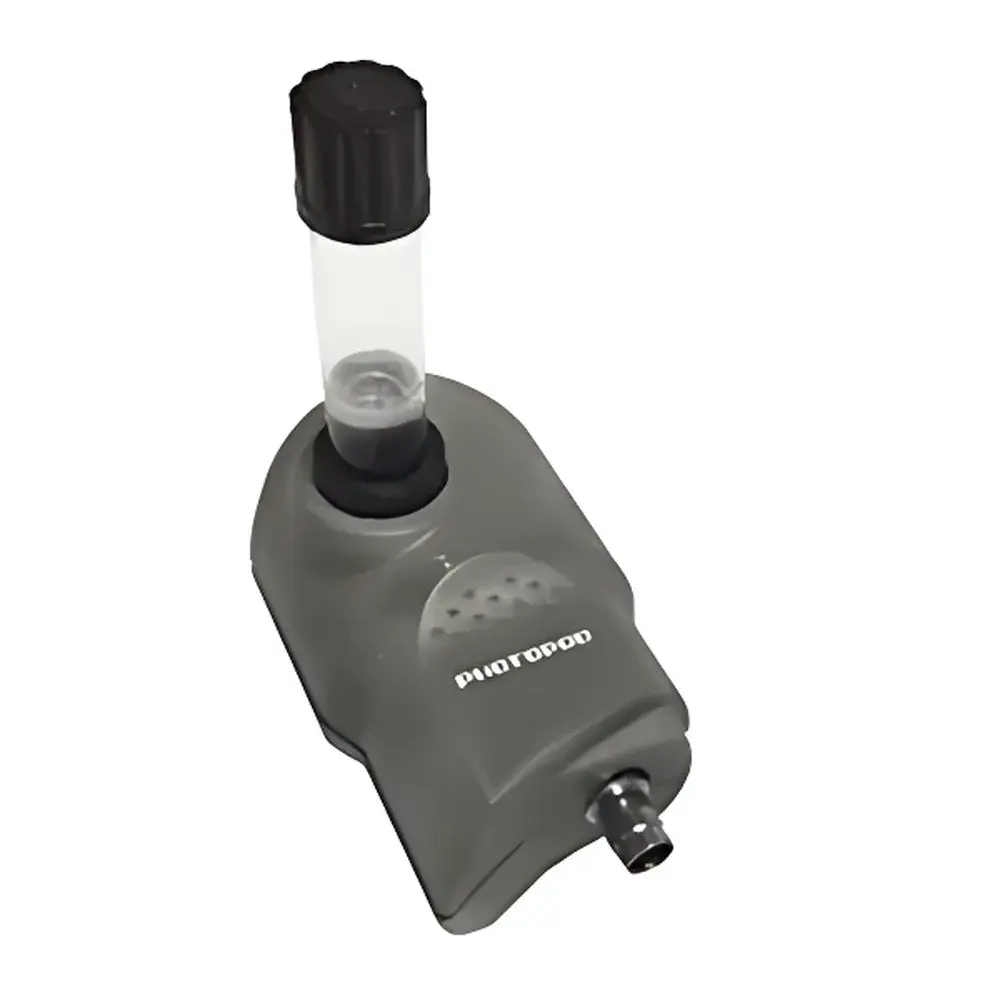
AQUALABO ODEON Handheld Multiparameter Water Quality Analyzer
| Brand | AQUALABO |
|---|---|
| Origin | France |
| Model | ODEON |
| Instrument Type | Portable/Handheld Water Quality Analyzer |
| Detection Parameters | Ntotal, Cl⁻, ClO₂, F⁻, Fe, CN⁻, BZT (Benzotriazole), SiO₂, Cr⁶⁺, Cr, MoO₄²⁻ (Mo), pH, Al³⁺, Br₂, Cu, Ni, Zn, P₂O₅, H₂O₂, N₂H₄ (Hydrazine), Mg²⁺, Mn²⁺, Cu²⁺, Ni²⁺, Ca²⁺, O₃, S²⁻, PO₄³⁻-P, TP (Total Phosphorus), K⁺, Al, Free Chlorine, Total Chlorine, Cyanuric Acid, Hydrazine, Hardness & Total Alkalinity, Turbidity, Benzotriazole, Phenol |
| Photometer Wavelengths | 400 nm, 468 nm, 518 nm, 591 nm, 639 nm |
| Detector | Silicon Photodiode |
| Cuvette Type | Round, 16 mm diameter |
| Data Storage Capacity | Up to 100,000 readings |
| Display | 4-inch high-resolution LCD |
| Protection Rating | IP67 |
| Battery Life | Up to 2000 hours |
| Compliance | GLP-compliant data logging with audit trail, auto-calibration diagnostics, automatic temperature compensation |
| Connectivity | RS-485 digital interface |
| Electrode Compatibility | Single-parameter and 3-in-1 multiplexed sensors (pH/ORP/DO/Conductivity/Turbidity) |
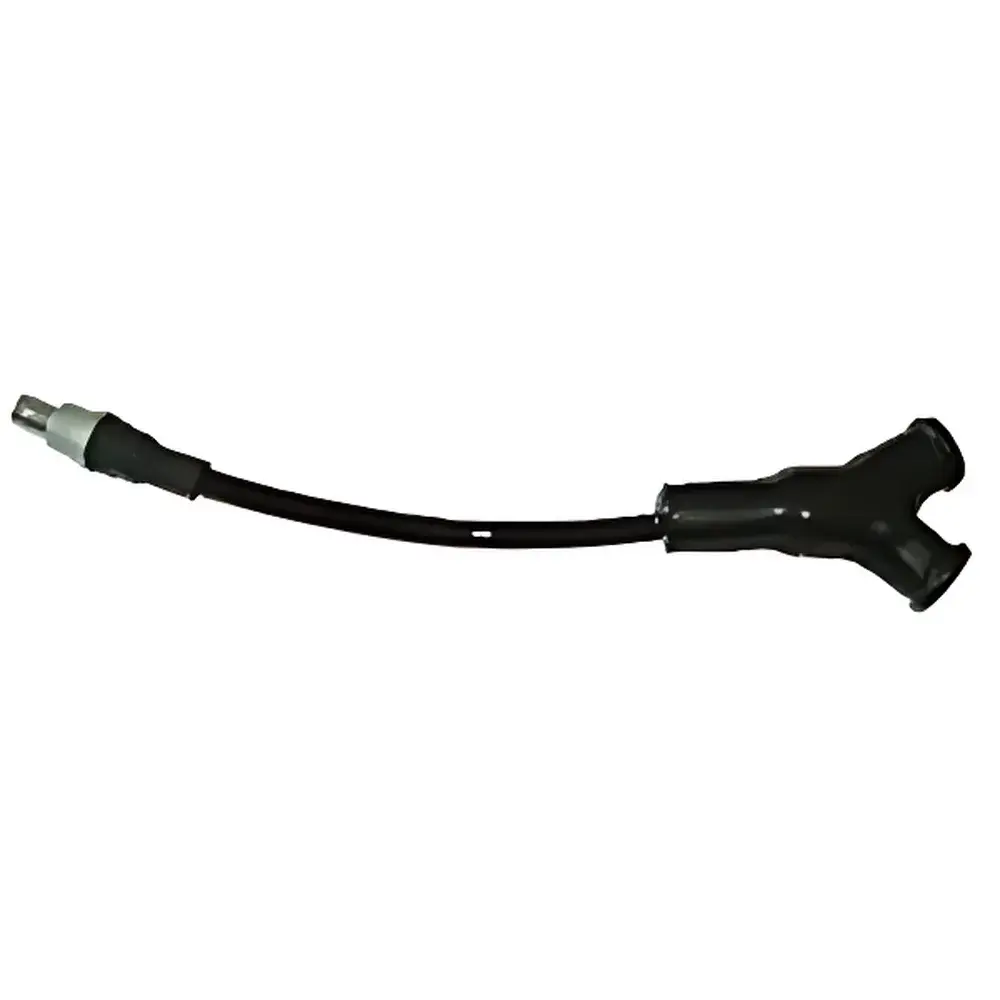
| Accessories | Y-adapter cables, digestion units, pre-filled reagent tubes (liquid/tablet/tube formats), portable carrying case |
Overview
The AQUALABO ODEON Handheld Multiparameter Water Quality Analyzer is an integrated field-deployable platform engineered for precise, trace-level quantification of physicochemical water parameters in compliance with international regulatory frameworks including ISO 7027 (turbidity), ASTM D3370 (sample handling), and USP (conductivity). It combines three modular subsystems — the ODEON meter unit, PHOTOPOD photometer, and interchangeable electrochemical/optical sensor probes — to support dual-mode measurement: spectrophotometric analysis (via colorimetric or enzymatic reactions) and direct electrochemical sensing (potentiometric, amperometric, optical fluorescence, and conductometric principles). The system operates on a validated wavelength set (400–639 nm) with silicon photodiode detection and automated cuvette recognition. Its architecture enables simultaneous deployment across drinking water distribution networks, industrial boiler feedwater circuits, municipal wastewater treatment plants, recreational swimming pool management, and environmental surface water monitoring — all without laboratory infrastructure.
Key Features
- IP67-rated ruggedized housing with ABS polymer construction for immersion-resistant operation in humid, dusty, or splash-prone environments
- 4-inch high-contrast LCD display showing real-time pH/temperature, electrode health status, atmospheric pressure, battery level, and calibration history
- Onboard data logger storing up to 100,000 timestamped, location-tagged (via optional GPS module integration) measurements with GLP-compliant metadata (operator ID, calibration dates, sensor serial numbers)
- Intelligent auto-read functionality with stability detection algorithms ensuring reproducible endpoint acquisition per ISO 5667-3 requirements
- Dual-interface configurations: ODEON ONE (single sensor port) and ODEON X (dual independent ports supporting concurrent pH/ORP + DO/conductivity measurements)
- Low-power electronics enabling >2000 hours of continuous operation on standard AA alkaline batteries — certified per IEC 60086-2
- Modular reagent compatibility: supports liquid reagents, tablet-based kits, and factory-preloaded sealed tubes — all compliant with EN ISO 15586 and APHA Standard Methods 2017
Sample Compatibility & Compliance
The ODEON system accommodates raw, filtered, and digested aqueous samples across matrices defined in EPA Method 365.4 (phosphorus), EPA 300.0 (anions), ISO 10523 (pH), and ISO 5815-1 (dissolved oxygen). Sensor modules meet ISO/IEC 17025 traceability requirements through NIST-traceable calibration standards. Photometric assays adhere to Beer–Lambert law validation protocols with blank subtraction, pathlength correction, and stray-light compensation. All electrochemical sensors incorporate NTC thermistors for automatic temperature compensation (ATC) aligned with ISO 15839. Data export supports CSV, PDF, and XML formats compatible with LIMS integration under 21 CFR Part 11-compliant electronic signature workflows.
Software & Data Management
Data transfer occurs via RS-485 serial interface to PC-based AQUALABO AquaSoft Suite (v5.2+), which provides audit-trail-enabled report generation, trend visualization, statistical process control (SPC) charting, and method validation templates aligned with ISO/IEC 17025 Clause 7.7. Firmware updates preserve backward compatibility with legacy sensor firmware versions. Internal memory maintains cyclic redundancy check (CRC) integrity verification for every stored record. Calibration logs include slope, offset, response time, and diagnostic flags — retained for ≥12 months as required by GLP Annex 11.
Applications
- Municipal drinking water compliance monitoring: free/total chlorine, cyanuric acid, nitrate, fluoride, and turbidity per WHO Guidelines and EU Directive 98/83/EC
- Industrial boiler water control: hydrazine (N₂H₄), phosphate (PO₄³⁻), silica (SiO₂), hardness, and total alkalinity per ASME D18.1 and VGB-W 515
- Wastewater effluent verification: COD, ammonia-N, orthophosphate-P, total phosphorus, chromium(VI), and sulfide per ISO 6060 and EN 12260
- Recreational water safety: combined chlorine, ORP, pH, and benzotriazole per CDC Model Aquatic Health Code and EN 15288-1
- Environmental field surveys: nutrient loading (Ntotal, TP), heavy metals (Cr⁶⁺, Cu, Ni, Zn), and emerging contaminants (phenol, ozone) per ISO 5667-16
FAQ
Does the ODEON system support regulatory reporting for ISO 17025-accredited laboratories?
Yes — all measurement records include mandatory GLP metadata (calibration certificates, uncertainty budgets, environmental conditions), and AquaSoft Suite supports 21 CFR Part 11-compliant electronic signatures and audit trails.
Can the PHOTOPOD photometer be used independently of the ODEON meter?
No — PHOTOPOD variants (LS/SP) require connection to either ODEON ONE or ODEON X for power, control, and data aggregation; they lack standalone display or storage.
What is the maximum allowable suspended solids concentration for turbidity measurement using the NTU sensor?
The OPTOD-NTU probe maintains linearity up to 4000 NTU under ISO 7027-compliant IR 90° geometry; samples exceeding 1000 NTU should be diluted with particle-free deionized water prior to analysis.
Are reagent kits supplied with lot-specific certificate of analysis (CoA)?
Yes — each batch of liquid reagents, tablets, and pre-filled tubes includes a CoA referencing shelf-life, purity, and traceability to CRM materials certified by LGC Standards or NIST.
How frequently must the pH and ORP electrodes be recalibrated during extended field use?
Calibration intervals follow ISO 15839 recommendations: daily two-point pH calibration (pH 4.01/7.00/10.01 buffers) and weekly ORP verification using Zobell’s solution (225 mV ± 5 mV at 25 °C).







