
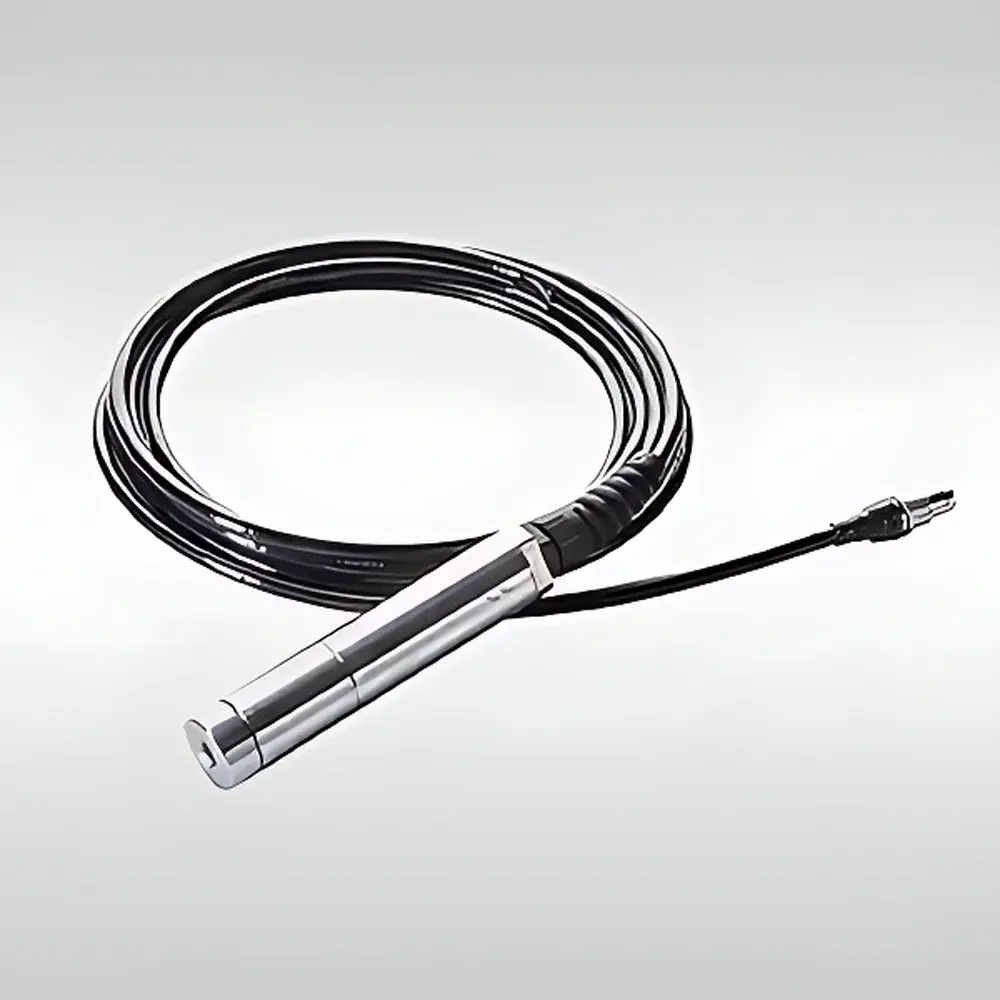
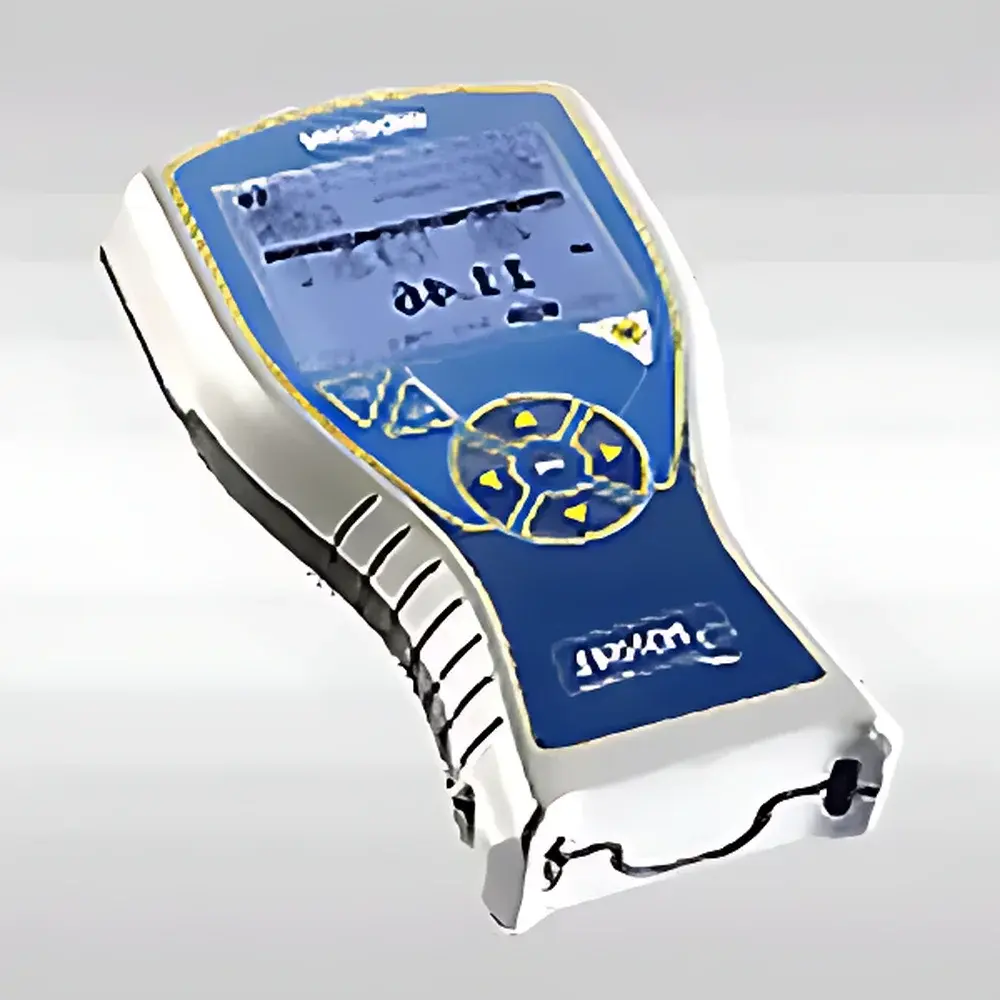
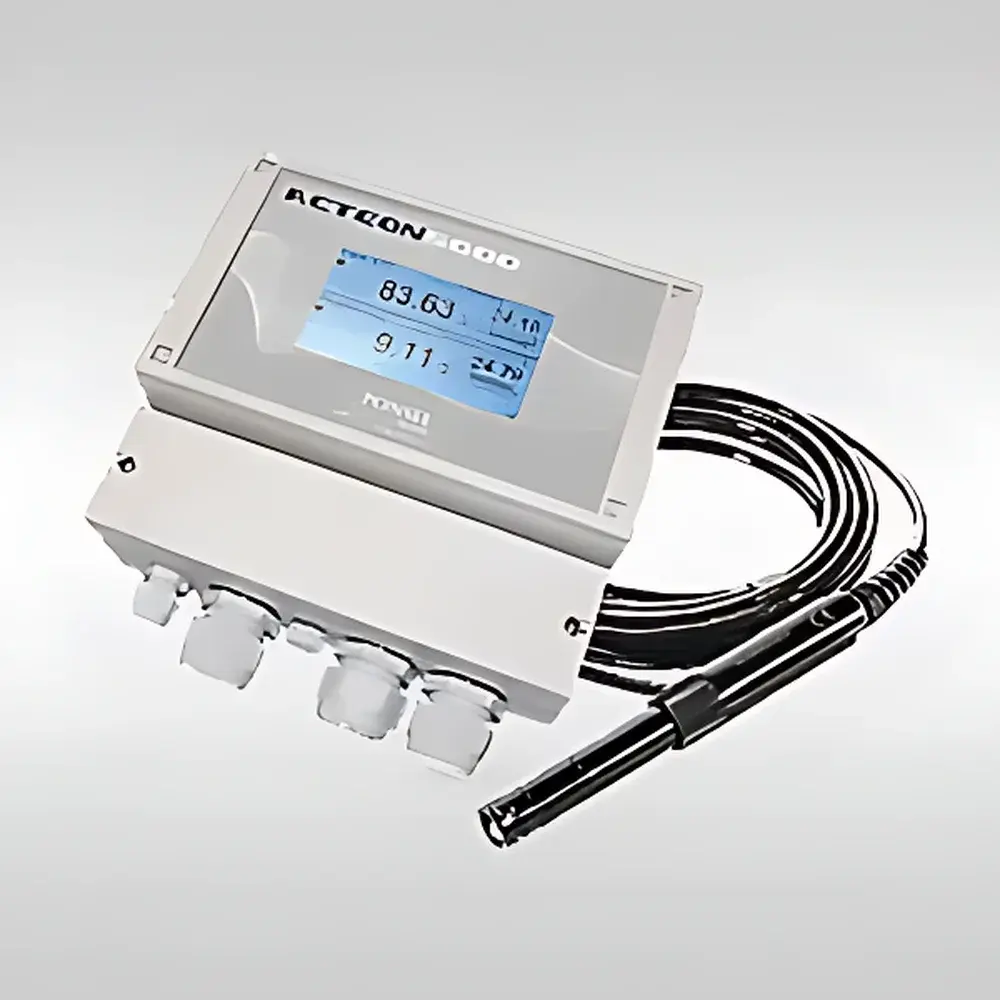
AQUALABO OPTOD Fluorescence-Based Dissolved Oxygen Sensor
| Brand | AQUALABO |
|---|---|
| Origin | France |
| Model | OPTOD |
| Instrument Type | Portable & Online |
| Measurement Principle | Fluorescence Quenching |
| Range | 0.00–20.00 mg/L (ppm) / 0–200% saturation |
| Accuracy | ±0.1 mg/L |
| Resolution | 0.01 mg/L |
| Response Time (t₉₀) | <60 s |
| Temperature Compensation | Integrated NTC thermistor |
| Operating Temperature | –10°C to +60°C |
| Storage Temperature | –10°C to +60°C |
| Pressure Rating | Up to 5 bar |
| Interface | Modbus RTU over RS-485 (standard), SDI-12 (optional) |
| Power Supply | 5–12 V DC |
| Current Consumption | 25 µA (standby), 4.4 mA (RS-485, 1 Hz), 7.3 mA (SDI-12, 1 Hz), 100 mA (pulse) |
| Dimensions | Ø25 mm × 146 mm (sensor + 3 m cable) |
| Weight | 450 g |
| Housing Material | Passivated 316L stainless steel or Grade 2 titanium |
| Protection Rating | IP68 |
| Certifications | ASTM D888-05 compliant |
| Data Logging | Onboard non-volatile memory for calibration history and measurement records |
Overview
The AQUALABO OPTOD Fluorescence-Based Dissolved Oxygen Sensor is an engineered solution for precise, maintenance-free dissolved oxygen (DO) monitoring in diverse aquatic environments—from freshwater streams and wastewater treatment basins to seawater aquaculture systems and industrial process water loops. Unlike electrochemical (Clark-type) sensors, the OPTOD employs optical fluorescence quenching technology: a blue LED excites a proprietary ruthenium-based luminophore immobilized on the sensor tip; molecular oxygen in the sample modulates the phase shift and intensity decay of the emitted red fluorescence. This physical, non-consumptive measurement principle eliminates oxygen depletion at the sensing surface, ensuring stable, drift-free performance—especially critical in low-oxygen conditions (<1 mg/L) and long-term unattended deployments. The sensor complies with ASTM D888-05 for standardized DO determination in water, validating its metrological suitability for regulatory reporting, environmental compliance, and research-grade data acquisition.
Key Features
- Zero-oxygen-consumption measurement ensures integrity of low-concentration samples and avoids biofilm interference.
- No routine calibration required—factory-calibrated with traceable reference standards; onboard memory stores calibration coefficients and timestamps.
- Robust dual-material housing: passivated 316L stainless steel or marine-grade titanium (Grade 2), rated for continuous immersion in aggressive media including seawater, brackish water, and chlorinated effluents.
- IP68-rated submersible design with 5-bar pressure tolerance supports deployment in deep wells, tidal zones, and pressurized pipelines.
- Ultra-low power consumption enables battery-operated field use (e.g., handheld loggers, solar-powered stations) and integration into energy-constrained IoT networks.
- Standard Modbus RTU over RS-485 ensures plug-and-play interoperability with SCADA systems, PLCs, data loggers (e.g., Campbell Scientific, HOBO), and industrial controllers without protocol translation.
Sample Compatibility & Compliance
The OPTOD is validated for use across natural and engineered water matrices—including potable water, surface water, groundwater, wastewater (primary through tertiary effluent), seawater, and aquaculture recirculation systems. Its inert optical sensing surface resists fouling from organic films, algae, and sulfide-rich sediments. The absence of electrolyte gel, membranes, or cathodes eliminates common failure modes associated with electrochemical DO sensors. Regulatory alignment includes ASTM D888-05 for method validation and compatibility with ISO 5815-1 (water quality — determination of dissolved oxygen — iodometric method) as a primary field verification tool. For GLP/GMP environments, the sensor’s onboard audit trail (calibration history, timestamped measurements) supports traceability requirements under FDA 21 CFR Part 11 when paired with compliant data acquisition software.
Software & Data Management
The OPTOD operates as a smart digital transducer—not an analog probe—delivering calibrated DO values directly via Modbus registers (e.g., holding register 40001 = DO in mg/L, 40002 = % saturation, 40003 = temperature). No external signal conditioning is needed. When integrated with cloud-connected gateways or edge devices, raw telemetry supports time-series visualization, threshold alerts, and automated report generation. Onboard non-volatile memory retains up to 10,000 timestamped readings and full calibration metadata, enabling post-deployment forensic analysis without real-time telemetry. Optional SDI-12 interface provides backward compatibility with legacy environmental monitoring networks.
Applications
- Environmental monitoring networks: Long-term DO profiling in rivers, lakes, estuaries, and coastal zones.
- Wastewater treatment: Aeration basin control, nitrification/denitrification optimization, and effluent compliance verification.
- Aquaculture and hatchery management: Real-time DO surveillance in raceways, tanks, and RAS (recirculating aquaculture systems).
- Drinking water distribution: Residual oxygen mapping in storage reservoirs and pipeline networks.
- Industrial process water: Monitoring boiler feedwater deaeration efficiency and cooling tower chemistry.
- Academic and regulatory research: Field validation of biogeochemical models and sediment–water interface flux studies.
FAQ
Does the OPTOD require zero-point or span calibration in the field?
No. It is factory-calibrated against NIST-traceable standards and requires no user calibration—only periodic verification using air-saturated water or Winkler titration if mandated by QA/QC protocols.
Can the sensor be used in seawater without corrosion concerns?
Yes. The titanium variant is specifically designed for prolonged seawater exposure; the passivated 316L version is suitable for short-to-medium term marine applications with regular cleaning.
What is the minimum detectable DO concentration?
The sensor maintains linearity and repeatability down to 0.01 mg/L, with accuracy specified at ±0.1 mg/L across the full 0.00–20.00 mg/L range.
Is temperature compensation automatic?
Yes. An integrated NTC thermistor provides real-time thermal correction per ISO 5814, eliminating manual input or external temperature probes.
How does the OPTOD handle biofouling in eutrophic waters?
The optical sensing element lacks consumable surfaces or permeable membranes; while heavy biofilm may attenuate signal intensity, routine mechanical cleaning restores full performance—no chemical reagents or membrane replacement required.
Related Products







