
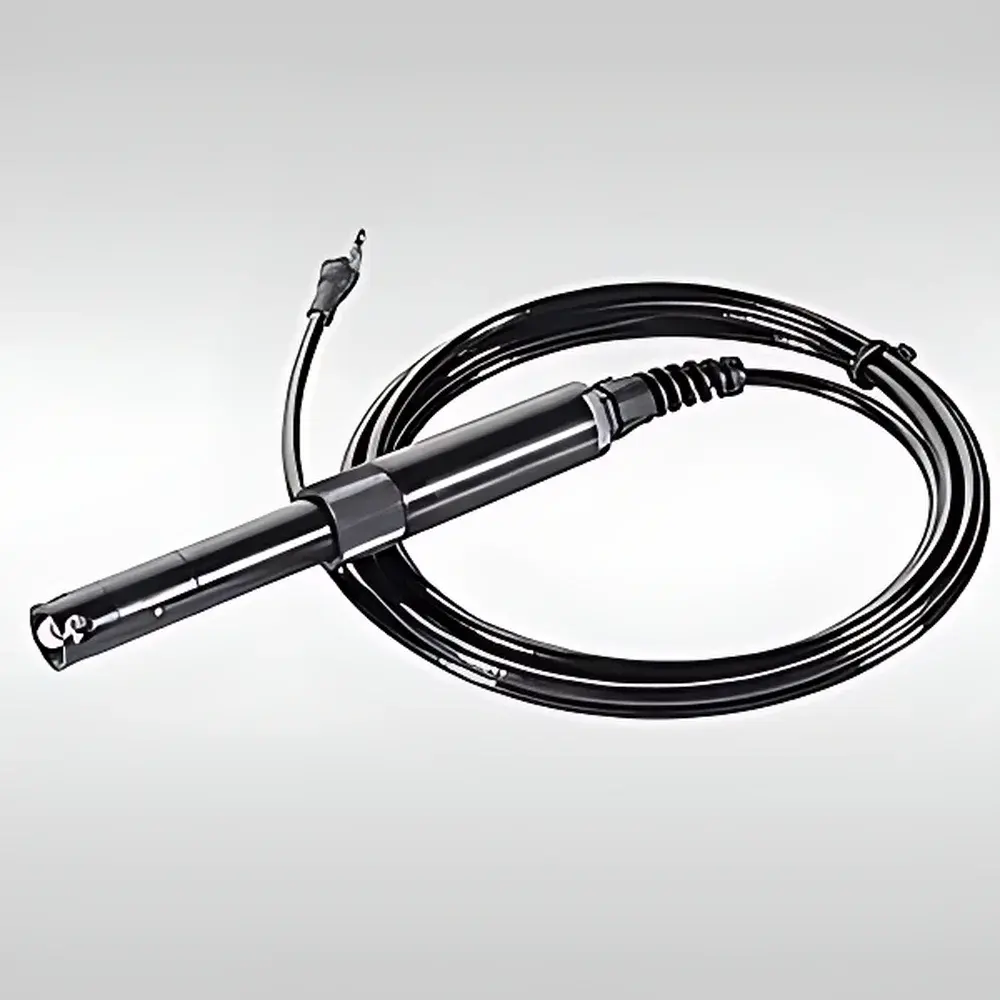
AQUALABO PHEHT pH & ORP Sensor
| Brand | AQUALABO |
|---|---|
| Origin | France |
| Model | PHEHT |
| Measurement Principle | Composite Glass Electrode (pH) / Platinum Redox Electrode (ORP) with Ag/AgCl Reference |
| pH Range | 0–14 |
| pH Resolution | 0.01 |
| pH Accuracy | ±0.1 |
| ORP Range | −1000 to +1000 mV |
| ORP Resolution | 0.1 mV |
| ORP Accuracy | ±2 mV |
| Temperature Range | 0.00–50.00 °C |
| Temp Resolution | 0.01 °C |
| Temp Accuracy | ±0.5 °C |
| Response Time | <5 s |
| Output Interface | Modbus RTU over RS-485 / SDI-12 (selectable) |
| Power Supply | 5–12 V DC |
| Standby Current | 25 µA |
| Active Current (RS-485, 1 Hz) | 3.9 mA |
| Active Current (SDI-12, 1 Hz) | 6.8 mA |
| Peak Pulse Current | 500 mA |
| Housing Material | PVC, Delrin®, specialty pH glass, platinum, polyamide |
| Cable | Armored coaxial polyurethane cable (3 m standard), optional Fisher connector |
| Pressure Rating | 5 bar |
| IP Rating | IP68 |
| Dimensions | Ø27 mm (body) / Ø21 mm (tip), L = 207 mm |
| Weight | 350 g (sensor + 3 m cable) |
| Internal Memory | Calibration history and sensor metadata storage |
| Compliance | Designed for ASTM D1293, ISO 10523, ISO 5814, USP <791>, and GLP/GMP-aligned data integrity workflows |
Overview
The AQUALABO PHEHT pH & ORP Sensor is a high-integrity, digitally enabled composite electrochemical probe engineered for continuous or intermittent measurement of pH, oxidation-reduction potential (ORP), and temperature in diverse aqueous matrices—from ultrapure water to high-salinity seawater and conductive industrial effluents. Based on PONSEL’s proprietary Plastogel® electrolyte technology, the sensor integrates a dual-function glass membrane pH electrode and a platinum-based redox electrode, both sharing a common Ag/AgCl reference system with colloidal KCl gel electrolyte. This architecture eliminates liquid junction drift and minimizes maintenance intervals while ensuring stable potentials across variable ionic strength environments. The sensor operates on the Nernst equation principle for pH and mixed-potential theory for ORP, delivering thermodynamically grounded measurements traceable to primary standards. Its compact, pressure-rated (5 bar) IP68 housing enables deployment in submersible, flow-through, and portable configurations without compromising signal fidelity or long-term stability.
Key Features
- Triple-parameter digital output: Simultaneous pH, ORP, and temperature readings via single-point calibration and internal thermal compensation.
- Plastogel® reference system: Colloidal KCl electrolyte ensures low junction potential drift, extended service life (>12 months typical in field use), and resistance to clogging in turbid or organic-laden waters.
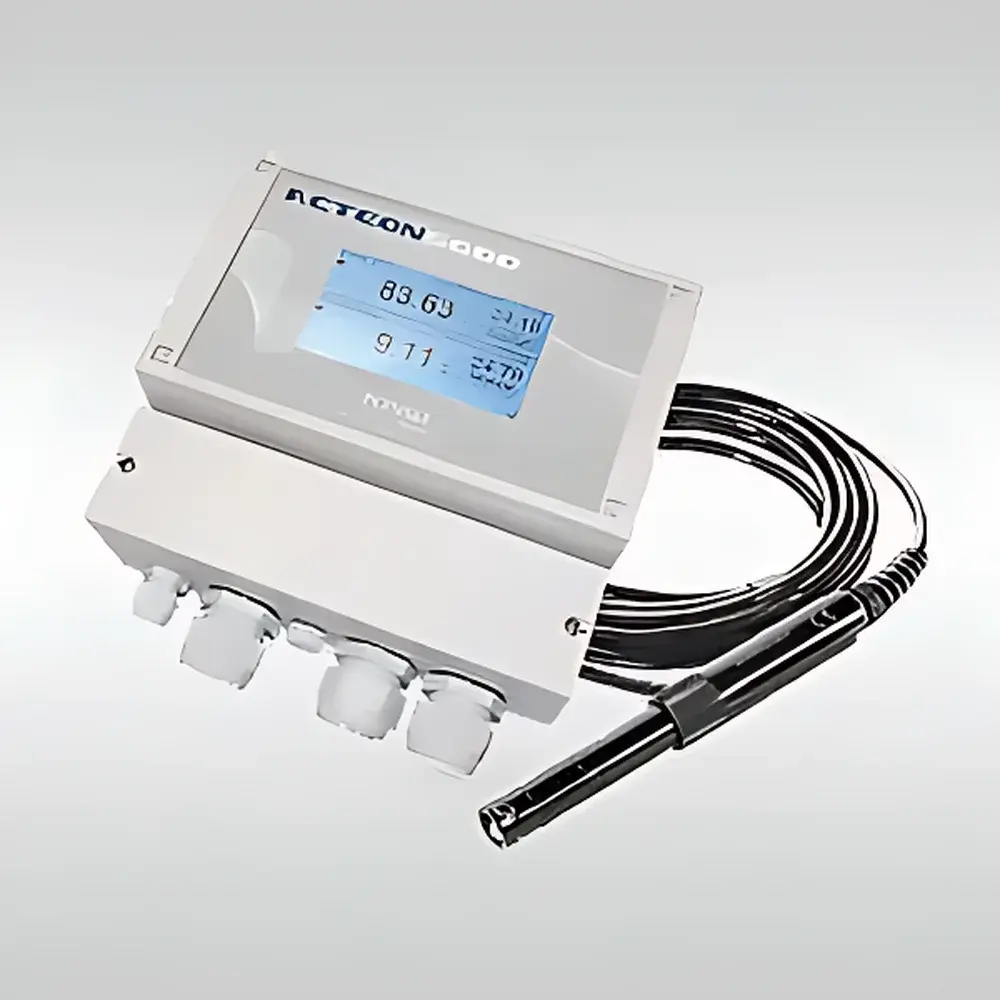
- Modbus RTU (RS-485) and SDI-12 dual-protocol support: Enables seamless integration with SCADA systems, environmental data loggers (e.g., Campbell Scientific CR series), PLCs, and telemetry gateways without protocol translation hardware.
- Onboard non-volatile memory: Stores up to 3 calibration events—including date/time stamps, slope/mV offset values, buffer IDs, and user notes—supporting audit-ready documentation per FDA 21 CFR Part 11 and ISO/IEC 17025 requirements.
- Ultra-low power architecture: 25 µA standby current and configurable measurement frequency allow multi-year operation on battery-powered stations; peak pulse draw (500 mA) is limited to electrode polarization cycles only.
- Robust mechanical design: PVC and Delrin® body with chemically inert platinum sensing tip and borosilicate pH glass; armored polyurethane cable resists abrasion, UV exposure, and biofouling in open-channel or submerged installations.
Sample Compatibility & Compliance
The PHEHT sensor maintains metrological reliability across conductivity ranges spanning 0–20 µS/cm (ultrapure boiler feedwater), 100–2000 µS/cm (freshwater lakes and rivers), 0–50 mS/cm (seawater and brackish estuaries), and up to 200 mS/cm (industrial wastewater streams). Its asymmetric response to low-conductivity media is mitigated by integrated high-impedance buffering and active electrode polarization control. The device complies with key international standards governing water quality instrumentation: ASTM D1293 (pH of water), ISO 10523 (water quality — pH determination), ISO 5814 (water quality — determination of redox potential), and USP (pH measurement for pharmaceutical water systems). All firmware and calibration metadata adhere to ALCOA+ principles (Attributable, Legible, Contemporaneous, Original, Accurate, Complete, Consistent, Enduring, Available), facilitating GLP and GMP audit readiness.
Software & Data Management
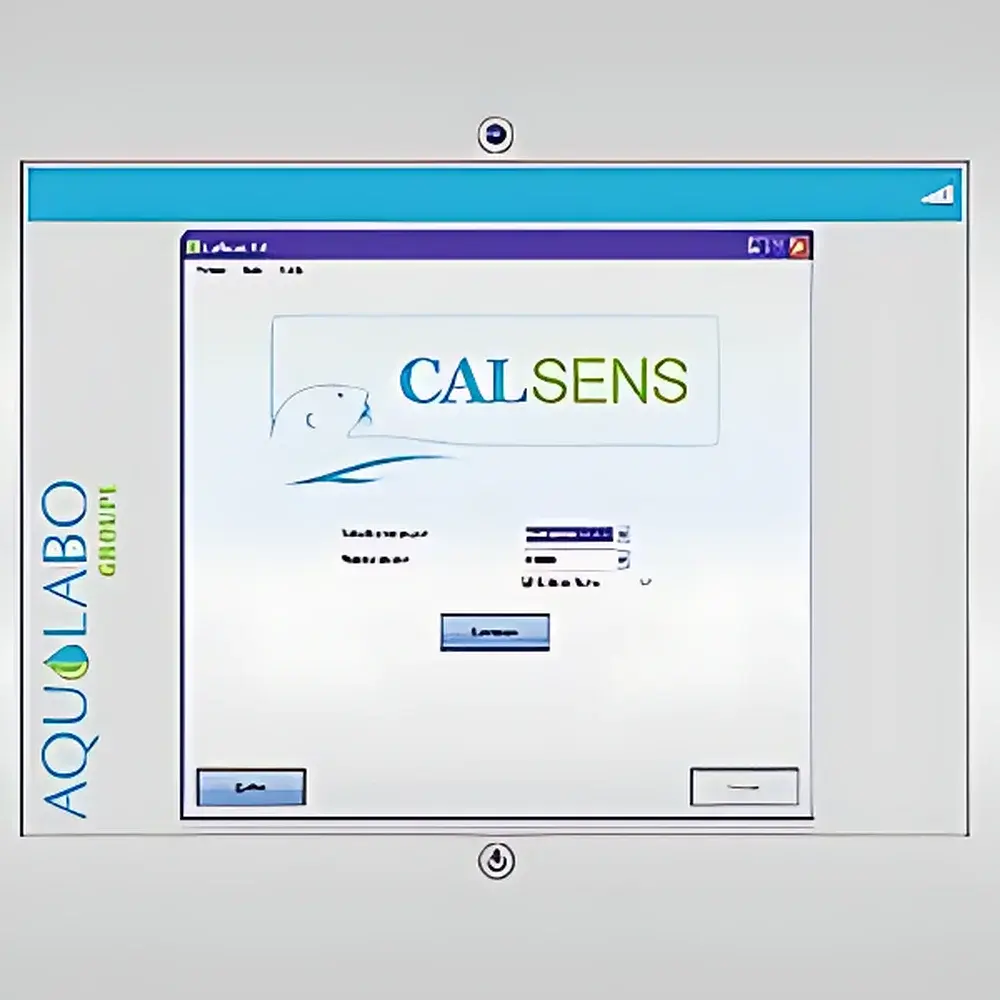
Calibration parameters and historical measurement logs are retained in the sensor’s embedded EEPROM, accessible via standard Modbus function codes (e.g., FC03 Read Holding Registers). No external configuration tool is required: sensors retain identity (model, serial number, firmware version) and calibration state independently of host controllers. When interfaced with compliant data acquisition platforms, timestamped readings include embedded temperature-compensated pH and ORP values, along with diagnostic flags (e.g., electrode impedance warning, low-battery status). Data export formats (CSV, JSON) support direct ingestion into LIMS, ELN, or cloud-based environmental monitoring dashboards. Firmware updates are performed over-the-air via Modbus, preserving configuration integrity and eliminating field recalibration.
Applications
- Real-time monitoring of drinking water treatment processes: coagulation pH control, chlorine residual correlation via ORP, and distribution system corrosion potential assessment.
- Wastewater influent/effluent compliance tracking under EU Urban Wastewater Treatment Directive and U.S. EPA NPDES permit requirements.
- Marine aquaculture and coastal ecosystem observatories requiring stable ORP measurements amid salinity fluctuations.
- Pharmaceutical purified water (PW) and water-for-injection (WFI) loop surveillance per USP and Annex 1 guidelines.
- Industrial cooling tower management, where rapid pH/ORP shifts indicate scaling, microbiological activity, or biocide depletion.
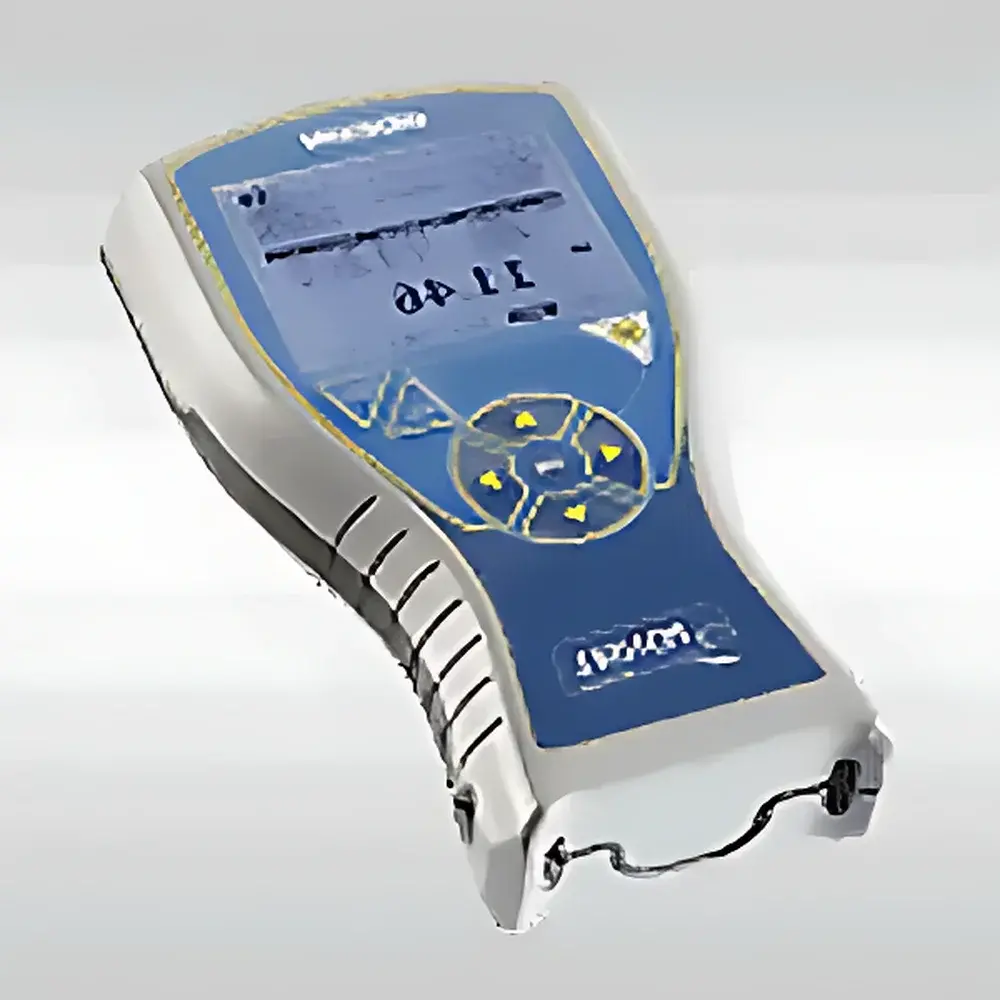
- Portable field surveys using handheld meters or ruggedized tablets equipped with RS-485/SDI-12 adapters for immediate QA/QC verification.
FAQ
Does the PHEHT require frequent recalibration in high-conductivity wastewater?
No—its Plastogel® reference system and dual-junction design maintain stable liquid junction potentials across conductivities up to 200 mS/cm. Field validation shows ≤0.05 pH unit drift over 30 days in activated sludge effluent.
Can the sensor be used in pressurized pipe applications?
Yes—rated for continuous operation at 5 bar (72.5 psi), it is suitable for inline installation in potable water mains, reverse osmosis reject lines, and industrial process piping.
Is SDI-12 mode compatible with legacy dataloggers?
Yes—fully compliant with SDI-12 v1.4 specification, including command syntax, timing tolerances, and sleep/wake protocols. Supports multi-sensor daisy-chaining on a single bus.
How is temperature compensation applied?
NTC thermistor data is acquired simultaneously with electrochemical signals; pH compensation follows the standard NIST-recommended algorithm (non-linear coefficient table), while ORP uses a fixed 0.198 mV/°C shift factor unless custom coefficients are loaded.
What happens if power is interrupted during a measurement cycle?
The sensor retains its last valid calibration and operational state in non-volatile memory. Upon power restoration, it resumes normal polling within 500 ms without requiring reinitialization or manual reset.
Related Products







