
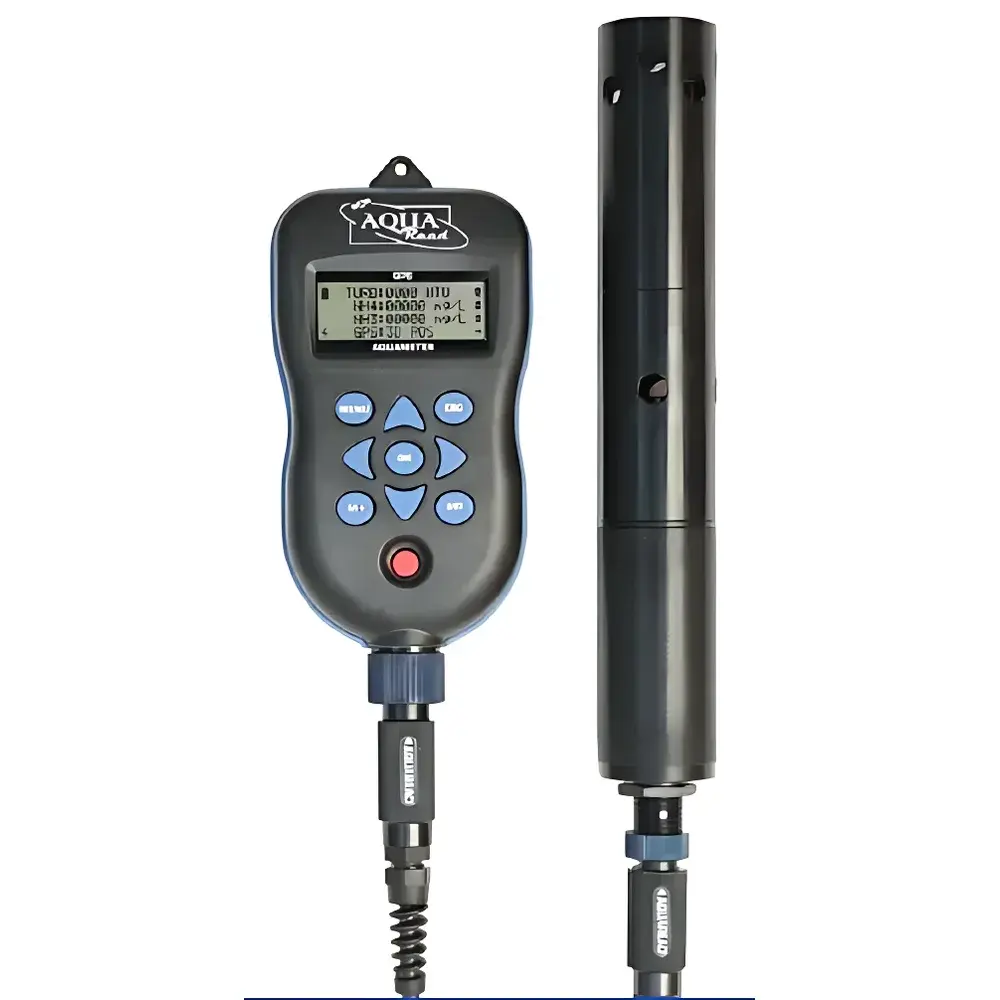
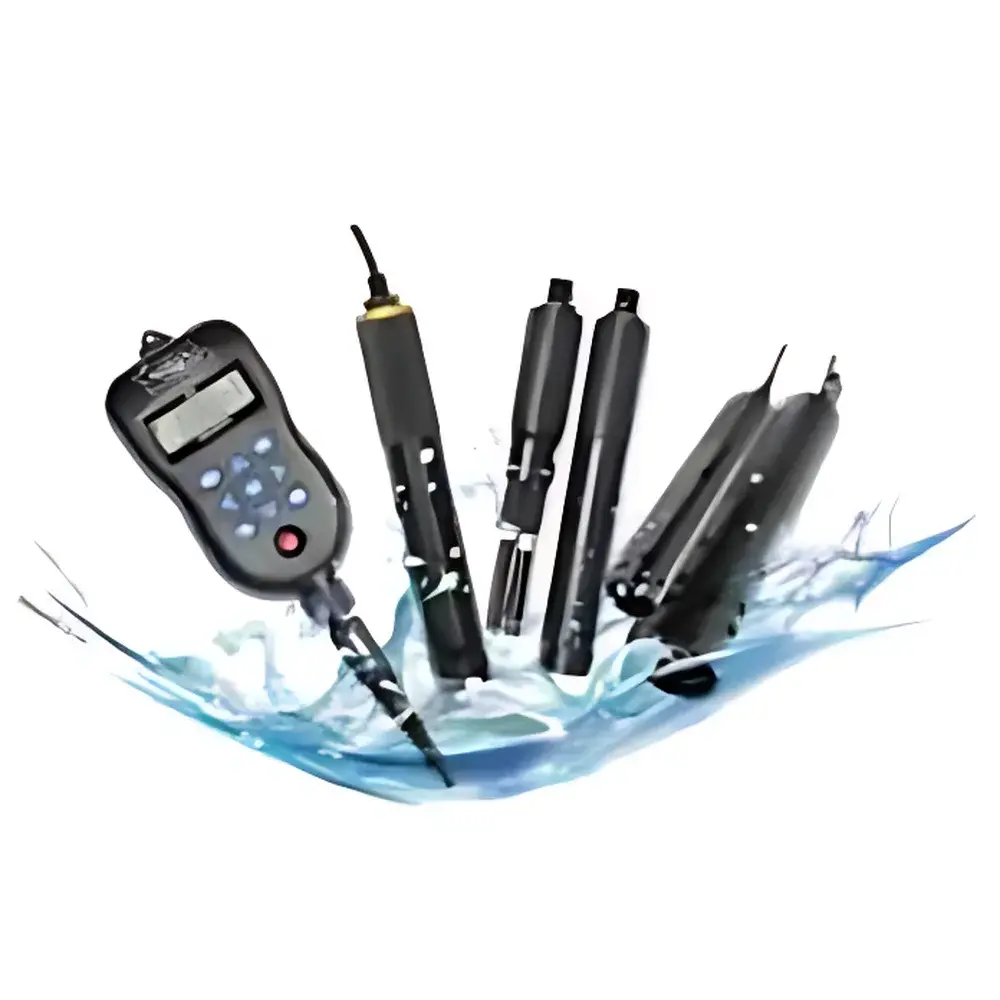
Aquaread AP-7000 GPS-Enabled Portable Multiparameter Water Quality Analyzer
| Brand | Aquaread |
|---|---|
| Origin | United Kingdom |
| Model | AP-7000 |
| Instrument Type | Portable / Handheld Water Quality Analyzer |
| GPS Accuracy | ±10 m |
| Operating Temperature | -20 to +70 °C |
| Protection Rating | IP67 |
| Display | Backlit 80-character LCD |
| Data Storage | 1900 measurements |
| Power Supply | Replaceable internal batteries |
| Communication Interface | RS-485/RS-232 |
| Barometric Pressure Range | 150–1150 mbar (±1 mbar) |
| Dissolved Oxygen | 0–500 % saturation / 0–50.00 mg/L (±0.01 mg/L) |
| Conductivity | 0–200 mS/cm (±0.5 % of reading) |
| TDS | 0–100,000 mg/L (±1 % of reading or ±0.1 unit, whichever is greater) |
| Resistivity | 5 Ω·cm – 1 MΩ·cm (±1 % of reading or ±0.1 unit, whichever is greater) |
| Salinity | 0–70 PSU (±1 % of reading or ±0.1 PSU, whichever is greater) |
| Seawater Density (σt) | 0–50 σt (±1.0 σt) |
| ORP | ±2000 mV (±0.5 mV) |
| Depth | 0–30 m (±0.1 m) |
| Temperature | -5 to +50 °C (±0.5 °C) |
| pH | 0–14 pH (±0.01 pH) |
| Optional ISE Sensors | Ammonium, Nitrate, Chloride, Fluoride, Calcium (0–1000 mg/L, ±10 %) |
| Optional Optical Sensors | Chlorophyll-a, Phycocyanin (freshwater/marine), Rhodamine WT, Fluorescein, Hydrocarbon Oil, Turbidity (0–3000 NTU, ±2 %) |
Overview
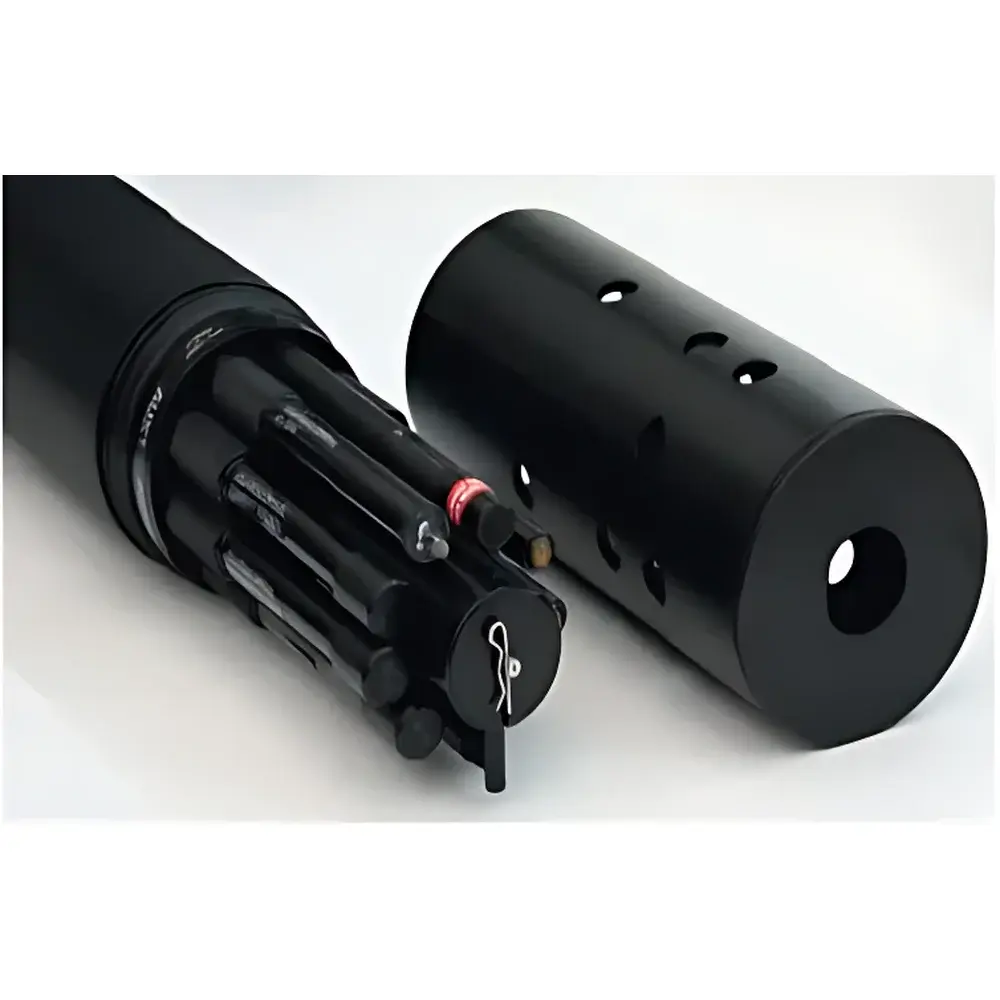
The Aquaread AP-7000 is a field-deployable, GPS-integrated multiparameter water quality analyzer engineered for high-reliability environmental monitoring in freshwater, estuarine, and marine ecosystems. Built upon a modular sensor architecture, it employs electrochemical, optical, and physical transduction principles—including potentiometric pH/ORP measurement, Clark-type polarographic dissolved oxygen sensing, four-electrode conductivity with automatic temperature compensation (ATC), and dual-beam optical detection for turbidity and fluorometric analytes. Each parameter is independently calibrated and validated against traceable NIST-traceable standards. The integrated GPS module (12-channel, ±10 m CEP) enables georeferenced data logging essential for spatial trend analysis, regulatory reporting under EU WFD or US EPA protocols, and longitudinal site assessment. Its ruggedized, IP67-rated housing ensures operational integrity during submersion, rain exposure, or transport across remote terrain—making it suitable for routine QA/QC sampling, emergency response, and long-term ecological research.
Key Features
- Modular probe design supporting up to 12 simultaneous parameters—including core physicochemical metrics (pH, DO, EC, TDS, salinity, resistivity, ORP, depth, temperature, barometric pressure) and optional ion-selective electrodes (ISEs) or optical sensors
- Real-time GPS tagging with timestamp synchronization, enabling GIS-compatible data export for spatial interpolation and watershed modeling
- Automatic temperature compensation across all electrochemical and conductive measurements, eliminating manual correction steps and reducing inter-operator variability
- High-resolution display (80-character backlit LCD) with intuitive menu navigation; operates continuously for >24 hours on standard replaceable batteries
- Onboard memory stores 1900 full-profile measurements with metadata (GPS coordinates, time, operator ID, calibration status)
- RS-485/RS-232 interface compatible with Aquaread’s AQView software for automated download, spectral validation, and audit-ready report generation
- Compliance-ready architecture: supports user-defined calibration logs, electronic signatures, and timestamped change history per GLP and ISO/IEC 17025 requirements
Sample Compatibility & Compliance
The AP-7000 is validated for use in natural surface waters (rivers, lakes, reservoirs), groundwater wells, wastewater effluents, aquaculture systems, and coastal marine environments. Sensor materials—including titanium housings, platinum reference electrodes, and FDA-compliant optical windows—resist biofouling and chemical corrosion in high-organic or saline matrices. All factory calibrations adhere to ISO 5667-3 (water sampling) and ASTM D1293 (pH), D888 (dissolved oxygen), D1125 (conductivity), and D3370 (field sampling procedures). Optional ISE and optical modules are certified to ISO 10301 (ammonia), ISO 15681-2 (phosphate analogues), and ISO 7027 (turbidity). Data integrity meets FDA 21 CFR Part 11 requirements when used with AQView v5.2+ and configured with audit trail, role-based access, and electronic signature enforcement.
Software & Data Management
AQView desktop software provides full lifecycle data management—from pre-deployment configuration and sensor validation to post-processing statistical analysis and regulatory reporting. It supports batch calibration curve import (linear, polynomial, or multi-point non-linear), automatic drift correction using reference buffer checks, and outlier flagging via Grubbs’ test. Export formats include CSV, Excel (.xlsx), Shapefile (.shp), and XML compliant with EPA STORET and WQX schemas. Audit trails record every calibration event, parameter modification, firmware update, and data export action—including operator ID, timestamp, and system hash. For cloud integration, AQView Connect enables secure TLS 1.2 transmission to AWS-hosted dashboards with configurable alert thresholds and automated PDF report generation.
Applications
- Regulatory compliance monitoring for municipal drinking water intakes and wastewater discharge points under EU Directive 2000/60/EC or US Clean Water Act Section 402
- Baseline characterization and impact assessment in environmental impact statements (EIS) and NEPA documentation
- Algal bloom forecasting via synchronized chlorophyll-a and phycocyanin profiling across diel cycles
- Hydrocarbon spill detection and plume mapping using rhodamine WT and hydrocarbon oil fluorescence channels
- Groundwater vulnerability studies integrating redox potential, nitrate, and chloride profiles with geospatial stratigraphy
- Academic limnology and oceanography field campaigns requiring traceable, reproducible, and metadata-rich datasets
FAQ
Does the AP-7000 support GLP-compliant data handling?
Yes—when paired with AQView software and configured with electronic signatures, audit trail logging, and calibration verification workflows, it satisfies core GLP principles per OECD Series on Principles of Good Laboratory Practice.
Can the instrument be used in seawater without sensor degradation?
Yes—the titanium probe body, Ag/AgCl reference electrode, and corrosion-resistant optical windows are rated for continuous operation in salinities up to 70 PSU; regular cleaning with dilute HCl (0.1 M) restores performance after prolonged deployment.
Is barometric pressure compensation available for dissolved oxygen calculations?
Yes—integrated barometric pressure measurement (150–1150 mbar) is automatically applied to DO saturation calculations per ISO 5814 and ASTM D888 Annex A1.
How is calibration traceability maintained across field deployments?
Each calibration event is stored with NIST-traceable standard IDs, lot numbers, expiration dates, and environmental conditions; calibration certificates are exportable as PDF with digital signatures.
What is the maximum depth rating for the probe assembly?
The standard AP-7000 probe is rated to 30 meters (100 ft) static depth; optional pressure-compensated versions extend to 100 m for deep-lake or offshore applications.







