
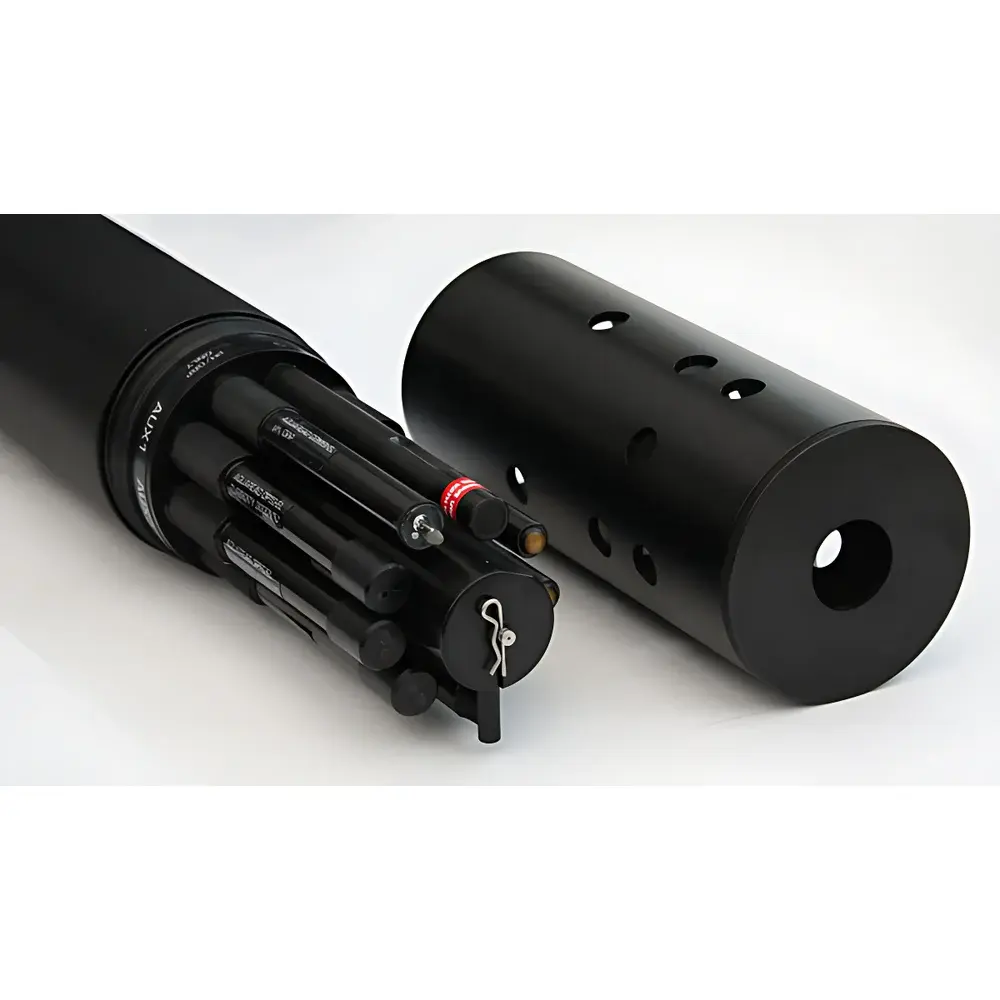
Aquaread AP-7000-SDI2 Portable Multiparameter Field Water Quality Monitor
| Brand | Aquaread |
|---|---|
| Origin | United Kingdom |
| Manufacturer Type | Authorized Distributor |
| Origin Category | Imported |
| Model | AP-7000-SDI2 |
| Pricing | Upon Request |
Overview
The Aquaread AP-7000-SDI2 is a rugged, field-deployable multiparameter water quality monitoring system engineered for long-term, unattended operation in diverse aquatic environments—from rivers and lakes to estuaries, wastewater outfalls, and industrial discharge points. Built upon Aquaread’s proven SDI-12 sensor interface architecture, the AP-7000-SDI2 employs direct digital communication with calibrated, smart sensors to ensure high reproducibility and minimal signal drift over extended deployment periods. Its core measurement principle relies on integrated electrochemical, optical, and physical transduction technologies—including galvanic optical dissolved oxygen (DO), solid-state pH/ISE electrodes, conductivity cells with temperature compensation, and pressure-compensated depth sensing—enabling simultaneous acquisition of up to 12 parameters without cross-sensitivity artifacts. Designed for compliance with environmental monitoring best practices, the system supports continuous logging at user-defined intervals (1 minute to 24 hours), with onboard time-stamping traceable to internal RTC (Real-Time Clock) synchronized via GPS.
Key Features
- Ruggedized, IP68-rated housing rated for submersion up to 1 meter for 30 minutes—tested per IEC 60529 standards
- Integrated anti-fouling system featuring mechanical wiper and optional ultrasonic cleaning module for optical DO and turbidity sensors
- Self-calibrating sensor suite with factory-applied NIST-traceable calibration certificates; field verification supported via two-point pH and single-point DO checks
- Onboard rechargeable lithium-ion battery pack providing ≥168 hours (7 days) of continuous operation at 15-minute logging intervals
- 8 GB embedded microSD storage with automatic rollover and timestamped binary data files (.aqd format), compliant with ISO/IEC 17025 data integrity requirements
- GPS-enabled georeferencing: records WGS84 coordinates with ±3 m CEP accuracy; exports KML-compatible metadata for GIS integration (e.g., Google Earth, QGIS)
- Modular sensor expansion: 6 standard SDI-12 ports pre-configured for DO, pH, ORP, EC, depth, and temperature; plus 6 auxiliary ports supporting ISE (NH₄⁺, NO₃⁻, Cl⁻, F⁻), turbidity, chlorophyll-a, CDOM, and Raman-based hydrocarbon sensors
Sample Compatibility & Compliance
The AP-7000-SDI2 is validated for use in freshwater, brackish, and marine matrices across salinities from 0 to 70 ppt. All wetted materials—including sensor housings, O-rings, and cable jackets—meet USP Class VI biocompatibility and EPA Method 160.1 compatibility requirements for environmental sampling. Sensor outputs conform to ASTM D1293 (pH), ASTM D888 (DO), ASTM D1129 (conductivity), and ISO 7888 (electrical conductivity). The system supports GLP/GMP-aligned audit trails through its Aquameter software, including electronic signatures, change logs, and 21 CFR Part 11–compliant user access controls when deployed in regulated industrial or municipal settings.
Software & Data Management
Aquameter v5.x software provides full configuration, visualization, and export capabilities across Windows, macOS, and Linux platforms. It supports concurrent connection to multiple AP-7000 loggers via USB, Bluetooth, or Ethernet (with optional cellular gateway). Data ingestion follows a hierarchical schema: raw sensor values → temperature- and pressure-compensated engineering units → QA/QC flags (e.g., saturation warning, electrode impedance check). Export formats include CSV, Excel (.xlsx), SQL dump, and NetCDF4 for interoperability with EPA STORET, WISKI, and HydroServer platforms. Alarm logic permits configurable threshold-based SMS/email notifications via GSM modem or MQTT broker integration—fully auditable with timestamped event logs.
Applications
- Regulatory compliance monitoring under EU WFD (Water Framework Directive) and US Clean Water Act Section 304(h) reporting protocols
- Baseline characterization and impact assessment for EIA (Environmental Impact Assessment) studies
- Real-time effluent monitoring at WWTPs and industrial outfalls with automated exceedance reporting
- Climate-resilient watershed monitoring networks integrating with LoRaWAN or NB-IoT infrastructure
- Academic research requiring high-temporal-resolution profiling in dynamic tidal zones or glacial meltwater streams
- Emergency response deployments following chemical spills or algal bloom events, leveraging rapid sensor reconfiguration
FAQ
What sensor calibration protocols does the AP-7000-SDI2 support?
It accepts factory calibration coefficients stored in each SDI-12 sensor’s memory and supports field validation using certified buffer solutions (pH 4.01/7.00/10.01) and zero-oxygen and saturated-air standards for DO. Calibration history is retained in non-volatile memory.
Can the system operate autonomously for more than 30 days?
Yes—when configured with low-power sensors (e.g., optical DO instead of Clark-type), 60-minute logging intervals, and optional solar charging kit (AP-SOLAR-KIT), deployments exceeding 90 days have been validated in UK Environment Agency trials.
Is remote firmware update capability available?
Firmware updates are delivered via signed .hex files through Aquameter; over-the-air (OTA) updates require an external LTE gateway (e.g., Telit LE910) and are subject to network security policies.
How is data security ensured during wireless transmission?
All MQTT or HTTP(S) transmissions use TLS 1.2+ encryption; credentials are stored in secure enclave hardware on compatible gateways. Local data remains encrypted at rest using AES-256 on the microSD card.
Does the system meet UKAS or ISO/IEC 17025 accreditation requirements for field measurements?
While the instrument itself is not accredited, its documented uncertainty budgets, traceable calibrations, and audit-trail functionality enable laboratories to demonstrate metrological traceability per ISO/IEC 17025:2017 Clause 7.7 when used within an accredited scope.







