
AQUAREAD AP Chlorophyll a and Algal Pigment Analyzer
| Brand | AQUAREAD |
|---|---|
| Origin | United Kingdom |
| Model | AP |
| Detection Principle | In-situ Fluorescence Excitation/Emission (685 nm excitation, 730 nm emission) |
| Chlorophyll a Range | 0–500 µg/L |
| Resolution | 0.1 µg/L |
| Accuracy | ±2% of reading |
| Turbidity Range | 0–3000 NTU (dual-range auto-scaling) |
| Dissolved Oxygen | 0–50.00 mg/L |
| Algal Pigment Channels | Chlorophyll a, Phycocyanin, Phycoerythrin |
| Fluorescent Tracer Detection | Rhodamine WT, Oil-in-Water (254 nm UV LED excitation) |
| Data Storage | 1900 samples |
| GPS | Built-in 12-channel, ±10 m accuracy |
| Display | Backlit 80-character LCD |
| Dimensions (W×H×D) | 90 × 180 × 39 mm |
| Weight (with batteries) | 450 g |
| Power | 5×AA alkaline or Ni-MH rechargeable |
| Battery Life | >20 h (alkaline), >40 h (Ni-MH) |
| Operating Temperature | −20 to +70 °C |
| Enclosure Rating | IP67 |
| Interface | USB |
| Barometric Pressure Sensor | 150–1150 mbar (±1 mbar) |
Overview
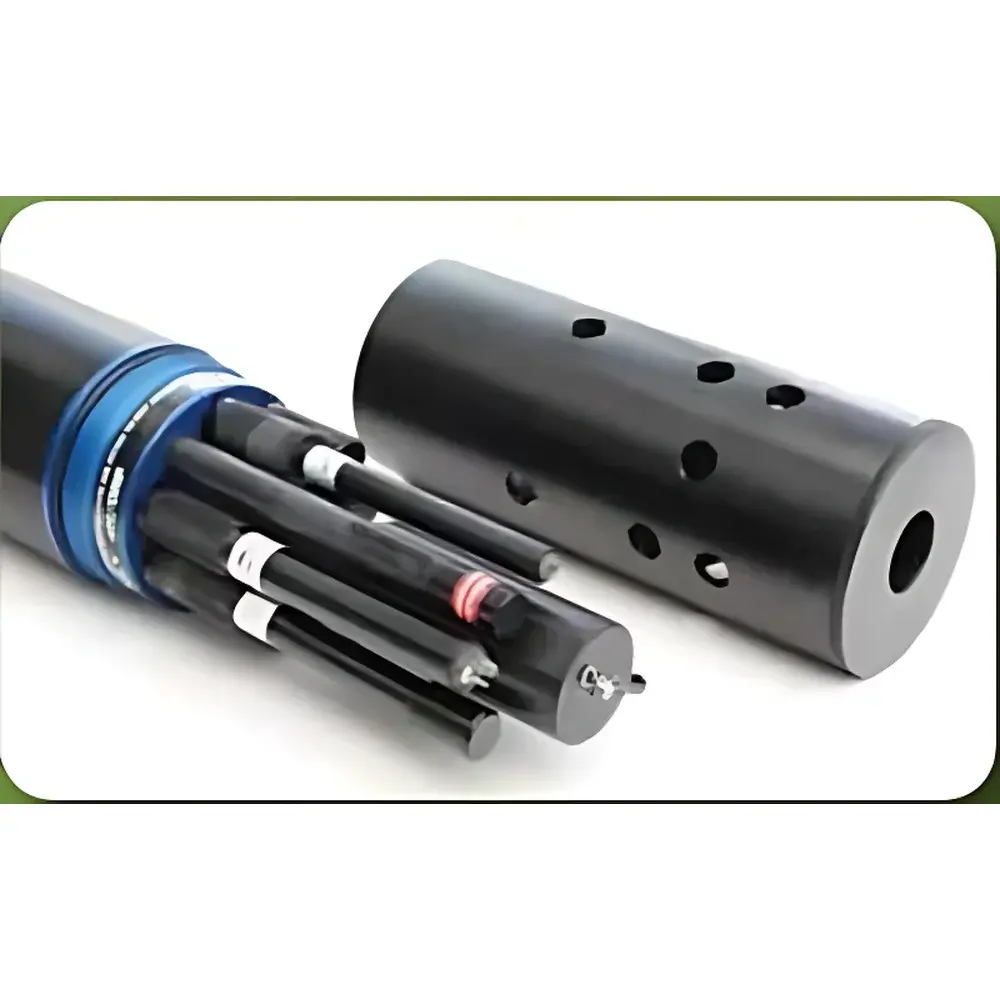
The AQUAREAD AP Chlorophyll a and Algal Pigment Analyzer is a field-deployable, multi-parameter optical sensing platform engineered for high-fidelity in-situ monitoring of phytoplankton biomass and water quality indicators in freshwater, estuarine, and coastal environments. At its core, the system employs calibrated fluorescence spectroscopy—specifically, excitation at 685 nm and emission detection at 730 nm—to quantify chlorophyll a concentration as a robust proxy for algal biomass. This method complies with established optical principles outlined in ISO 10260:2021 (Water quality — Determination of chlorophyll a by fluorescence) and supports traceable quantification without reagent addition or sample extraction. Unlike laboratory-based spectrophotometric or HPLC methods, the AP enables real-time, non-destructive profiling—critical for detecting rapid phytoplankton dynamics during bloom onset, nutrient pulses, or diel cycles. Its modular architecture allows integration with interchangeable optical sensors—including phycocyanin (cyanobacteria-specific), phycoerythrin (red algae marker), Rhodamine WT (tracer studies), and UV-excited hydrocarbon detection—making it suitable for both regulatory compliance monitoring and process-oriented limnological research.
Key Features
- Modular optical sensor interface supporting simultaneous deployment of up to six calibrated probes: chlorophyll a, phycocyanin, phycoerythrin, turbidity, dissolved oxygen, and fluorescent tracers (Rhodamine WT, oil-in-water)
- Deep-UV (254 nm) LED excitation source for hydrocarbon detection—minimizing power draw while maintaining sensitivity to aromatic compounds in ppb-level concentrations
- Integrated 12-channel GPS receiver with ±10 m positional accuracy and automatic geotagging of all measurements
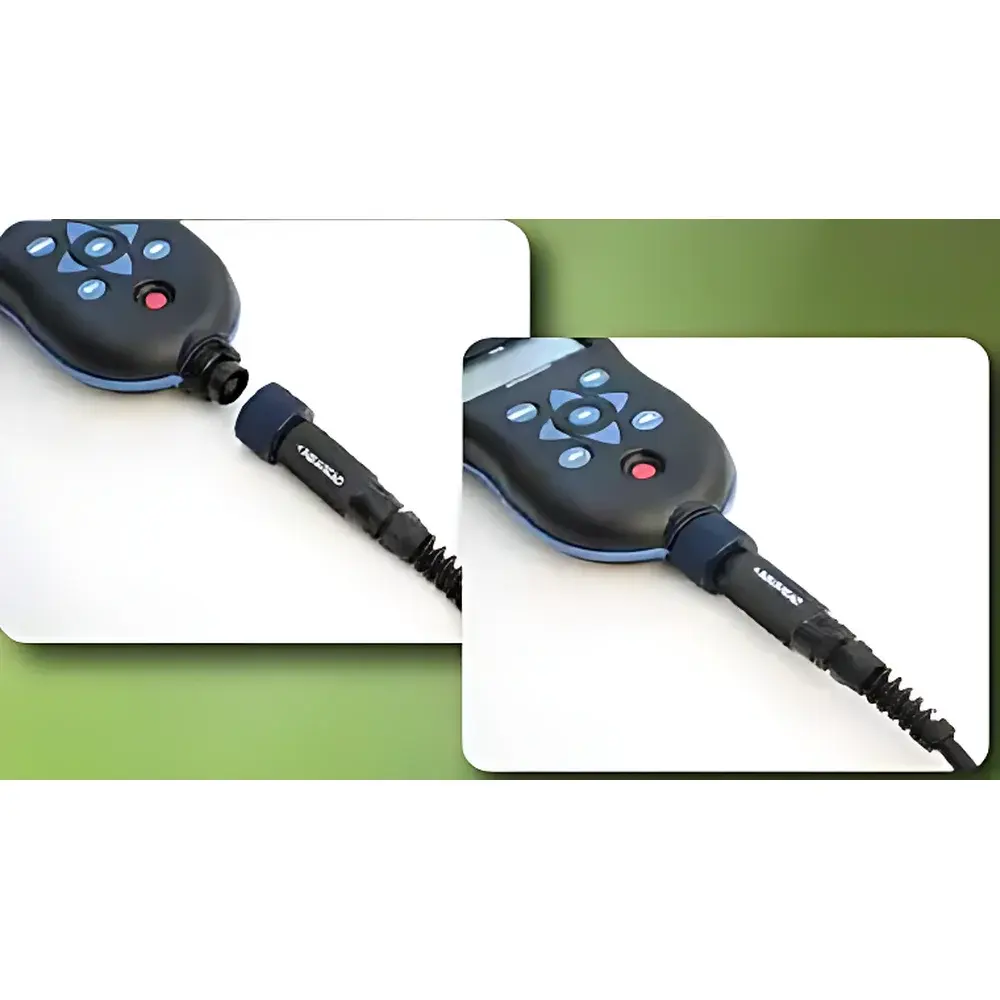
- Ruggedized handheld host unit rated IP67 for submersion up to 1 m for 30 minutes; operational across −20 °C to +70 °C ambient conditions
- Backlit 80-character LCD display with intuitive menu navigation and real-time parameter visualization
- Onboard memory storing up to 1900 timestamped, georeferenced datasets with configurable logging intervals (1 s to 24 h)
- USB interface for direct data export and firmware updates; compatible with Aquaread’s Aquameter software suite for post-processing and QA/QC validation
Sample Compatibility & Compliance
The AP analyzer is validated for use in natural waters including lakes, reservoirs, rivers, wetlands, and brackish systems with salinity up to 15 PSU. It meets functional requirements specified in EPA Method 445.1 (In Vivo Chlorophyll a Fluorescence) and aligns with ASTM D5257–22 for field fluorometric determination of algal pigments. Sensor calibrations are traceable to NIST-traceable standards, and factory verification includes linearity assessment across full dynamic ranges per ISO/IEC 17025:2017 guidelines. The instrument supports GLP-compliant data integrity through time-stamped audit logs, user-accessible calibration history, and immutable metadata embedding (GPS coordinates, barometric pressure, temperature, operator ID). While not FDA 21 CFR Part 11 certified out-of-the-box, raw data export formats (CSV, TXT) enable integration into validated LIMS environments requiring electronic signature and change control.
Software & Data Management
Data acquisition and configuration are managed via Aquaread’s Aquameter desktop application (Windows-compatible), which provides sensor calibration management, spectral overlay visualization, and batch export with customizable metadata fields. All stored datasets include embedded timestamps, GPS coordinates, atmospheric pressure (150–1150 mbar, ±1 mbar), and probe-specific diagnostic flags (e.g., fouling alerts, signal saturation warnings). Export options support CSV for statistical analysis in R or Python, and formatted reports compliant with WFD (Water Framework Directive) Annex V reporting templates. Firmware updates preserve historical calibration coefficients and retain user-defined site profiles, ensuring continuity across seasonal deployments and inter-instrument comparability.
Applications
- Eutrophication monitoring programs tracking chlorophyll a trends against phosphorus/nitrogen loading models
- Cyanobacterial bloom early-warning systems utilizing concurrent phycocyanin and chlorophyll a ratio analysis
- Tracer studies evaluating hydraulic residence time using Rhodamine WT or WT dye decay kinetics
- Oil spill response operations quantifying petroleum hydrocarbons in surface water via 254 nm UV fluorescence
- Regulatory compliance sampling under national monitoring frameworks (e.g., USGS NWIS, UK EA Water Framework Directive monitoring)
- Academic limnology fieldwork requiring portable, battery-operated instrumentation with minimal maintenance overhead
FAQ
Does the AP require daily calibration in the field?
No—factory-calibrated sensors maintain stability for up to 30 days under typical field conditions. Field verification using a certified chlorophyll a standard solution (e.g., 10 µg/L) is recommended before critical sampling campaigns.
Can the AP measure chlorophyll b or pheophytin?
No—the optical filter set is optimized exclusively for chlorophyll a fluorescence at 730 nm. It does not resolve accessory pigments or degradation products.
Is the turbidity measurement compliant with ISO 7027?
Yes—the dual-range NTU sensor uses 860 nm near-IR LED illumination and meets ISO 7027:2016 performance criteria for formazin-equivalent turbidity across both low- and high-range scales.
How is biofouling mitigated on optical windows?
The AP host does not include mechanical wipers; users are advised to deploy protective sleeves or schedule routine cleaning using lint-free wipes and deionized water—particularly in high-organic-load or saline environments.
Can data be transmitted wirelessly in real time?
The AP host lacks built-in cellular or LoRaWAN connectivity. Real-time telemetry requires external integration via USB-to-serial gateways or third-party IoT hubs configured for ASCII protocol parsing.
Related Products







