
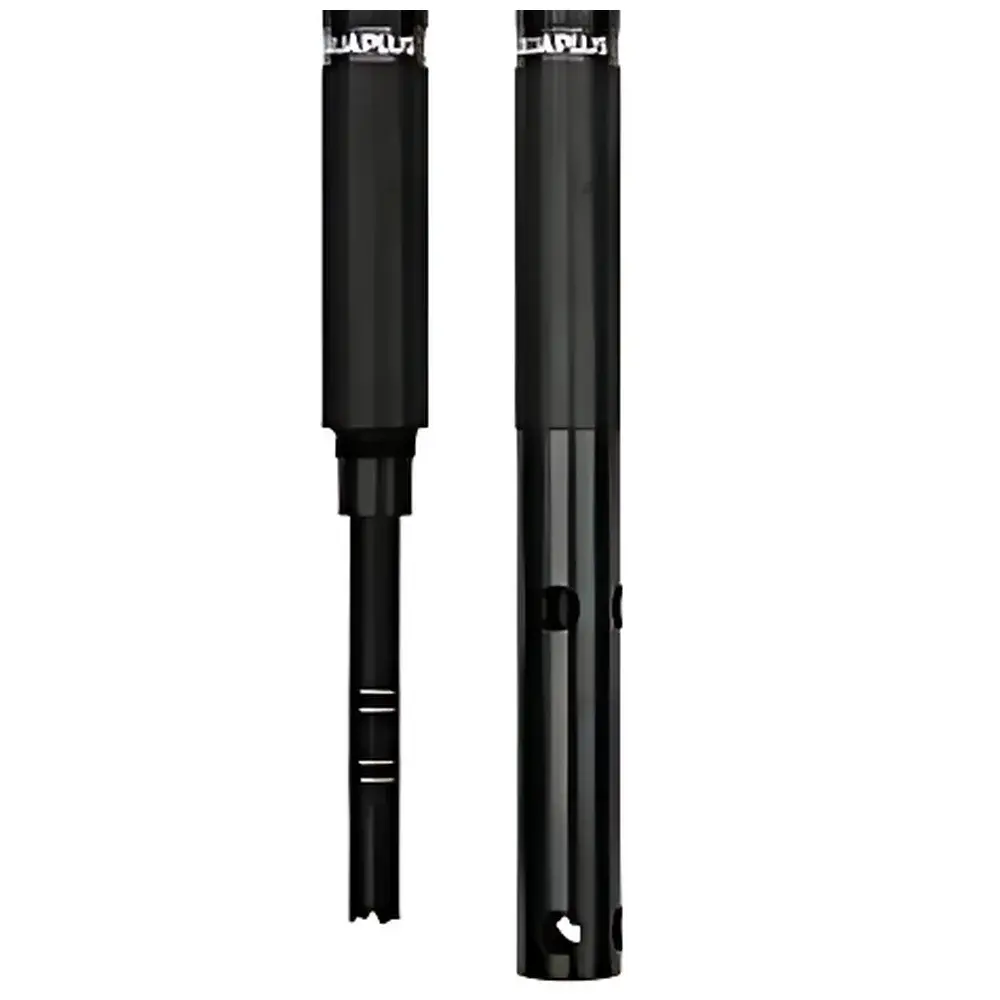
AQUAREAD AP-LITE-BGAPE1 Portable Phycocyanin Fluorometer for Cyanobacteria Quantification
| Brand | AQUAREAD |
|---|---|
| Origin | United Kingdom |
| Model | AP-LITE-BGAPE1 |
| Instrument Type | Portable/Handheld Water Quality Analyzer |
| Sensor Principle | Allophycocyanin (APC)-Specific Fluorescence Detection |
| Measurement Range | 0–200,000 cells/mL |
| Resolution | 1 cell/mL |
| Repeatability | ±2% of reading |
| Sensor Housing Dimensions | Ø24 mm × 250 mm |
| Aquameter Display Unit | 90 × 180 × 39 mm, 450 g (with batteries), Backlit 80-character LCD, 1900-data memory, Built-in 12-channel GPS (±10 m accuracy), Barometric Pressure Sensor (150–1150 mbar, ±1 mbar), IP67-rated, Operating Temperature: −20 to +70 °C |
| Power | 5×AA alkaline or Ni-MH rechargeable batteries |
| Interchangeable Sensor Platform | Supports APC, Chlorophyll-a, Phycocyanin (PC), Turbidity, Rhodamine WT, CDOM, and Hydrocarbon optical sensors |
Overview
The AQUAREAD AP-LITE-BGAPE1 is a field-deployable, optical fluorometric instrument engineered for the rapid, in-situ quantification of cyanobacterial biomass in freshwater systems via selective detection of allophycocyanin (APC), a phycobiliprotein uniquely expressed in cyanobacteria. Unlike broad-spectrum chlorophyll-a fluorescence methods—which suffer from interference by non-cyanobacterial phytoplankton—the APC-specific excitation/emission profile (typically ~615 nm excitation / ~650 nm emission) enables high taxonomic specificity for Microcystis, Anabaena, Planktothrix, and other bloom-forming genera. The system operates on a modular architecture comprising the Aquameter display and data logger, a standardized sensor housing, and the LITE-BGAPE optical sensor—designed for direct immersion and real-time signal acquisition without sample filtration or reagent addition. Its compact form factor, IP67 ingress protection, and extended operational temperature range (−20 to +70 °C) support deployment across diverse hydrological settings—from shallow ponds and reservoirs to fast-flowing rivers and remote alpine lakes.
Key Features
- APC-selective fluorescence detection with minimal cross-sensitivity to chlorophyll-a, phycoerythrin, or dissolved organic matter
- Calibrated cell-density output (cells/mL) traceable to NIST-traceable reference cultures and validated against microscopy and flow cytometry
- Modular sensor interface enabling rapid field substitution with complementary optical modules (e.g., chlorophyll-a, turbidity, rhodamine WT, CDOM)
- Integrated 12-channel GPS with sub-10-meter positional accuracy for georeferenced water quality mapping
- On-device data logging capacity for up to 1900 timestamped, location-tagged measurements with barometric pressure and temperature compensation
- Ruggedized handheld design (450 g with batteries), conforming to IEC 60529 IP67 for dust and temporary immersion resistance
- Low-power architecture supporting >100 hours of continuous operation on standard AA alkaline cells
Sample Compatibility & Compliance
The AP-LITE-BGAPE1 is optimized for natural freshwater matrices including lakes, reservoirs, rivers, canals, and wastewater-impacted surface waters. It demonstrates robust performance in turbidities up to 100 NTU and DOC concentrations ≤20 mg/L, with built-in algorithms correcting for inner-filter effects and Raman scattering. Sensor calibration follows ISO 10260:2022 (Water quality — Guidance on fluorescence-based phytoplankton monitoring) and aligns with EPA Method 445.0 (Chlorophyll a and Phycocyanin by Fluorometric Analysis) for method validation protocols. Data integrity complies with GLP principles, including electronic audit trails, user-access controls, and time-stamped metadata capture. While not FDA 21 CFR Part 11-certified out-of-the-box, the Aquameter firmware supports export of CSV-structured files with full traceability for integration into validated laboratory information management systems (LIMS).
Software & Data Management
Data retrieval occurs via USB-C connection to Windows/macOS platforms using AQUAREAD’s AquaSuite v4.x software suite. This desktop application enables spectral visualization, multi-parameter correlation analysis (e.g., APC vs. turbidity vs. conductivity), automated outlier flagging, and batch export compliant with WQX (Water Quality Exchange) and OGC SensorML standards. Field-collected datasets include embedded GPS coordinates, barometric pressure, ambient temperature, operator ID, and sensor serial number—ensuring full chain-of-custody documentation. Firmware updates are delivered through secure HTTPS channels, and configuration profiles (e.g., calibration offsets, alarm thresholds, sampling intervals) can be deployed remotely to fleets of instruments.
Applications
- Early-warning monitoring of cyanobacterial blooms in drinking water source protection zones
- Regulatory compliance reporting under EU Water Framework Directive (WFD) Article 8 and US Clean Water Act Section 303(d) listing criteria
- Research-grade longitudinal studies of cyanobacterial population dynamics in response to nutrient loading, thermal stratification, or climate perturbations
- Verification of algaecide treatment efficacy during bloom mitigation interventions
- Integration into autonomous buoy networks or drone-deployed sensor packages via optional RS-485 or SDI-12 interface adapters
- Training and education in limnology, environmental microbiology, and water resource management curricula
FAQ
Does the AP-LITE-BGAPE1 require laboratory calibration before field use?
No—each LITE-BGAPE sensor ships with a factory-applied two-point calibration (zero and mid-range) verified against cultured Microcystis aeruginosa suspensions. Field recalibration is optional and supported via user-defined single-point checks using certified reference standards.
Can APC measurements be converted to microcystin toxin concentration?
No. APC quantifies total cyanobacterial biovolume but does not correlate directly with microcystin production, which is strain-dependent and environmentally regulated. Toxin analysis requires complementary ELISA or LC-MS/MS testing.
Is the sensor housing compatible with third-party CTD or multiparameter sondes?
Yes—the 24 mm diameter, 250 mm length cylindrical form factor conforms to industry-standard mounting sleeves (e.g., YSI EXO, Hydrolab MS5). Mechanical and electrical integration requires custom bracketing and voltage-level matching.
What is the minimum detectable cell density under low-light conditions?
The system maintains 1 cell/mL resolution across its full dynamic range; however, signal-to-noise ratio degrades below 50 cells/mL in highly turbid or CDOM-rich waters, necessitating replicate profiling or depth-integrated sampling.
How frequently should the optical window be cleaned during extended deployments?
For continuous immersion (>72 h), manual cleaning with lint-free tissue and isopropyl alcohol is recommended every 24–48 h. Biofouling mitigation accessories—including copper-alloy wipers and ultrasonic transducers—are available as OEM add-ons.
Related Products







