
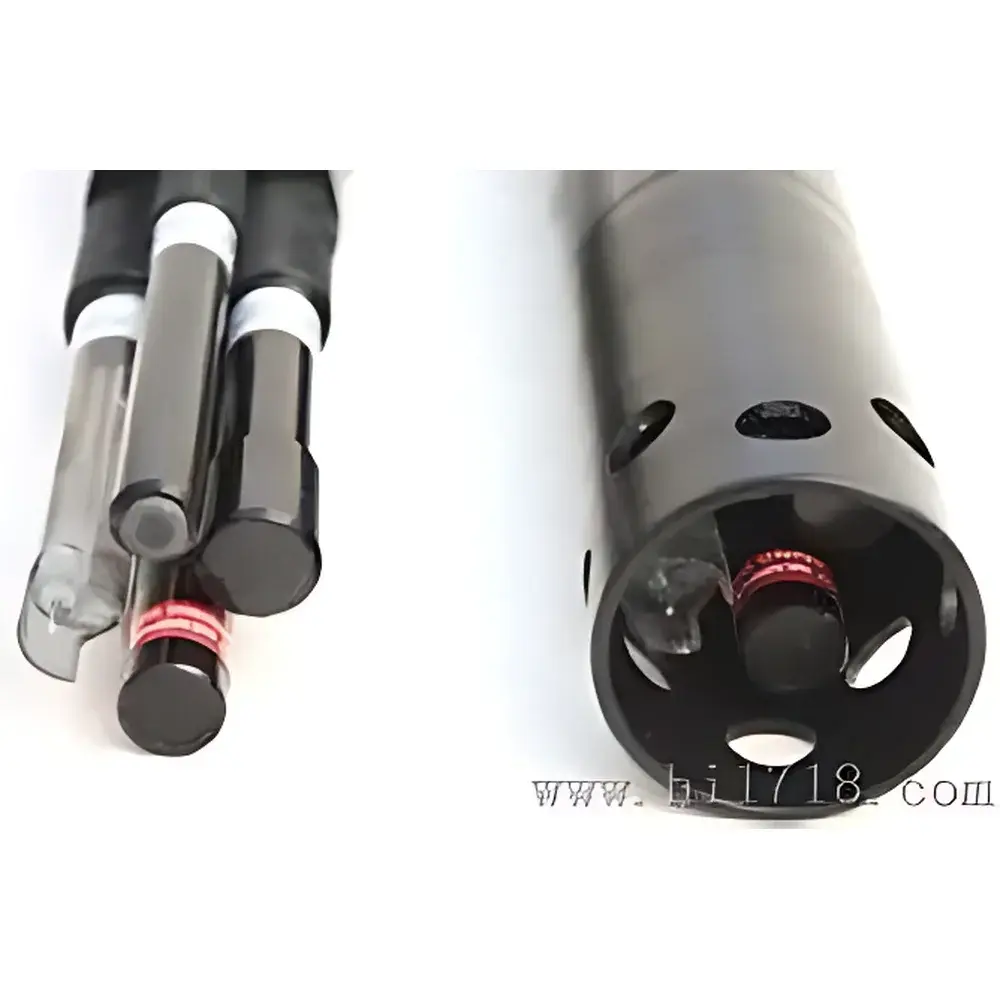
AQUAREAD AP7000-2 Multi-Parameter Online Water Quality Monitoring System
| Brand | AQUAREAD |
|---|---|
| Origin | United Kingdom |
| Model | AP7000-2 |
| Instrument Type | Online Multi-Parameter Water Quality Analyzer |
| Sensor Capacity | Up to 12 sensors (6 standard + 6 expandable ISE/optical interfaces) |
| Power | Rechargeable internal battery (7-day continuous operation) |
| Data Storage | 8 GB embedded memory |
| Communication | USB, RS-232, SDI-12, GSM/GPRS for SMS alerts |
| IP Rating | IP68 (1 m submersion, 30 min) |
| Housing Material | Marine-grade aluminum alloy |
| GPS Integration | Yes (via Aquameter handheld controller) |
| Compliance | Designed for ASTM D1129, ISO 5667, US EPA 40 CFR Part 136, and GLP-compliant data logging |
Overview
The AQUAREAD AP7000-2 is a field-deployable, multi-parameter online water quality monitoring system engineered for long-term, unattended operation in diverse hydrological environments—including groundwater wells, surface water bodies, wastewater outfalls, and industrial effluent streams. Built upon a modular sensor architecture and a robust marine-grade aluminum housing, the AP7000-2 employs electrochemical, optical, and physical transduction principles to deliver high-reproducibility measurements of critical water quality parameters. Its core measurement methodology integrates potentiometric sensing (for pH, ORP, and ISEs), optical fluorescence (for dissolved oxygen), conductometric cell technology (for conductivity and salinity), and precision thermistor-based temperature compensation. The system operates under continuous self-calibration logic and incorporates anti-fouling mechanisms—including a mechanical self-cleaning wiper and bio-resistant sensor coatings—to maintain signal integrity over extended deployments without manual intervention.
Key Features
- Modular sensor platform supporting up to 12 simultaneous parameters: standard configuration includes optical dissolved oxygen (DO), pH, oxidation-reduction potential (ORP), electrical conductivity (EC), depth/pressure, and temperature—with six additional SDI-12-compatible ports for optional ISEs (e.g., NH₄⁺, NO₃⁻, F⁻) or optical sensors (e.g., turbidity, chlorophyll-a, CDOM).
- Integrated anti-biofouling design featuring hydrophobic sensor coatings and an automated mechanical wiper—validated for >30 days of continuous operation in eutrophic or tidal environments without performance degradation.
- Embedded data logger with 8 GB flash memory, programmable sampling intervals (1 min to 24 h), and time-stamped audit trails compliant with GLP requirements.
- GSM/GPRS-enabled real-time alerting: configurable threshold-based SMS notifications for parameter excursions, low-battery warnings, or communication failures—fully programmable via PC software or Aquameter handheld interface.
- Marine-grade aluminum alloy enclosure rated IP68 (1 m water submersion for 30 minutes); pressure-compensated depth sensor with automatic barometric correction.
- Internal rechargeable lithium-ion battery providing ≥168 hours of continuous operation at 15-minute sampling intervals; supports dual power modes (battery-only or external DC input).
Sample Compatibility & Compliance
The AP7000-2 is validated for use across freshwater, brackish, and low-salinity marine matrices (up to 35 ppt). Its sensor suite meets the analytical performance criteria outlined in ASTM D1129 (Standard Terminology Relating to Water), ISO 5667-22 (Water quality — Sampling — Guidance on determination of uncertainty), and US EPA Method 160.1 (Conductivity), while DO and pH modules comply with ISO 5814 and ISO 10523 respectively. All firmware and data handling protocols support ALCOA+ principles (Attributable, Legible, Contemporaneous, Original, Accurate, Complete, Consistent, Enduring, Available) for regulatory reporting. Data export formats include CSV, XML, and SQL-compatible dumps—enabling direct ingestion into LIMS or SCADA platforms. The system satisfies key elements of FDA 21 CFR Part 11 when deployed with enabled electronic signature and audit trail functions within the AquaSuite software environment.
Software & Data Management
AquaSuite is the native Windows-based configuration, visualization, and data management platform for the AP7000-2. It supports concurrent connection to multiple loggers via USB, RS-232, or TCP/IP (with optional cellular gateway). Key capabilities include: remote firmware updates; sensor calibration curve import/export (NIST-traceable standards supported); dynamic alarm rule creation with hysteresis and delay logic; automated report generation (PDF/Excel) with customizable templates; time-series graphing with overlay comparison across sites; and georeferenced mapping via integrated Google Earth KML export. All data entries are timestamped, digitally signed, and retain immutable audit logs—including user login history, parameter changes, and calibration events—meeting GLP/GMP documentation requirements for environmental compliance reporting.
Applications
- Groundwater monitoring: Optimized for borehole deployment (diameter ≥5 cm); pressure-compensated depth sensor enables accurate profiling in confined aquifers; corrosion-resistant housing withstands prolonged exposure to iron-rich or sulfidic waters.
- Surface water networks: Deployed across river basins or reservoirs as part of distributed Water Monitor & Alert systems—enabling synchronized multi-site trend analysis and early-warning detection of nutrient pulses or thermal anomalies.
- Wastewater process control: Installed at influent, bioreactor, and effluent points to track nitrification/denitrification efficiency, DO demand, and conductivity shifts—supporting real-time optimization of aeration and chemical dosing.
- Regulatory compliance monitoring: Used by municipal utilities and industrial dischargers to fulfill reporting obligations under EU WFD, US Clean Water Act NPDES permits, and ISO 14001 EMS frameworks—leveraging tamper-evident data storage and secure remote access.
- Research-grade field studies: Paired with the Aquameter handheld controller for GPS-tagged grab sampling correlation; supports custom sensor configurations for limnological, estuarine, or wetland biogeochemistry investigations.
FAQ
What is the maximum recommended deployment duration without maintenance?
The AP7000-2 is validated for up to 30 days of continuous operation in moderate-fouling environments when equipped with the standard anti-fouling package; extended deployments (≥90 days) require periodic visual inspection and optional ultrasonic cleaning module integration.
Can the system operate in saline or tidal environments?
Yes—the marine-grade aluminum housing and pressure-rated seals permit deployment in brackish and low-salinity seawater (≤35 ppt); however, optical DO and pH sensors require periodic verification using seawater-certified calibration standards.
Is remote firmware update supported over cellular networks?
Firmware updates must be initiated locally via USB or serial connection; however, configuration changes, alarm thresholds, and sampling schedules can be modified remotely via GSM/GPRS using encrypted command protocols.
Does the system meet cybersecurity requirements for industrial SCADA integration?
The AP7000-2 supports TLS 1.2-encrypted data transmission when interfaced through certified cellular gateways; local network access requires firewall segmentation per ISA/IEC 62443-3-3 Level 1 guidelines.
How is traceability ensured for calibration records?
Each calibration event is logged with operator ID, timestamp, reference standard lot number, and deviation values; logs are exportable in PDF format with digital signature verification enabled in AquaSuite’s GLP mode.
Related Products







