
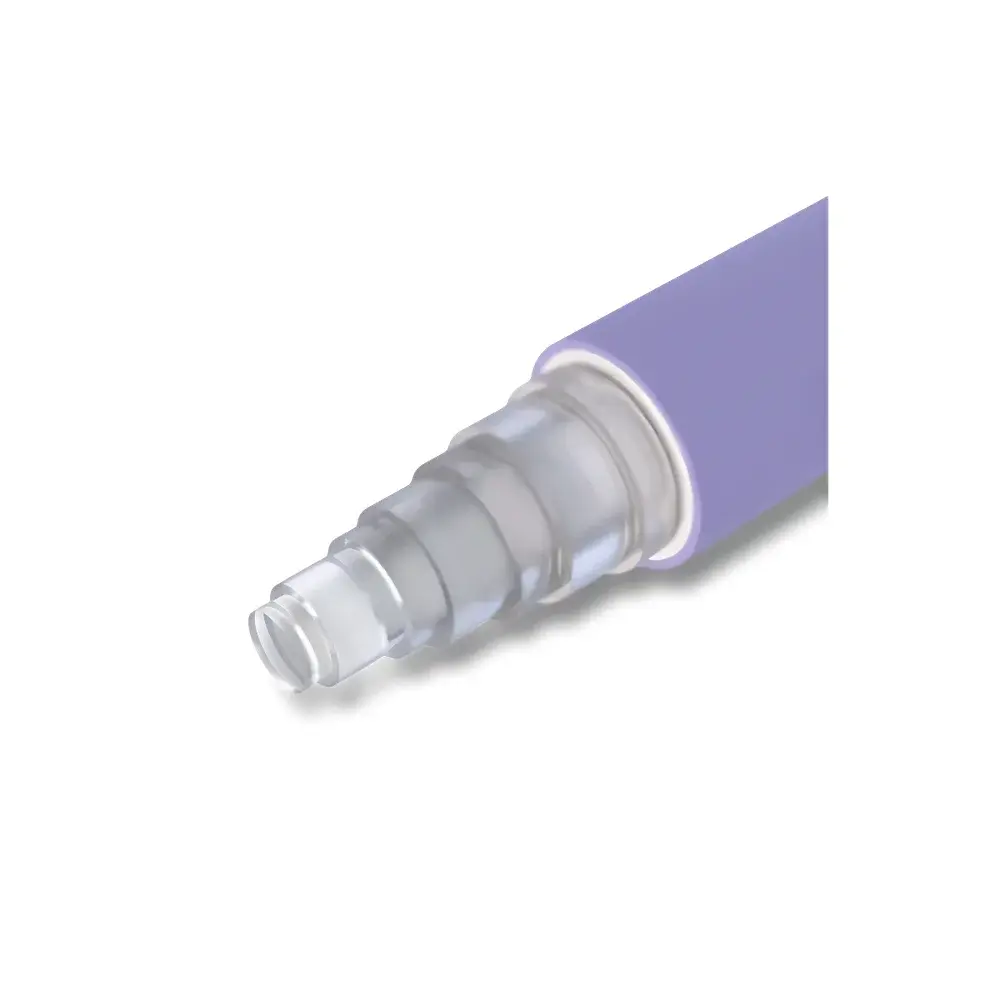
Armadillo SIA Multicore Optical Fiber
| Brand | Armadillo SIA |
|---|---|
| Core Configuration | Customizable Multicore |
| Wavelength Range | UV190–1200 nm (UV grade) / NIR700–2400 nm (broadband) |
| Numerical Aperture (NA) | 0.1–0.28 ±0.02 |
| Cladding Diameter | 100–2100 µm |
| Compliance | ISO 10110-3, IEC 60793-2-10, Telcordia GR-20-CORE |
| Customization | Core count, pitch, geometry, coating, termination, and connectorization available |
Overview
Armadillo SIA Multicore Optical Fiber is a high-performance specialty fiber engineered for advanced photonic applications requiring spatial power distribution, beam shaping, and multi-channel signal routing within a single waveguide structure. Unlike conventional single-mode or multimode fibers, this multicore fiber integrates multiple independent optical cores—typically arranged in symmetric or tailored lattices—within a shared cladding, enabling simultaneous transmission of distinct optical signals or controlled redistribution of laser energy across defined spatial profiles. The fiber operates on the principle of guided-wave optics, where each core supports its own propagation mode(s), with inter-core coupling minimized through precise control of core-to-core spacing, refractive index contrast, and cladding homogeneity. Designed for demanding environments in industrial laser processing, distributed fiber sensing, and adaptive illumination systems, it delivers high modal stability, low crosstalk (< −30 dB over 10 m at 1550 nm), and excellent mechanical robustness under thermal cycling and bending stress.
Key Features
- Configurable core architecture: Standard configurations include 7-, 19-, and 37-core hexagonal lattices; custom geometries (e.g., linear arrays, ring patterns, asymmetric clusters) supported upon request.
- Broad spectral compatibility: UV-grade variant (190–1200 nm) features synthetic fused silica preform and low-OH coating; NIR/broadband variant (700–2400 nm) utilizes optimized germanosilicate composition with extended infrared transparency.
- Precision NA control: Tight numerical aperture tolerance (±0.02) ensures consistent coupling efficiency across all cores and predictable far-field divergence profiles.
- Scalable diameter range: Cladding diameters from 100 µm to 2100 µm accommodate integration into compact micro-optics assemblies or high-power macro-delivery systems.
- Hermetic and acrylate dual-coating options: Available with low-stress UV-curable acrylate for laboratory flexibility or hermetically sealed metal (Al or Cu) coatings for vacuum-compatible or high-humidity operation.
- Termination-ready formats: Supplied as bare fiber, connectorized (FC/PC, SMA905, or custom hybrid ferrules), or spliced to delivery arms with integrated collimation optics.
Sample Compatibility & Compliance
This multicore fiber is compatible with continuous-wave (CW) and pulsed laser sources—including excimer (193 nm), Nd:YAG (1064 nm), Tm:fiber (1940 nm), and quantum cascade lasers (up to 2400 nm)—provided peak power density remains below 1 GW/cm² and average power does not exceed 50 W per core (derated for bend radius < 30 mm). All fibers are manufactured in accordance with ISO 10110-3 (surface quality), IEC 60793-2-10 (geometric and transmission specifications), and Telcordia GR-20-CORE (reliability under environmental stress). Batch certification includes spectral attenuation curves (measured per IEC 61300-2-17), core position metrology (via near-field scanning), and proof testing at 1% strain. Optional documentation supports GLP/GMP traceability, including full manufacturing lot records and calibration certificates traceable to NIST standards.
Software & Data Management
While the fiber itself is a passive component, Armadillo provides complementary design support tools—including a web-based multicore coupling simulator (MCSim v2.1) that models inter-core power transfer, mode field overlap, and far-field intensity reconstruction based on user-defined core layout, wavelength, and launch conditions. For system integrators, Armadillo supplies MATLAB and Python APIs enabling automated alignment optimization during active multicore coupling setups. All delivered fibers include a digital twin dataset: a JSON-formatted metadata file containing core centroid coordinates (µm resolution), measured NA per core, polarization extinction ratio (PER), and spectral loss coefficients across the operational band. This dataset is compatible with LabVIEW, Python-based optical modeling frameworks (e.g., PyMMF, MODE), and enterprise PLM systems compliant with ISO 10303-21 (STEP AP242).
Applications
- Laser material processing: Spatially structured beam delivery for selective ablation, annealing, and surface texturing using independently addressable cores.
- Distributed fiber-optic sensing: Multi-point temperature, strain, or acoustic monitoring via phase-sensitive OTDR (φ-OTDR) across isolated cores.
- Endoscopic imaging and illumination: Co-located imaging and lighting channels in ultra-thin medical or industrial borescopes.
- Free-space optical communications: Parallel data transmission using orbital angular momentum (OAM) multiplexing across orthogonal core modes.
- Adaptive illumination systems: Real-time dynamic control of irradiance distribution in lithography, microscopy, and photopolymerization.
- Quantum photonics: Generation and manipulation of path-entangled states in integrated quantum circuits.
FAQ
Can this fiber be spliced to standard SMF-28 or HI1060 fibers?
Yes—fusion splicing is feasible using core-alignment splicers (e.g., Fujikura CT50 or Vytran GPX-3400) with customized arc parameters. Typical splice loss is 0.15–0.35 dB per core when matched to SMF-28; higher losses may occur for broadband variants due to mode-field diameter mismatch.
What is the minimum bend radius for sustained operation?
For acrylate-coated versions: 15× cladding diameter (e.g., 30 mm for 2000 µm fiber); for hermetically coated versions: 10× cladding diameter. Bending beyond these limits increases inter-core crosstalk and may induce permanent attenuation rise.
Is radiation-hardened version available?
Yes—Armadillo offers REACH-compliant radiation-tolerant variants with cerium-doped silica cores, qualified to 10⁵ Gy(SiO₂) total ionizing dose (TID) per MIL-STD-883H Method 1019.4.
Do you provide test reports for individual fiber lots?
Yes—each shipment includes a Certificate of Conformance (CoC) with batch-specific attenuation, NA, geometry, and proof-test results. Full test reports (per IEC 60793-1-40) are available upon request.




