
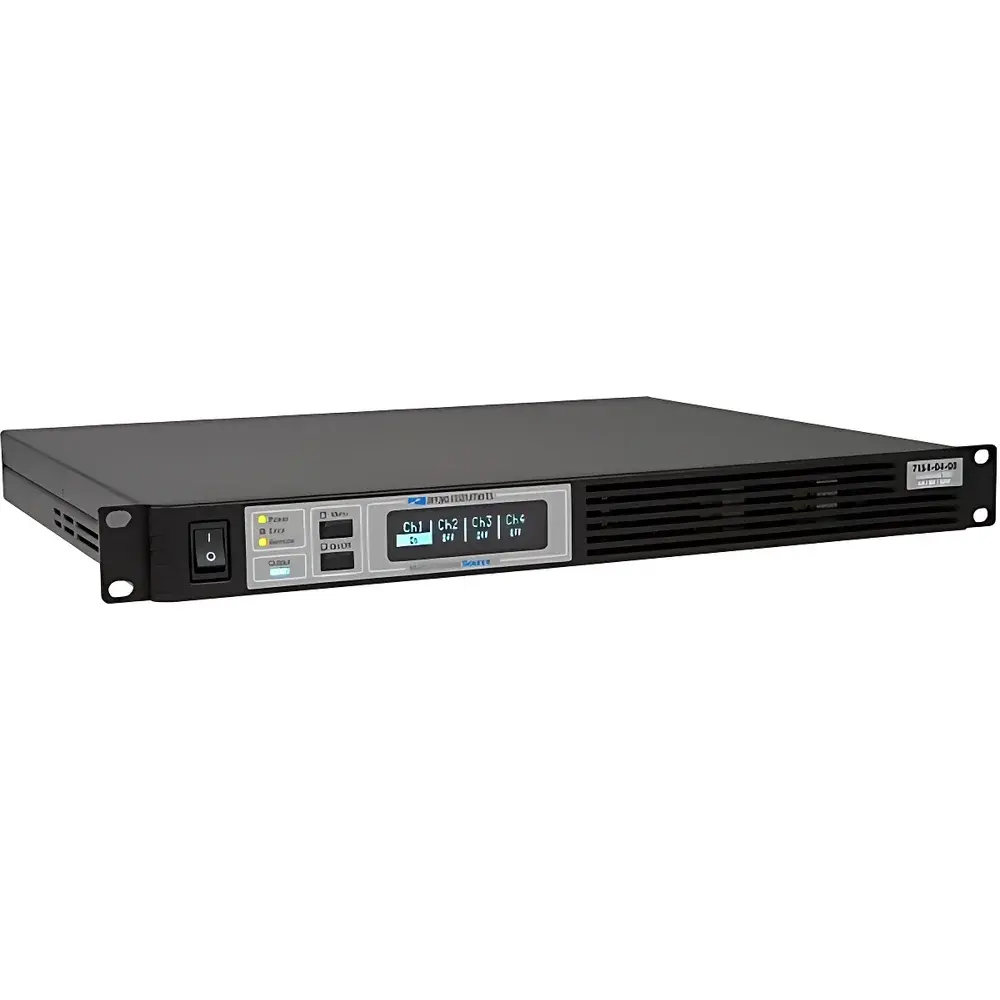
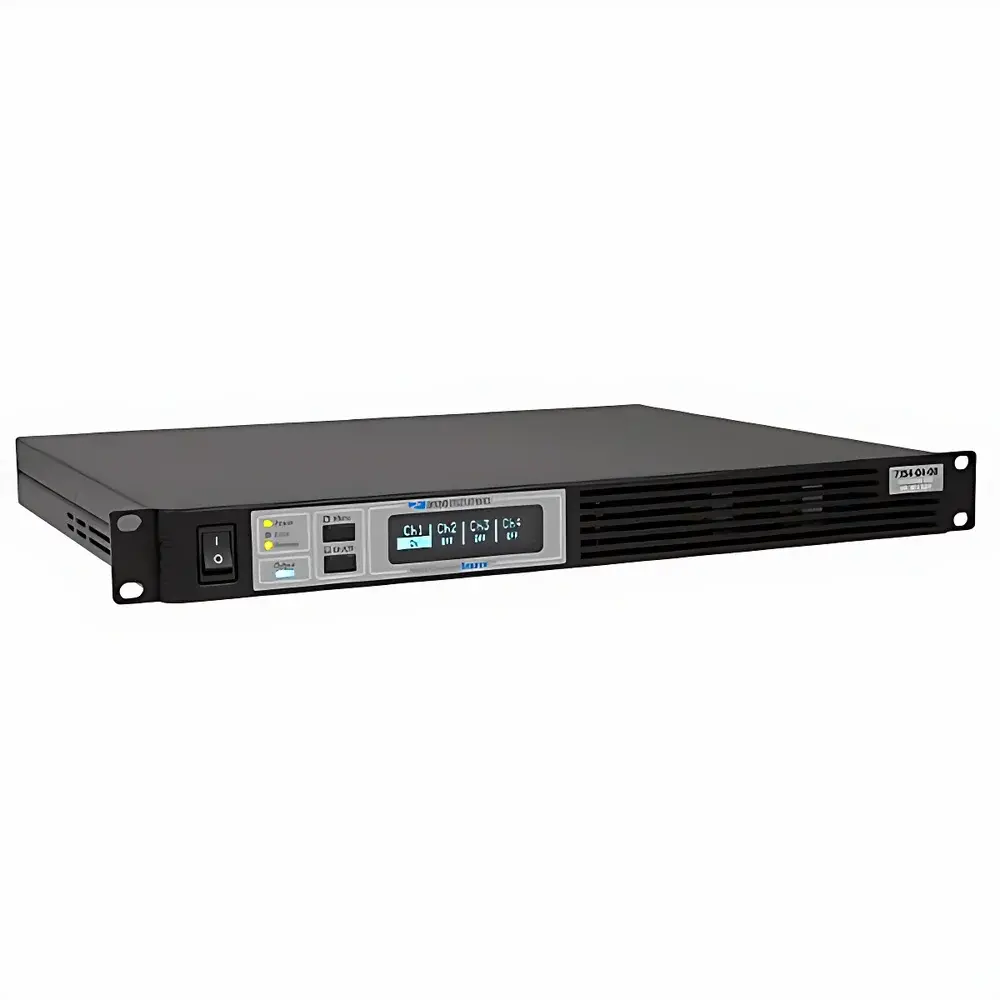
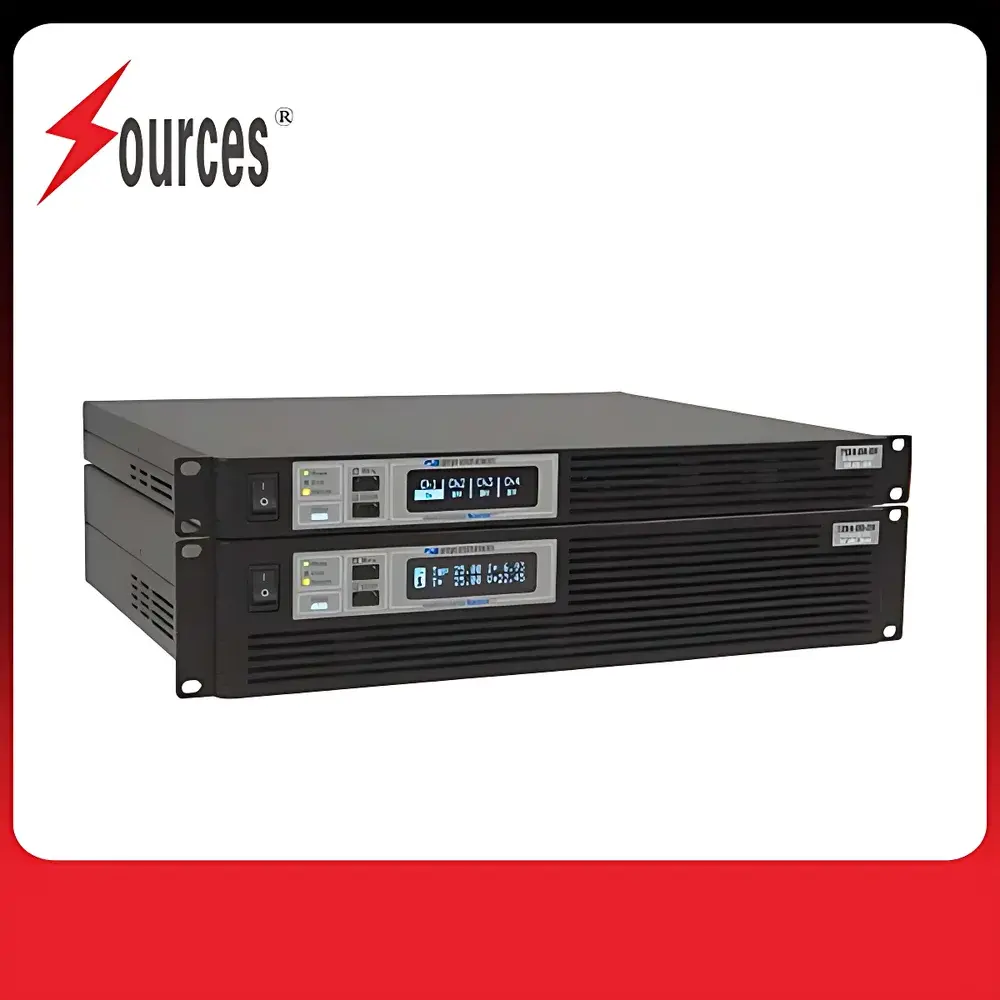
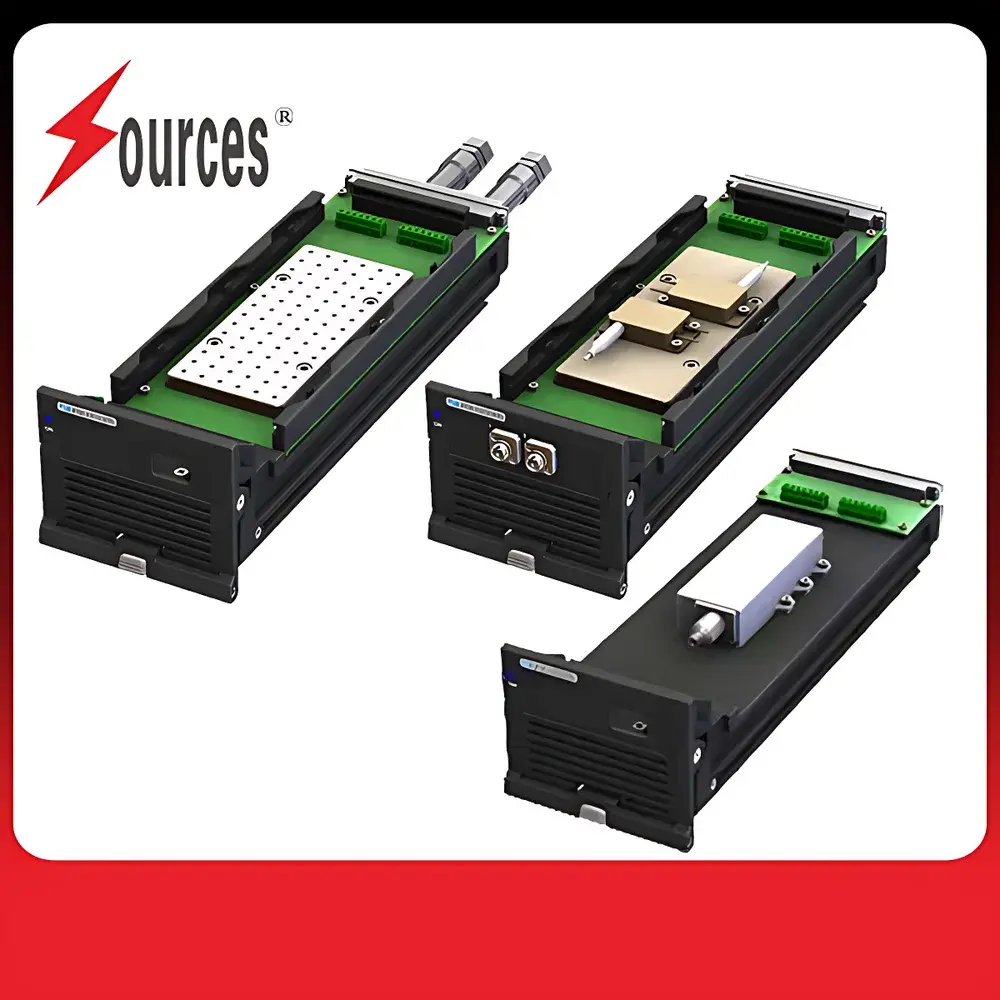
Arroyo Instruments 7000 Series MultiSource Laser Diode & TEC Controller
| Brand | Arroyo Instruments |
|---|---|
| Origin | USA |
| Model | 7000 Series |
| Form Factor | 1U or 2U Rack-Mountable / Benchtop |
| Laser Driver Channels | Up to 4 per unit |
| Max Laser Current | 4 A |
| Max Laser Voltage | 8 V |
| TEC Driver Channels | Up to 4 per unit |
| Max TEC Current | 18 A |
| Max TEC Voltage | 28 V |
| Max TEC Power | 420 W |
| Temperature Stability (24 h) | ±0.1 °C |
| Short-Term Stability (1 h) | <0.004 °C |
| Control Interface | Ethernet, USB |
| PID Auto-Tuning | Yes |
| Compatibility | ILX Lightwave & Newport TEC/LD command set |
| Input Power | Universal AC (90–264 VAC, 47–63 Hz) |
Overview
The Arroyo Instruments 7000 Series MultiSource is a dual-function, high-density benchtop and rack-mountable instrumentation platform engineered for precision control of laser diodes and thermoelectric coolers (TECs) in optical measurement and photonics characterization systems. Unlike standalone laser drivers or temperature controllers, the 7000 Series integrates both functions—laser current regulation and closed-loop TEC thermal management—within a single, compact chassis. It operates on the principle of constant-current laser diode driving with real-time optical power feedback compatibility (when paired with external photodiodes), and proportional-integral-derivative (PID) controlled TEC actuation using thermistor or RTD input signals. Designed for applications demanding long-term thermal stability and repeatable optical output—such as wavelength-stabilized diode lasers, fiber-coupled source aging tests, and interferometric sensor calibration—the system delivers sub-millikelvin short-term thermal resolution and industry-leading 24-hour drift performance (<±0.1 °C). Its modular architecture supports scalable multi-channel configurations without sacrificing channel independence or noise floor integrity.
Key Features
- Integrated dual-function design: simultaneous laser diode driver (LDD) and thermoelectric controller (TEC) in one 1U or 2U enclosure
- Four independent, galvanically isolated channels per unit—configurable as LDD-only, TEC-only, or mixed-mode
- Laser driver specifications: up to 4 A/8 V (model-dependent); low-noise current regulation (<50 µA RMS ripple); compliance voltage monitoring; soft-start and current limit protection
- TEC driver specifications: up to 18 A/28 V (7252-18-28 model); 420 W max output power; integrated fan control output for active heatsink management
- AutoTune PID algorithm—automatically identifies optimal P/I/D gains based on connected thermal load and sensor dynamics, eliminating manual tuning
- High-stability temperature control: <0.004 °C/h short-term drift; ±0.1 °C over 24 hours under constant ambient conditions
- Universal AC input (90–264 VAC, 47–63 Hz) with active power factor correction and internal EMI filtering
- Front-panel OLED display with intuitive menu navigation for local status monitoring, channel enable/disable, and setpoint adjustment
Sample Compatibility & Compliance
The 7000 Series is compatible with standard NTC thermistors (10 kΩ nominal at 25 °C), PT100/PT1000 RTDs, and industry-standard laser diodes requiring analog modulation or TTL-triggered operation. It supports common optical mounts—including Arroyo’s 207-series laser mounts—and interfaces seamlessly with third-party thermal fixtures via 0–5 V or 4–20 mA analog I/O. From a regulatory standpoint, the instrument complies with IEC 61010-1 (Safety Requirements for Electrical Equipment for Measurement, Control, and Laboratory Use), FCC Part 15 Class A (EMI emissions), and RoHS 2011/65/EU. Its firmware architecture supports audit-ready operation in GLP/GMP environments: all parameter changes, setpoint adjustments, and operational events are timestamped and logged internally. While not FDA 21 CFR Part 11–certified out-of-the-box, the Ethernet API enables integration with validated software platforms that provide electronic signature, role-based access control, and immutable audit trails.
Software & Data Management
Control is implemented via a vendor-provided SCPI-compliant Ethernet and USB interface, supporting TCP/IP socket communication and virtual COM port emulation. The instruction set is fully backward-compatible with legacy ILX Lightwave (e.g., LDC-37xx) and Newport (e.g., TED series) controllers—allowing drop-in replacement in existing LabVIEW, Python, MATLAB, or C++ automation frameworks. Arroyo provides open-source Python drivers and detailed API documentation, including examples for synchronized multi-channel ramping, logging at 10 Hz, and conditional triggering based on thermal or current thresholds. All configuration data—including channel assignments, PID coefficients, safety limits, and AutoTune history—is stored non-volatilely and can be exported/imported as JSON files for system replication or backup. Firmware updates are performed over Ethernet using signed binaries, ensuring integrity and version traceability.
Applications
- Laser diode aging and burn-in testing in manufacturing QA labs
- Wavelength stabilization of distributed feedback (DFB) and external cavity diode lasers (ECDLs)
- Thermal drift compensation in interferometric metrology setups (e.g., cavity ring-down spectroscopy, optical coherence tomography)
- Multi-source optical coherence multiplexing systems requiring synchronized thermal and current control
- R&D prototyping of tunable laser modules for telecom, quantum sensing, and biomedical instrumentation
- Calibration of photodetectors and optical power meters under thermally stabilized conditions
FAQ
Is the 7000 Series suitable for cryogenic TEC applications?
Yes—when paired with appropriate low-temperature thermistors and vacuum-compatible mounts, the 7000 Series supports TEC operation down to –40 °C ambient and can stabilize devices at sub-ambient temperatures with proper heat sinking.
Can I synchronize laser current ramps with TEC temperature sweeps?
Yes—using the Ethernet API, users can execute time-aligned sequences across multiple channels with microsecond-level inter-channel timing consistency.
Does the unit support analog modulation of laser current?
Yes—each laser driver channel accepts 0–5 V analog input for real-time current modulation at bandwidths up to 10 kHz (dependent on model and load).
How is safety ensured during unattended operation?
Each channel features hardware-enforced current/voltage limits, over-temperature shutdown, open-sensor detection, and configurable fault latching—all independently monitored by dedicated ASICs.
What is the maximum number of units controllable from a single PC?
Practically limited only by network topology: dozens of units can be managed concurrently over Gigabit Ethernet using UDP broadcast or individual IP addressing.




