
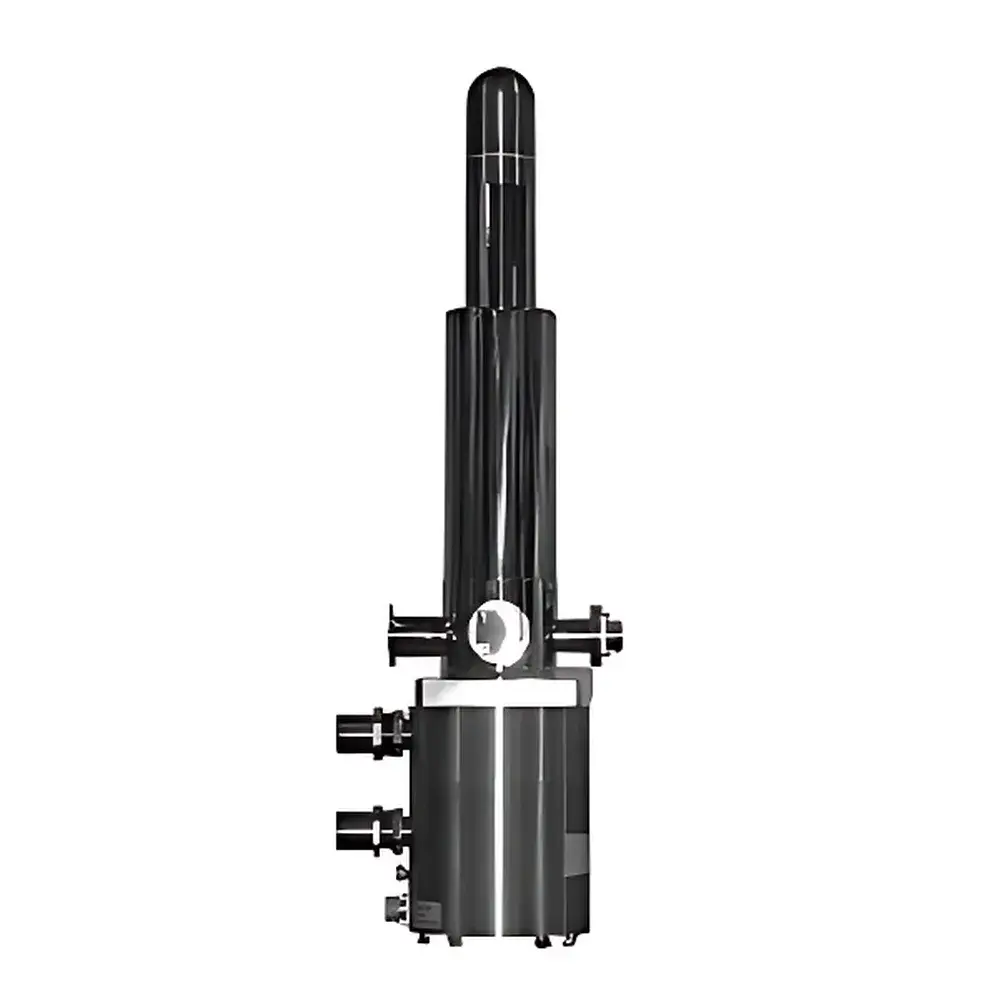
ARS X-2 XRD Cryogenic Closed-Cycle Thermostat
| Brand | ARS |
|---|---|
| Origin | USA |
| Manufacturer Type | Authorized Distributor |
| Origin Category | Imported |
| Model | X-2 XRD-1 |
| Instrument Type | Vertical |
| Cooling Method | Helium-Free Closed-Cycle Refrigeration |
| Compatible Goniometers | Huber 512.12, Huber 5020, Newport |
| Compatible Diffractometers | Bruker D8, D500, D5000, Agfa/Seifert XRD-3003, STOE |
| Window Options | Beryllium Dome (DMX-2D), Beryllium Window, Kapton Window |
| Cold Head | DE-202 |
| Mounting Interface | CS202*G-DMX-2D |
| Application Focus | X-ray Diffraction at Cryogenic Temperatures |
Overview
The ARS X-2 XRD Cryogenic Closed-Cycle Thermostat is a vertically oriented, helium-free low-temperature sample environment system engineered specifically for high-precision X-ray diffraction (XRD) experiments. Unlike traditional liquid nitrogen or liquid helium cryostats, the X-2 integrates a compact, high-stability DE-202 closed-cycle refrigeration cold head to achieve continuous, vibration-minimized operation from 10 K to 300 K without cryogen refills. Its mechanical design centers on thermal isolation and optical access optimization: the system employs a rigid stainless-steel vacuum chamber with integrated radiation shielding, precision-machined flanges, and a low-background thermal architecture to ensure minimal thermal drift during long-duration scans. The thermostat operates on the principle of conductive heat transfer from the sample stage—mounted directly on the cold finger—to the cold head, while maintaining ultra-high vacuum (UHV)-compatible base pressure (<1×10⁻⁷ mbar) when paired with appropriate pumping systems. This enables stable, reproducible lattice parameter measurements under cryogenic conditions essential for studying phase transitions, thermal expansion anisotropy, magnetic ordering, and quantum lattice dynamics.
Key Features
- Helium-free operation using the ARS DE-202 two-stage pulse-tube cold head—eliminates logistical constraints and operational hazards associated with cryogenic liquids.
- Vertical configuration optimized for integration with commercial diffractometer goniometers including Huber 512.12 and 5020 horizontal stages, as well as Newport high-precision rotation platforms.
- Modular optical interface options: DMX-2D beryllium dome (transmission >95% above 5 keV), thin beryllium windows (250 µm), or Kapton windows (for lower-energy applications), all vacuum-sealed and X-ray transparent.
- Custom instrumentation package including calibrated silicon diode temperature sensor (±0.1 K accuracy), resistive heater for active temperature control, and feedthroughs for electrical leads or fiber-optic probes.
- CS202*G-DMX-2D mounting standard ensures mechanical and thermal compatibility with Huber’s 512.12 cryostat bracket, enabling sub-arcminute angular alignment repeatability.
- Low-vibration mechanical design compliant with ISO 20486:2018 (vibration requirements for XRD instrumentation) and compatible with motorized sample transport carriers (e.g., DMX-2D automated positioning stage).
Sample Compatibility & Compliance
The X-2 XRD supports standard XRD sample geometries—including flat-plate, capillary, and single-crystal mounts—with a maximum sample diameter of 25 mm and thickness up to 3 mm. Sample holders are fabricated from oxygen-free high-conductivity (OFHC) copper or aluminum to maximize thermal coupling and minimize thermal lag. The system meets ASTM E975-22 requirements for thermal stability in diffraction-based residual stress measurement and complies with IEC 61000-6-2/6-4 for electromagnetic compatibility in laboratory environments. Vacuum integrity conforms to ISO 10110-7 for optical component cleanliness, and all metallic surfaces are electropolished to reduce outgassing. When operated within validated temperature ranges (15–300 K), the system supports GLP-compliant data acquisition protocols required for materials certification workflows.
Software & Data Management
Temperature setpoint, ramp rate, and hold duration are controlled via ARS’s proprietary CryoCon 34i-compatible interface or third-party LabVIEW/VISA drivers. Real-time temperature logging (1 Hz sampling) is synchronized with diffractometer motor positions and detector frame timestamps using TTL triggers—enabling strict temporal correlation for time-resolved XRD studies. All thermal metadata (sensor resistance, heater power, cold head status) is embedded in HDF5-formatted raw scan files per NeXus standard (NXcrys). Audit trails, user authentication, and electronic signatures align with FDA 21 CFR Part 11 requirements when deployed in regulated QC/QA laboratories supporting pharmaceutical or aerospace material qualification.
Applications
- In situ low-temperature structural characterization of battery cathode materials (e.g., NMC, LFP) during charge/discharge cycling analogs.
- Quantitative analysis of martensitic transformation kinetics in shape-memory alloys (NiTi, CuAlMn) via Rietveld refinement of temperature-dependent peak splitting.
- Single-crystal XRD of molecular magnets below 20 K to resolve spin-Peierls dimerization and magnetic superstructure formation.
- Thermal expansion tensor determination in anisotropic 2D materials (MoS₂, Bi₂Se₃) using high-resolution Bragg peak tracking.
- Validation of ab initio phonon dispersion models through precise Debye-Waller factor extraction across 10–100 K.
FAQ
What is the base temperature achievable with the X-2 XRD system?
The system reaches a base temperature of ≤10 K under no-load conditions; typical operating range for XRD is 15–300 K with ±50 mK stability over 24 hours.
Is the X-2 compatible with Bruker D8 Advance diffractometers?
Yes—the DMX-2C variant (with modified flange geometry and beam path clearance) is certified for integration with Bruker D8, D500, and D5000 platforms.
Can the thermostat be used under ultra-high vacuum (UHV) conditions?
Yes; the chamber is UHV-rated (<1×10⁻⁷ mbar) when baked at 120 °C and equipped with metal-sealed CF flanges.
Does ARS provide calibration certificates traceable to NIST standards?
Yes—each unit ships with a factory calibration report for the silicon diode sensor, traceable to NIST SRM 1750a.
What maintenance intervals are recommended for the DE-202 cold head?
ARS recommends compressor oil change every 24 months and full cold head inspection every 48 months under continuous operation; mean time between failures exceeds 25,000 hours.



