
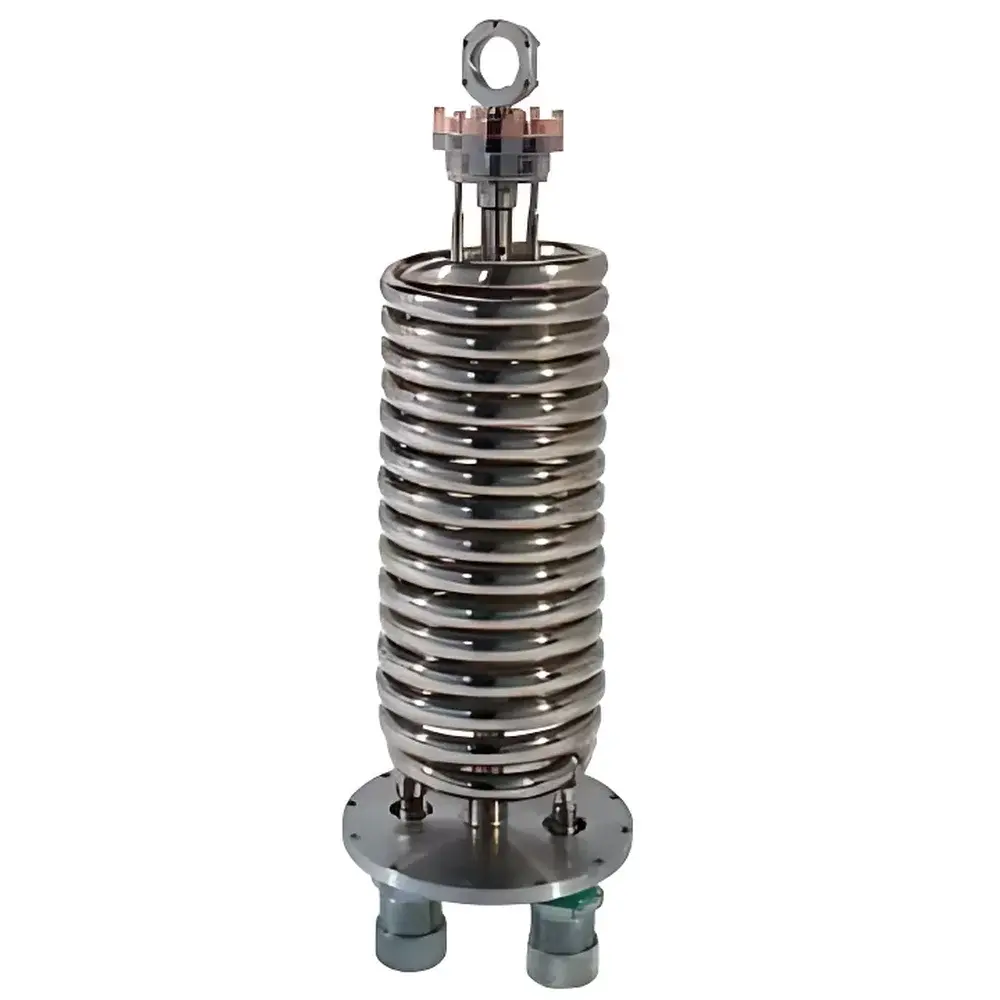
ARS Orca Mixed Gas JT Cryogenic Thermostat
| Brand | ARS |
|---|---|
| Origin | USA |
| Model | Orca Mixed Gas JT |
| Cooling Principle | Joule-Thomson (JT) Expansion Cycle |
| Base Temperature | 80 K |
| Refrigerant | Mixed Gas (N₂/Ar or similar blend) |
| Compressor Type | Air-Cooled |
| Vibration Level | < 1 µm RMS (typical) |
| Maintenance Requirement | None (no moving parts in cold head) |
| Standard Configuration | MR-80 Cold Head, Air-Cooled Compressor, Two Flexible High-Pressure Transfer Lines |
| Compliance | CE, RoHS, UL Listed (Compressor Unit) |
Overview
The ARS Orca Mixed Gas JT Cryogenic Thermostat is a closed-cycle, liquid-free cryogenic cooling system engineered for stable, continuous operation at 80 K (–193 °C) in vacuum or inert-gas environments. Unlike traditional cryocoolers relying on helium gas or liquid cryogens, the Orca employs a Joule-Thomson (JT) expansion cycle using a proprietary mixed-gas refrigerant—typically a non-ozone-depleting blend of nitrogen and argon. This thermodynamic process enables efficient heat extraction without phase change in the cold head, eliminating the need for liquid helium, liquid nitrogen, or mechanical displacers. The MR-80 cold head contains no moving parts, ensuring ultra-low vibration (< 1 µm RMS), high long-term stability, and immunity to wear-induced drift. Designed for integration into vacuum chambers, optical cryostats, and low-temperature probe stations, the Orca delivers repeatable thermal performance under demanding laboratory and industrial R&D conditions.
Key Features
- Zero-cryogen operation: Eliminates dependency on liquid helium or nitrogen supply chains, reducing operational cost and logistical complexity.
- Joule-Thomson cooling architecture: Thermodynamically optimized for 80 K base temperature with inherent thermal stability and minimal temperature hysteresis.
- Passive cold head (MR-80): Contains no seals, bearings, or sliding components—ensuring infinite service life and zero scheduled maintenance.
- Air-cooled compressor unit: Compact, UL-listed, and designed for standard laboratory power (115 V / 60 Hz or 230 V / 50 Hz); includes integrated oil separation and pressure regulation.
- Flexible high-pressure transfer lines: Stainless steel-reinforced PTFE tubing (2 × 3 m standard) enables easy routing around vacuum feedthroughs and vibration-isolated mounts.
- Low-vibration thermal interface: Ideal for sensitive applications including scanning probe microscopy (SPM), quantum transport measurements, and infrared detector characterization.
Sample Compatibility & Compliance
The Orca Mixed Gas JT supports sample mounting via standard CF-63 or ISO-KF flanges (custom adapters available). Its 80 K operating point is compatible with high-Tc superconductors, bolometric sensors, thermoelectric materials, and many semiconductor heterostructures. The system meets CE marking requirements for electromagnetic compatibility (EMC Directive 2014/30/EU) and low-voltage safety (LVD Directive 2014/35/EU). The air-cooled compressor complies with UL 61010-1 and RoHS 2011/65/EU. While not intrinsically rated for explosive atmospheres, the system may be operated in Class 1000 cleanrooms and conforms to ASTM E2714-19 guidelines for cryogenic system documentation and traceability.
Software & Data Management
The Orca operates as a standalone thermostat; no proprietary software is required for basic function. Optional digital I/O (0–10 V analog output, RS-485 Modbus RTU) enables integration with LabVIEW, Python-based control frameworks, or SCADA systems for remote monitoring of inlet pressure, outlet temperature, and compressor status. All analog signals are calibrated per NIST-traceable procedures. Audit trails for operational logs (e.g., run hours, pressure excursions) can be generated when interfaced with GLP-compliant data acquisition platforms supporting 21 CFR Part 11 electronic signatures—though the Orca itself does not implement user authentication or electronic record retention.
Applications
- Low-temperature electrical transport studies (resistivity, Hall effect, magnetoresistance) in condensed matter physics labs.
- Cooling of mid-wave and long-wave infrared (MWIR/LWIR) focal plane arrays (FPAs) in defense and aerospace sensor development.
- Thermal stabilization of Fabry–Pérot interferometers and cavity-enhanced spectroscopy cells.
- Material property screening (thermal conductivity, specific heat) under controlled 80 K conditions per ISO 21028-2.
- Pre-cooling stage for hybrid systems combining JT cooling with adiabatic demagnetization refrigeration (ADR) or dilution refrigeration.
FAQ
Does the Orca Mixed Gas JT require liquid nitrogen or liquid helium?
No. It operates exclusively on compressed mixed gas and requires no cryogenic liquids at any stage.
What is the expected lifetime of the MR-80 cold head?
Indefinite—there are no consumable or wear-prone components within the cold head assembly.
Can the Orca be used in ultra-high vacuum (UHV) environments?
Yes, provided appropriate vacuum-compatible transfer line feedthroughs and outgassing-controlled mounting hardware are employed.
Is the system compatible with automated temperature ramping?
Yes, via external PID controllers interfaced through analog voltage input; ARS provides detailed pinout schematics and signal conditioning guidance.
How is refrigerant replenishment handled?
The sealed mixed-gas circuit is factory-charged and requires no periodic refilling under normal operation; loss indicates a leak requiring professional service.



