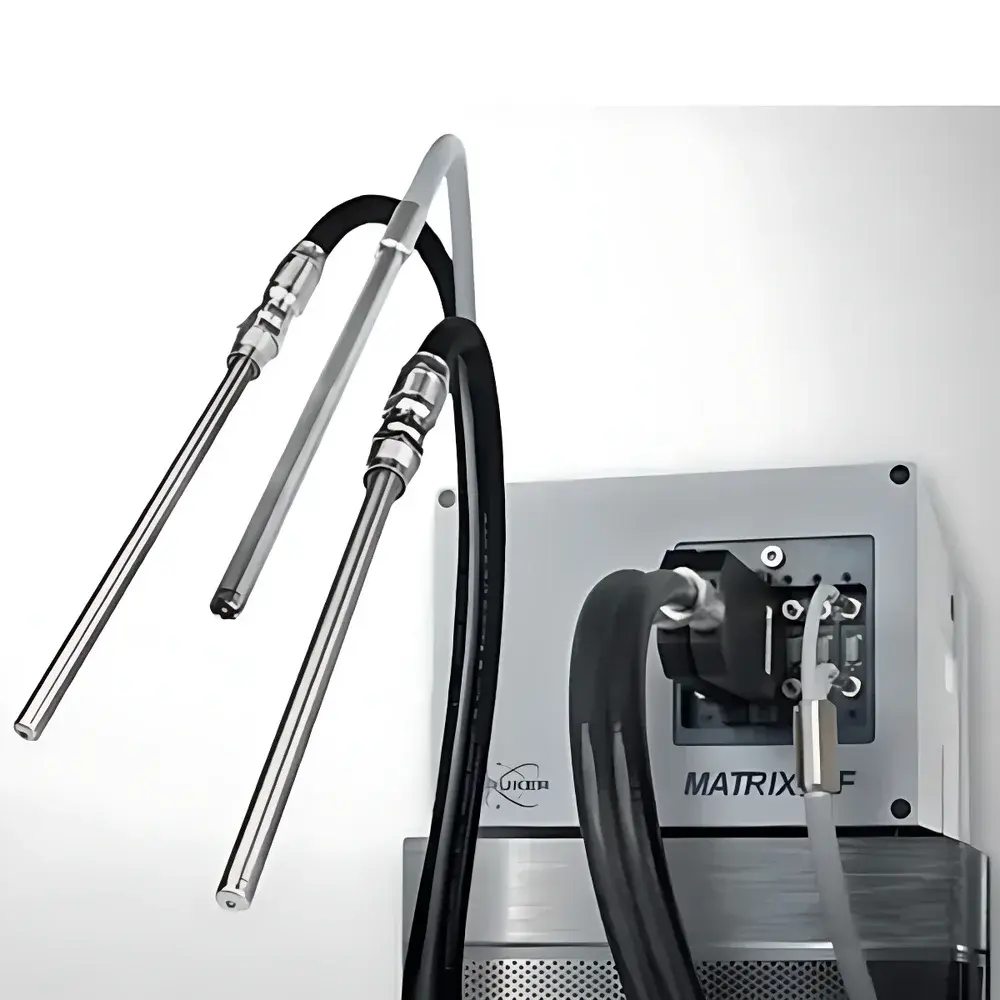
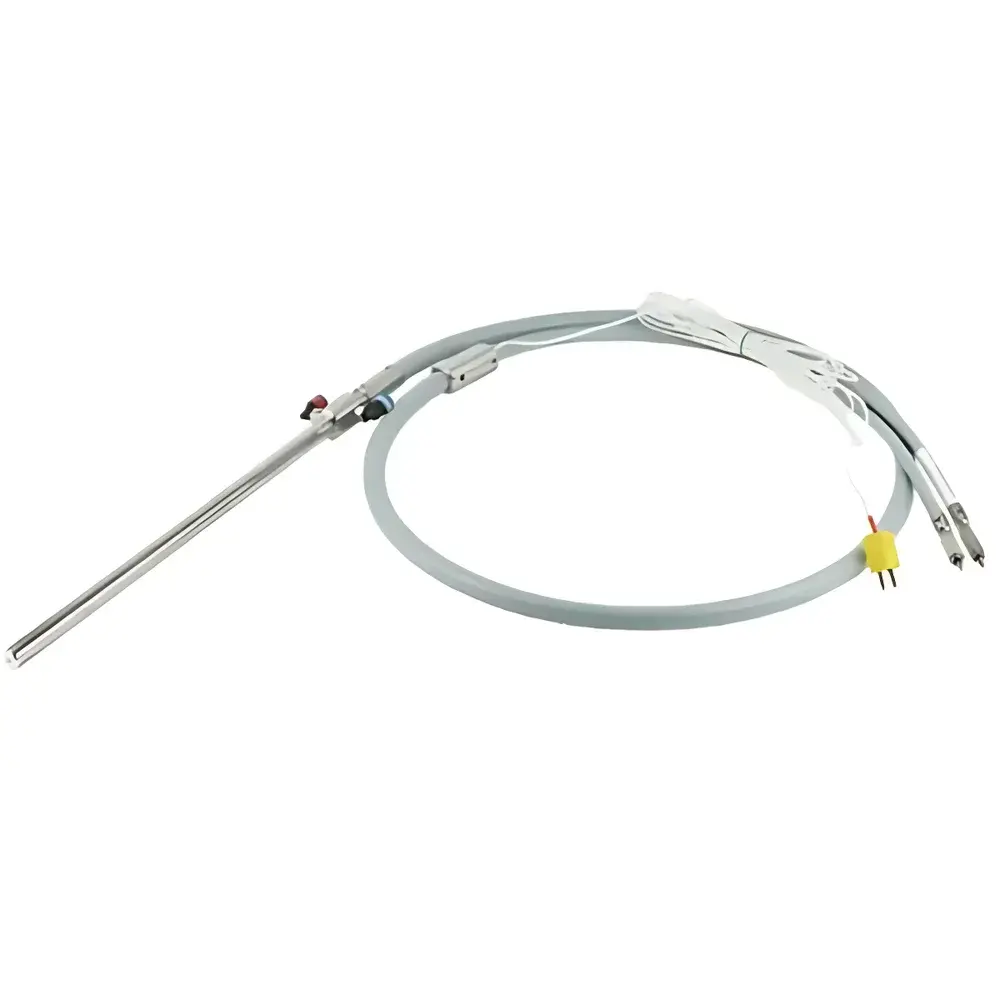
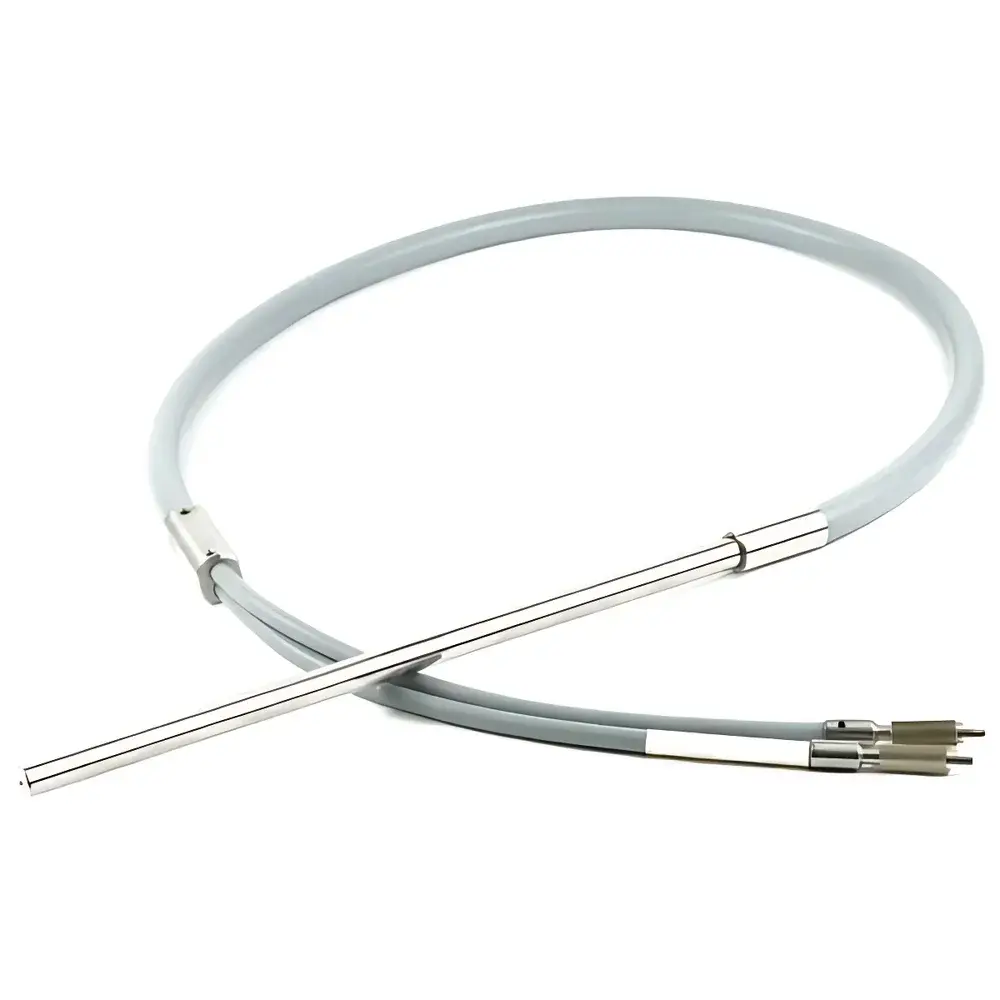
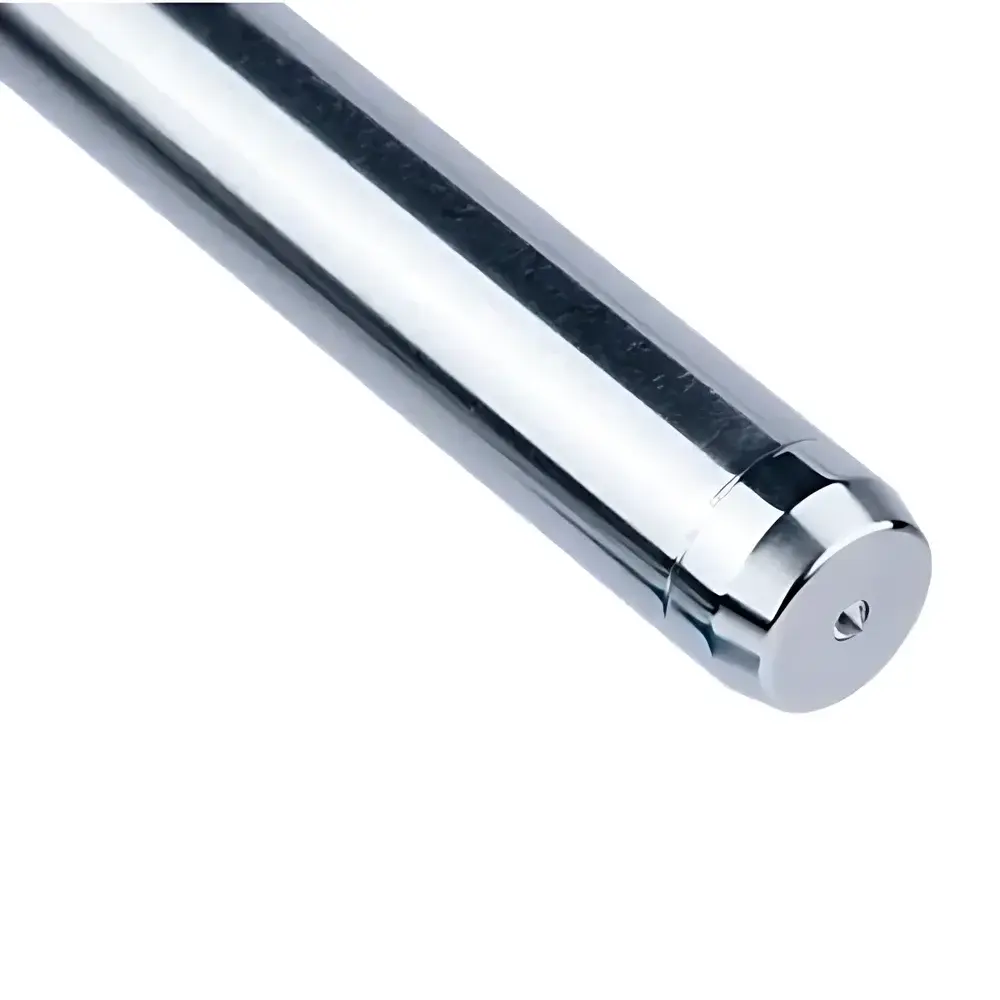
ART Photonics ATR-P-D-6-30-150/50 Diamond-Tipped Attenuated Total Reflection Mid-IR Fiber Probe
| Brand | ART Photonics |
|---|---|
| Origin | Germany |
| Model | ATR-P-D-6-30-150/50 |
| Tip Material | Diamond (D) |
| Prism Diameter | 6 mm |
| Path Length | 30 µm |
| Fiber Core Diameter | 150 µm |
| Cladding Diameter | 50 µm |
| Probe Shaft Length | 300 ± 5 mm |
| Total Length | 1.5 ± 0.05 m |
| Fiber Length | 1.2 m |
| Connector Type | SMA905 |
| Sheath Material | Stainless Steel with Polymer Coating |
| Shaft Material | Hastelloy C22 |
Overview
The ART Photonics ATR-P-D-6-30-150/50 is a high-performance, diamond-tipped attenuated total reflection (ATR) fiber-optic probe engineered for robust mid-infrared (Mid-IR) spectroscopic analysis in demanding industrial and laboratory environments. Unlike conventional transmission or reflectance probes, this ATR probe operates on the principle of evanescent wave coupling: infrared light propagates through a diamond internal reflection element (IRE), generating an evanescent field that penetrates ~0.5–3 µm into the sample surface—enabling direct, non-destructive, and solvent-insensitive molecular fingerprinting of solids, pastes, viscous liquids, and thin films. Its design integrates a monolithic diamond prism (6 mm diameter, 30 µm effective optical path length) fused to a low-OH, step-index chalcogenide (or PIR-type) fiber with 150/50 µm core/cladding geometry, optimized for broadband transmission from 2–12 µm (5000–830 cm⁻¹). The probe’s rigid yet flexible architecture—featuring a Hastelloy C22 shaft and stainless-steel polymer-coated sheath—ensures mechanical stability under thermal cycling, vibration, and chemical exposure typical in continuous process monitoring.
Key Features
- Diamond IRE (6 mm diameter) providing exceptional chemical inertness, thermal conductivity (>2000 W/m·K), and abrasion resistance—critical for long-term deployment in aggressive chemical environments.
- Precision-engineered 30 µm effective penetration depth, balancing sensitivity and surface selectivity for quantitative ATR-FTIR measurements of layered or heterogeneous samples.
- 150 µm core / 50 µm cladding infrared-transmitting fiber with low attenuation (<1.5 dB/m @ 4.5 µm), enabling high signal-to-noise ratio even with compact spectrometers.
- Modular SMA905 connectors compatible with standard FT-IR spectrometers (e.g., Thermo Nicolet iS50, Bruker Tensor series), QCL-based sensors, and tunable IR LED platforms.
- Hastelloy C22 shaft (300 ± 5 mm) offering superior corrosion resistance against chlorides, acids, and caustics—validated per ASTM G48 and NACE MR0175.
- Full-length assembly (1.5 ± 0.05 m) includes 1.2 m of protected fiber and dual 0.5 m pigtails for seamless integration into automated sampling manifolds or reactor ports.
Sample Compatibility & Compliance
The ATR-P-D-6-30-150/50 supports direct contact measurement of non-volatile, semi-solid, and high-viscosity materials without sample preparation—ideal for in-line monitoring of polymer melts, API slurries, catalyst beds, and semiconductor precursor films. It complies with ISO 17025 traceability requirements when used with calibrated reference standards (e.g., polystyrene film, NIST SRM 1921b). For regulated environments, the probe’s construction meets FDA-recommended material biocompatibility guidelines (USP <87> and <88>) and supports 21 CFR Part 11-compliant data acquisition when paired with validated spectroscopic software. Its sealed, non-porous diamond tip eliminates cross-contamination risk and enables cleaning via ethanol, acetone, or mild alkaline solutions—fully aligned with GMP cleaning validation protocols.
Software & Data Management
While the probe itself is hardware-only, it functions transparently within industry-standard spectroscopy platforms including OPUS (Bruker), OMNIC (Thermo Fisher), and GRAMS/AI (Thermo Scientific). When integrated into process analytical technology (PAT) frameworks, the probe delivers raw interferograms or absorbance spectra directly to SCADA/HMI systems via Ethernet-enabled spectrometer interfaces. Spectral preprocessing (e.g., MIR normalization, baseline correction, derivative transformation) and multivariate calibration (PLS, PCA) are performed externally; no embedded firmware or proprietary drivers are required. Audit trails, user access logs, and spectral metadata (timestamp, temperature, pressure if sensor-equipped) are retained per GLP/GMP documentation standards.
Applications
- Real-time monitoring of wafer cleaning chemistry composition (e.g., SC-1, DHF, piranha) in semiconductor wet benches via characteristic Si–O, F–H, and S=O vibrational bands.
- In-line quantification of residual monomer conversion during polyimide or photoresist polymerization in spin-coating and curing processes.
- Batch consistency verification of pharmaceutical excipients (lactose, microcrystalline cellulose) during fluid-bed granulation using spectral fingerprint matching.
- Quality control of polymer melt viscosity indices via carbonyl band intensity ratios in extrusion lines (ASTM D1238 correlation).
- Reaction endpoint detection in catalytic hydrogenation of nitroaromatics by tracking N=O peak decay kinetics at 1530 cm⁻¹.
FAQ
What spectral range is supported by the ATR-P-D-6-30-150/50 probe?
The probe transmits efficiently from 2.0 to 12.0 µm (5000–830 cm⁻¹), covering fundamental vibrational modes of C–H, O–H, N–H, C=O, C–O, and Si–O bonds.
Can this probe be used with benchtop FT-IR instruments equipped with standard ATR accessories?
Yes—it replaces conventional ATR crystals and connects directly via SMA905 to any spectrometer with fiber-coupled input; no optical realignment is needed.
Is the diamond tip replaceable or serviceable in the field?
No—the diamond IRE is permanently fusion-bonded to the fiber; replacement requires factory recalibration and requalification per ISO/IEC 17025.
What is the maximum operating temperature and pressure rating?
Continuous operation up to 180 °C and 10 bar; short-term excursions to 220 °C are permissible with derated mechanical load.
Does the probe require purging or environmental shielding in humid conditions?
No—its hermetically sealed diamond interface and Hastelloy shaft eliminate water vapor interference; no nitrogen purge is necessary for routine use.