
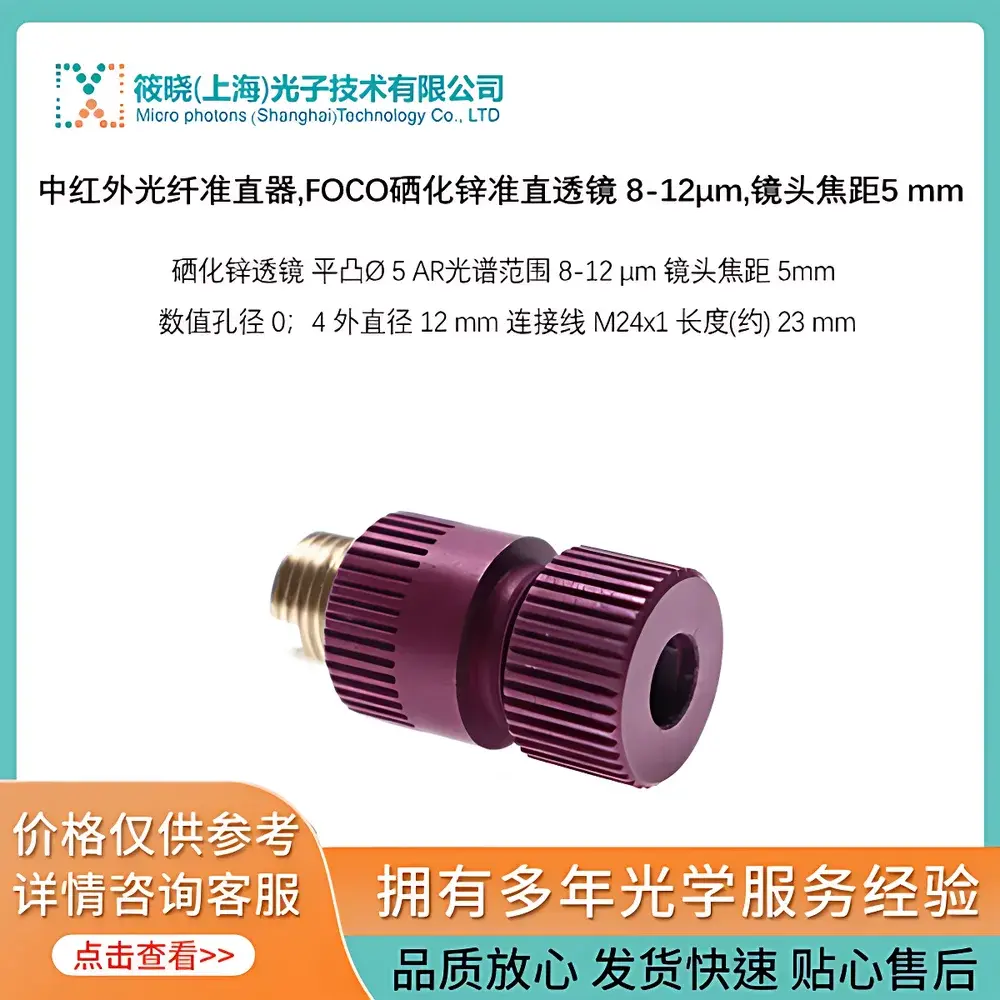
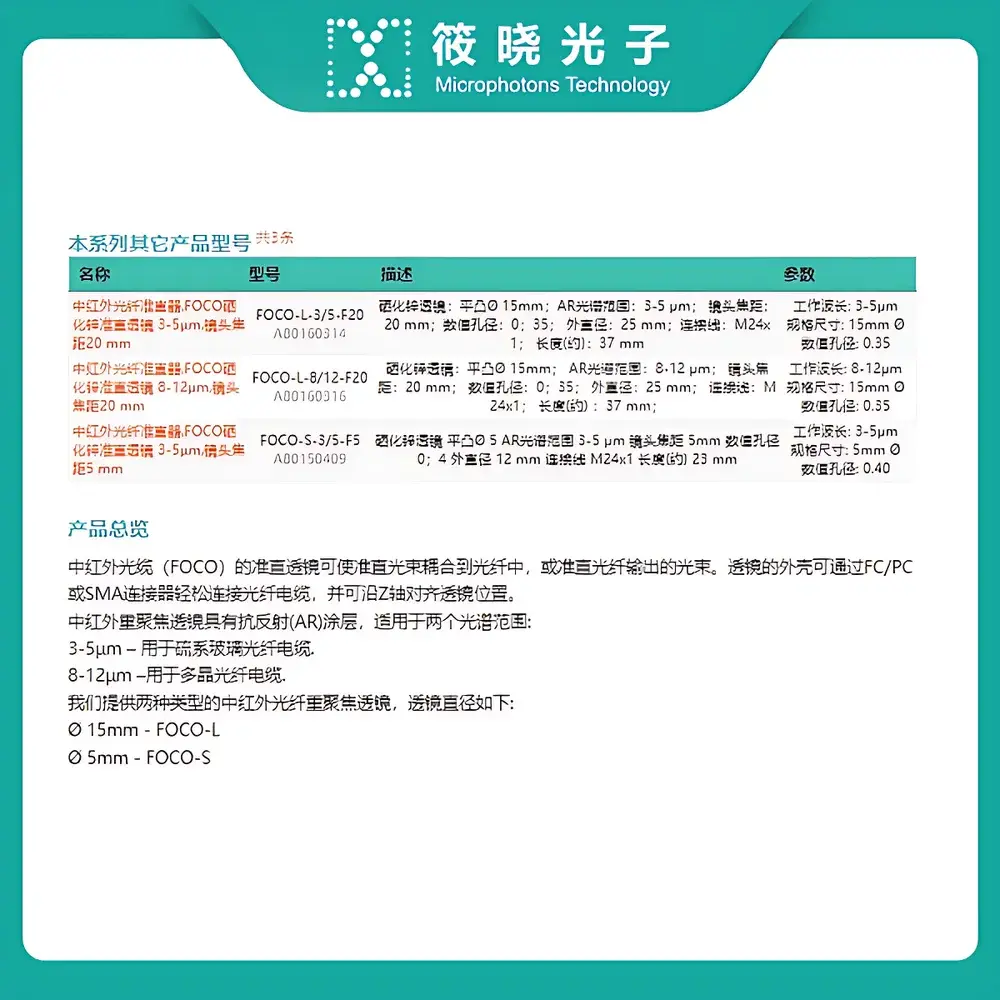
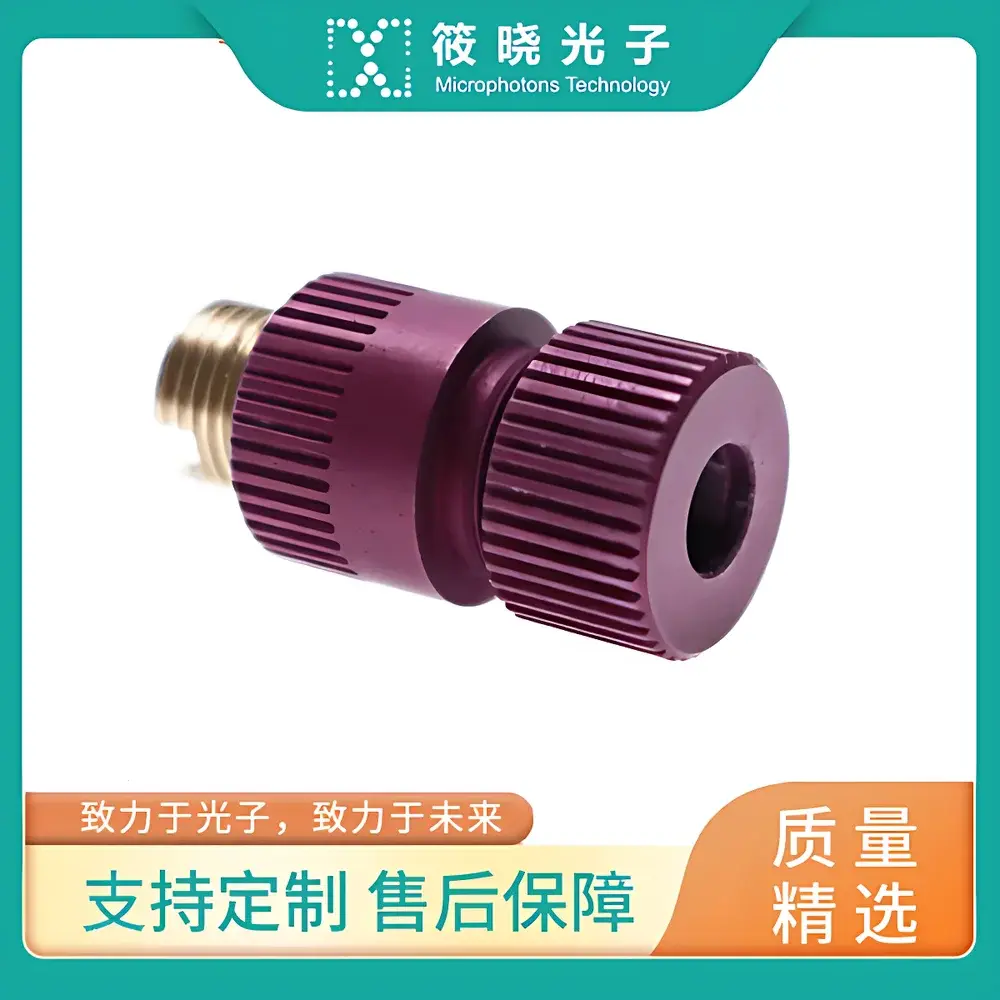
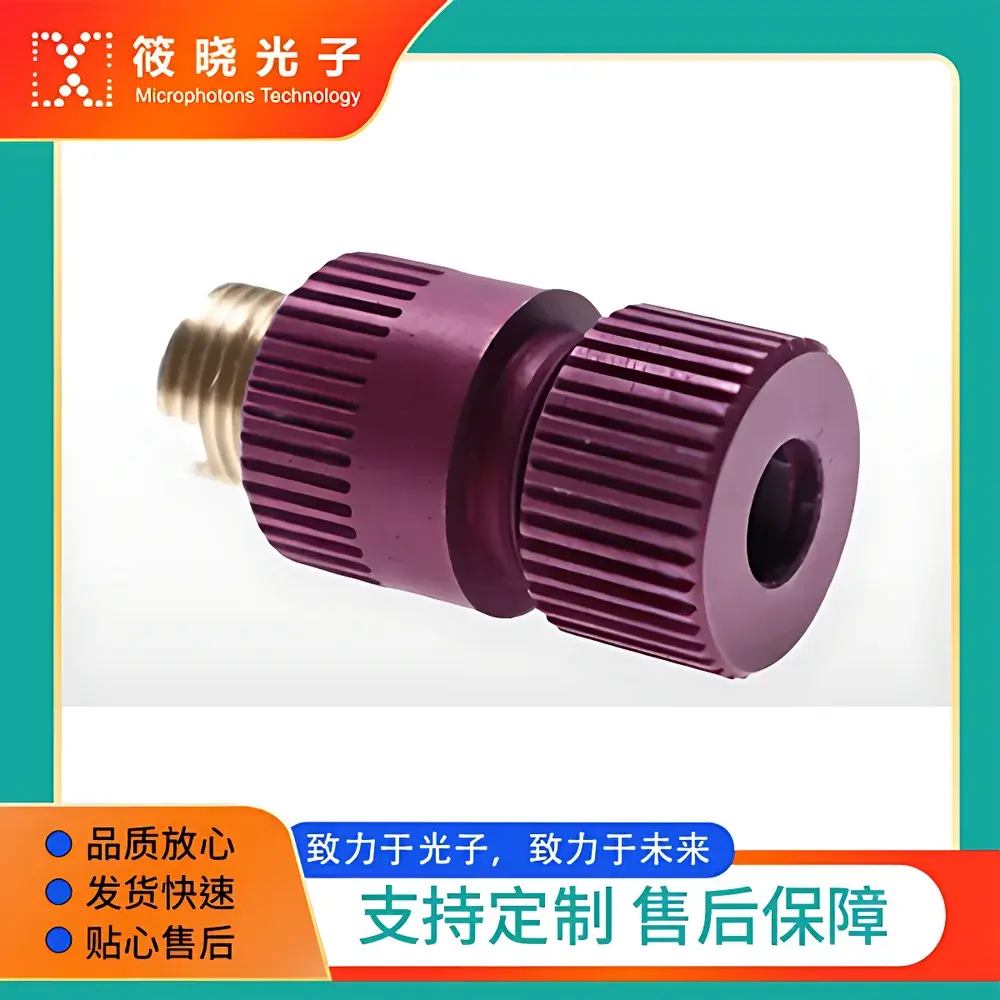
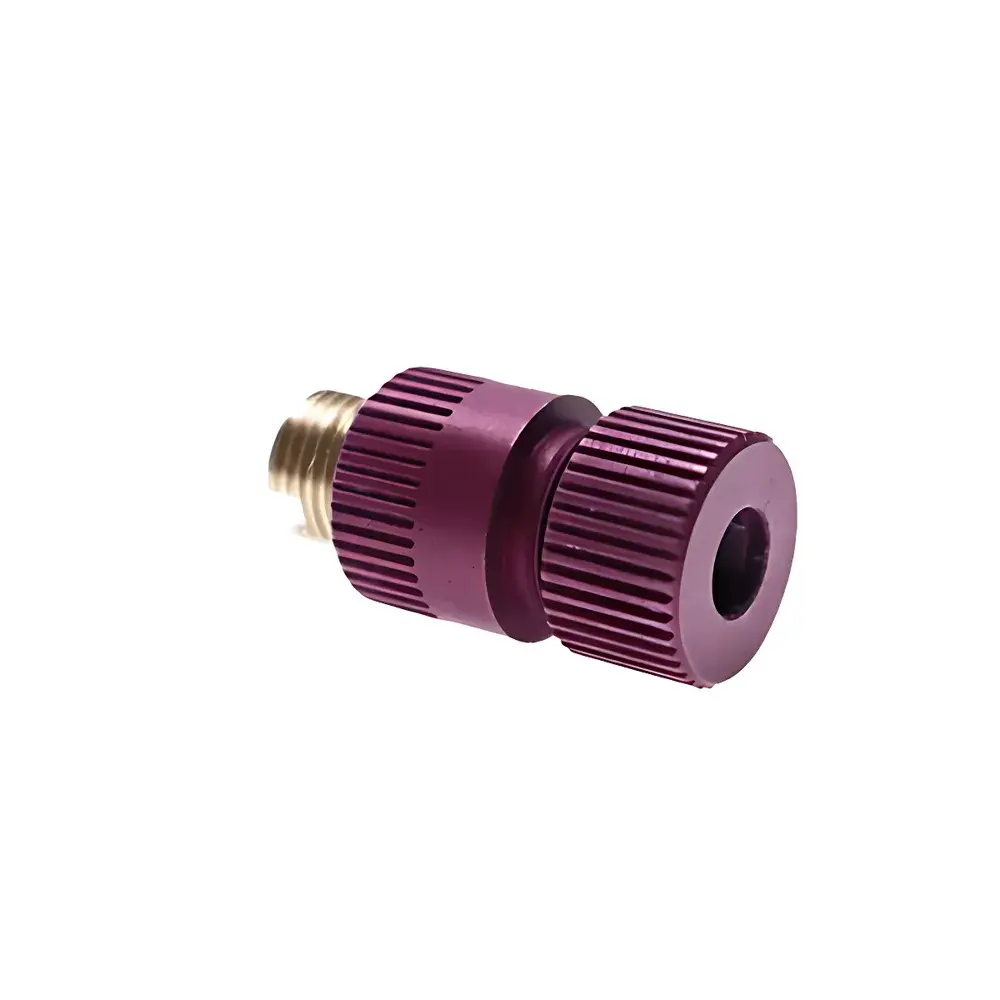
art photonics FOCO-S-8/12-F5 Mid-Infrared Fiber Collimator with ZnSe Lens, 8–12 µm Spectral Range, 5 mm Focal Length
| Brand | art photonics |
|---|---|
| Origin | Germany |
| Model | FOCO-S-8/12-F5 |
| Spectral Range | 8–12 µm |
| Focal Length | 5 mm |
| Lens Material | Zinc Selenide (ZnSe) |
| Component Type | Optical Collimating Assembly |
| Compliance | RoHS-compliant, CE-marked for optical instrumentation |
Overview
The art photonics FOCO-S-8/12-F5 is a precision-engineered mid-infrared (MIR) fiber collimator designed for stable beam shaping and alignment in demanding spectroscopic, sensing, and thermal imaging applications. Built around a high-transmission zinc selenide (ZnSe) aspheric lens, this collimator operates across the full atmospheric transmission window of 8–12 µm—enabling compatibility with quantum cascade lasers (QCLs), CO₂ laser sources, and Fourier-transform infrared (FTIR) systems. Its fixed 5 mm focal length delivers tight collimation of output beams from multimode or single-mode MIR fibers (e.g., chalcogenide or silver halide fibers), minimizing divergence while maintaining high wavefront fidelity. The collimator’s monolithic mechanical housing—machined from low-thermal-expansion stainless steel—ensures long-term alignment stability under thermal cycling and mechanical vibration, making it suitable for integration into portable gas analyzers, industrial process monitors, and laboratory-grade MIR spectrometers.
Key Features
- Optimized ZnSe lens with anti-reflection coating (AR @ 8–12 µm) achieving >95% transmission per surface
- Precision kinematic mounting ensures sub-microradian angular repeatability during lens insertion and fiber coupling
- Integrated fiber ferrule interface compatible with standard 2.5 mm or 3.2 mm MIR fiber connectors (custom adapters available)
- Hermetically sealed housing with vacuum-compatible design options (optional O-ring sealing per ISO 2859-1)
- No internal adhesives—lens retention achieved via mechanical interference fit to eliminate outgassing and thermal drift
- Complies with ISO 10110-7 for surface quality (scratch-dig 20–10) and ISO 10110-3 for wavefront error (λ/4 @ 10.6 µm)
Sample Compatibility & Compliance
The FOCO-S-8/12-F5 supports both step-index and graded-index chalcogenide (e.g., As₂S₃, Ge-As-Se) and silver halide (AgClBr) fibers with core diameters ranging from 100 µm to 1000 µm. It is fully compatible with common MIR fiber termination standards including FC/PC, SMA 905, and custom ceramic ferrules. From a regulatory standpoint, the device meets IEC 61000-6-3 (EMC emission limits) and IEC 61000-6-2 (immunity to electrostatic discharge up to ±8 kV contact discharge), ensuring reliable operation in shared lab environments. Its materials and assembly processes adhere to RoHS Directive 2011/65/EU and REACH Annex XVII restrictions on hazardous substances. For GxP-aligned installations, traceable calibration certificates (including focal spot profile and collimation angle verification) are available upon request per ISO/IEC 17025-accredited procedures.
Software & Data Management
While the FOCO-S-8/12-F5 is a passive optical component requiring no firmware or driver software, its performance integration is fully supported within industry-standard optical modeling platforms. Beam propagation simulations (e.g., using Zemax OpticStudio or FRED) can be executed using provided STEP and ZMX files—including precise surface geometry, refractive index dispersion data for ZnSe (Sellmeier coefficients valid over 8–12 µm), and thermal expansion coefficients. For system-level validation, art photonics supplies metrology reports documenting measured beam divergence (<1.5 mrad full angle), wavefront error (≤0.25 λ RMS @ 10.6 µm), and spectral transmission uniformity (±1.2% across 8–12 µm). These datasets are structured in CSV and HDF5 formats for direct ingestion into LabVIEW, Python (SciPy/NumPy), or MATLAB-based QA/QC workflows.
Applications
- Gas-phase FTIR spectroscopy for real-time detection of CH₄, CO, NOₓ, and volatile organic compounds (VOCs)
- Non-contact temperature monitoring in semiconductor wafer processing (MIR pyrometry at 8–10 µm)
- Free-space coupling between QCLs and multipass absorption cells in environmental monitoring stations
- Beam delivery in medical MIR endoscopy systems operating near the water absorption peak at 9.6 µm
- Reference collimator in NIST-traceable calibration setups for MIR detector responsivity mapping
FAQ
Is the ZnSe lens coated for broadband MIR performance?
Yes—the lens features a dual-layer dielectric anti-reflection coating optimized for ≥95% average transmission across 8–12 µm, with measured reflectance <1.5% at normal incidence.
Can this collimator be used with pulsed QCL sources?
Yes—it is rated for peak power densities up to 50 MW/cm² at 10.6 µm (10 ns pulses, 1 kHz rep rate) without measurable thermal lensing or coating damage.
What is the maximum allowable misalignment tolerance during fiber insertion?
The integrated kinematic seat maintains collimation stability within ±0.15° angular deviation for radial fiber offset ≤±10 µm and axial insertion depth variation ≤±5 µm.
Do you provide test reports with each unit?
Each collimator ships with a factory test report listing measured collimation angle, transmitted wavefront error, and spectral transmission curve—traceable to PTB (Physikalisch-Technische Bundesanstalt) reference standards.
Is vacuum operation supported?
Standard units operate up to 10⁻³ mbar; vacuum-rated versions with metal-sealed housings and outgassing-tested materials are available under model suffix “-VAC”.



