
ART Photonics PIR Polycrystalline Infrared Fiber
| Brand | ART Photonics |
|---|---|
| Origin | Germany |
| Manufacturer Type | Authorized Distributor |
| Origin Category | Imported |
| Model | PIR Fiber |
| Spectral Range | 3–17 µm |
Overview
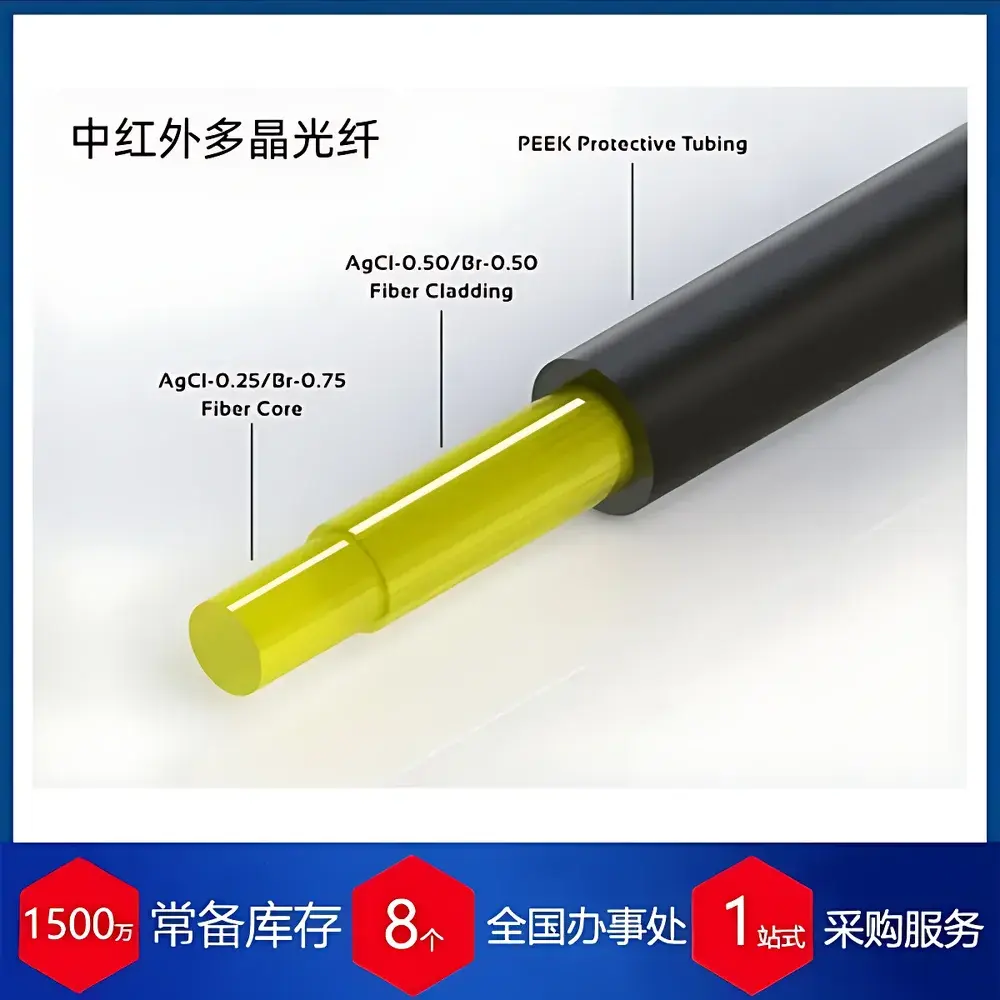
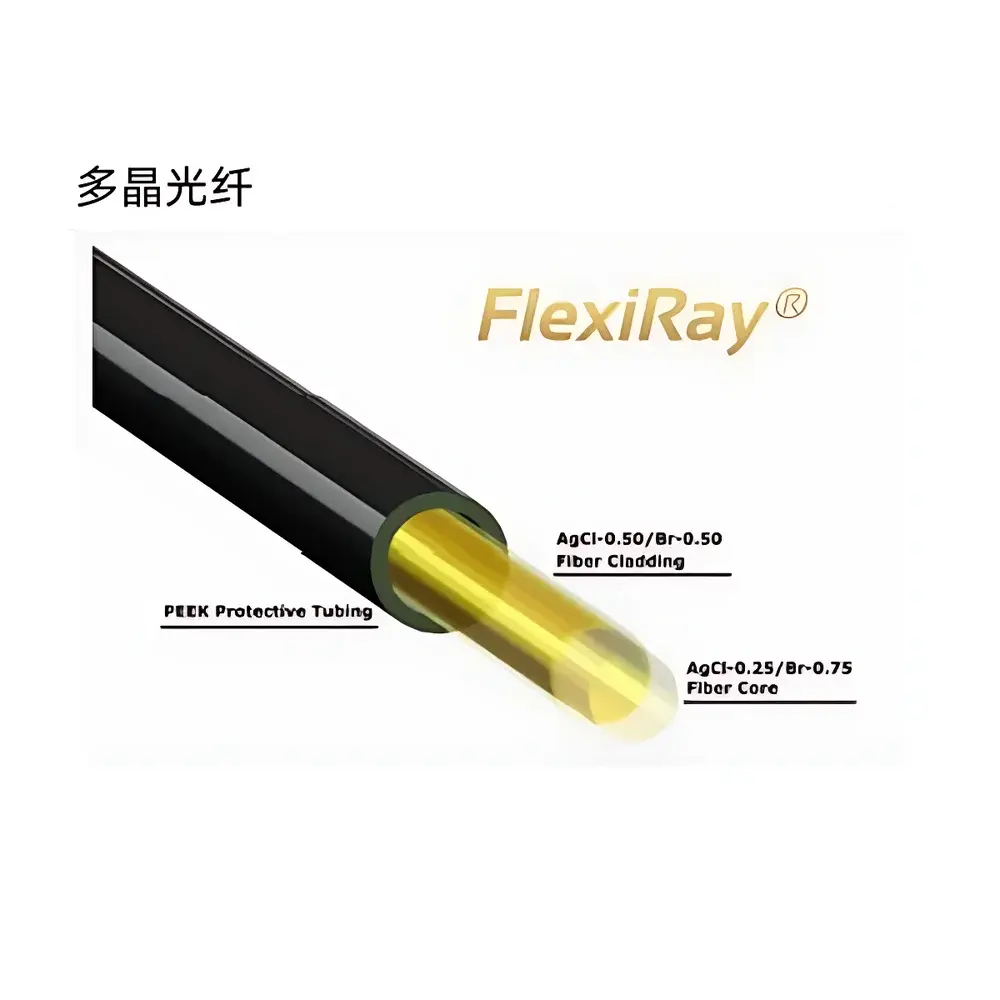
The ART Photonics PIR (Polycrystalline Infrared) Fiber is a high-performance, single-material, core/cladding optical fiber engineered for efficient light transmission in the mid- to far-infrared spectrum. Based on a polycrystalline AgClxBr1−x composition, it operates via intrinsic lattice vibration transparency—rather than electronic bandgap transmission—enabling broadband spectral coverage from 3 to 17 µm. This makes it uniquely suited for applications requiring flexible, low-loss delivery of thermal radiation, molecular fingerprinting signals (e.g., C=O, N–H, C–F stretching modes), and high-power laser energy where conventional silica or fluoride fibers fail. Unlike chalcogenide or hollow-core fibers, the PIR fiber offers isotropic mechanical behavior, excellent thermal stability, and immunity to moisture-induced degradation—critical for long-term deployment in industrial process monitoring, laboratory FTIR spectroscopy, and medical IR diagnostics.
Key Features
- Ultra-broad spectral transmission window: 3–17 µm, with minimal absorption features across the entire range
- Low attenuation: 0.2–0.3 dB/m at 9–13 µm (optimal region for CO₂ and quantum cascade laser emission)
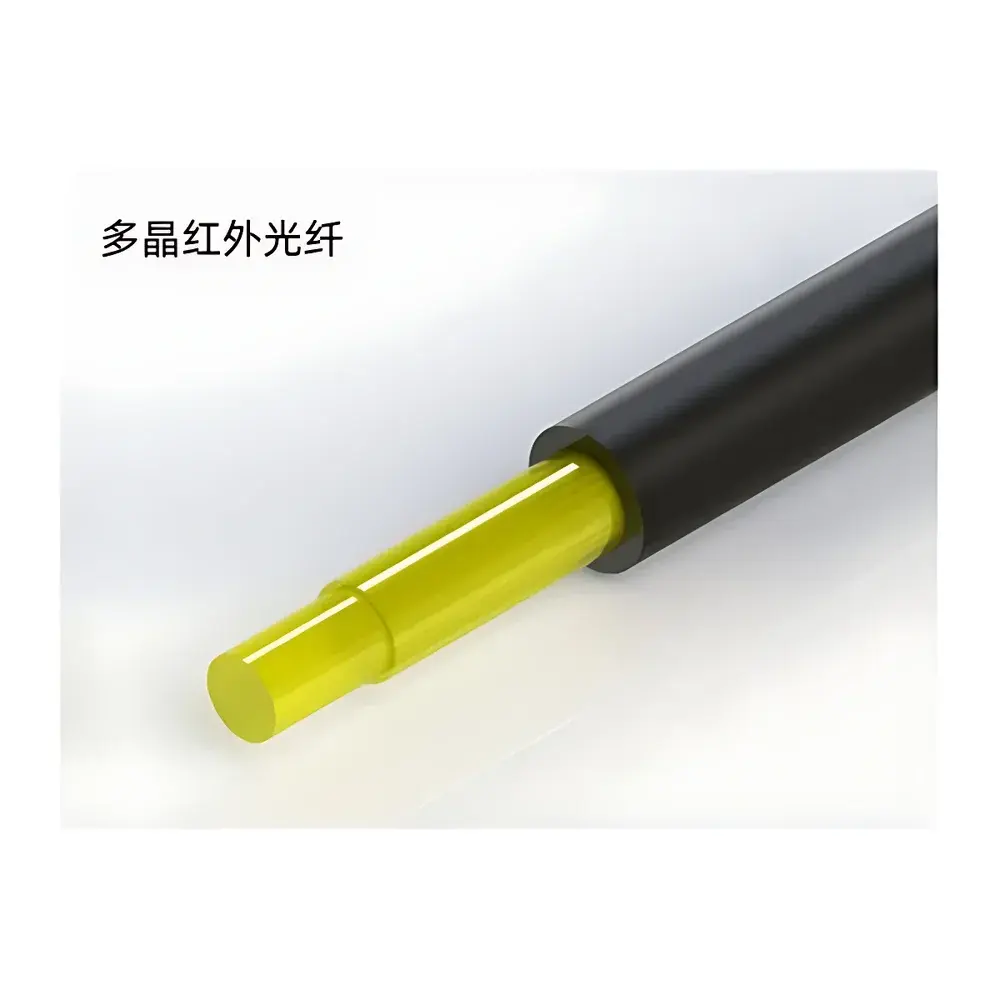
- Core/cladding architecture with precisely controlled stoichiometry—ensuring reproducible NA and mode field distribution
- High laser damage threshold: >12 kW/cm² under continuous-wave CO₂ laser irradiation at 10.6 µm
- Thermal resilience: operational from cryogenic temperatures (–273 °C) up to +140 °C; melting point at 410 °C
- Non-hygroscopic and non-toxic—no special handling or desiccation required during storage or installation
- Mechanical robustness: tensile strength >70 MPa; minimum fixed bend radius = 5× fiber diameter; minimum elastic bend radius = 150× fiber diameter
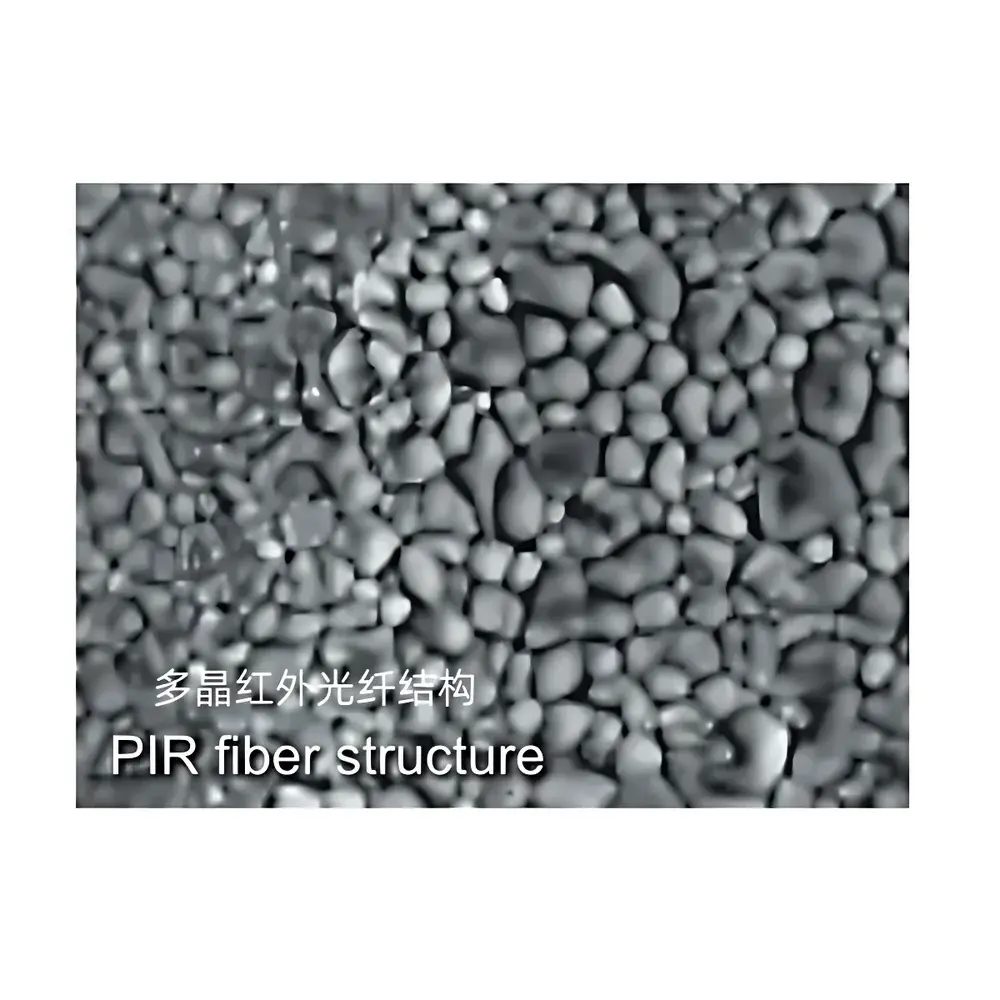
- Optimized extrusion manufacturing yields uniform grain structure, minimizing scattering losses and microcrack formation
Sample Compatibility & Compliance
The PIR fiber is compatible with standard SMA-905, FC/PC, and custom metal- or ceramic-ferrule connectors for integration into commercial FTIR spectrometers, gas analyzers, and thermal imaging systems. Its material composition complies with RoHS Directive 2011/65/EU and REACH Regulation (EC) No. 1907/2006 for restricted substances. While not intrinsically certified for ATEX or IECEx hazardous environments, its non-sparking, non-outgassing characteristics support use in Class 1 Div 2 and Zone 2 installations when properly jacketed and terminated. The fiber meets ASTM E1421–22 requirements for infrared spectral reference materials used in qualitative and quantitative analysis, and supports GLP-compliant data acquisition when paired with traceable calibration sources.
Software & Data Management
As a passive optical component, the PIR fiber does not incorporate embedded electronics or firmware. However, it is fully interoperable with industry-standard spectroscopic platforms—including Bruker Tensor series, Thermo Nicolet iS50, and Hamamatsu C12880MA array-based spectrometers—via standardized optical interfaces. When deployed in automated process analytical technology (PAT) workflows, the fiber enables real-time spectral streaming compliant with ISA-88 and ISA-95 frameworks. For auditability, system integrators may configure metadata tagging (wavelength calibration timestamp, fiber serial ID, insertion loss history) within LIMS or ELN environments supporting 21 CFR Part 11 electronic signatures.
Applications
- Remote mid-IR spectroscopy for in-situ gas detection (e.g., NH₃, CH₄, H₂S, SF₆) in petrochemical refineries and biogas plants
- Flexible beam delivery for CO₂ (10.6 µm) and quantum cascade lasers (4–12 µm) in surgical ablation, material processing, and photoacoustic imaging
- Fiber-coupled FTIR probes for pharmaceutical tablet coating uniformity analysis per USP
- Thermal radiation sampling in high-temperature industrial furnaces (>800 °C) without active cooling
- Infrared endoscopy and minimally invasive diagnostics leveraging 3–5 µm and 8–12 µm atmospheric windows
- Calibration transfer between benchtop and portable IR instruments using matched fiber path lengths and coupling optics
FAQ
What is the primary material composition of the PIR fiber?
The fiber consists of a polycrystalline mixed halide—silver chloride and silver bromide (AgClxBr1−x)—extruded into a monolithic core/cladding geometry.
Can this fiber transmit CO₂ laser radiation at 10.6 µm with high efficiency?
Yes—attenuation is 0.2–0.4 dB/m at 10.6 µm, and the CW laser damage threshold exceeds 12 kW/cm², making it suitable for industrial laser machining and medical ablation systems.
Is the PIR fiber sensitive to humidity or ambient moisture?
No—it is chemically inert and non-hygroscopic, eliminating the need for hermetic packaging or dry-gas purging during operation.
What connectorization options are available for integration into existing spectrometers?
Standard configurations include SMA-905, FC/PC, and custom stainless-steel or Inconel ferrules optimized for vacuum or high-temperature feedthroughs.
How does bending affect transmission performance?
Elastic bending up to 150× the fiber diameter introduces negligible additional loss (<0.1 dB); permanent deformation occurs only below 5× the diameter, which must be avoided during routing.
Related Products





