
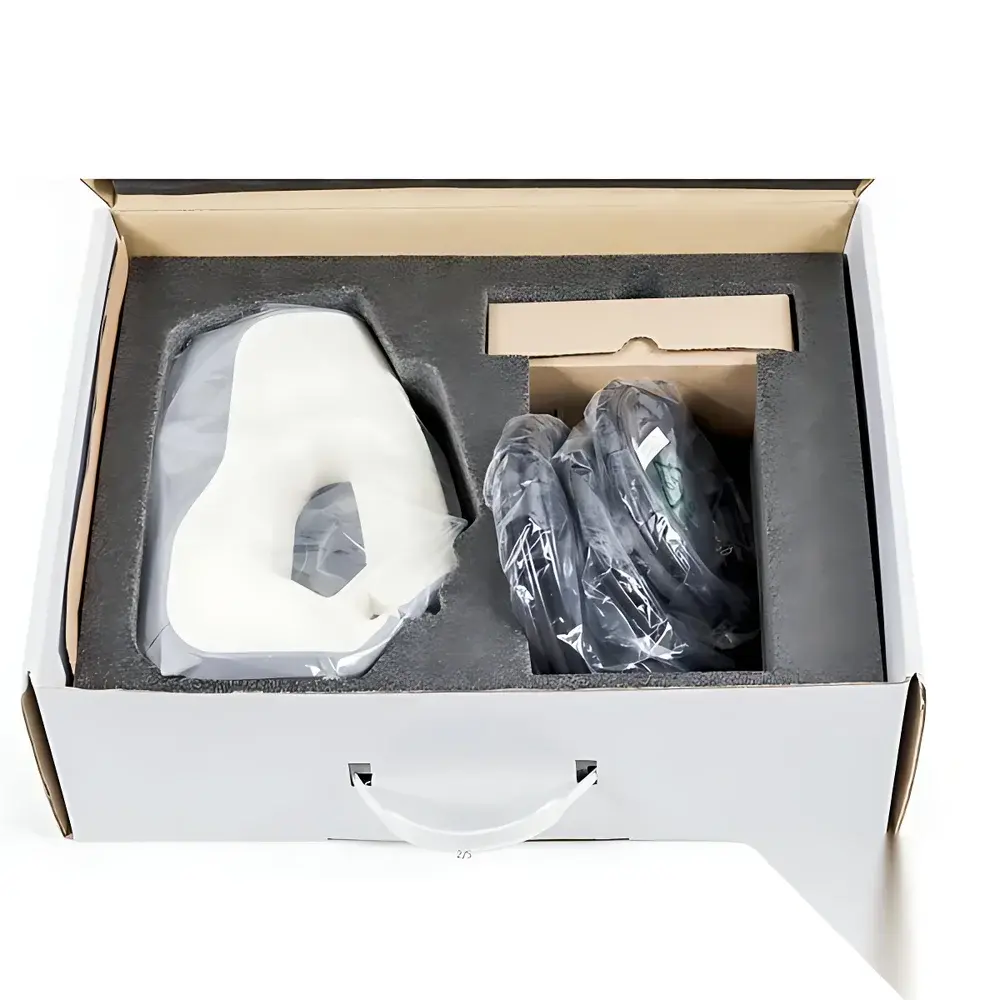
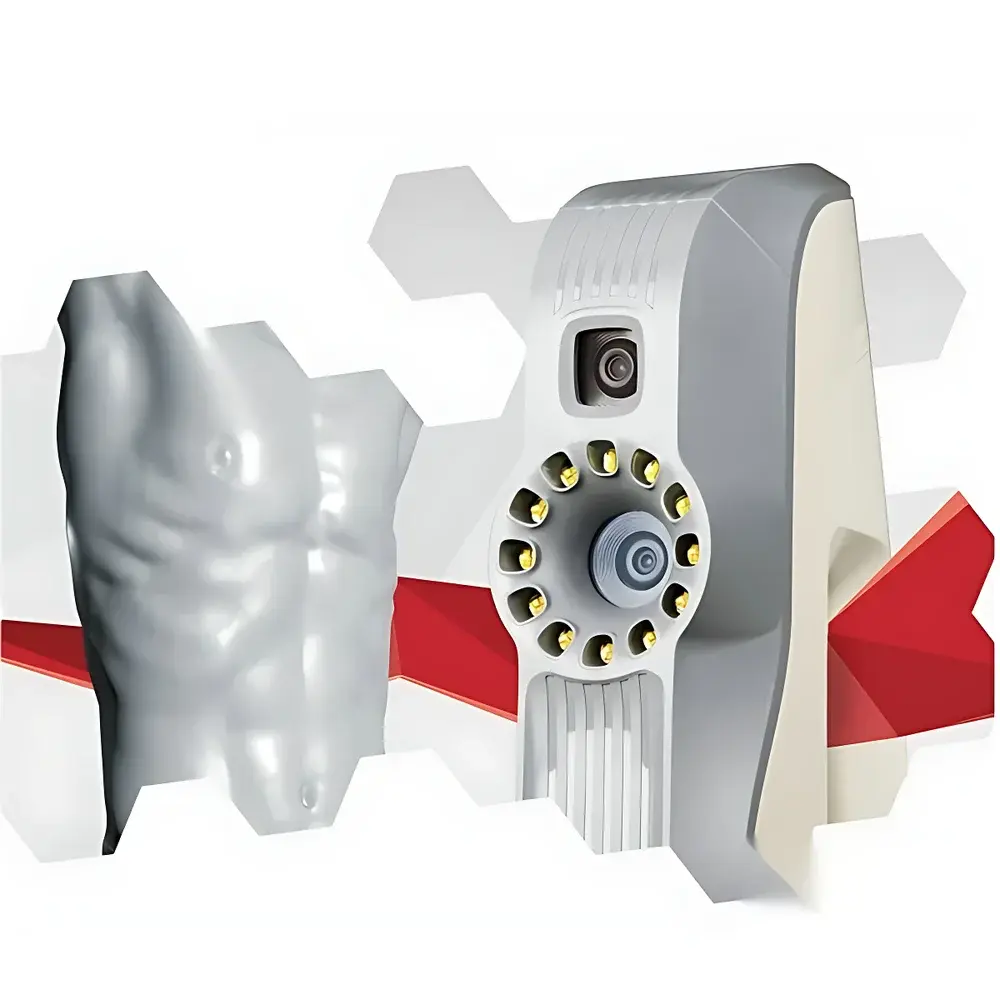
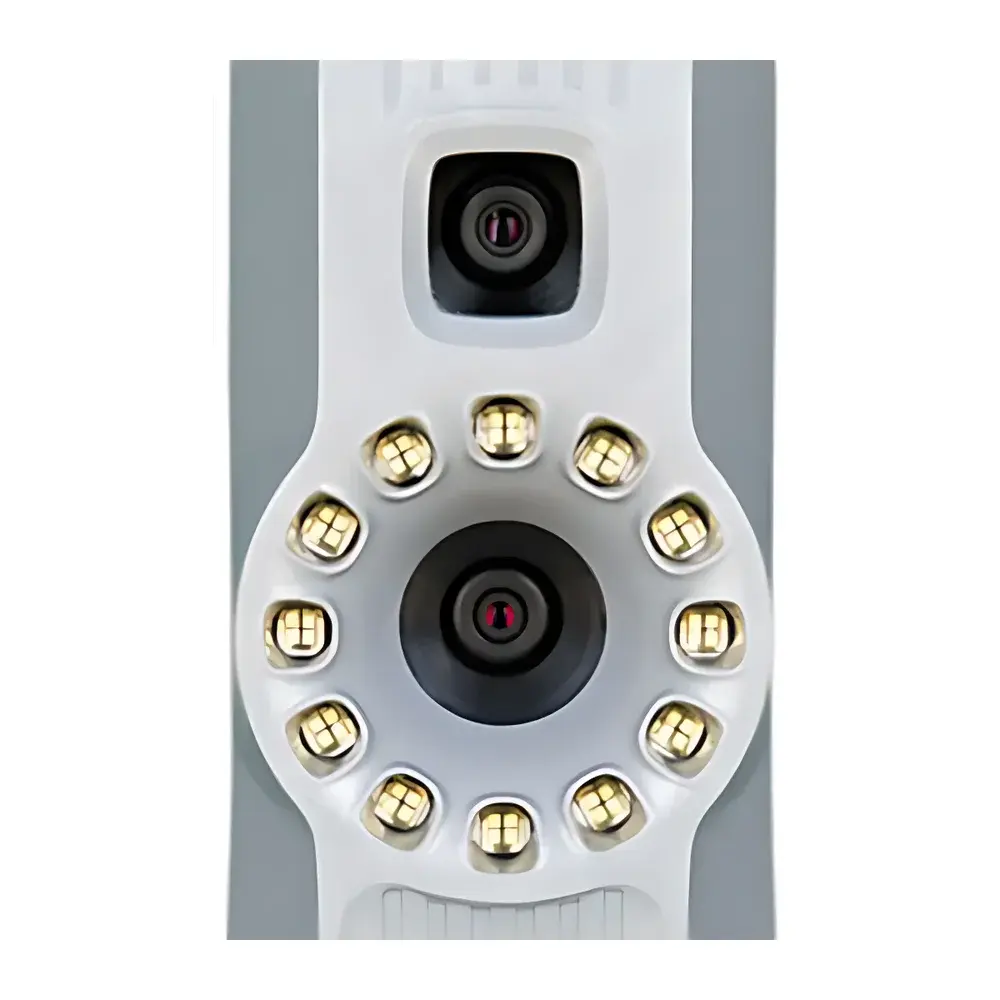
Artec EVA LITE Handheld 3D Scanner
| Brand | Artec |
|---|---|
| Model | EVA LITE |
| Type | Structured Light 3D Scanner |
| Tracking | Geometry-Only (No Texture/Color Capture) |
| Resolution | Up to 0.2 mm |
| Data Output Format | STL, OBJ, ASC, PLY, AOP, WRML, X3D, PDF3D |
| Power Consumption | Low (USB-Powered) |
| Compatibility | Windows 10/11 (64-bit), Intel Core i7 or AMD Ryzen 7 recommended |
| Software | Artec Studio 14 (AI-powered processing, HD Mode, Smart Fusion, Radar-guided scanning) |
| Compliance | CE, FCC, RoHS |
Overview
The Artec EVA LITE Handheld 3D Scanner is a precision-engineered structured light imaging system designed for high-fidelity geometric acquisition of medium-to-large-scale physical objects. Unlike photogrammetry or laser triangulation systems, the EVA LITE employs a dual-camera, blue LED-based fringe projection architecture that projects calibrated sinusoidal patterns onto surfaces and reconstructs 3D geometry via phase-shift analysis. Its core design philosophy centers on accessibility without compromise in geometric fidelity—making it especially suitable for applications where surface texture and color are secondary to accurate topology, such as anatomical modeling, reverse engineering of mechanical components, and educational prototyping. As the streamlined variant of the flagship Artec EVA platform, the EVA LITE retains identical optical calibration, spatial accuracy, and real-time meshing latency—but omits RGB sensor integration and associated color mapping pipelines. This architectural simplification reduces computational load, power draw, and hardware dependency—enabling reliable operation on mid-tier workstations while maintaining sub-millimeter reproducibility under controlled ambient lighting.
Key Features
- Geometry-only acquisition: Captures dense point clouds and watertight polygonal meshes without embedded color or texture data—ideal for CAD-integrated workflows requiring clean, topology-accurate inputs.
- 0.2 mm resolution at optimal working distance (0.4–1.0 m): Achieved through synchronized stereo vision and adaptive fringe frequency modulation, enabling faithful reconstruction of thin-walled features, sharp edges, and organic contours.
- Artec Studio 14 integration: Delivers AI-accelerated mesh generation, automatic hole-filling, noise suppression, and Smart Fusion algorithms optimized for handheld motion artifacts.
- Radar-guided scanning mode: Provides real-time visual feedback via on-screen directional cues, reducing operator learning curve and improving scan completeness for complex geometries.
- Low-power USB 3.0 interface: Eliminates need for external power supplies; compatible with portable workstations meeting minimum CPU/GPU specifications.
- Robust geometric tracking engine: Uses iterative closest point (ICP) registration combined with feature-based coarse alignment—ensuring stable pose estimation even during rapid hand movement.
Sample Compatibility & Compliance
The EVA LITE demonstrates broad compatibility across non-reflective, matte-surfaced specimens typical in life sciences, industrial metrology, and cultural heritage documentation. It reliably captures human anatomy—including torso, limbs, and facial topography—without requiring spray-based matting agents. For dark or low-reflectivity surfaces (e.g., black rubber, carbon fiber, or anodized aluminum), the scanner’s high-gain blue-light illumination and dynamic exposure control mitigate signal loss. Specular or highly reflective regions may require minor repositioning but do not necessitate surface treatment. The device complies with CE marking requirements for electromagnetic compatibility (EN 61326-1) and safety (EN 62471 for LED radiation), as well as FCC Part 15 Class B and RoHS Directive 2011/65/EU. While not certified for clinical diagnostic use, its geometric repeatability supports GLP-aligned documentation practices in R&D labs and academic institutions.
Software & Data Management
Artec Studio 14 serves as the native processing environment, supporting full audit-trail logging, version-controlled project files (.aop), and export to industry-standard formats including STL, OBJ, and PLY—ensuring interoperability with SOLIDWORKS, Fusion 360, Geomagic Design X, and MeshLab. The software implements FDA 21 CFR Part 11–compatible user authentication, electronic signatures, and immutable processing history when configured in enterprise deployment mode. HD Mode leverages the ARTEC AI neural engine—trained on >200,000 registered scans—to enhance edge preservation and suppress stochastic noise during multi-frame fusion. All raw frame data, intermediate meshes, and final exports are timestamped and checksum-verified, facilitating traceable data lineage per ISO/IEC 17025 documentation standards.
Applications
- Reverse engineering of legacy parts lacking CAD models—particularly where surface finish or material color is irrelevant to functional replication.
- Biomechanics and ergonomics research: Capturing anthropometric data for prosthetic socket design, orthopedic brace development, and wearable device fit analysis.
- Tech-enabled STEM education: Enabling students to digitize physical prototypes, compare dimensional deviations against nominal CAD, and validate tolerance stack-ups.
- Cultural artifact documentation: Generating archival-grade geometric records of sculptures, fossils, and archaeological finds where pigment integrity prohibits contact or UV exposure.
- Industrial quality assurance: Rapid verification of castings, molded components, or machined assemblies against GD&T specifications using deviation color-mapping tools.
FAQ
Does the EVA LITE support color or texture capture?
No. The EVA LITE is strictly a geometry-only scanner. It lacks integrated RGB sensors and does not record surface reflectance or chromatic information.
Can it scan shiny or black objects?
Yes—within operational limits. Its blue-light projection system and adaptive exposure control improve capture reliability on low-reflectivity and moderately specular surfaces. However, mirror-finish metals or transparent materials remain outside its native capability envelope.
What computing resources are required to run Artec Studio 14?
A Windows 10/11 64-bit system with Intel Core i7 (or AMD Ryzen 7) processor, 32 GB RAM, NVIDIA GTX 1060 or better GPU, and 512 GB SSD is recommended for optimal HD-mode performance.
Is calibration required before each scan session?
No. The EVA LITE features factory-calibrated optics with thermal drift compensation. Routine verification using the included calibration panel is advised every 30 days for metrology-critical applications.
How is data security handled during export and archival?
Artec Studio supports encrypted project archives, password-protected file sharing, and configurable metadata tagging. When deployed in networked lab environments, role-based access controls and Windows Active Directory integration are available.



