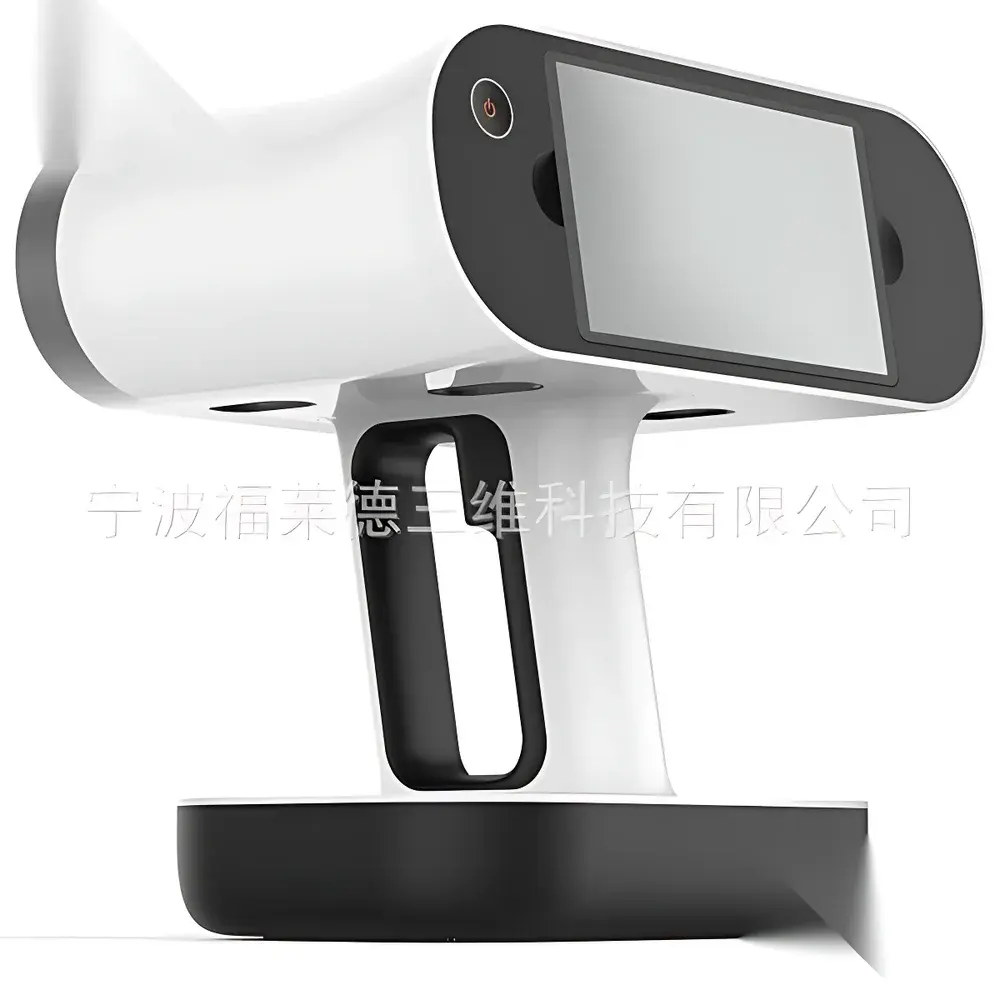
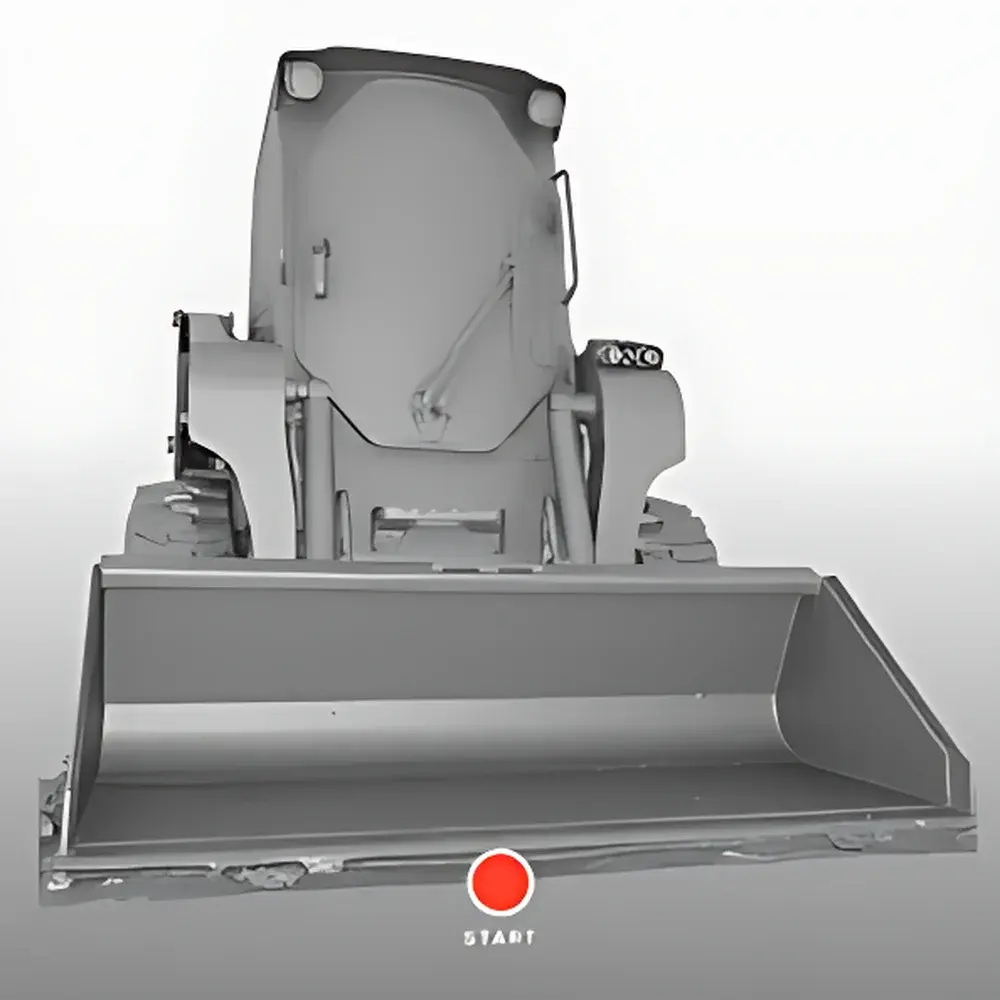
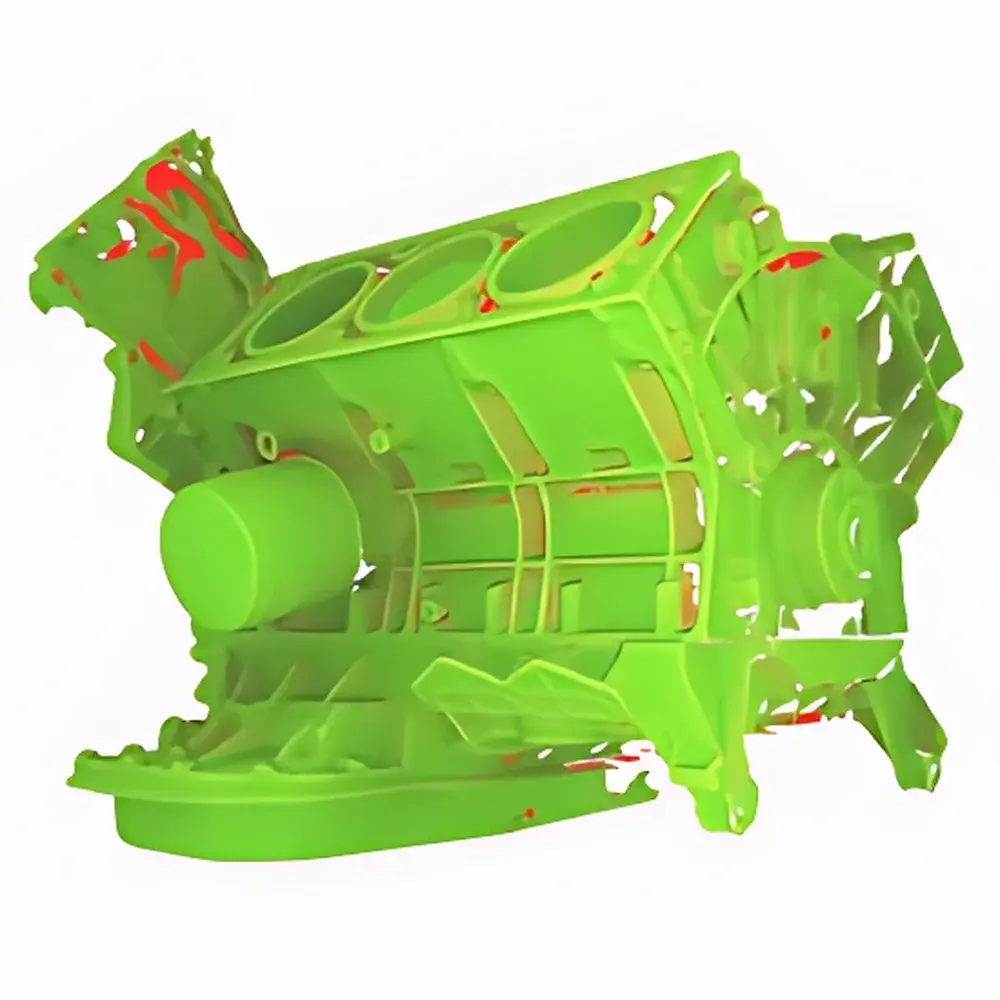
Artec Leo Professional Smart Handheld 3D Scanner
| Brand | Artec |
|---|---|
| Origin | Imported (Non-China) |
| Manufacturer Type | Authorized Distributor |
| Instrument Type | Structured Light 3D Scanner |
| Model | Artec Leo |
| Measurement Speed | 60 fps |
| 3D Accuracy | ≤ 0.1 mm |
| 3D Resolution | 0.2 mm |
| Max Scanning Range | 8–10 m |
| Operating System Compatibility | Windows 10/11 (for Artec Studio) |
| Weight | 1.8 kg (scanner body only), 2.5 kg (fully configured with battery & handle) |
Overview
The Artec Leo is a professional-grade, fully autonomous handheld 3D scanner engineered for high-fidelity geometric digitization in industrial metrology, reverse engineering, quality inspection, and digital archiving applications. Unlike conventional photogrammetry- or laser-based systems, the Leo employs dual VCSEL (Vertical-Cavity Surface-Emitting Laser) structured light projection combined with a synchronized 5-megapixel color sensor array to capture dense, texture-rich point clouds at up to 4 million points per second. Its on-device AI-accelerated processing unit eliminates dependency on external computers during acquisition—enabling real-time surface reconstruction, adaptive mesh generation, and automatic alignment directly on the integrated 5.5-inch HD touchscreen. This architecture supports markerless, freehand scanning across complex geometries, varying reflectivity, and occluded surfaces—without requiring target markers, calibration boards, or pre-scanning setup. The system operates within a working distance range of 0.35–1.2 m, delivering sub-0.1 mm volumetric accuracy traceable to NIST-traceable reference artifacts under controlled environmental conditions (ISO 10360-8 compliant workflows).
Key Features
- Fully Integrated Onboard Processing: Real-time 3D reconstruction powered by NVIDIA Jetson TX2 GPU and proprietary AI algorithms—no laptop or tethered workstation required during data capture.
- Touchscreen-Driven Workflow: Intuitive 5.5-inch capacitive display enables live preview, manual mesh editing, region-of-interest selection, and immediate post-capture validation in-field.
- Markerless Tracking Engine: Hybrid geometry + texture-based SLAM (Simultaneous Localization and Mapping) ensures robust pose estimation—even on low-texture, dark, or glossy surfaces.
- Adaptive Scanning Modes: Dual-mode operation: “Smart Mode” guides users through optimal scan paths and auto-adjusts exposure, brightness, and resolution; “Manual Mode” provides full control over frame rate, point density, and fusion parameters.
- Wireless & Modular Connectivity: IEEE 802.11ac Wi-Fi, Gigabit Ethernet, and SDXC slot support seamless data offload, remote monitoring, and firmware updates without physical docking.
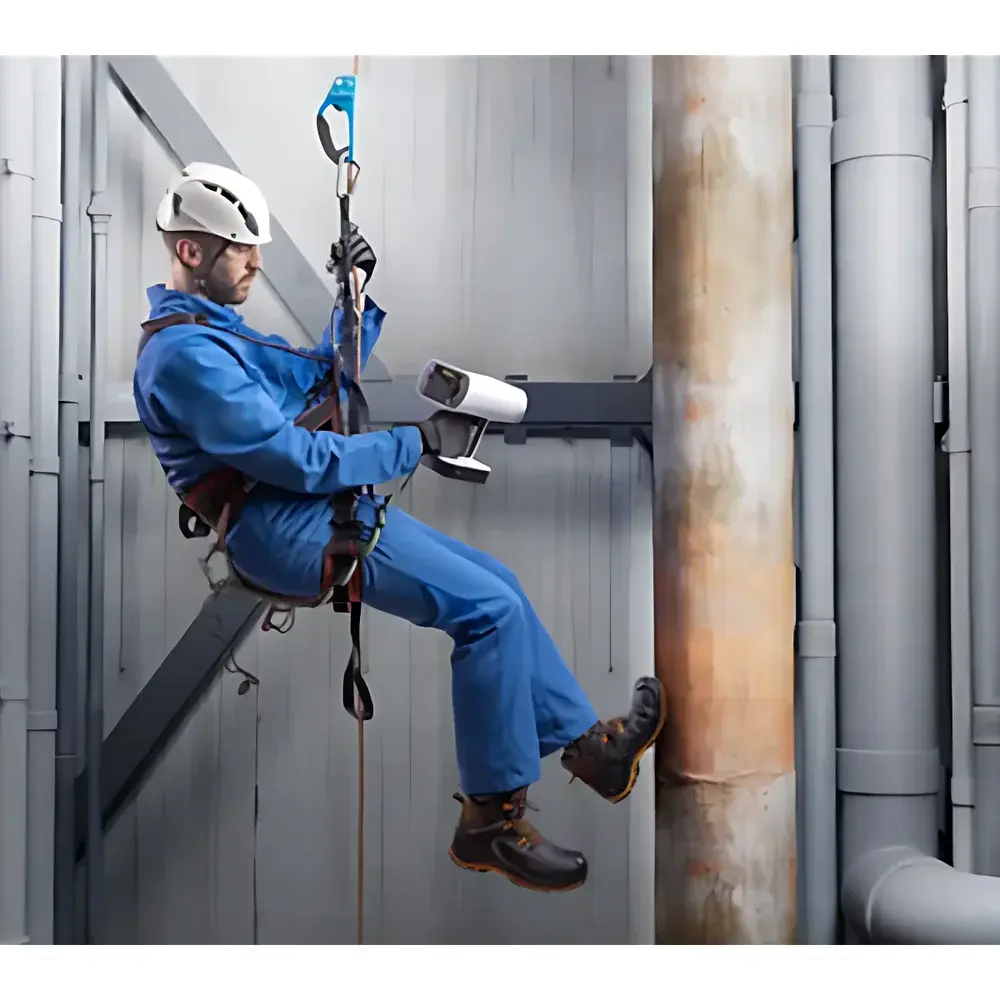
- Ergonomic Industrial Design: Balanced weight distribution (1.8 kg scanner core), IP52-rated housing, hot-swappable lithium-ion battery (up to 90 min runtime), and modular handle options for extended use in factory or field environments.
Sample Compatibility & Compliance
The Artec Leo is validated for scanning objects ranging from small mechanical components (≥50 mm) to large-scale assets (up to 10 m in dimension), including castings, composite panels, human anatomy, heritage artifacts, and automotive bodywork. It complies with CE, FCC, and RoHS directives. For regulated environments—including ISO 9001-certified manufacturing lines and FDA-regulated medical device prototyping—the system supports audit-ready documentation via Artec Studio’s GLP/GMP-compliant reporting module, which logs user actions, timestamped scan sessions, version-controlled processing pipelines, and raw-to-mesh provenance metadata. While not intrinsically certified for ATEX or IECEx zones, its non-laser Class 1 LED illumination (IEC 62471) ensures safe operation in standard laboratory and production floor settings.
Software & Data Management
Artec Studio 19+ serves as the primary desktop application for advanced post-processing, supporting ISO/IEC 17025-aligned calibration verification reports, GD&T analysis (via optional Geomagic Control X integration), and direct export to industry-standard formats: STL, OBJ, PLY, ASC, STEP (AP214/AP242), and PTX. All processing steps—including noise filtering, hole filling, smoothing, simplification, and texture mapping—are fully scriptable via Python API and reproducible through project templates. Data integrity is maintained via SHA-256 checksums embedded in native .E57 and .ART files. For enterprise deployment, Artec Studio supports centralized license management, role-based access control, and integration with PLM systems (e.g., Windchill, Teamcenter) via RESTful webhooks.
Applications
- Industrial Metrology: Rapid first-article inspection, tooling verification, and dimensional deviation analysis against CAD references—reducing CMM programming time by >70% in aerospace component validation.
- Reverse Engineering: Generation of watertight, topology-accurate meshes suitable for direct import into SolidWorks, Fusion 360, or CATIA for parametric reconstruction.
- Medical & Dental: Non-contact anatomical digitization for custom orthotics, prosthetic socket design, craniofacial surgery planning, and dental model archiving (HIPAA-compliant local storage supported).
- Cultural Heritage: High-resolution documentation of sculptures, archaeological finds, and museum exhibits—with photorealistic UV texture mapping and multi-exposure HDR fusion.
- Education & Research: Teaching 3D measurement principles, computational geometry, and digital twin development in mechanical engineering and materials science curricula.
FAQ
Does the Artec Leo require external computing hardware to operate?
No. All core scanning, alignment, and meshing operations are performed onboard. A Windows PC is only required for advanced post-processing in Artec Studio or CAD integration.
Is calibration required before each scan session?
The system performs automatic self-calibration at startup using internal reference patterns. Periodic verification against certified calibration artifacts (e.g., Artec Calibration Kit) is recommended every 6 months per ISO 17025 guidelines.
Can the Leo scan highly reflective or black surfaces?
Yes—its dual VCSEL illumination and adaptive exposure control enable reliable capture of challenging surfaces without spray coating, though matte finishes yield optimal signal-to-noise ratios.
What file formats can be exported directly from the device?
Native .ART projects and processed .STL/.OBJ files can be saved to SD card; full-format export (including STEP, PDF reports, E57) requires Artec Studio on Windows.
Is the Artec Leo compatible with FDA 21 CFR Part 11 requirements?
While the scanner itself is not a medical device, Artec Studio 19+ includes electronic signature, audit trail, and data integrity features aligned with Part 11 expectations for use in regulated design control and validation processes.