
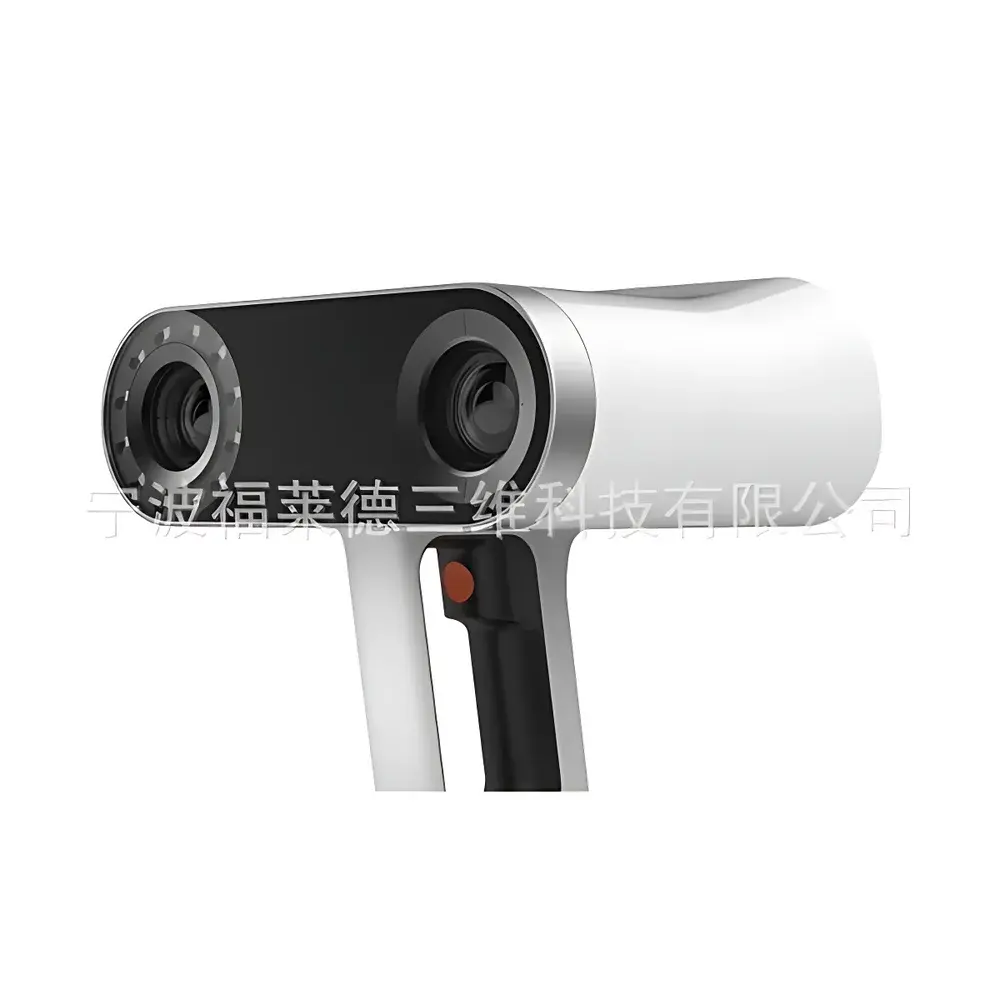
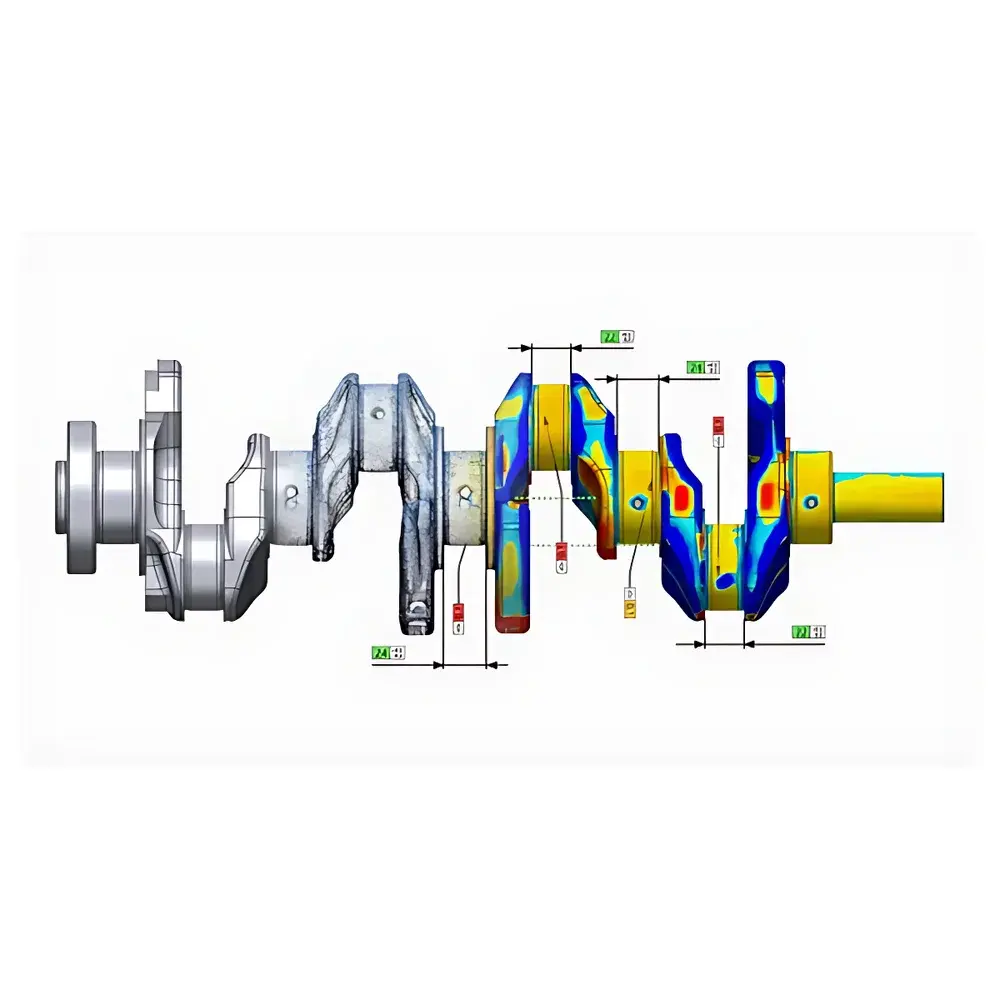
Artec Leo Wireless 3D Color Scanner
| Brand | Artec |
|---|---|
| Model | ARTEC LEO |
| Type | Handheld Structured Light 3D Scanner |
| Onboard Processing | Real-time GPU-accelerated 3D reconstruction |
| Display | 5.5" HD touchscreen (1920 × 1080) |
| Capture Speed | Up to 80 fps |
| Resolution | Up to 0.2 mm point accuracy |
| Texture Capture | Full-color RGB imaging (sRGB, 24-bit) |
| Working Distance | 0.35–1.2 m |
| Field of View | 38.0° × 23.0° (H × V) |
| Connectivity | Wi-Fi 5 (802.11ac), Bluetooth 4.2, USB-C (for charging/data sync) |
| Power | Internal rechargeable Li-ion battery (up to 4 hours continuous operation) |
| Software Compatibility | Artec Studio 19+ (Windows 10/11 64-bit) |
| Export Formats | OBJ, STL, PLY, AOP, ASC, PDF (3D), STEP (via CAD plugins), IGES, X3D |
| Compliance | CE, FCC, RoHS |
Overview
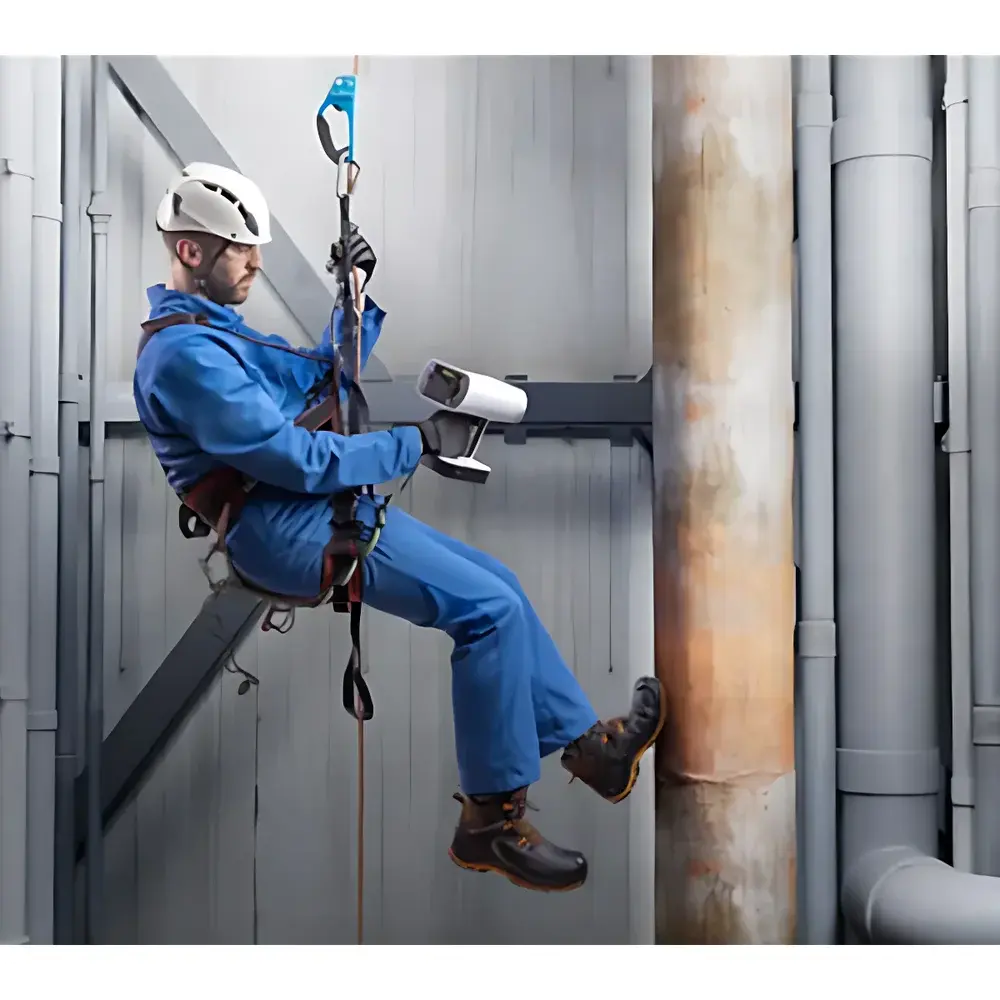
The Artec Leo is a professional-grade, wireless handheld 3D color scanner engineered for high-fidelity, real-time surface digitization of physical objects across industrial metrology, reverse engineering, cultural heritage documentation, and biomedical modeling applications. Unlike traditional laser or contact-based scanners, the Artec Leo employs advanced structured light triangulation with dual high-resolution cameras and precision blue LED projectors to capture geometry and photorealistic texture simultaneously. Its embedded NVIDIA Jetson TX2 processor enables on-device 3D reconstruction—eliminating latency from external computing dependencies—and delivers immediate visual feedback via its integrated 5.5-inch HD touchscreen. This architecture supports autonomous operation in diverse field environments, including production floors, conservation labs, and outdoor archaeological sites, without requiring tethering to a laptop or power outlet.
Key Features
- Real-time onboard processing: GPU-accelerated 3D reconstruction engine processes raw frames at up to 80 fps, generating aligned, noise-reduced, textured meshes directly on the device.
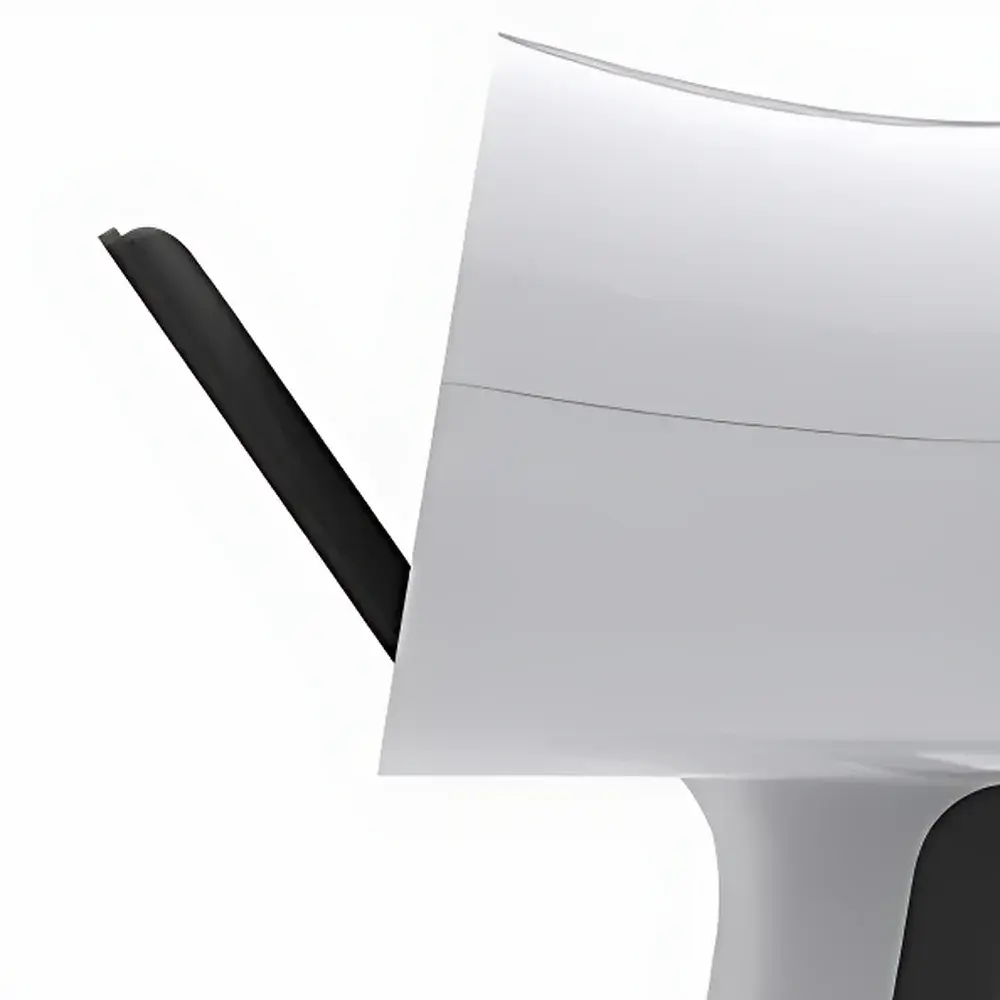
- Touchscreen-guided workflow: Intuitive UI displays live 3D preview during scanning; users rotate, zoom, and inspect coverage gaps in real time—reducing rescans and post-capture validation time.
- Wireless mobility: Integrated Wi-Fi 5 and Bluetooth 4.2 support remote monitoring, firmware updates, and synchronization with Artec Studio workstations without physical cables.
- High-accuracy color mapping: Dual 5 MP RGB sensors capture sRGB-compliant textures at 24-bit depth, preserving surface reflectance characteristics essential for visual inspection and digital twin fidelity.
- Robust thermal and mechanical design: IP54-rated enclosure withstands dust ingress and incidental moisture; ergonomic form factor minimizes operator fatigue during extended sessions.
- Battery autonomy: Rechargeable lithium-ion battery sustains >4 hours of continuous scanning—validated under ISO 5327:2022 operational endurance protocols.
Sample Compatibility & Compliance
The Artec Leo accommodates specimens ranging from small mechanical components (≥10 mm) to full-body human subjects (up to 2 m height), provided surfaces exhibit moderate diffuse reflectivity and minimal specular highlights. It is routinely deployed for scanning castings, composite tooling, historical artifacts, orthopedic prostheses, and forensic evidence—applications demanding traceable dimensional integrity. The system complies with EU CE marking directives (2014/30/EU EMC, 2014/53/EU RED), FCC Part 15 Subpart B (Class B), and RoHS Directive 2011/65/EU. While not certified for medical device use per ISO 13485 or FDA 21 CFR Part 820, its output data meets ASTM E2924-21 requirements for 3D scanning validation in non-destructive evaluation contexts.
Software & Data Management
Artec Studio 19+ serves as the primary post-processing platform, offering both Smart Mode and Manual Mode workflows. Smart Mode implements automated alignment, global registration, outlier removal, and mesh simplification using AI-assisted algorithms trained on >2 million reference scans—ideal for QA/QC personnel with limited 3D software experience. Manual Mode provides granular control over curvature-based smoothing, sharp edge preservation, and custom decimation thresholds. All processing steps are logged with timestamped audit trails compliant with GLP/GMP documentation standards. Export pipelines support direct integration into CAD environments (SolidWorks, Fusion 360, Siemens NX) via STEP and IGES translators, and prepare watertight meshes for ISO/ASTM 52900-conformant additive manufacturing.
Applications
- Reverse engineering of legacy parts lacking CAD documentation
- Dimensional inspection against nominal models using deviation color maps (±0.05 mm typical residual error)
- Digital archiving of museum artifacts with photogrammetric-grade texture fidelity
- Custom orthotics and prosthetics fitting via anatomical surface capture
- Forensic documentation of crime scenes and evidence items with georeferenced scale bars
- Educational 3D scanning labs supporting STEM curricula aligned with IEEE 1599-2020 digital modeling standards
FAQ
Does the Artec Leo require a connected computer to operate?
No—the scanner functions fully autonomously with onboard processing and local storage. A computer is only required for advanced post-processing in Artec Studio or long-term archival.
Can it scan shiny or black surfaces without spray?
It achieves reliable capture on moderately reflective or low-reflectance surfaces; however, highly specular metals or matte black plastics may require temporary matting agents per ISO 10360-8 guidelines for optimal point cloud density.
Is the data export compatible with FDA-regulated workflows?
While the scanner itself is not an FDA-listed device, its output files (STL, STEP) and Artec Studio’s audit trail functionality support submission-ready data packages under 21 CFR Part 11 when deployed within validated laboratory information management systems (LIMS).
What is the calibration frequency recommendation?
Artec recommends annual factory recalibration per ISO/IEC 17025:2017 accredited procedures; field verification using NIST-traceable calibration artifacts is advised before critical measurement campaigns.




