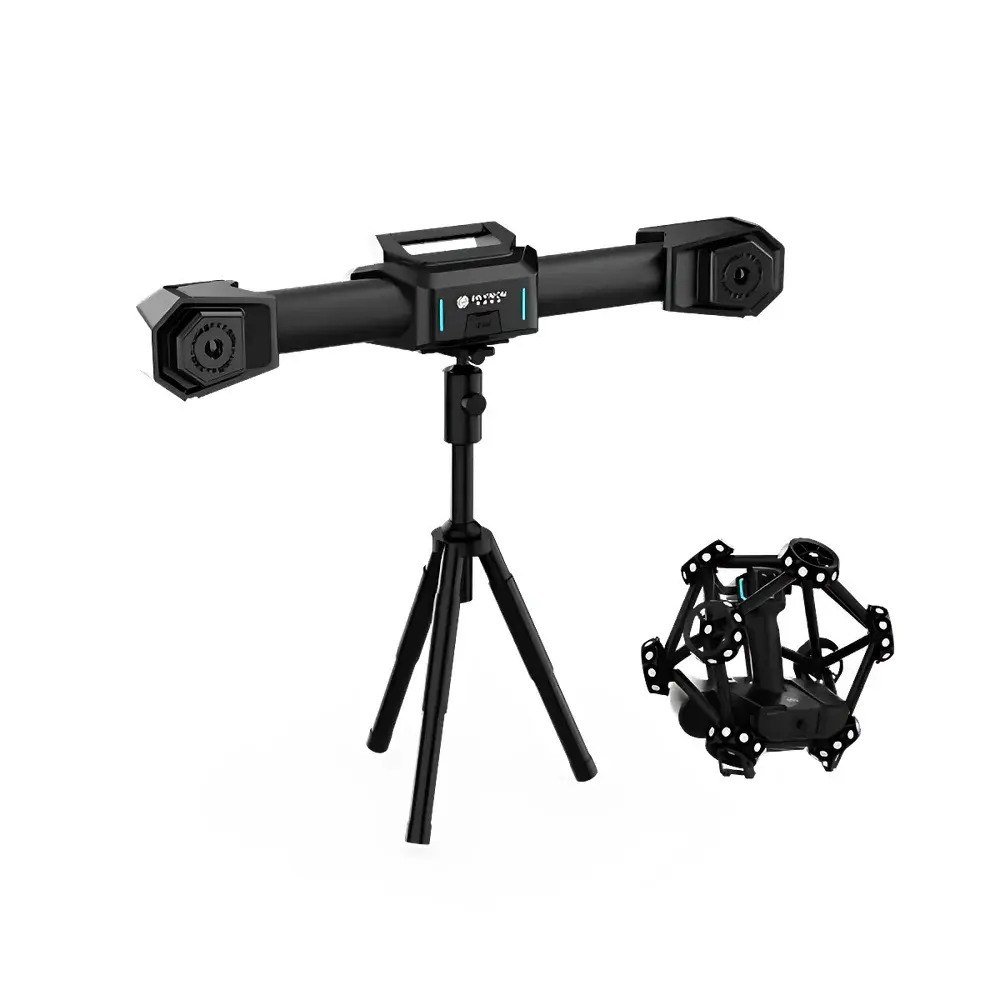
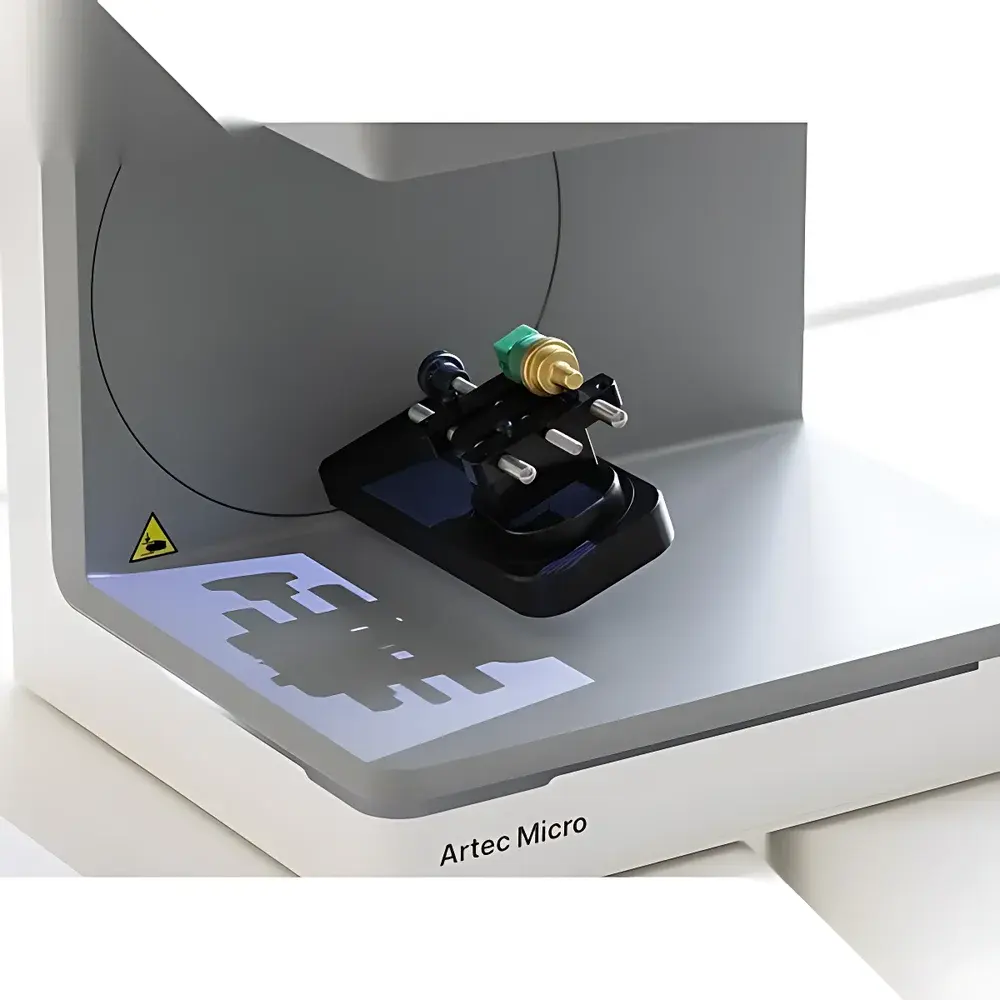
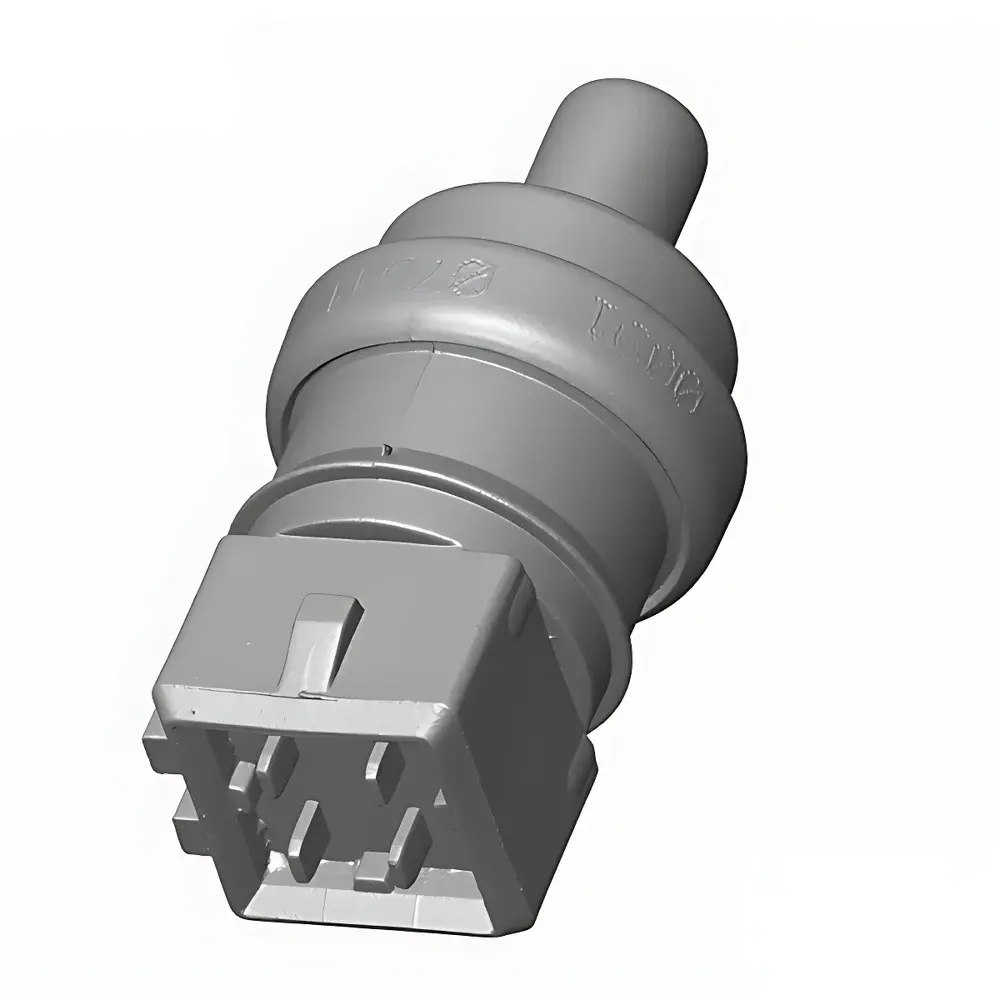
ARTEC MICRO II Desktop High-Precision 3D Scanner
| Brand | ARTEC |
|---|---|
| Origin | Imported |
| Model | MICRO II |
| Measurement Speed | 1,000,000 points/sec |
| Accuracy | 5 µm |
| Resolution | 30 µm |
| Maximum Scan Volume | 200 mm (L × W × H) |
| Operating System | Windows 11 |
| Weight | 12 kg |
| Camera System | Four 13 MP RGB sensors |
| Lighting | Integrated RGB LED array |
| Targetless Scanning | Yes |
| Calibration Certificate | ISO 12836-compliant |
| Output Formats | STL, OBJ, PLY, AOP, XYZ, PDF (report), and others |
Overview
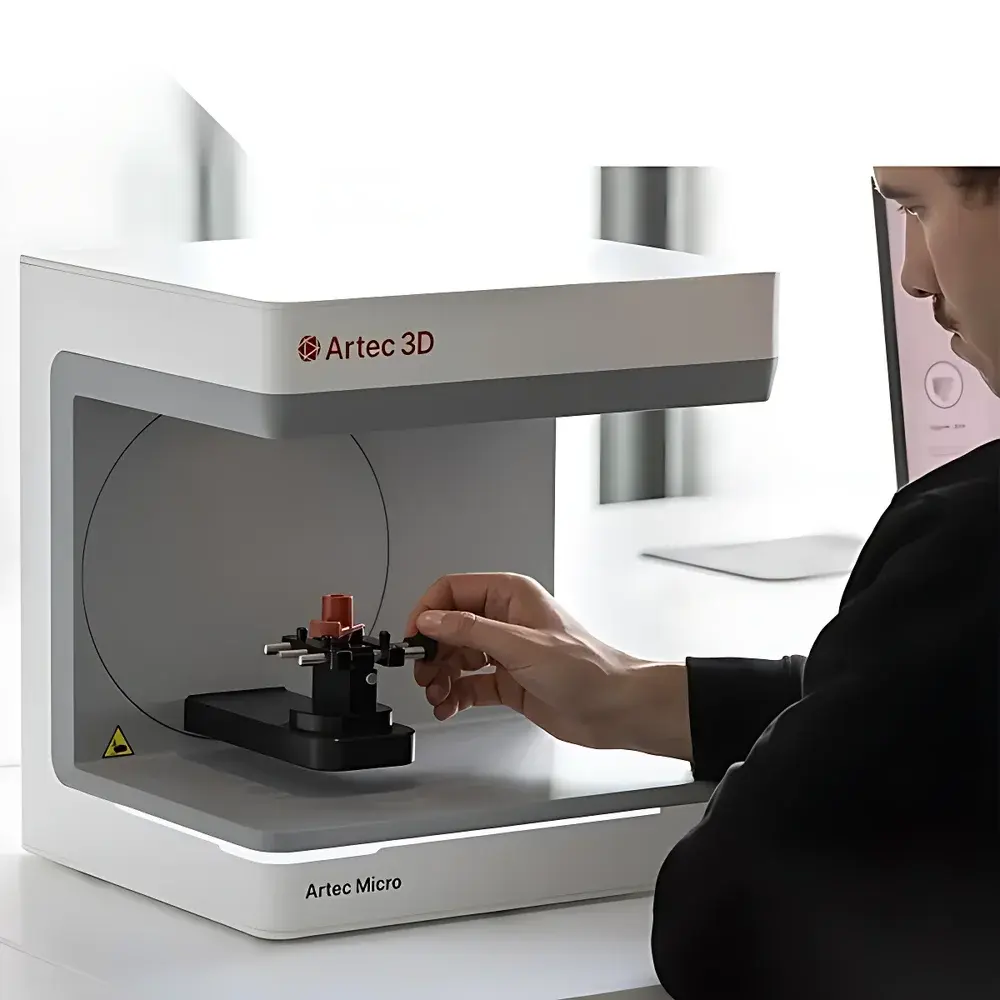
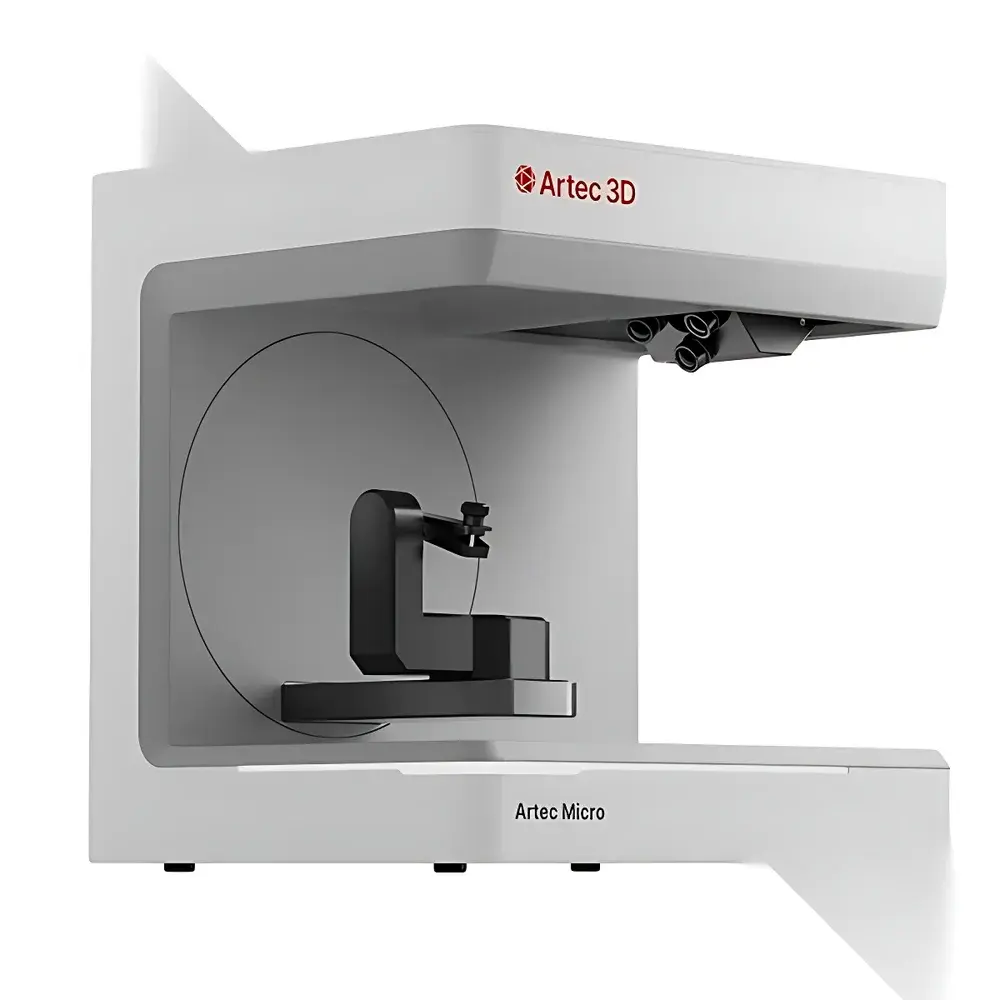
The ARTEC MICRO II is a metrology-grade, fully automated desktop 3D scanner engineered for non-contact, high-fidelity digitization of small industrial components, dental prostheses, jewelry pieces, precision molds, and heritage artifacts. Utilizing structured light triangulation combined with multi-view photogrammetric fusion, the MICRO II achieves traceable dimensional accuracy of ±5 µm (ISO 12836 certified) and repeatability of ±2 µm under controlled laboratory conditions. Its compact, benchtop form factor integrates four synchronized 13-megapixel RGB cameras and an optimized RGB LED illumination system to capture full-color surface geometry without external targets or manual alignment. Unlike handheld or turntable-dependent systems, the MICRO II’s fixed-optics architecture eliminates mechanical drift and operator-induced variability—ensuring consistent, audit-ready data acquisition suitable for first-article inspection, GD&T validation, and digital twin generation in regulated environments.
Key Features
- Metrology-validated accuracy: Certified to ISO 12836 for geometric measurement performance, supporting compliance with ISO/IEC 17025 calibration requirements.
- Targetless scanning workflow: Eliminates need for adhesive markers or reference spheres; automatic registration via high-contrast texture mapping and sub-pixel edge detection.
- Full-color photorealistic capture: Four synchronized RGB sensors deliver 30 µm spatial resolution with true-color texture mapping at native camera resolution—enabling visual defect documentation alongside dimensional analysis.
- Intelligent scanning modes: Auto-exposure control, adaptive exposure bracketing, and real-time mesh quality feedback optimize scan parameters per material reflectivity and surface topology.
- Integrated hardware-software synchronization: Dedicated FPGA-based timing controller ensures microsecond-level synchronization across all cameras and lighting channels.
- Robust thermal management: Active cooling system maintains optical path stability during extended acquisition sessions (>2 hrs), minimizing thermal drift in Z-axis measurements.
Sample Compatibility & Compliance
The MICRO II is optimized for objects within a maximum envelope of 200 × 200 × 150 mm—ideal for turbine blades, gear assemblies, dental crowns, watch components, and injection-molded prototypes. It supports matte, semi-gloss, and low-reflectivity surfaces without spray coating; highly reflective or transparent materials may require optional diffuse polarization filters. The system complies with CE, FCC, and RoHS directives. Its measurement uncertainty budget is documented per ISO/IEC 17025 Annex A.3 guidelines, and raw point cloud traceability aligns with FDA 21 CFR Part 11 requirements when used with Artec Studio’s audit-trail-enabled project mode (electronic signatures, version-controlled revisions, and immutable log files).
Software & Data Management
Artec Studio 19 provides end-to-end processing—from real-time preview and automatic outlier rejection to GD&T-compliant deviation analysis, cross-section extraction, and NURBS surface reconstruction. The software includes built-in ISO 1101-compliant geometric tolerancing tools, statistical process control (SPC) reporting, and direct export to PolyWorks, Geomagic Control X, and SolidWorks Inspection. All projects support metadata embedding (operator ID, timestamp, environmental conditions), encrypted project archives, and DICOM-compatible volumetric export for hybrid CT+scan workflows. Data integrity is preserved through SHA-256 hashing of raw scans and delta-encoded version history.
Applications
- Quality assurance: First-article inspection, FAI report generation (AS9102), and comparative analysis against CAD master models.
- Dental laboratory digitization: Accurate crown, bridge, and implant abutment modeling for CAM milling and sintering workflows.
- Jewelry prototyping: Capture of intricate filigree, gemstone settings, and wax patterns with sub-10 µm surface fidelity.
- Reverse engineering: Generation of watertight, topology-optimized meshes for parametric CAD reconstruction (e.g., Fusion 360, Creo).
- Academic research: Non-destructive documentation of archaeological specimens, biological samples, and micro-mechanical structures.
- Regulatory submissions: Traceable 3D datasets compliant with MDR (EU 2017/745) and ISO 13485 design history file (DHF) requirements.
FAQ
Is the MICRO II suitable for ISO/IEC 17025-accredited calibration laboratories?
Yes—the system ships with an ISO 12836-compliant factory calibration certificate and supports periodic verification using NIST-traceable step gauges and sphere artifacts.
Can it scan black or glossy surfaces without surface treatment?
Matte-black surfaces are captured reliably; high-gloss or mirror-finish surfaces benefit from optional polarized lighting modules to suppress specular reflection artifacts.
Does Artec Studio support automated GD&T reporting per ASME Y14.5–2018?
Yes—position, profile, runout, and concentricity controls are evaluated against nominal geometry with tolerance zone visualization and Cpk/Ppk statistical summaries.
What is the recommended environmental operating condition?
Temperature: 18–22°C ±0.5°C; humidity: 40–60% RH; vibration isolation table recommended for sub-5 µm repeatability.
Is network deployment supported for enterprise-scale data management?
Artec Studio Enterprise Edition enables centralized license management, shared project repositories via SMB/NFS, and integration with PLM systems (Teamcenter, Windchill) through API-driven import/export pipelines.