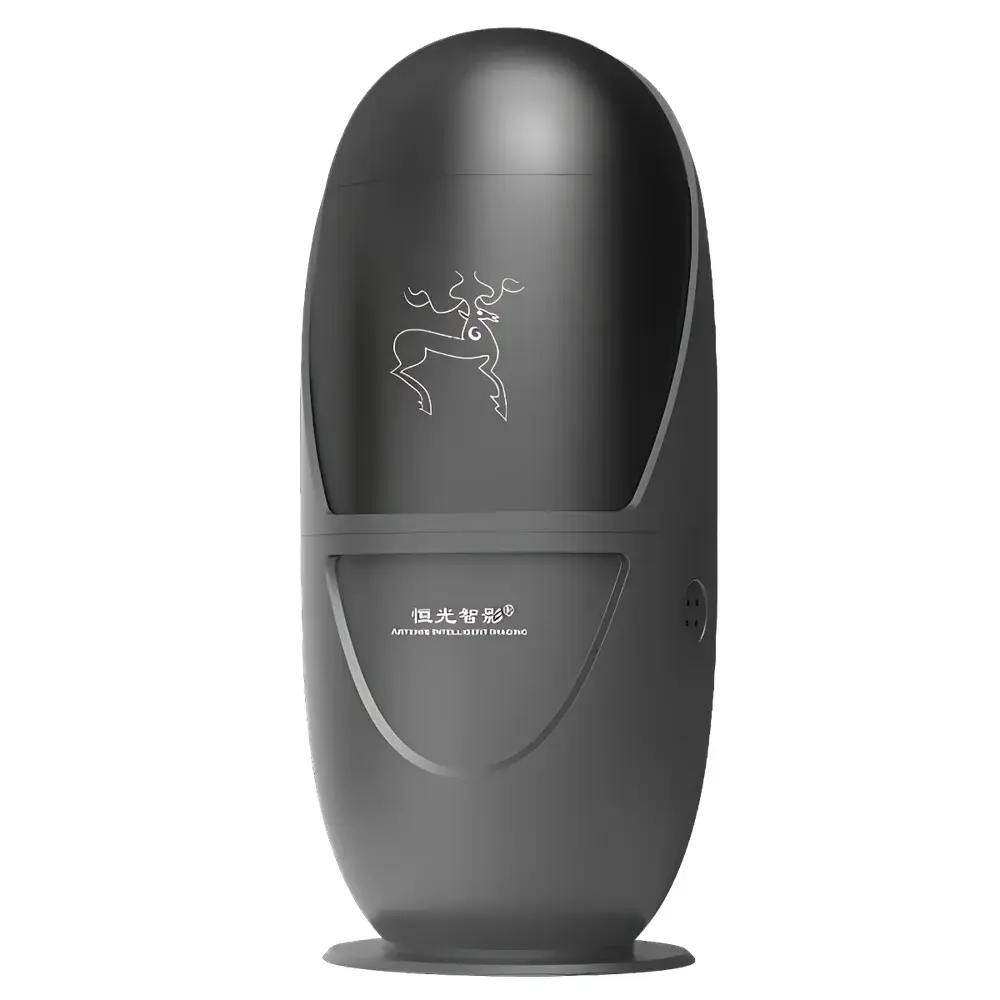
Artemis MARS-Full Spectrum Small Animal In Vivo Imaging System
| Brand | Artemis |
|---|---|
| Model | MARS-Full Spectrum |
| Imaging Modalities | Multispectral Fluorescence (400–1700 nm), X-ray, CT |
| Spectral Range | 400–900 nm (Visible–NIR-I), 900–1700 nm (NIR-II/SWIR) |
| Origin | Shanghai, China |
| Manufacturer Type | Original Equipment Manufacturer (OEM) |
| Instrument Category | Optical In Vivo Imaging System |
| Compliance | Designed for GLP-compliant preclinical research environments |
Overview
The Artemis MARS-Full Spectrum Small Animal In Vivo Imaging System is a high-performance, multimodal preclinical imaging platform engineered for quantitative, non-invasive visualization of biological processes in live rodents. Leveraging advanced optical detection architecture, the system integrates high-quantum-efficiency back-illuminated CCD and InGaAs-based SWIR sensors to support continuous spectral acquisition across 400–1700 nm — spanning visible, NIR-I (700–900 nm), and NIR-II/SWIR (900–1700 nm) windows. Unlike conventional fluorescence imaging systems limited to narrow-band excitation/emission filters, the MARS platform employs tunable bandpass filtering and spectral unmixing algorithms to resolve multiple fluorophores with overlapping emission profiles. Its modular design accommodates concurrent or sequential acquisition of fluorescence, bioluminescence, X-ray radiography, and micro-CT data — enabling structural-functional correlation without subject repositioning. The system is optimized for longitudinal studies requiring high spatial reproducibility, low phototoxicity, and quantitative signal linearity across dynamic physiological ranges.
Key Features
- Full-spectrum optical detection from 400 nm to 1700 nm with dual-sensor architecture: back-thinned CCD for 400–900 nm and thermoelectrically cooled InGaAs array for 900–1700 nm
- Automated spectral unmixing engine supporting up to 8 fluorophore signatures simultaneously, validated against NIST-traceable reference standards
- Integrated X-ray and micro-CT modules with sub-millimeter spatial resolution (≤50 µm isotropic voxel size in CT mode)
- Motorized stage with precision XYZ translation and rotational alignment for repeatable animal positioning across imaging sessions
- Temperature- and gas-controlled anesthesia-compatible imaging chamber (25–37 °C, O2/isoflurane mix regulation)
- Quantitative calibration workflow compliant with ISO 15197:2013 principles for intensity normalization and inter-session signal stability
Sample Compatibility & Compliance
The MARS-Full Spectrum system supports standard rodent models including C57BL/6, BALB/c, nude, NSG, and humanized mice, as well as Sprague-Dawley and Wistar rats (up to 500 g). Anesthesia integration conforms to AVMA guidelines, and chamber airflow meets NIH OLAW-recommended ventilation rates (>15 air changes/hour). All optical components are certified per IEC 61000-6-3 (EMC) and IEC 60601-1 (medical electrical equipment safety). Data acquisition protocols align with FDA 21 CFR Part 11 requirements for audit trails, electronic signatures, and secure user access control. System validation documentation supports GLP and GCP study readiness, including IQ/OQ/PQ templates aligned with ASTM E2500-13 and ISO/IEC 17025:2017 frameworks.
Software & Data Management
Acquisition and analysis are managed via Artemis ImageSuite v5.x — a DICOM-compliant, FDA-cleared software platform. It provides real-time spectral decomposition, 3D volume rendering from fused CT/optical datasets, and automated region-of-interest (ROI) quantification with coefficient-of-variation (CV) tracking across timepoints. Raw data is stored in vendor-neutral HDF5 format with embedded metadata (EXIF-compliant tags for exposure, gain, binning, filter position, and animal ID). Audit logs record all user actions, parameter modifications, and export events. Integration with institutional LIMS and ELN systems is supported via RESTful API and HL7/FHIR adapters. Software validation packages include traceability matrices linking functional requirements to test cases, per IEEE 1012-2016.
Applications
- Tumor xenograft monitoring: Quantitative longitudinal assessment of orthotopic and metastatic lesions using NIR-II probes (e.g., IR-1061, CH1055) with improved depth penetration (>8 mm in muscle tissue)
- Cerebrovascular mapping: High-resolution imaging of intracranial vasculature in Thy1-GFP transgenic mice, enabled by reduced scattering in the 1300–1400 nm water absorption window
- Lymphatic dynamics: Real-time tracking of lymph flow and node accumulation using PEGylated indocyanine green derivatives (ICG-PEG) in tail-lymphatic injection models
- Hepatic and pulmonary metastasis: Dual-modality CT-fluorescence co-registration for anatomical localization of micrometastases (<200 µm) in liver and lung parenchyma
- Thermogenic adipose imaging: Functional assessment of brown adipose tissue activation via mitochondrial-targeted NIR-II dyes under cold-challenge protocols
- Nanoparticle biodistribution: Pharmacokinetic profiling of liposomal, polymeric, and inorganic nanocarriers labeled with spectrally distinct fluorophores
FAQ
What spectral ranges does the MARS-Full Spectrum system cover, and how are they physically implemented?
The system covers 400–900 nm using a back-illuminated scientific CCD and 900–1700 nm using a cooled InGaAs focal plane array. Each sensor operates independently with dedicated optical paths, dichroic beam splitters, and motorized filter wheels.
Is the system compatible with existing preclinical imaging workflows and data standards?
Yes — it exports DICOM SR objects for fluorescence quantification and supports NIfTI and MINC formats for multimodal fusion. All metadata adhere to MIAME/MIAPE-compliant ontologies.
How is quantitative accuracy ensured across long-term longitudinal studies?
Through daily auto-calibration using integrated LED reference sources, mechanical shutter-based dark current correction, and ROI-based photometric drift compensation algorithms.
Does the system meet regulatory requirements for GLP-compliant toxicology or pharmacokinetic studies?
Yes — full validation documentation, 21 CFR Part 11-compliant software, and IQ/OQ/PQ protocols are provided upon request for regulated study deployment.
Can third-party fluorophores and contrast agents be used with this platform?
Yes — the open spectral acquisition mode allows import of custom excitation/emission spectra and supports user-defined unmixing matrices for proprietary probes.