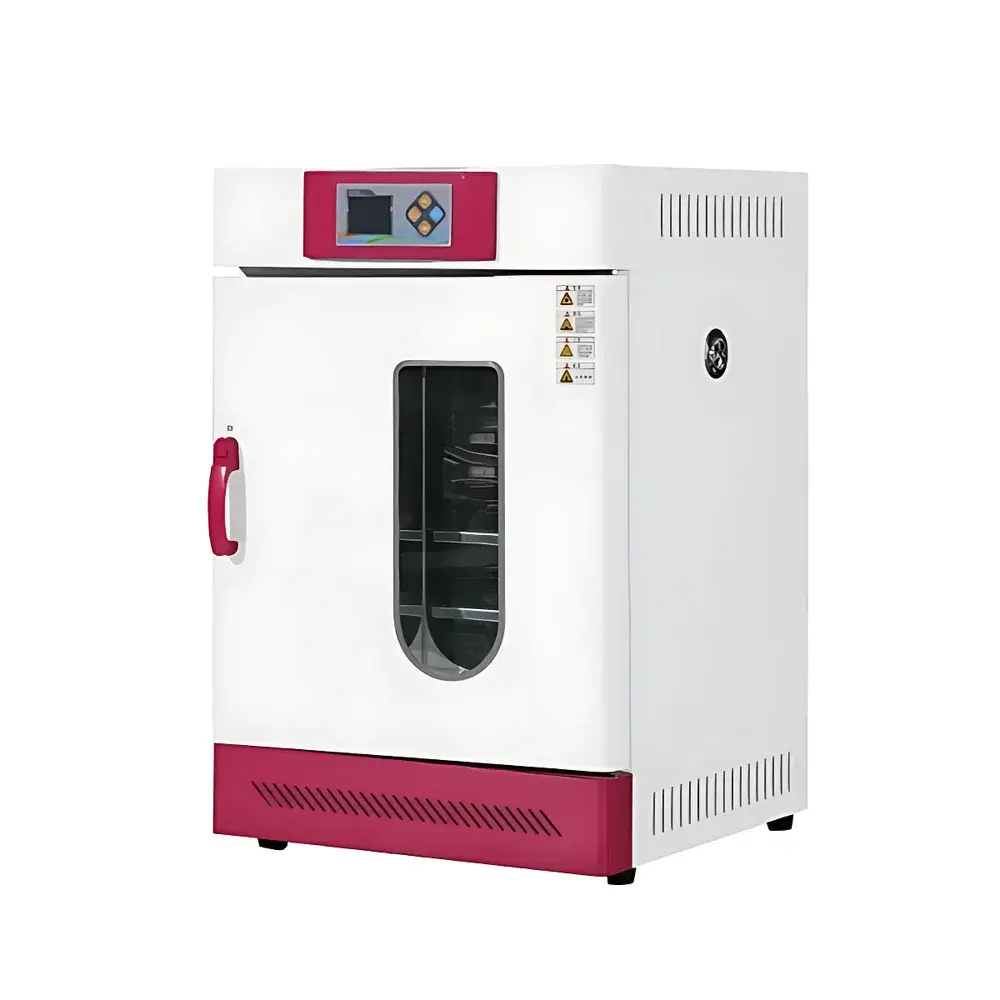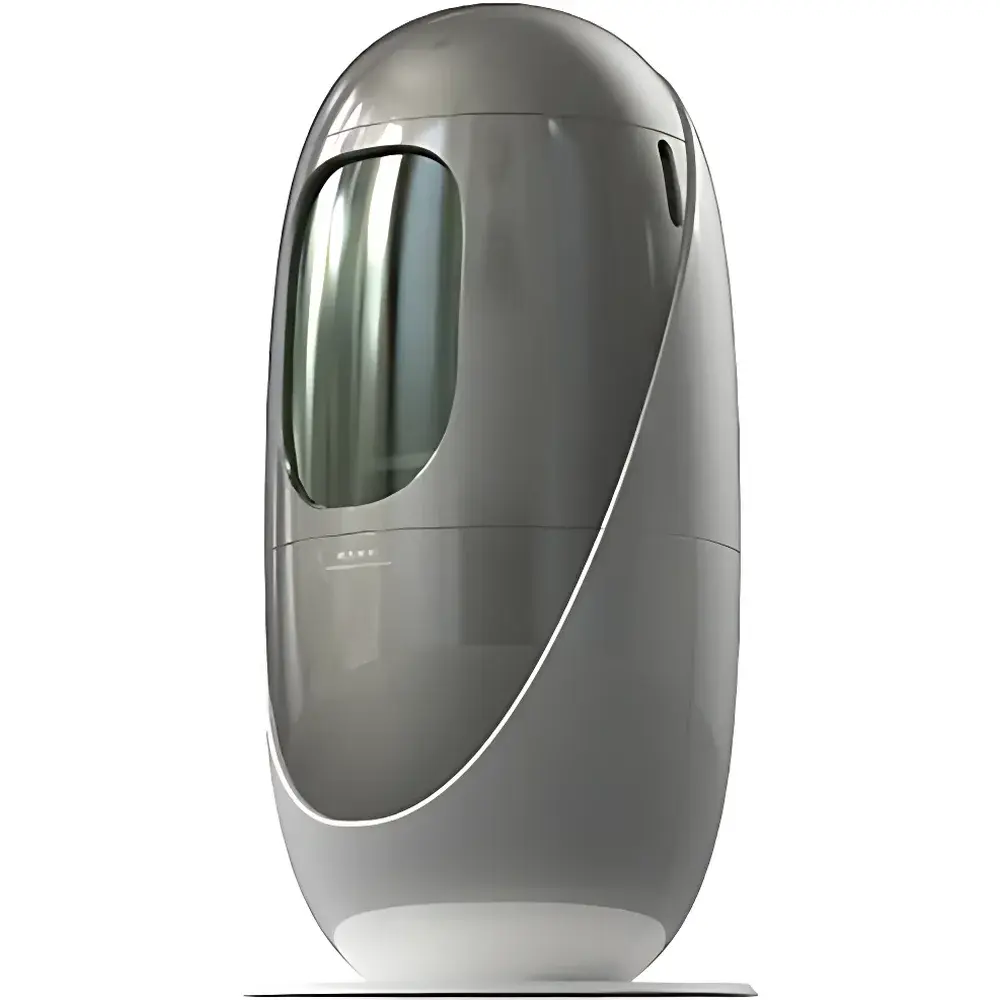
Artemis MARS Near-Infrared II (NIR-II) Small Animal In Vivo Fluorescence Imaging System
| Brand | Artemis |
|---|---|
| Origin | Shanghai, China |
| Manufacturer Type | Original Equipment Manufacturer (OEM) |
| Country of Origin | China |
| Model | MARS |
| Instrument Category | Optical In Vivo Imaging System |
| Camera | Teledyne Princeton Instruments NIRvana Series |
| Optical Configurations | FAST (Wide-Field Acquisition) & Pathfinder (High-Resolution Targeted Imaging) |
| Modularity | Fully Modular Platform for Multimodal Integration |
| Sample Capacity | Single-animal positioning stage (mouse/rat compatible) |
| Dye Compatibility | Water-soluble D-A-D small-molecule NIR-II fluorophores (e.g., QY ≈ 1.2% at ~1000–1700 nm) |
Overview
The Artemis MARS Near-Infrared II (NIR-II) Small Animal In Vivo Fluorescence Imaging System is an engineered platform designed for quantitative, non-invasive optical imaging in preclinical rodent models. Operating within the 1000–1700 nm spectral window—commonly referred to as the NIR-IIb sub-band—the system leverages reduced photon scattering and minimal tissue autofluorescence to achieve significantly improved spatial resolution and signal-to-background ratio compared to conventional visible or NIR-I (700–900 nm) modalities. At its core, MARS integrates a high-sensitivity, deep-cooled scientific-grade InGaAs camera from Teledyne Princeton Instruments’ NIRvana series, optimized for quantum efficiency (>80% peak QE at 1300 nm) and ultra-low read noise (<15 e⁻ RMS), enabling detection of weak, transient fluorescence signals from endogenous or exogenous NIR-II probes. The system is not a turnkey black box; rather, it is architected as an open-platform instrument—supporting hardware-level synchronization, third-party software API access, and mechanical/electrical interfaces compliant with standard preclinical imaging infrastructure.
Key Features
- Scientific-grade NIR-II imaging engine: NIRvana 640LN InGaAs camera with 640 × 512 pixel resolution, thermoelectric cooling to –80°C, and <15 e⁻ read noise at 100 kHz readout speed.
- Dual optical path architecture: FAST mode provides wide-field illumination and acquisition (up to 12 cm × 12 cm FOV at 1× magnification) for whole-body screening; Pathfinder mode employs motorized zoom optics and precision pinhole alignment for targeted high-magnification imaging (spatial resolution ≤ 25 µm at working distance).
- Modular mechanical design: Standardized optical rails, ISO-KF vacuum flanges, and TTL-triggered peripheral ports enable seamless integration with ultrasound biomicroscopy (UBM), photoacoustic tomography (PAT), micro-CT, PET/CT, and MRI-compatible animal handling stages.
- Open software architecture: Native support for MATLAB, Python (via PyVISA and OpenCV bindings), and LabVIEW drivers—facilitating custom algorithm development, real-time processing pipelines, and automated acquisition protocols.
- Regulatory-ready data handling: Audit-trail-enabled acquisition logs, timestamped metadata embedding (including excitation wavelength, exposure time, binning, gain, and filter position), and optional 21 CFR Part 11-compliant user authentication modules.
Sample Compatibility & Compliance
MARS accommodates standard murine models (C57BL/6, BALB/c, nude, NSG) and rat strains (Sprague-Dawley, Wistar) using a motorized, heated, and gas-anesthetized stage with integrated ECG/respiratory monitoring inputs. The system supports both dorsal and ventral positioning, with adjustable LED-based white-light reflectance illumination for anatomical reference overlay. All optical components comply with ISO 13485 design control requirements for Class I medical device manufacturing. While MARS itself is classified as a research-use-only (RUO) instrument under FDA guidance, its data output format (TIFF/FITS with embedded EXIF-style metadata) conforms to MIAME and MINSEQE reporting standards for publication-grade imaging datasets. Validation documentation—including linearity verification across 3-log intensity range, dark-current stability assessment (≤0.5% drift over 2 h), and spectral response calibration traceable to NIST SRM 2035—is supplied with each installation.
Software & Data Management
The Artemis Imaging Suite (v4.2+) provides a unified GUI for acquisition, co-registration, quantification, and export. Key capabilities include multi-channel spectral unmixing (for simultaneous NIR-IIa/NIR-IIb dye discrimination), dynamic contrast enhancement using local histogram equalization, and region-of-interest (ROI)-based kinetic curve extraction with background subtraction algorithms compliant with ICH M10 bioanalytical method validation principles. Raw image stacks are stored in hierarchical HDF5 containers with embedded provenance metadata (operator ID, protocol version, instrument firmware revision). Export options include DICOM-SR for PACS integration, NIfTI-1 for neuroimaging workflows, and CSV/TXT for pharmacokinetic modeling (e.g., two-compartment modeling in PKSolver). Optional add-ons include GLP audit trail logging and encrypted database backend (PostgreSQL with AES-256 encryption).
Applications
- Longitudinal vascular mapping: High-resolution visualization of cerebral, coronary, and tumor-associated vasculature using water-soluble D-A-D small-molecule fluorophores (e.g., CH1055 derivatives) with reported quantum yields of ~1.2% in aqueous buffer and circulation half-lives >4 h in murine models.
- Lymphatic drainage kinetics: Real-time tracking of interstitial tracer clearance via popliteal or axillary lymph nodes under controlled thermal and pressure conditions.
- Theranostic agent evaluation: Quantitative assessment of probe accumulation, retention, and metabolic clearance in orthotopic xenografts and genetically engineered mouse models (GEMMs) of solid tumors.
- Multimodal correlation studies: Synchronized acquisition with micro-CT enables precise anatomical anchoring of functional NIR-II signals; concurrent photoacoustic imaging validates oxygen saturation (sO₂) gradients within imaged regions.
- Neuroinflammation monitoring: Detection of activated microglia using NIR-II-labeled anti-CD11b antibodies, with signal specificity validated against immunohistochemistry and flow cytometry endpoints.
FAQ
What excitation sources are supported?
MARS accepts fiber-coupled laser diodes (785 nm, 808 nm, 850 nm, 1064 nm) and tunable OPO systems (900–1300 nm) via SMA905 or FC/PC input ports. Laser safety interlocks and power monitoring are integrated per IEC 60825-1:2014 Class 3B compliance.
Is the system compatible with fluorescent lifetime imaging (FLIM)?
Yes—when paired with a time-correlated single-photon counting (TCSPC) module (e.g., Becker & Hickl SPC-150NX) and pulsed laser source (e.g., PicoQuant LDH-D-C-808), MARS supports gated acquisition with temporal resolution down to 25 ps FWHM.
Can I perform quantitative pharmacokinetic analysis directly in the software?
Yes—the Artemis Imaging Suite includes built-in compartmental modeling tools that accept user-defined initial parameters and generate AUC, Cmax, T½, and Vd estimates in accordance with FDA Guidance for Industry: Bioanalytical Method Validation (May 2018).
Does MARS support GMP/GLP-compliant workflows?
Standard configuration includes electronic signature support, change control logs, and raw-data immutability enforcement. Full 21 CFR Part 11 compliance requires optional Validation Package (IQ/OQ/PQ documentation + site-specific risk assessment).
What maintenance is required for the InGaAs sensor?
The NIRvana camera is sealed and vacuum-pumped at factory; no user-serviceable parts exist. Annual recalibration of quantum efficiency and dark current profile is recommended, traceable to NIST-certified reference detectors.