
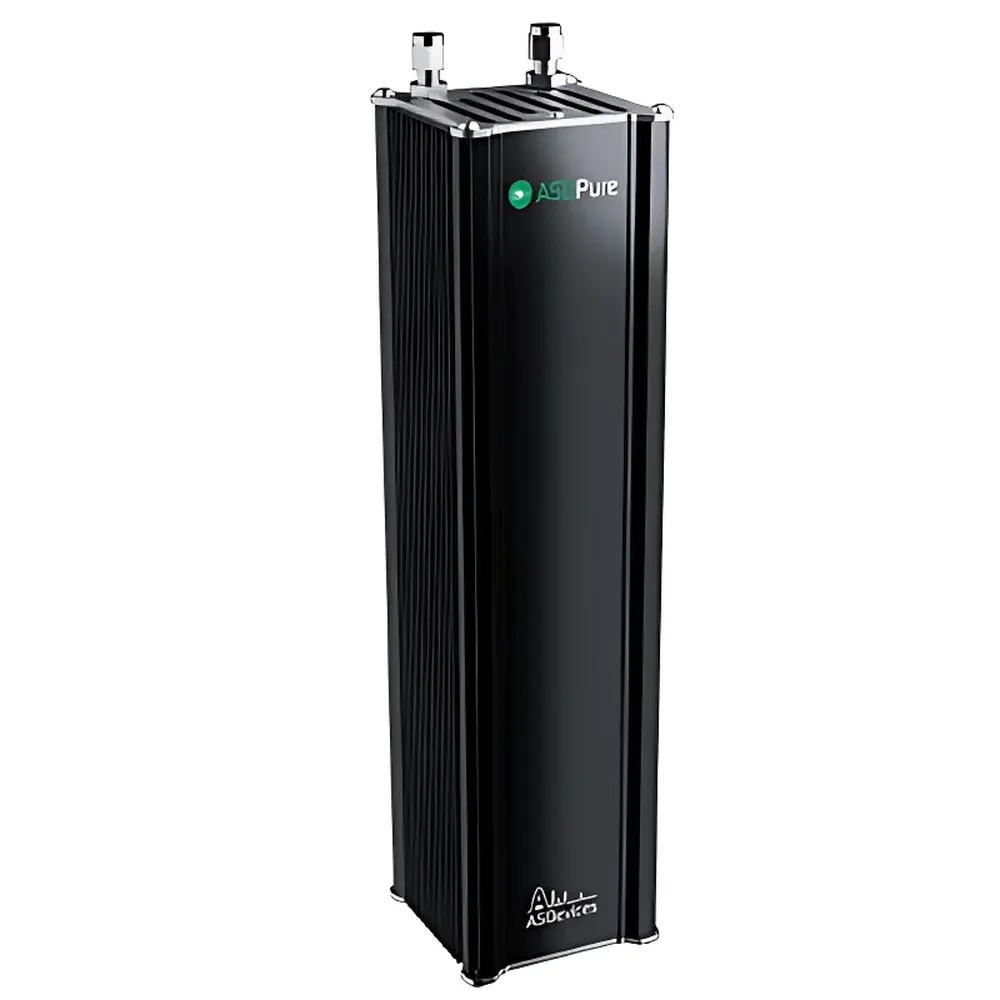
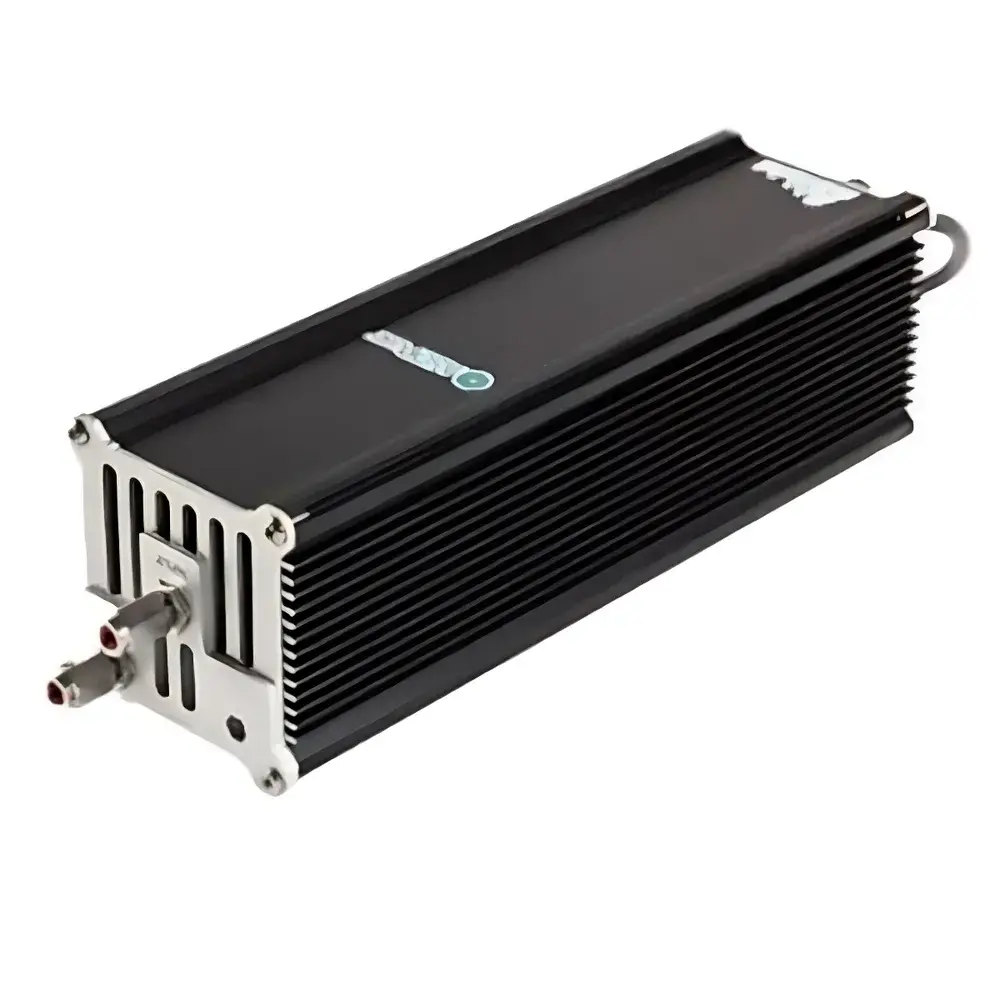
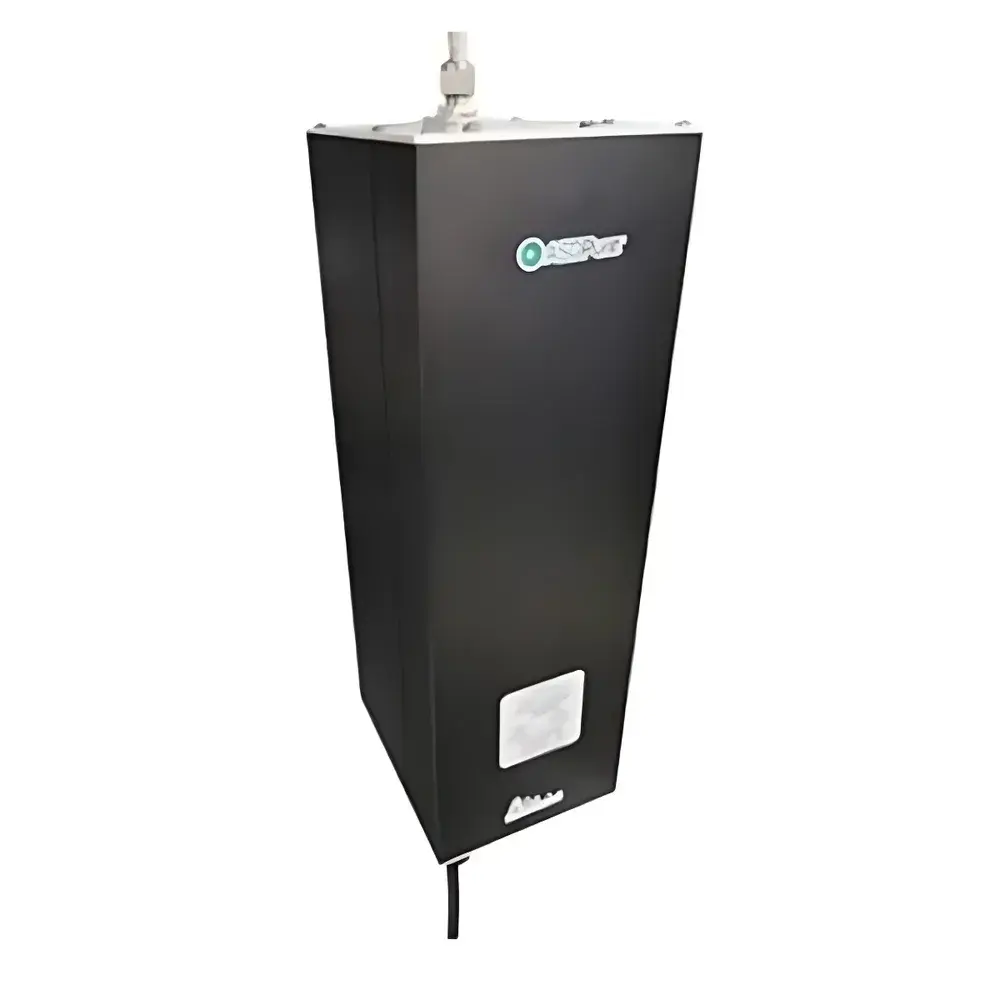
ASD ASDPureTM High-Purity Specialty Gas Purifier
| Brand | ASD |
|---|---|
| Origin | Canada |
| Model | ASDPureTM |
| Detection Targets | Trace impurities in helium, hydrogen, nitrogen, carbon dioxide, and other industrial gases |
| Compatible Gases | Ar, He, Ne, Xe, Kr (N₂ purification optional) |
| Impurities Removed | H₂O, O₂, CO, CO₂, H₂, THC, CH₄, N₂ |
| Purification Depth | <1 ppb |
| Flow Rate Options | 300 mL/min, 1 L/min, 5 L/min |
| Operating Temperature | Ambient |
Overview
The ASD ASDPureTM High-Purity Specialty Gas Purifier is an engineered solution for ultra-trace impurity removal from inert and reactive specialty gases used in analytical instrumentation, semiconductor manufacturing, and high-precision research environments. Utilizing thermally activated, regenerable metal oxide and catalytic absorbent media arranged in a dual-stage configuration, the ASDPureTM operates on the principle of selective chemisorption and catalytic conversion—enabling consistent sub-part-per-trillion (sub-ppt) residual impurity levels across critical gas streams. Unlike passive or room-temperature purifiers, its heated absorption architecture ensures kinetic efficiency for low-concentration contaminants such as H₂, CO, and hydrocarbons—even at ambient inlet temperatures—while maintaining stable performance over extended service intervals. Designed specifically for integration into carrier gas lines, zero-air generation systems, and mass spectrometry helium supply networks, the ASDPureTM delivers certified purity upgrades from 5.0 (99.999%) to 9.0 (99.9999999%) grade gases without requiring cryogenic or membrane-based infrastructure.
Key Features
- Dual-stage heated absorption technology: First stage removes moisture, oxygen, and CO₂ via high-capacity desiccants and metal oxides; second stage eliminates H₂, CO, THC, CH₄, and trace nitrogen using temperature-stabilized palladium catalysts and proprietary getter alloys.
- No hydrogen outgassing: Dual-stage design prevents catalytic recombination of residual H₂O or CO that could generate molecular hydrogen—a critical requirement for electron capture detection (ECD) and pulsed discharge ionization detection (PDID) applications.
- Gas-specific modular absorbent cartridges: Pre-configured for Ar, He, Ne, Xe, and Kr; optional N₂-compatible configuration available upon request for controlled atmosphere applications.
- Flow-flexible architecture: Standard 300 mL/min capacity with validated performance; upgradeable to 1 L/min or 5 L/min configurations via calibrated flow restrictors and reinforced thermal management.
- Robust ambient-temperature operation: No external cooling or heating utilities required; internal heater control maintains optimal adsorbent temperature (typically 120–180 °C) independent of ambient fluctuations.
Sample Compatibility & Compliance
The ASDPureTM supports routine use with ultra-high-purity (UHP) argon, helium, neon, xenon, and krypton—meeting ASTM D7607-22 specifications for residual impurity limits in carrier gases for gas chromatography. Optional N₂ purification meets ISO 8573-1 Class 1 compressed air purity requirements when integrated with zero-air generators. All absorbent media are RoHS-compliant and manufactured under ISO 9001-certified processes. The system is compatible with GLP/GMP workflows requiring audit-ready documentation: cartridge replacement logs, flow calibration certificates, and impurity breakthrough test reports are provided per unit shipment. While not intrinsically rated for hazardous area installation, it may be deployed in Class 1, Division 2 environments when installed upstream of analytical instruments per NEC Article 500 guidelines.
Software & Data Management
The ASDPureTM is a hardware-only purification module with no embedded firmware or digital interface. However, it integrates seamlessly with third-party gas monitoring platforms (e.g., Siemens Desigo, Emerson DeltaV, or custom SCADA systems) via analog 4–20 mA output signals from optional inline residual moisture (TDLAS) or oxygen (zirconia sensor) monitors. Each unit ships with a Certificate of Conformance listing initial breakthrough testing data (per ISO 10156 Annex B), batch-specific absorbent activation parameters, and recommended service interval guidance aligned with USP and ICH Q5C gas quality expectations. Full traceability is maintained through serialized cartridge IDs linked to QC test records archived for 10 years.
Applications
- Carrier gas purification for GC-TCD, GC-FID, GC-ECD, GC-PDID, and GC-DID systems requiring baseline stability and detector sensitivity below 100 fA.
- Zero-air generation support: Final-stage polishing for synthetic air systems used in ambient air monitoring calibrations per EPA Method TO-15 and EN 14662.
- Helium supply conditioning for high-resolution mass spectrometry (HRMS), including Orbitrap and magnetic sector platforms where <0.1 ppb O₂/H₂O is mandatory.
- Process gas conditioning in semiconductor CVD/ALD tooling where Ar/He purge lines must meet SEMI F57-0301 purity thresholds for metallic contamination control.
- Reference gas stabilization for photometric ozone analyzers (UV absorption) and cavity ring-down spectroscopy (CRDS) systems operating in ppq-level detection regimes.
FAQ
What is the expected service life of the absorbent cartridges under continuous 300 mL/min operation?
Typical service life ranges from 6–12 months depending on inlet impurity load; a full replacement set includes both Stage 1 and Stage 2 cartridges with documented breakthrough validation.
Can the ASDPureTM be regenerated in situ?
No—cartridges are single-use, factory-activated units designed for trace-level removal; regeneration would compromise structural integrity and reproducibility.
Is N₂ purification performance equivalent to noble gas purification?
N₂ compatibility requires a modified Stage 2 formulation optimized for nitrogen matrix interference; performance metrics (<1 ppb O₂/H₂O) remain identical, but THC removal efficiency is reduced by ~15% relative to He/Ar streams.
Does the system require periodic calibration or certification?
While no field calibration is needed, annual verification using certified standard gas mixtures (e.g., Air Liquide CertiGas®) is recommended for ISO/IEC 17025-accredited labs.
How is pressure drop managed across the dual-stage configuration at 5 L/min flow?
The 5 L/min variant incorporates low-backpressure ceramic support matrices and expanded cross-sectional absorbent geometry to maintain ΔP < 25 psi at rated flow—verified per ISO 11170 Annex A.







