
ASD KA5800 Online Ion Chromatograph
| Brand | ASD |
|---|---|
| Origin | Canada |
| Model | KA5800 |
| Instrument Type | Online Analyzer |
| Application Scope | General-Purpose |
| Operating System | Embedded Linux with Touchscreen Interface |
| Detection Principle | Dual-Polarity Pulsed Electrochemical Conductivity Detection |
| Data Acquisition | Real-Time Asynchronous Parallel Chromatography |
| Sample Introduction | Automated Multi-Channel Switching with Integrated Pre-Treatment Module |
| Calibration Method | Single-Point Standard-Based Auto-Calibration |
| Detection Enhancement | eLOD Noise-Filtering Algorithm (3–5× Sensitivity Gain) |
| Gas Capture Technology | Multi-Threaded Aeration Trapping (KA5800-EIC Variant, Patent Pending) |
| Analysis Cycle | <30 min per Full Sequence |
| Sample Volume Requirement | ≤1.5 L for ppb-Level Analysis |
| Compliance Framework | Designed for GLP/GMP Environments |
| Temperature Control | Digital Precision Dual-Zone Column & Detector Thermostat |
Overview
The ASD KA5800 Online Ion Chromatograph is a modular, embedded-system-based analytical platform engineered for continuous, unattended ion monitoring in industrial process streams, environmental emissions, and high-purity gas supply lines. Unlike conventional benchtop ion chromatographs, the KA5800 integrates hardware modularity with deterministic real-time control architecture—enabling deployment as a dedicated online analyzer rather than a lab-shared instrument. Its core detection principle relies on digital-controlled dual-polarity pulsed electrochemical conductivity detection, delivering stable baseline performance under variable flow and temperature conditions typical of plant-floor environments. The system employs suppressed conductivity detection with chemical or electrolytic suppression, optimized for anions (e.g., F⁻, Cl⁻, NO₂⁻, NO₃⁻, SO₄²⁻, PO₄³⁻) and cations (e.g., NH₄⁺, Na⁺, K⁺, Ca²⁺, Mg²⁺) across aqueous and gas-phase matrices. The KA5800-EIC variant extends capability into trace gaseous impurity analysis via patented multi-threaded aeration trapping—a technique that quantitatively transfers volatile ionic species (e.g., NH₃, HCOOH, HCl, HF, HI) from gas to liquid phase using calibrated carrier gas standards, thereby eliminating interphase matrix effects inherent in traditional absorption-based calibration.
Key Features
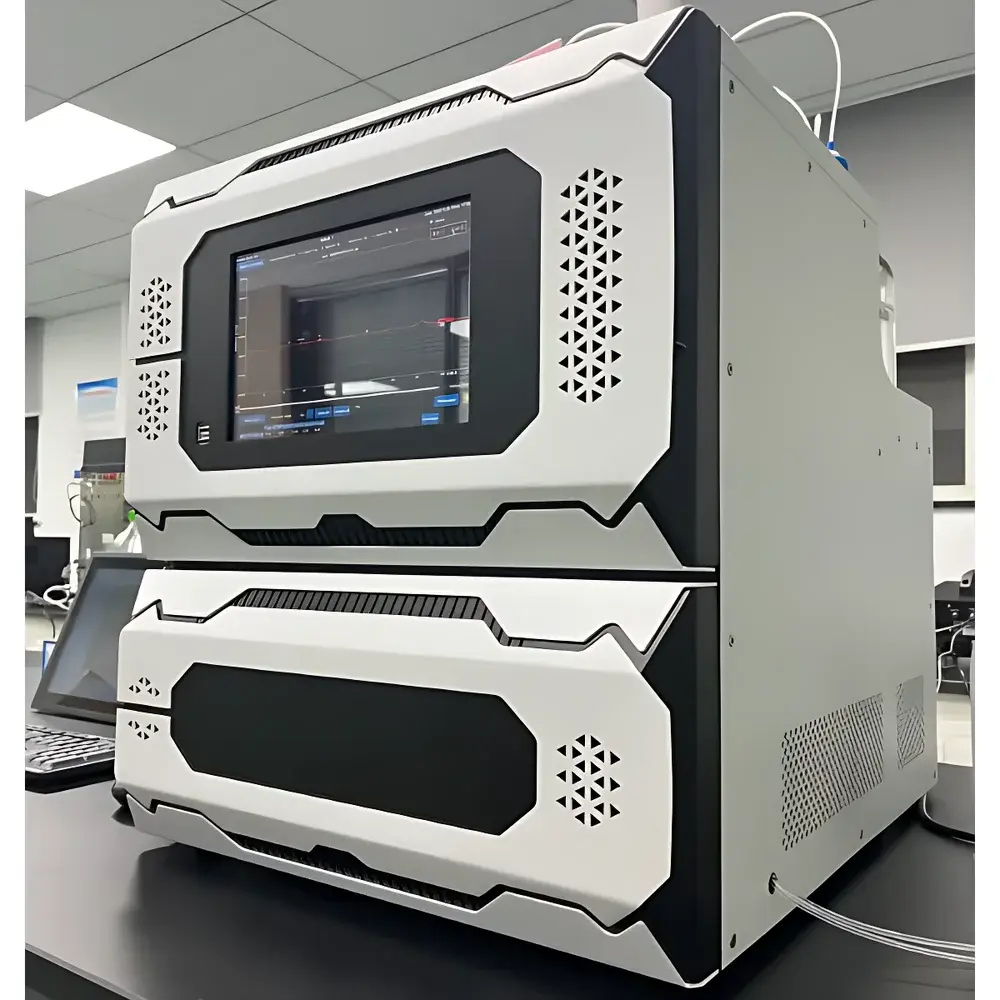
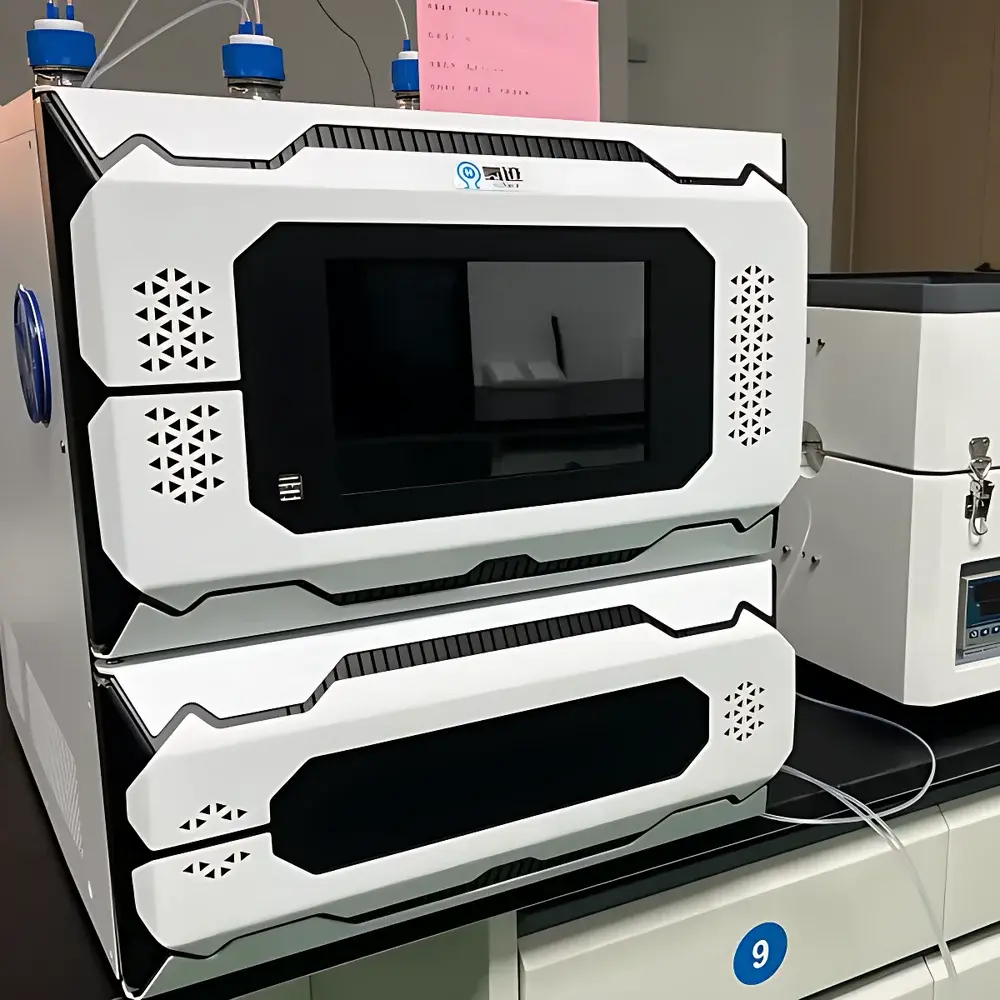
- Modular hardware architecture: Independent pump, injector, column oven, detector, and eluent generator modules support field-configurable layouts for space-constrained or hazardous-area installations.
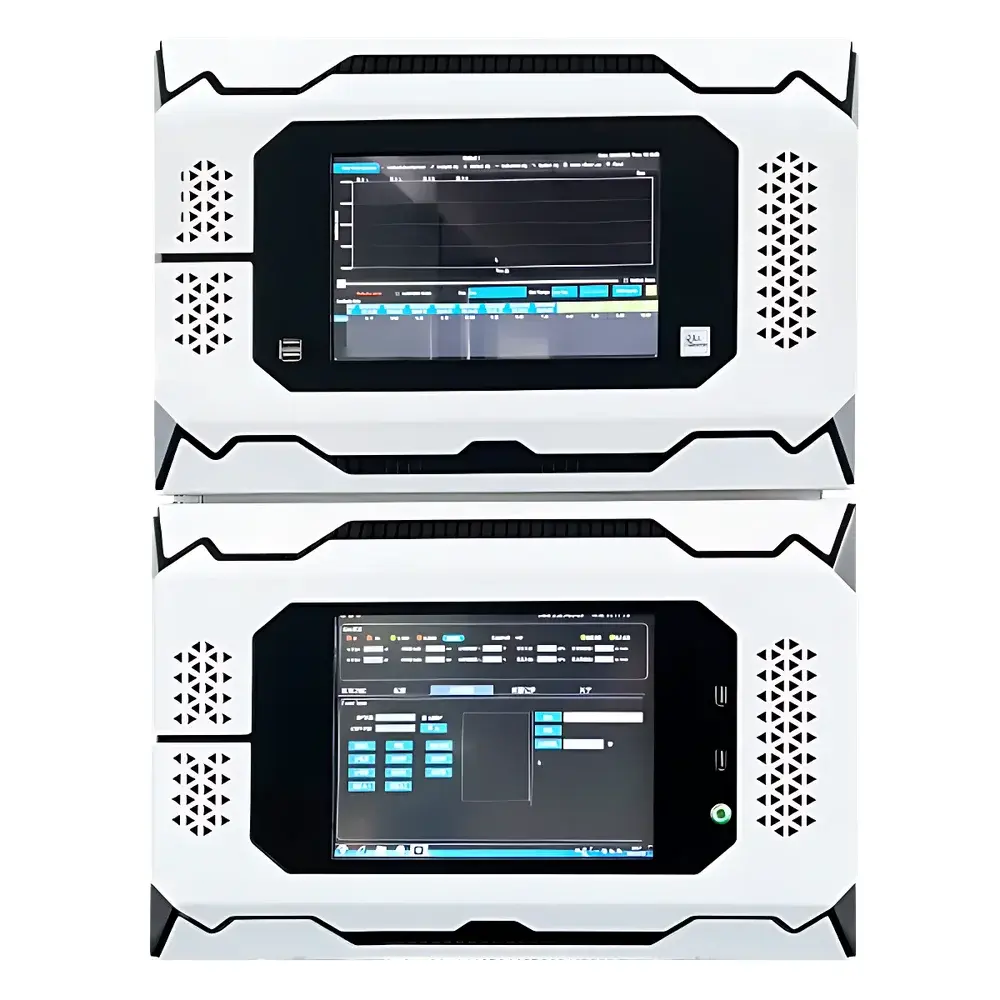
- Embedded Linux operating system with 10.1″ capacitive touchscreen interface: Eliminates external PC dependency; supports local operation, diagnostics, and firmware updates without network exposure.
- eLOD (enhanced Limit of Detection) signal-processing algorithm: Applies adaptive digital filtering to raw detector output, reducing high-frequency noise while preserving peak shape integrity—yielding 3–5× improvement in practical sensitivity without hardware modification.
- Asynchronous parallel chromatography: Two independent separation channels operate under distinct gradient programs, enabling simultaneous analysis of complementary ion sets (e.g., anions + cations) or redundant verification runs for critical quality control points.
- Automated multi-stream sample introduction: Up to eight inlet ports managed by programmable rotary valve; each stream assigned unique injection volume, loop fill time, and pre-injection conditioning protocol.
- Integrated sample preparation module: Onboard filtration, pH adjustment, degassing, and dilution functions are directly orchestrated via chromatographic method files—ensuring full traceability from raw sample to final report.
- Digital dual-zone thermal management: Independent PID-controlled ovens for separation column (30–60 °C) and conductivity cell (35–45 °C), minimizing thermal drift and improving retention time reproducibility (<0.15% RSD over 72 h).
Sample Compatibility & Compliance
The KA5800 accepts liquid samples (aqueous matrices, condensates, scrubber effluents) and gas-phase samples via optional EIC interface. For liquid analysis, it accommodates conductivity ranges from 0.05 to 20 mS/cm and suspended solids up to 5 µm nominal pore size. Gas analysis requires integration with standardized permeation tubes or certified gas standards (NIST-traceable), particularly for NH₃, formic acid vapor, and hydrogen halides. Regulatory alignment includes design-level compatibility with ISO 17025 method validation requirements, ASTM D4327 and D6919 for water anion/cation profiling, USP for purified water conductivity mapping, and IEC 61511 for safety-related instrumentation in process industries. Audit trail functionality meets FDA 21 CFR Part 11 criteria when configured with user authentication, electronic signatures, and immutable data archiving.
Software & Data Management
The native ChromaControl™ workstation provides unified control of all hardware modules through a role-based web-accessible interface (HTTPS/TLS 1.2). Methods define not only gradient profiles and detection parameters but also pre- and post-run maintenance sequences (e.g., column regeneration, detector rinse cycles). All raw chromatograms, processed results, system logs, and environmental sensor readings (pressure, temperature, conductivity) are stored in vendor-agnostic HDF5 format with embedded metadata (ISO/IEC 11179 compliant). Data export supports CSV, CDF, and ANDI-MSI formats for third-party statistical packages. Remote troubleshooting is enabled via secure SSH tunneling; no inbound open ports required. Firmware updates follow signed package verification to ensure integrity.
Applications
- Real-time monitoring of boiler feedwater and steam condensate for chloride and sulfate ingress in power generation.
- Continuous verification of semiconductor-grade ultrapure water (UPW) against SEMI F63 specifications.
- Trace halide and amine impurity tracking in hydrogen, nitrogen, and argon supply lines for photolithography tool purge gases.
- Automated wastewater compliance reporting per EPA Method 300.0 and ISO 10304-1 for municipal treatment plants.
- In-line QC of lithium-ion battery electrolyte formulations for fluoride, phosphate, and sulfate contaminants.
- Environmental stack gas analysis for regulated acid gases (HCl, HF, HBr) under EU Directive 2010/75/EU (IED).
FAQ
Is the KA5800 compatible with existing LIMS or MES platforms?
Yes—via OPC UA 1.04 server implementation and configurable RESTful API endpoints for result push/pull integration.
Can the system operate without internet connectivity?
Absolutely; all control, acquisition, and reporting functions execute locally on the embedded controller. Network access is optional and limited to secure remote support or data export.
What maintenance intervals are recommended for online operation?
Pump seals and suppressor cartridges require replacement every 6 months under continuous use; column lifetime exceeds 2,000 injections with proper eluent filtration and guard column usage.
Does KA5800-EIC require specialized gas calibration standards?
Yes—certified permeation devices or dynamic dilution systems traceable to NIST SRM 2691 (NH₃) or SRM 2692 (HCl) are mandatory for quantitative accuracy in gas-phase mode.
How is method transfer handled between offline and online configurations?
ChromaControl™ supports bidirectional method import/export in .icm format; retention time alignment is achieved via internal standard referencing and adaptive peak matching algorithms.




