
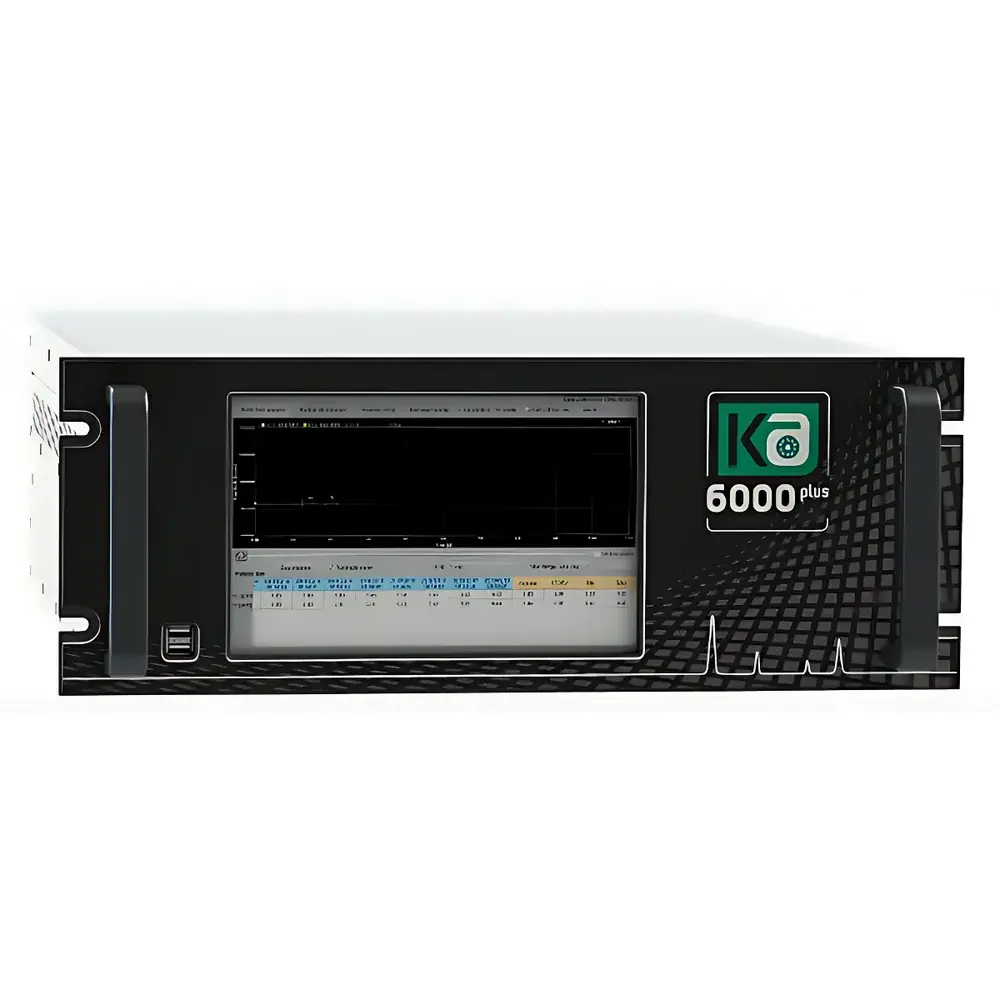
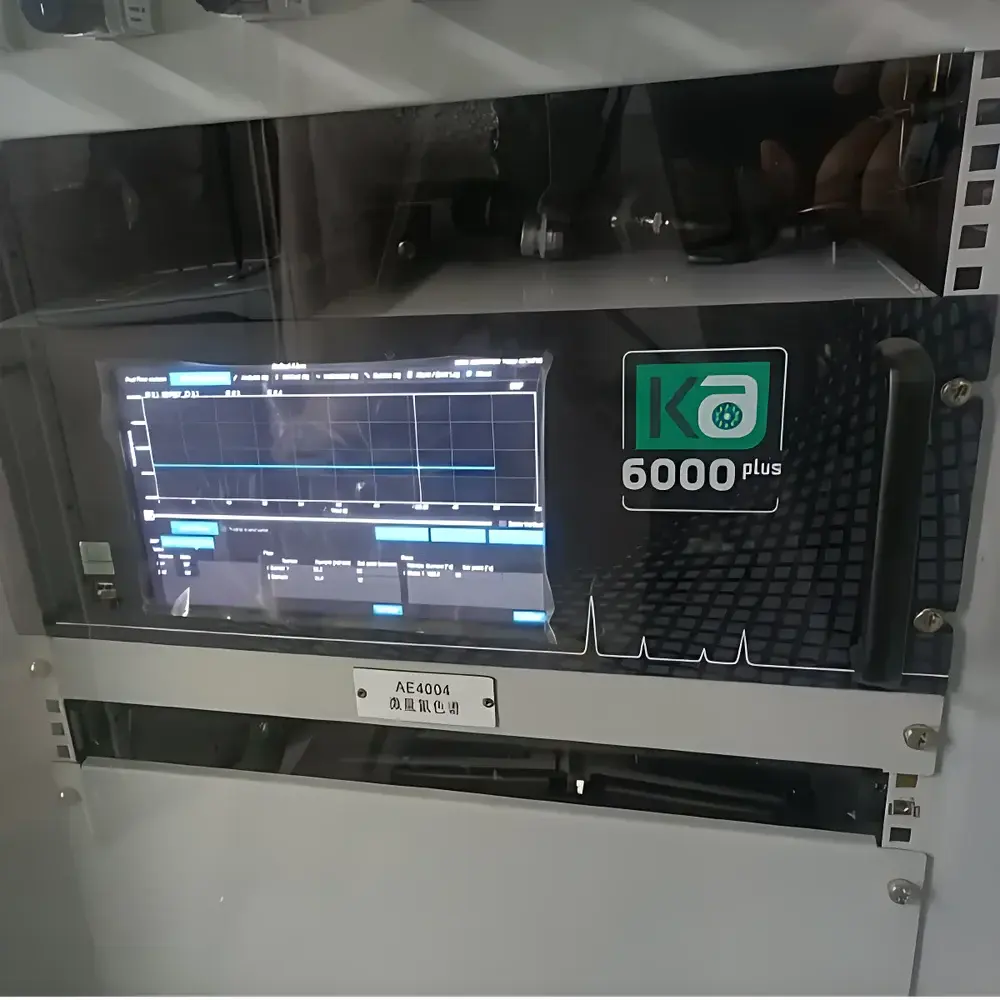
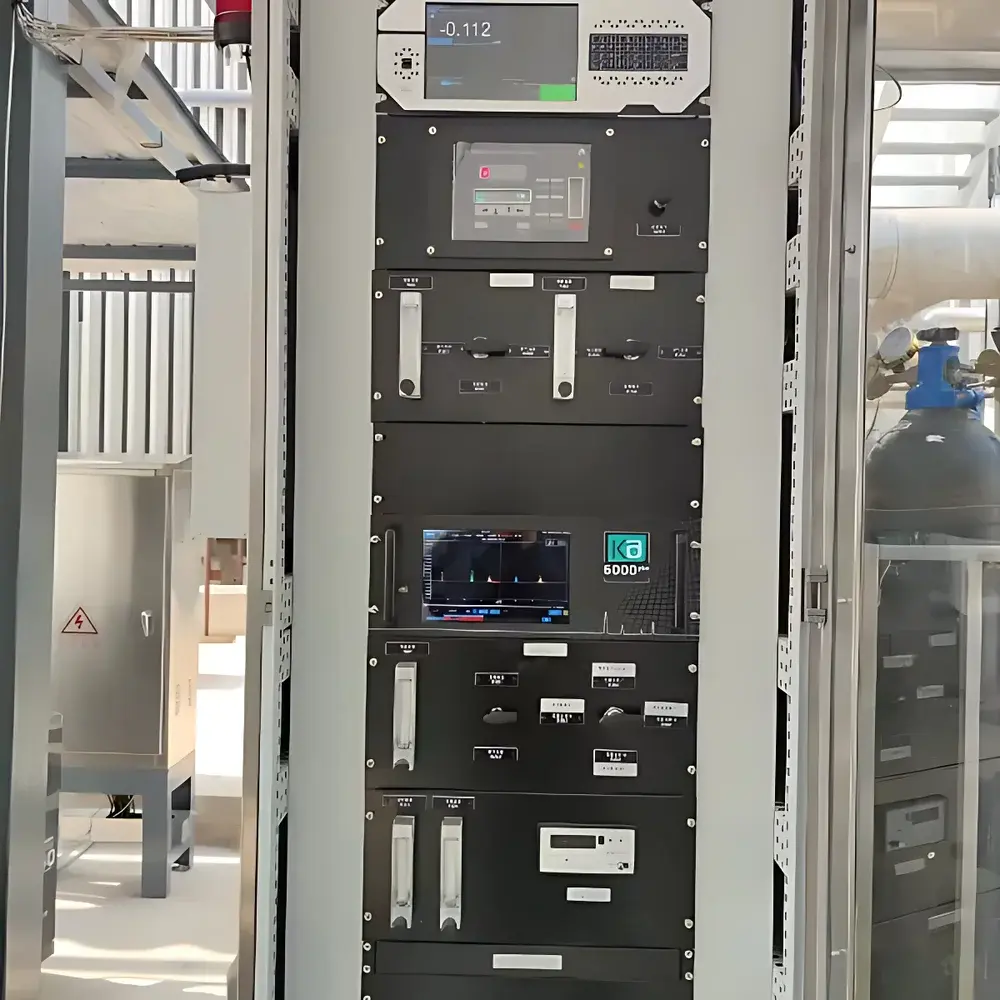
ASD Ka6000 Plus Online Gas Chromatograph
| Brand | ASD |
|---|---|
| Origin | Canada |
| Model | Ka6000 Plus |
| Instrument Type | Online Gas Chromatograph |
| Temperature Control Range | Ambient +4 °C to 450 °C |
| Maximum Ramp Rate | 75 °C/min |
| Cooling Rate | ~6 min (from 400 °C to 50 °C) |
| Carrier Gas Flow Range | 30–100 mL/min |
| Carrier Gas Pressure Range | 90–100 psig |
| Injector Max Operating Temperature | 400 °C |
| Injector Pressure Setting Range | 3–25 psig |
| Injector Total Flow Setting Range | 5–200 mL/min |
| Column Oven Zones | Up to 4 independently controlled zones |
| Valves | Up to 5 programmable PLSV valves |
| Detectors | Up to 2 gas-phase detectors (e.g., EPD) |
| Detection Limit (LOD) | <1 ppb (stable, compound-dependent) |
Overview
The ASD Ka6000 Plus Online Gas Chromatograph is a rack-mounted, industrial-grade analytical platform engineered for continuous, unattended gas composition monitoring in demanding process and environmental applications. Built on the GCSense architecture and integrated with the IMov modular framework, it implements classical gas chromatographic separation—based on differential partitioning of volatile analytes between a mobile gas phase (carrier gas) and a stationary phase coated inside fused-silica capillary or packed columns. Its design emphasizes robustness, thermal stability, and long-term reproducibility under 24/7 operation. The system supports up to four independently heated oven zones, enabling precise temperature programming across complex multi-column configurations, and accommodates up to five high-cycle PLSV (Pneumatically-Actuated, Low-Dead-Volume, Self-Validating) valves for automated sample routing, backflushing, and column switching. With its embedded digital signal processing engine and real-time chromatogram reconstruction, the Ka6000 Plus delivers consistent retention time alignment and peak shape fidelity—critical for compliance with ASTM D1945, ISO 6974, USP , and EPA Method 8260/8021 requirements.
Key Features
- IMov modular platform: Pre-integrated, factory-tested GC configuration with plug-and-play detector modules, valve manifolds, and oven assemblies—reducing commissioning time and field validation burden.
- Fully independent column oven zoning: Four thermally isolated zones with PID-controlled heating and active air-cooling, supporting simultaneous isothermal and gradient elution protocols across multiple columns.
- Patented electronic pressure control (EPC): Dual-channel EPC for both carrier and sample gas streams, incorporating purge functionality to eliminate residual dead volume and ensure repeatable flow/pressure setpoints (3–25 psig injector pressure; 90–100 psig carrier pressure).
- Liplock zero-dead-volume fittings: Stainless-steel, metal-to-metal compression fittings with proprietary sealing geometry—validated to prevent leakage and adsorption at trace-level (<1 ppb) analysis.
- Enhanced Plasma Discharge Detector (EPD): A low-noise, high-sensitivity universal detector optimized for permanent gases (O2, N2, Ar), hydrocarbons (C1–C4), and sulfur compounds (H2S, COS, SO2)—with stable baseline and sub-ppb LOD across extended calibration intervals.
- Industrial-grade 4U 19-inch rack form factor: Designed for integration into PLC-controlled skids, analyzer shelters, or central utility rooms—with IP54-rated front panel, wide operating ambient range (5–40 °C), and EMC-compliant power supply.
Sample Compatibility & Compliance
The Ka6000 Plus is validated for direct injection of compressed gases, liquefied petroleum gas (LPG), natural gas, refinery off-gas, ambient air, and ultra-high-purity (UHP) electronic-grade gases (e.g., N2, He, Ar, H2). Its inert flow path—comprising SilcoNert®-treated stainless-steel tubing, electropolished valves, and low-bleed columns—minimizes surface adsorption and catalytic decomposition of reactive species (e.g., NH3, Cl2, HF). System-level compliance includes CE marking per Directive 2014/30/EU (EMC) and 2014/35/EU (LVD); full audit trails, user-access controls, and electronic signature support align with FDA 21 CFR Part 11 and EU Annex 11 for regulated environments. Calibration and performance qualification follow IQ/OQ/PQ protocols per ASTM E2655 and ISO/IEC 17025 guidelines.
Software & Data Management
The embedded GCSense software provides full instrument control via a 10.1-inch capacitive touchscreen interface—supporting method creation, sequence scheduling, real-time chromatogram visualization, and alarm-triggered event logging. All chromatographic data—including raw ADC values, processed peak tables, and system diagnostic logs—are stored locally on an industrial SSD with optional network backup (SFTP, OPC UA, or Modbus TCP). The platform supports secure remote access through TLS 1.2–encrypted web interface and integrates natively with LIMS (via ASTM E1384 or HL7) and MES systems. Audit trail records capture operator ID, timestamp, parameter changes, and calibration events—retained for ≥36 months with write-protection and tamper-evident hashing.
Applications
- Semiconductor manufacturing: Real-time monitoring of dopant gases (PH3, B2H6), etchants (Cl2, NF3), and purge gases (N2, Ar) for contamination control per SEMI F57.
- Air separation units (ASUs): Continuous O2/N2/Ar purity verification and hydrocarbon impurity detection (C2H2, CH4) to prevent explosive accumulation.
- Environmental compliance: On-site measurement of benzene, toluene, ethylbenzene, and xylenes (BTEX) in ambient air per EPA TO-15; H2S and mercaptans in biogas per ISO 14687.
- Petrochemical refining: C1–C5 speciation in FCC off-gas, hydrogen purity analysis, and sulfur compound profiling in LPG and naphtha streams.
- Food & tobacco: Headspace analysis of volatile organic compounds (VOCs) indicative of spoilage, fermentation, or additive migration—aligned with ISO 17255 and AOAC 2012.02.
FAQ
Is the Ka6000 Plus compatible with existing plant DCS or SCADA systems?
Yes—it supports native communication via Modbus TCP, OPC UA (PubSub and Client/Server), and analog 4–20 mA outputs with configurable engineering units and alarm thresholds.
Can the system operate without continuous PC connectivity?
Yes—the onboard Linux-based controller runs all acquisition, processing, and reporting functions autonomously; external PCs are only required for advanced method development or archival review.
What maintenance intervals are recommended for the EPD detector?
Under normal operation with UHP carrier gas and filtered samples, the EPD requires no routine consumables; annual verification of plasma electrode alignment and detector gain stability is advised per the PQ protocol.
Does the system support GLP/GMP-compliant reporting?
Yes—full electronic records, 21 CFR Part 11–compliant user roles, and immutable audit trails are enabled by default; PDF reports include digital signatures and cryptographic hash verification.
How is column conditioning and bake-out performed?
The GCSense software includes dedicated oven ramp profiles for column conditioning, with programmable hold times, maximum temperature limits, and automatic cooldown sequencing—all logged with timestamps and operator ID.
Related Products





