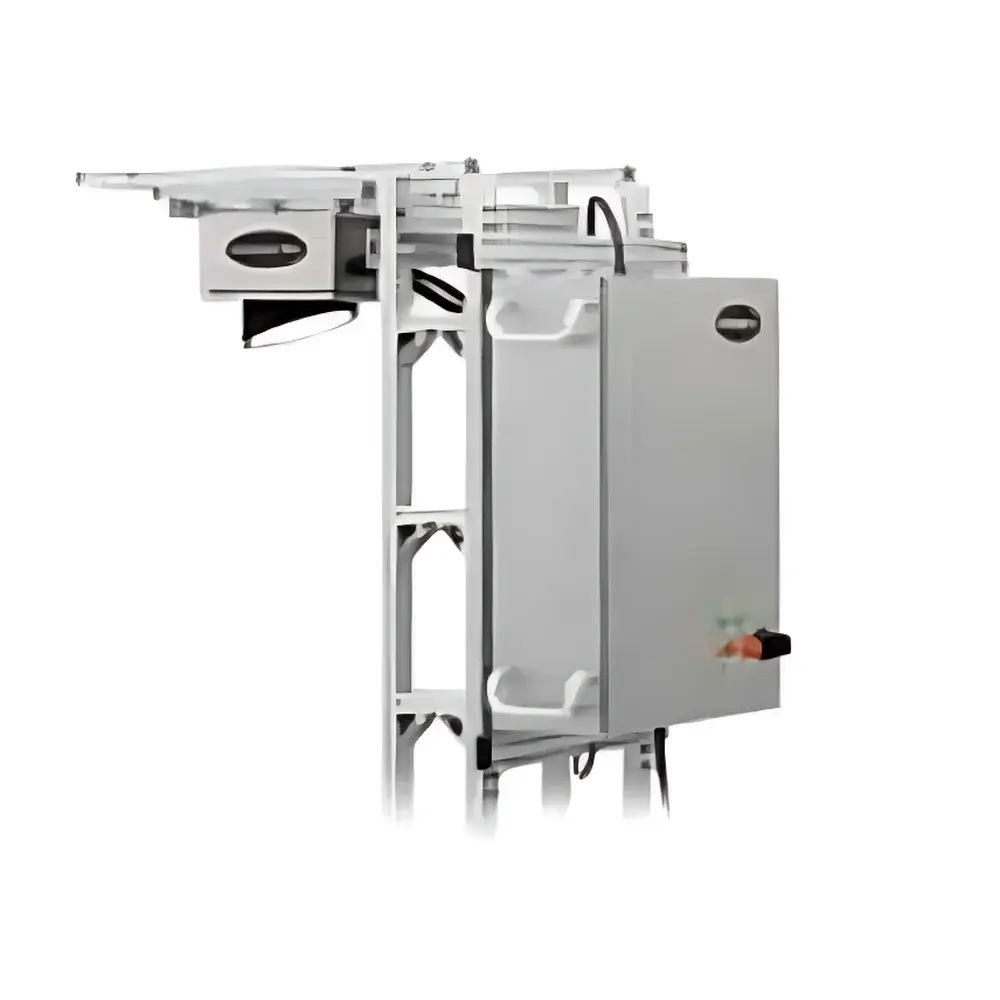
ASD QualitySpec 7000 Conveyor-Mounted NIR Mineral Process Analyzer
| Brand | ASD |
|---|---|
| Origin | USA |
| Model | QualitySpec 7000 |
| Wavelength Range | 350–2500 nm |
| Wavelength Accuracy | ±1 nm |
| Spot Size | 76–100 mm |
| Output Interface | Fast Ethernet (100BASE-T or 100BASE-FX) |
| OPC Server Integration | Yes |
| Max. Components Quantified | 20 per measurement |
| Light Source | 100 W Quartz Halogen |
| Optical Head to Conveyor Distance | 74 cm |
| Power Consumption | 230 W (±10%, 12 A, 50/60 Hz) |
| Operating Temperature | −20 to +50 °C |
| Relative Humidity | 5–95% non-condensing |
| Certifications | CE |
Overview
The ASD QualitySpec 7000 Conveyor-Mounted NIR Mineral Process Analyzer is an industrial-grade, real-time near-infrared (NIR) spectroscopic system engineered for continuous, non-contact compositional analysis of bulk mineral materials on moving conveyor belts. Unlike traditional offline laboratory assays or intermittent grab sampling, the QualitySpec 7000 operates on the principle of diffuse reflectance NIR spectroscopy—illuminating the material surface with a stable quartz halogen source and capturing spectral responses across a broad range (350–2500 nm) using a high-sensitivity array detector. This enables simultaneous quantification of up to 20 chemical or mineralogical components—including critical parameters such as swelling clay content, amphibole abundance, talc concentration, iron oxide ratios, and moisture—without physical contact, radiation hazard, or process interruption. Its design adheres to the fundamental requirements of industrial process analytical technology (PAT), supporting closed-loop control strategies in accordance with ICH Q8/Q9 frameworks and enabling data traceability compliant with 21 CFR Part 11 when integrated with validated software environments.
Key Features
- Real-time, continuous measurement at conveyor speeds up to 4 m/s, delivering compositional updates every 1–5 seconds depending on integration time and belt velocity
- Non-destructive, non-ionizing optical architecture: no X-ray generators, neutron sources, or radioactive isotopes—ensuring intrinsic safety and eliminating regulatory licensing burdens
- Robust mechanical design rated for harsh mining and processing environments: IP65-rated optical head; operating temperature range from −20 °C to +50 °C; humidity tolerance up to 95% non-condensing
- Integrated Model Quality Index (MQI) for each prediction, providing real-time diagnostic feedback on calibration validity and spectral signal integrity
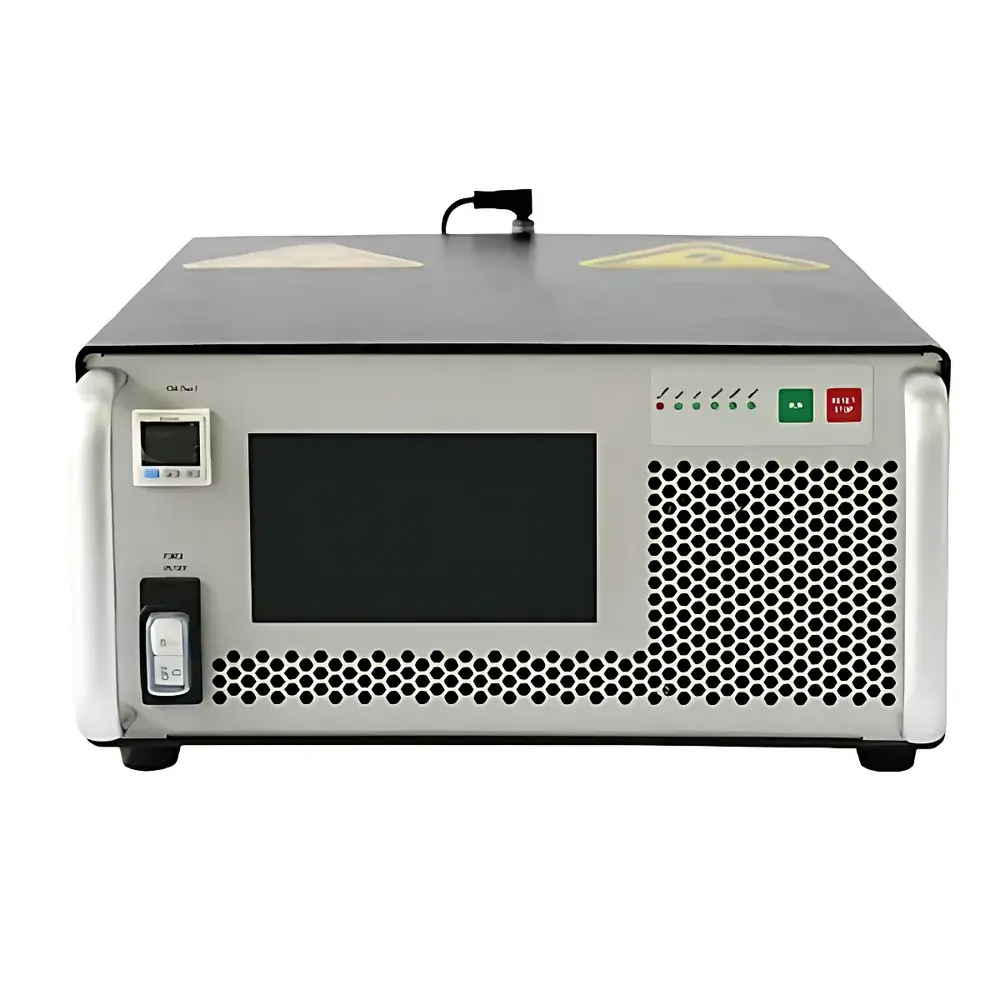
- Modular hardware configuration: separable optical head (22.6 kg) and electronics cabinet (159 kg), facilitating installation on existing infrastructure with minimal structural reinforcement
- CE-marked for electromagnetic compatibility (EMC) and low-voltage directive compliance, suitable for deployment in EU-regulated facilities
Sample Compatibility & Compliance
The QualitySpec 7000 is optimized for heterogeneous, granular, and particulate mineral feed streams typical of crushing, grinding, and beneficiation circuits—including run-of-mine ore, crushed aggregates, mill discharge, and flotation feed. It accommodates particle sizes ranging from fines (<100 µm) to coarse lumps (up to 150 mm), provided the material layer presents a representative surface for diffuse reflectance. The system supports method validation per ASTM E1655 (Standard Practices for Infrared Multivariate Quantitative Analysis) and ISO 12099 (Animal feeding stuffs, cereals and milled cereal products — Guidelines for the application of near infrared spectroscopy), with adaptation pathways for mineral-specific protocols. When deployed under GLP or GMP-aligned quality systems, full audit trails—including raw spectra timestamps, calibration version IDs, and operator metadata—can be maintained through OPC-compliant data routing to SQL-based historian databases.
Software & Data Management
Data acquisition and modeling are managed via ASD’s proprietary Spectral Analysis Suite, which includes chemometric engine support for PLS (Partial Least Squares), PCR (Principal Component Regression), and SVM (Support Vector Machine) algorithms. Calibration models are developed using reference laboratory data (e.g., XRF, ICP-OES, or wet chemistry) and rigorously validated using independent test sets meeting ISO/IEC 17025 criteria. Measurement results are exported via OPC UA or legacy OPC DA to DCS, MES, or SCADA platforms. Raw spectral files (in ASD .asd format) and processed outputs (CSV, XML) are timestamped and stored in Microsoft Access or SQL Server databases, supporting configurable retention policies and role-based access control. All software modules undergo periodic revalidation to ensure continued alignment with FDA expectations for computerized system validation (CSV).
Applications
- Real-time grade control during primary crushing and ROM stockpile blending to maintain consistent feed chemistry to downstream processing units
- Early detection of deleterious minerals (e.g., smectite clays, serpentine, or talc) that impair flotation recovery or cause reagent consumption spikes
- Moisture and volatile content monitoring for energy optimization in drying and thermal processing stages
- Feed-forward control of grinding media addition based on real-time hardness proxies derived from spectral band ratios
- Automated rejection of low-grade or contaminated material streams using configurable threshold logic on multiple predicted components
- Supporting digital twin development by feeding high-frequency compositional data into metallurgical process simulators (e.g., JKSimMet, USIM PAC)
FAQ
Does the QualitySpec 7000 require sample preparation or calibration transfer between sites?
No—calibration models are instrument-specific but transferable across identical units when supported by robust cross-instrument standardization protocols. Site-specific recalibration using local reference samples is recommended after installation or major maintenance.
Can the system operate in dusty or high-vibration environments common in mining?
Yes—the optical head features sealed optics, vibration-dampened mounting interfaces, and optional air-purge ports for lens protection in high-dust settings. Vibration tolerance has been verified per IEC 60068-2-6 up to 5 g RMS.
Is spectral data export compatible with third-party chemometrics platforms like Unscrambler or MATLAB?
Yes—raw interferograms and processed spectra are exportable in ASCII, CSV, and JCAMP-DX formats, enabling seamless integration with external modeling tools.
What maintenance intervals are recommended for long-term operational reliability?
Annual verification of wavelength accuracy and photometric linearity using NIST-traceable standards is advised. The quartz halogen lamp has a rated lifetime of 2,000 hours; replacement is a field-serviceable procedure requiring <15 minutes.
How is cybersecurity addressed for network-connected operation?
The embedded controller supports VLAN segmentation, TLS 1.2 encryption for OPC UA sessions, and configurable firewall rules. No remote desktop or unauthenticated web interface is exposed by default.