
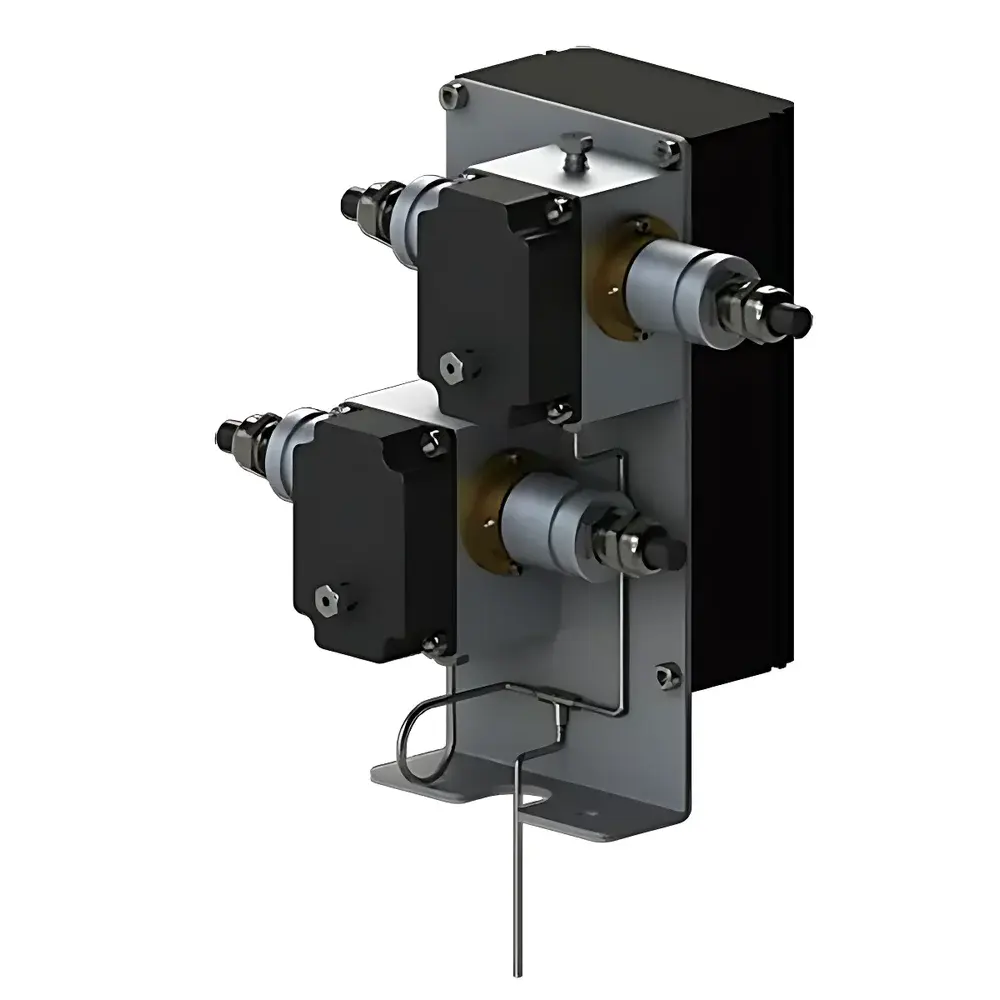
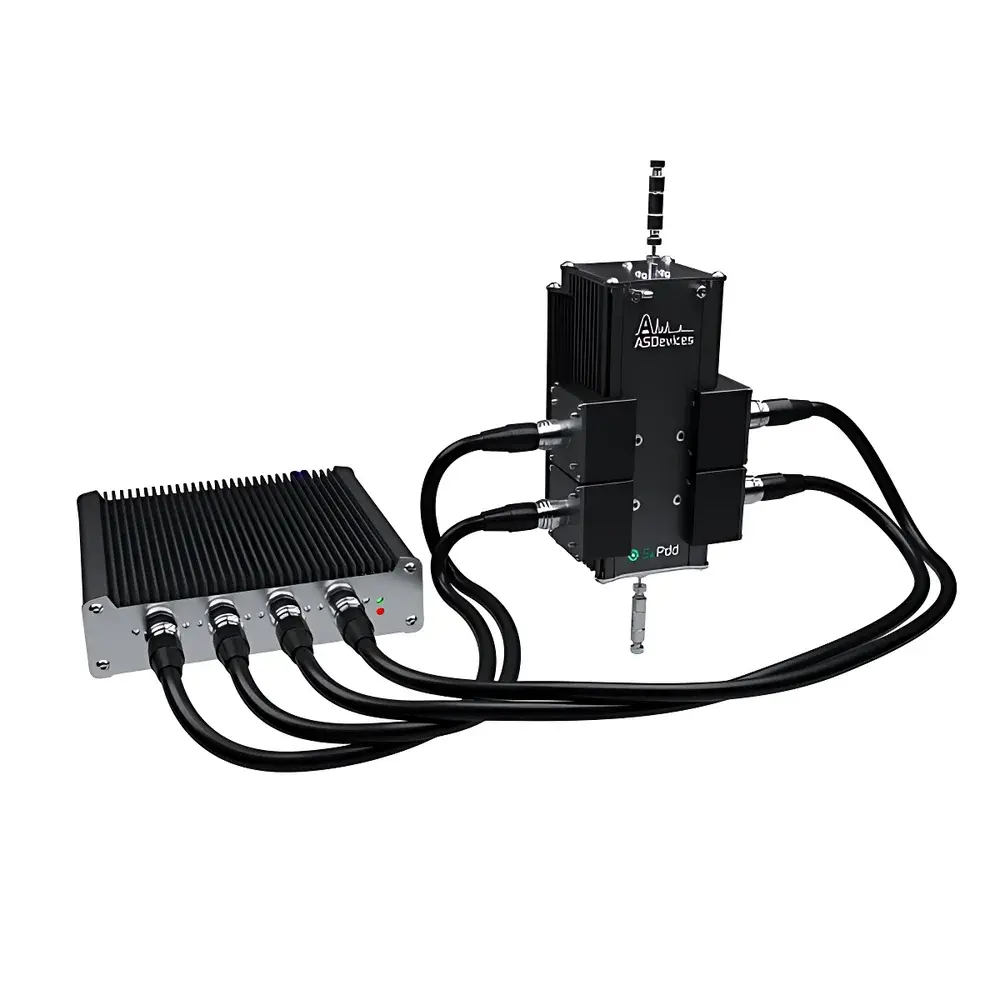
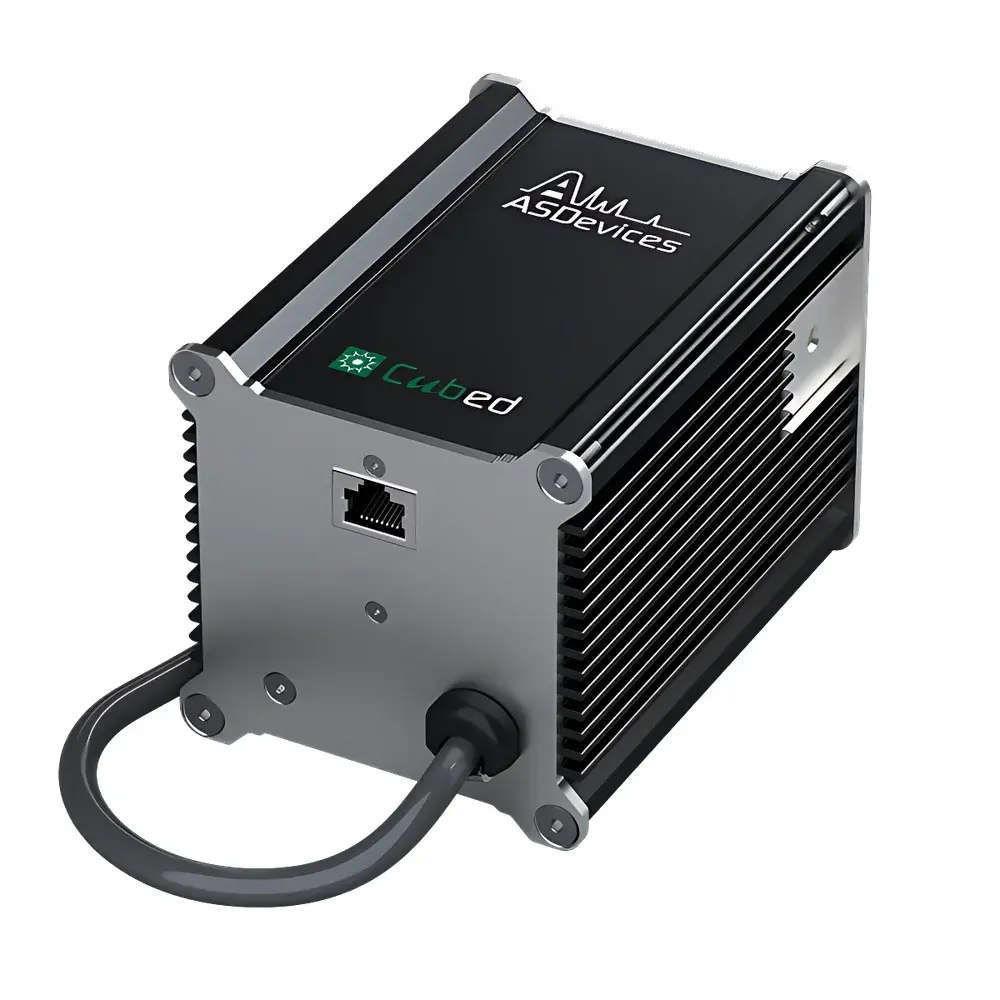
ASD SePdd Extended Plasma Discharge Detector
| Brand | ASD |
|---|---|
| Origin | Canada |
| Manufacturer Type | General Distributor |
| Origin Category | Imported |
| Model | SePdd |
| Quotation | Upon Request |
| Compatible Instrument | Gas Chromatograph |
| Instrument Type | Specialized Chromatographic Detector |
| Wavelength Range | 100 nm – 900 nm |
| Detection Mode | Emission |
| Light Source | Plasma Discharge |
| Noise | <1% |
| Detection Limit | 1 ppb |
| Baseline Drift | <1% |
| Signal Channels | 4 |
| Adjustment Accuracy / Repeatability | ±1% |
Overview
The ASD SePdd Extended Plasma Discharge Detector is a modular, OEM-optimized analytical detection platform engineered for high-sensitivity elemental and molecular detection in gas chromatography (GC) systems. Unlike conventional photometric or ionization-based detectors, the SePdd operates on a patented enhanced plasma discharge principle: a stable, low-power, pulsed plasma is generated in the carrier gas stream—argon, helium, nitrogen, oxygen, or hydrogen—inducing characteristic atomic and molecular emission across the deep UV to near-IR spectrum (100–900 nm). This emission is spectrally resolved and quantified via integrated photodiode array detection, enabling selective identification and quantification without chemical derivatization. The detector’s core architecture comprises three interoperable subsystems: a tunable plasma discharge generator, a wavelength-resolved optical measurement module, and a real-time digital signal processor (DSP) with embedded spectral deconvolution algorithms. Designed explicitly for integration into laboratory GC systems and industrial process analyzers, the SePdd delivers trace-level sensitivity (1 ppb LOD), wide dynamic range (ppb to % v/v), and robust operation under variable flow and pressure conditions.
Key Features
- Multi-carrier-gas compatibility: Fully functional with Ar, He, N₂, O₂, and H₂ as carrier gases—enabling replacement of He-dependent methods and supporting helium conservation strategies.
- Differential detection mode: Simultaneous dual-channel acquisition allows real-time background subtraction, significantly improving signal-to-noise ratio and minimizing baseline drift (<1% over 8 h).
- Plasma-on-demand operation: Plasma ignition and quenching are software-controlled; carrier gas flows uninterrupted during plasma-off periods, eliminating column contamination risk and enabling duty-cycle optimization.
- Multi-detection paradigm: Configurable for divergent, tracer, or energy-balance detection schemes—supporting applications traditionally requiring DID, PDID, ECD, FPD, FID, or TCD, but with unified hardware and calibration logic.
- Four independent signal channels: Enables parallel monitoring of distinct emission bands or reference/analyte pairs for ratiometric quantitation and cross-validation.
- Plug-and-play integration: Native support for RS-485 (Modbus RTU), USB 2.0 (CDC class), and 10/100BASE-T Ethernet (TCP/IP stack with HTTP/REST API) — compliant with Industry 4.0 and ISA-95 system architectures.
- Embedded IoT readiness: Firmware supports TLS 1.2-secured MQTT publishing, device telemetry streaming, and remote firmware updates via HTTPS—designed for cloud-connected lab and plant-floor deployments.
Sample Compatibility & Compliance
The SePdd is validated for use with volatile and semi-volatile organic compounds (VOCs/SVOCs), permanent gases (e.g., CO, CO₂, CH₄, H₂S), halogenated species (Cl⁻, F⁻, Br⁻), sulfur compounds (SO₂, COS, mercaptans), and nitrogen-containing analytes (NH₃, NOₓ, amines). Its emission-based detection mechanism avoids saturation effects common in ionization detectors, ensuring linear response over six orders of magnitude. The instrument complies with IEC 61326-1 (EMC for laboratory equipment), IEC 61010-1 (safety), and meets essential requirements for CE marking. For regulated environments, data integrity is supported through audit-trail-enabled firmware (21 CFR Part 11-ready configuration available), electronic signature capability, and time-stamped raw spectral logs—facilitating GLP and GMP-aligned validation protocols per ASTM D6729, ISO 10156, and USP .
Software & Data Management
The SePdd ships with ASD ControlSuite™ v3.x—a cross-platform application (Windows/macOS/Linux) providing instrument control, spectral visualization, peak integration, and method management. Raw spectral data (intensity vs. wavelength, timestamped per scan) is stored in HDF5 format, ensuring long-term readability and metadata embedding (e.g., GC method ID, carrier gas type, plasma pulse parameters). The REST API exposes full parameter control and real-time data streaming (JSON/CSV), enabling seamless integration with LIMS (e.g., LabWare, Thermo SampleManager), SCADA systems, and Python-based chemometrics pipelines (NumPy, SciPy, scikit-learn). All firmware updates undergo SHA-256 signature verification; configuration backups include cryptographic hash integrity checks.
Applications
- Ultra-trace impurity analysis in high-purity industrial gases (electronic-grade Ar, N₂, H₂)
- Residual solvent monitoring in pharmaceutical manufacturing (ICH Q3C-compliant)
- Environmental air monitoring for VOCs and greenhouse gases (EPA Method TO-15 extension)
- Process gas analysis in petrochemical reformers and ammonia synthesis loops
- Halogen leak detection and fluorinated compound screening in semiconductor fab utilities
- Method consolidation in QC labs seeking to replace multiple dedicated detectors with a single configurable platform
FAQ
Does the SePdd require helium as a carrier gas?
No. It is fully operational with argon, nitrogen, oxygen, hydrogen, or helium—making it suitable for helium-independent GC methods and supporting global helium supply mitigation strategies.
Can the SePdd be used for quantitative analysis in regulated laboratories?
Yes. When configured with audit-trail logging, electronic signatures, and secure user access controls, it meets technical prerequisites for 21 CFR Part 11 compliance and supports IQ/OQ/PQ validation documentation packages.
What maintenance is required for the plasma discharge module?
The solid-state plasma generator has no consumables or electrodes subject to erosion. Routine maintenance is limited to periodic optical window inspection and carrier gas filter replacement per manufacturer guidelines (typically every 6–12 months).
Is spectral library matching supported?
Yes. ControlSuite includes a customizable emission library builder. Users may import reference spectra (NIST Atomic Spectra Database, custom calibrants) and configure match thresholds for automated peak identification in multi-analyte runs.
How does the SePdd handle co-eluting peaks?
By resolving emission signatures at up to 1 nm spectral resolution across four simultaneous channels, it enables deconvolution of overlapping chromatographic peaks based on unique elemental/molecular emission fingerprints—complementing retention time data with orthogonal spectral evidence.





