
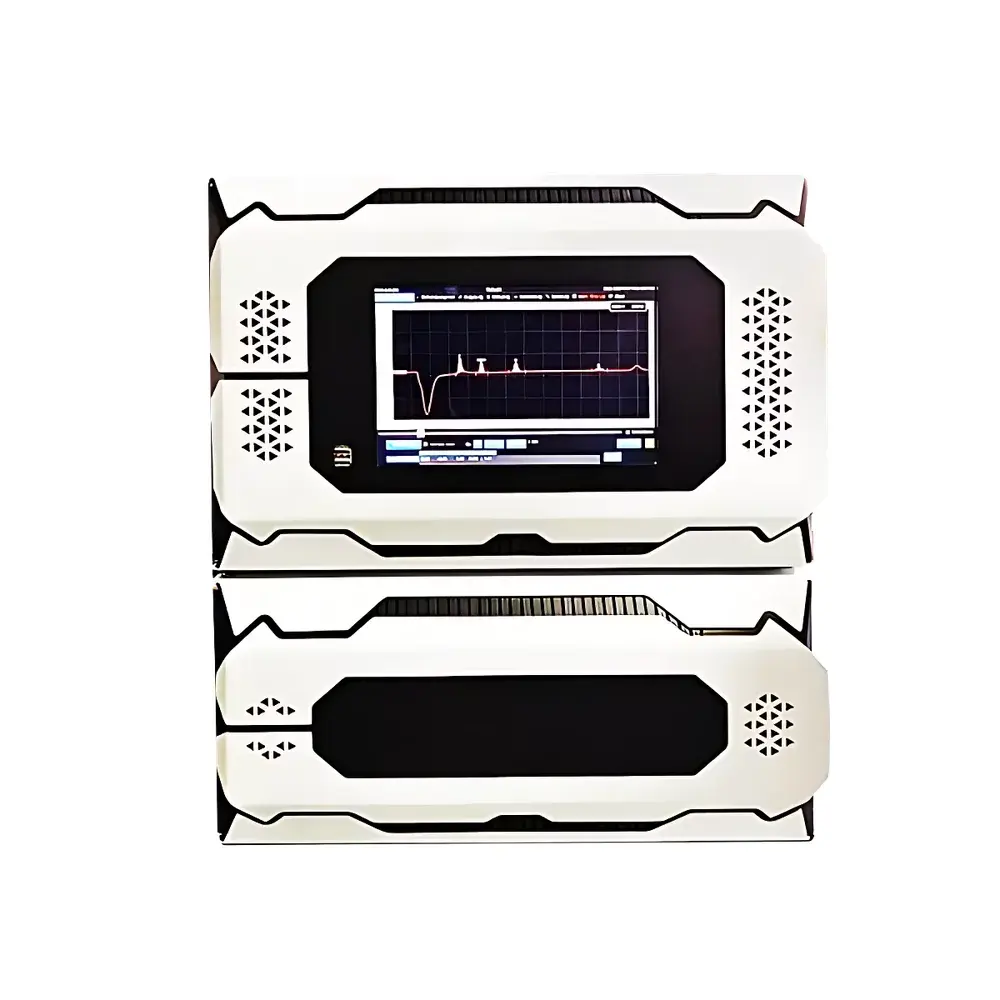
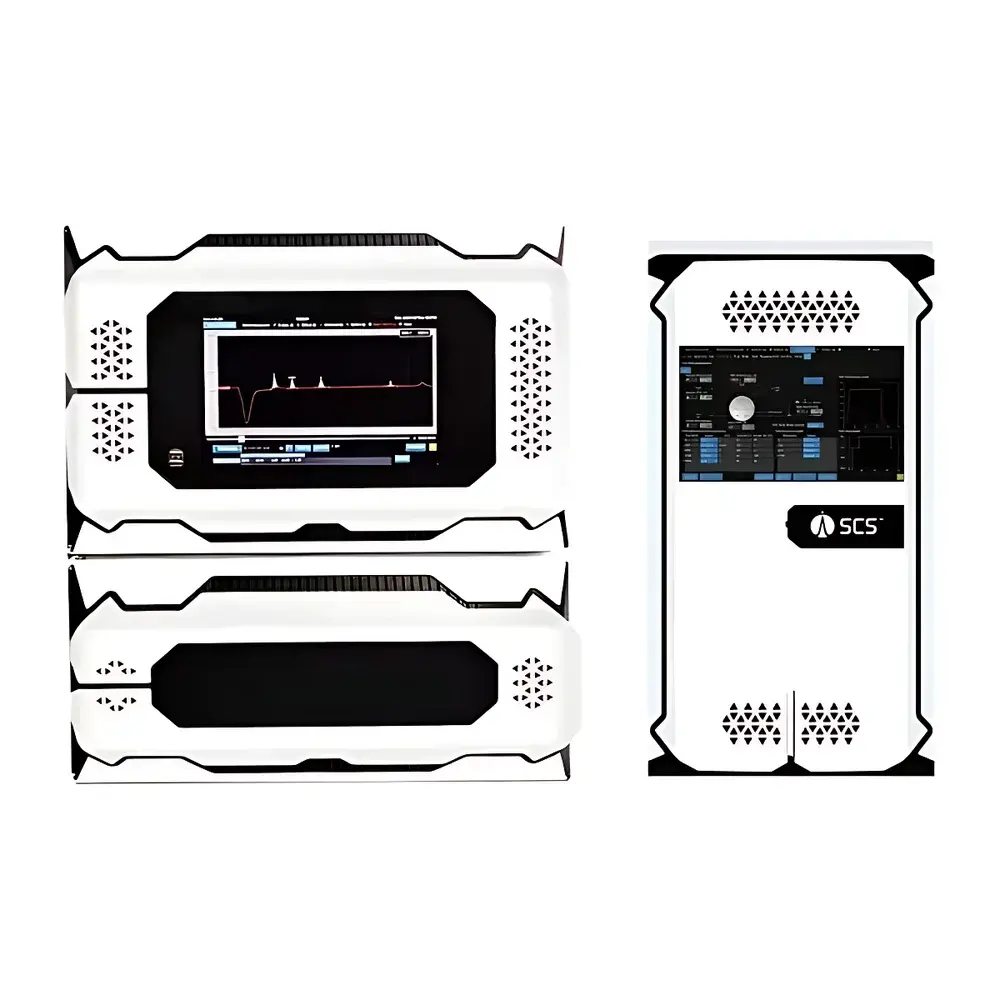
ASDevices IC-KA5800 High-Temperature Anaerobic Hydrolysis Ion Chromatography System
| Brand | ASD |
|---|---|
| Origin | Canada |
| Model | IC-KA5800 |
| Instrument Type | Online Analyzer |
| Application Scope | Universal Gas Impurity Analysis |
| Compliance Framework | ASTM D7622, ISO 14687-2, GB/T 37244–2018, USP <645> (for total ionizable impurities) |
Overview
The ASDevices IC-KA5800 is a fully automated, online high-temperature anaerobic hydrolysis ion chromatography system engineered for trace-level quantification of total halogens, total acid/total base, and total sulfur in gaseous matrices. Unlike conventional ion chromatography systems requiring liquid-phase sample introduction, the IC-KA5800 integrates three functionally coupled modules—gas trapping, catalytic thermal hydrolysis under inert atmosphere, and suppressed conductivity detection—into a single, closed-loop analytical platform. Its core measurement principle relies on quantitative conversion of covalently bound halogen, sulfur, and acidic/basic heteroatoms into their respective ionic forms (e.g., Cl⁻, Br⁻, F⁻, SO₄²⁻, NO₃⁻, HCOO⁻, CH₃COO⁻, NH₄⁺) via controlled pyrolytic cleavage at temperatures up to 1050 °C in an oxygen-free environment. This ensures stoichiometric release without oxidative side reactions or recombination artifacts—critical for accurate speciation of thermally labile or strongly adsorbed species in hydrogen, CO₂, natural gas, and ultra-high-purity electronic specialty gases.
Key Features
- Fully automated sequence execution: integrated control of gas sampling, cryogenic trapping, inert-gas purging, high-temperature catalytic hydrolysis (N₂/Ar atmosphere), alkaline absorption, IC injection, column elution, detector readout, and system regeneration—all initiated by a single command.
- Dual-channel parallel analysis capability: simultaneous separation and detection of anions and cations using two independent IC flow paths with dedicated suppressors, detectors, and eluent delivery systems—enabling concurrent quantification of Cl⁻/F⁻/SO₄²⁻ and NH₄⁺/Na⁺/K⁺ in one run.
- Sub-ppb sensitivity: method detection limit (MDL) of 0.1 nmol/mol (equivalent to 0.1 ppb v/v) for halide ions in gas phase, validated per EPA Method 301 and ISO 17025 requirements.
- High analytical reproducibility: relative standard deviation (RSD) ≤ 5% for triplicate injections across 24-hour unattended operation; recovery range 90–110% for certified gas standards across multiple concentration levels (1–100 nmol/mol).
- Inert fluidic architecture: all wetted surfaces—including sampling lines, hydrolysis reactor, absorption loop, and IC autosampler—feature electropolished, passivated 316L stainless steel or PFA-lined components to minimize adsorption, memory effects, and surface-catalyzed decomposition.
- Self-sustaining water management: integrated recirculating ultrapure water system (18.2 MΩ·cm, TOC < 1 ppb) enables uninterrupted operation for up to 6 months without manual replenishment or external DI water supply.
Sample Compatibility & Compliance
The IC-KA5800 is validated for direct analysis of compressed gases including hydrogen (ISO 14687-2 Grade 3), carbon dioxide (ASTM D7622 Class 1), natural gas (ISO 6974-1), silane, ammonia, and other permanent gases (He, N₂, Ar). It supports compliance with regulatory and industry-standard test methods including ISO 14687–2:2019 (hydrogen fuel purity), ASTM D7622–22 (total acid in CO₂), GB/T 37244–2018 (hydrogen for fuel cell vehicles), and USP (conductivity-based impurity profiling in pharmaceutical gases). All data acquisition, audit trail, and user access controls conform to FDA 21 CFR Part 11 requirements when operated with optional GxP software module.
Software & Data Management
Control and data handling are managed through ASDevices ChromaSuite™ v4.2—a Windows-based platform supporting method development, sequence scheduling, real-time chromatogram visualization, peak integration with customizable baselines, and automated report generation in PDF/CSV formats. The software includes full electronic signature capability, configurable user roles (Administrator, Analyst, Reviewer), and immutable audit trails recording every parameter change, calibration event, and result export. Raw data files are stored in vendor-neutral .cdf format compatible with third-party chemometrics tools. Optional LIMS integration is supported via ASTM E1482-compliant API.
Applications
- Hydrogen quality assurance: continuous monitoring of total halides (Cl, F, Br), total sulfur (as SO₄²⁻), and formic/acetic acid in PEM fuel cell feedstock—deployed in national hydrogen demonstration stations and refinery off-gas streams.
- Electronic specialty gases: online QC of XCDA, CO₂, and NF₃ for semiconductor etching processes; detection of ppb-level HF, HCl, and NH₃ residuals that cause gate oxide defects.
- Environmental emissions monitoring: quantification of HCl, HF, and SO₂ precursors in flue gas and biogas upgrading streams—aligned with EU IED Annex VI reporting thresholds.
- Research & method validation: support for interlaboratory studies under ISO/IEC 17043 proficiency testing schemes; used by Sinopec Shanghai Research Institute of Petrochemical Technology for ISO 14687 method transfer and ruggedness testing.
FAQ
What gases can be analyzed directly without pre-concentration?
Hydrogen, helium, nitrogen, argon, carbon dioxide, and natural gas—provided pressure is regulated between 0.5–2.0 MPa and moisture content remains below 1 ppmv.
Is the system compatible with third-party IC detectors or columns?
Yes—the IC-KA5800’s dual-channel output interfaces comply with ANSI/SLAS standard fittings (1/16″ VCR) and supports common Dionex™, Metrohm™, and Thermo™ column chemistries via configurable eluent composition and flow rate profiles.
How is calibration performed to ensure traceability?
Calibration uses NIST-traceable certified gas standards (e.g., Scott-Marrin Halogen Mixes, Air Liquide Acid Gas Blends); no liquid standard dilution or matrix-matching is required due to direct gas-phase introduction and stoichiometric hydrolysis.
What maintenance intervals are recommended for unattended operation?
Catalyst cartridge replacement every 6 months (or after 500 analyses); absorber solution refresh every 30 days; annual verification of hydrolysis temperature uniformity and gas-tight integrity per ISO/IEC 17025 internal audit checklist.





