
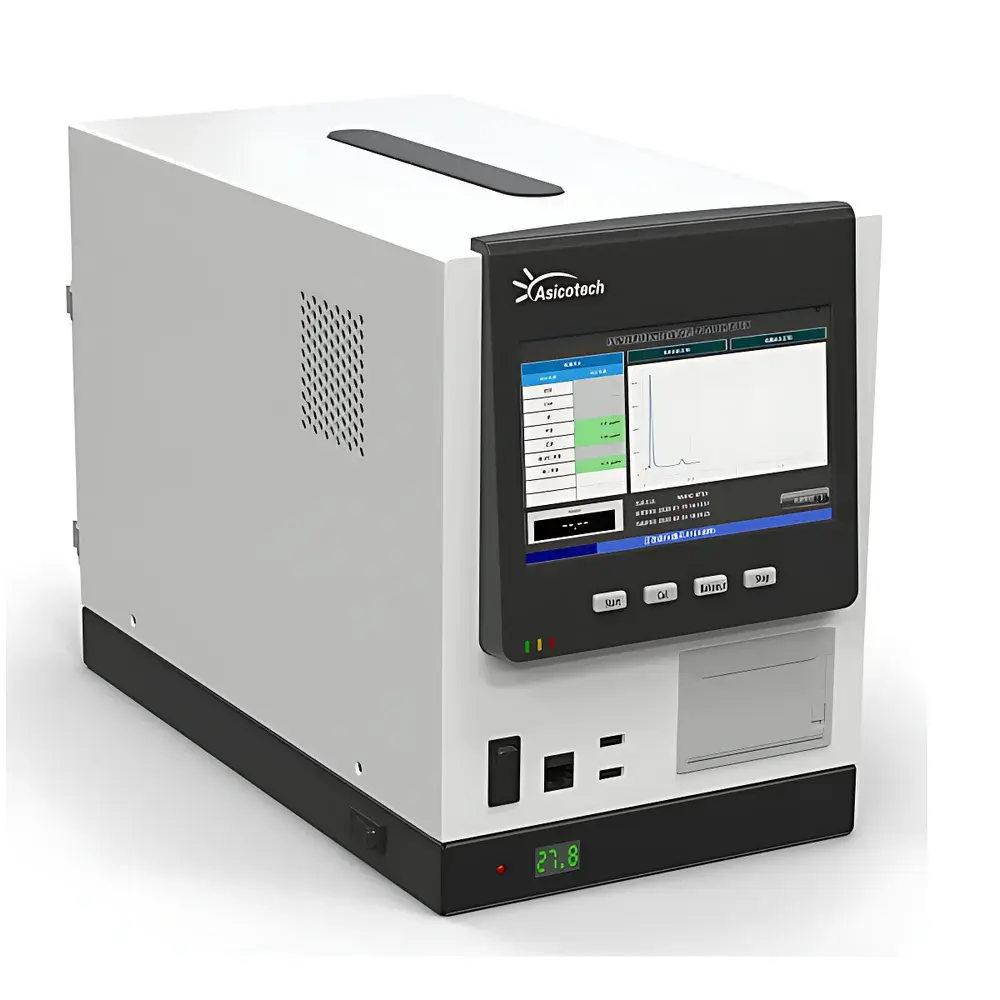
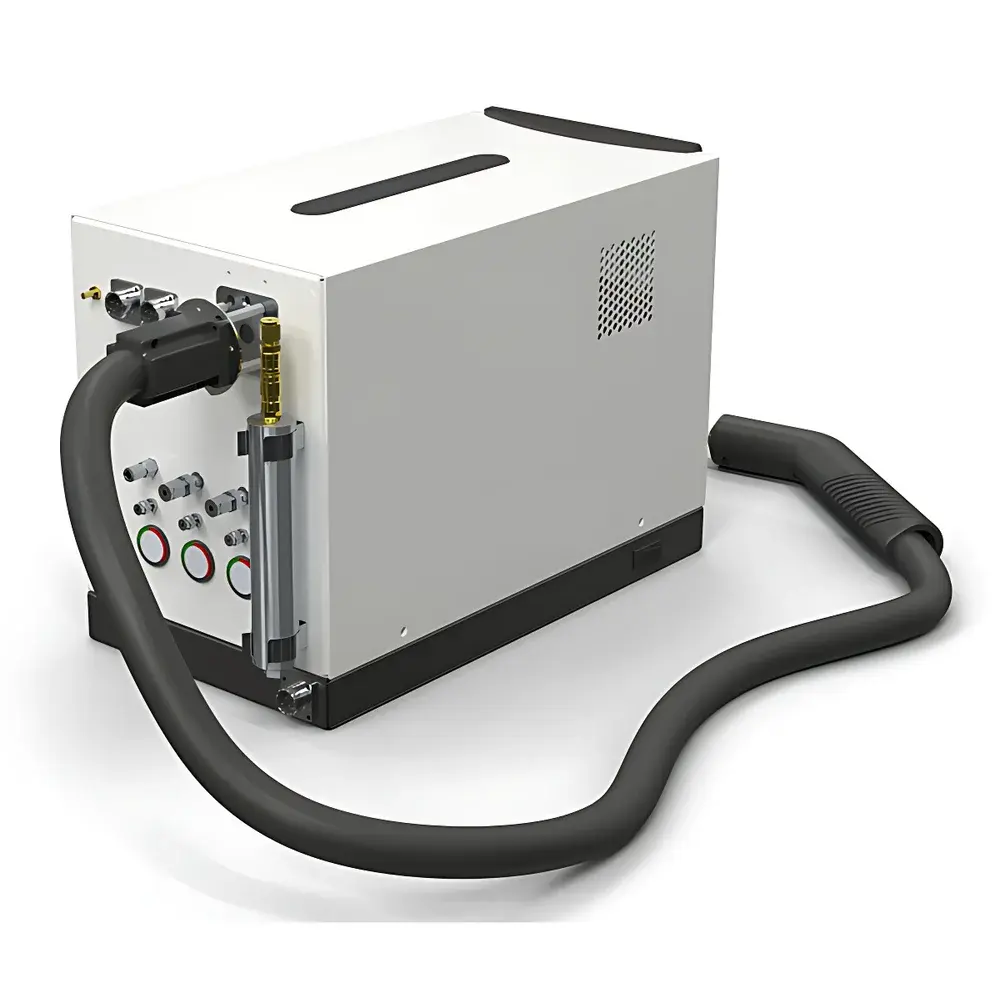
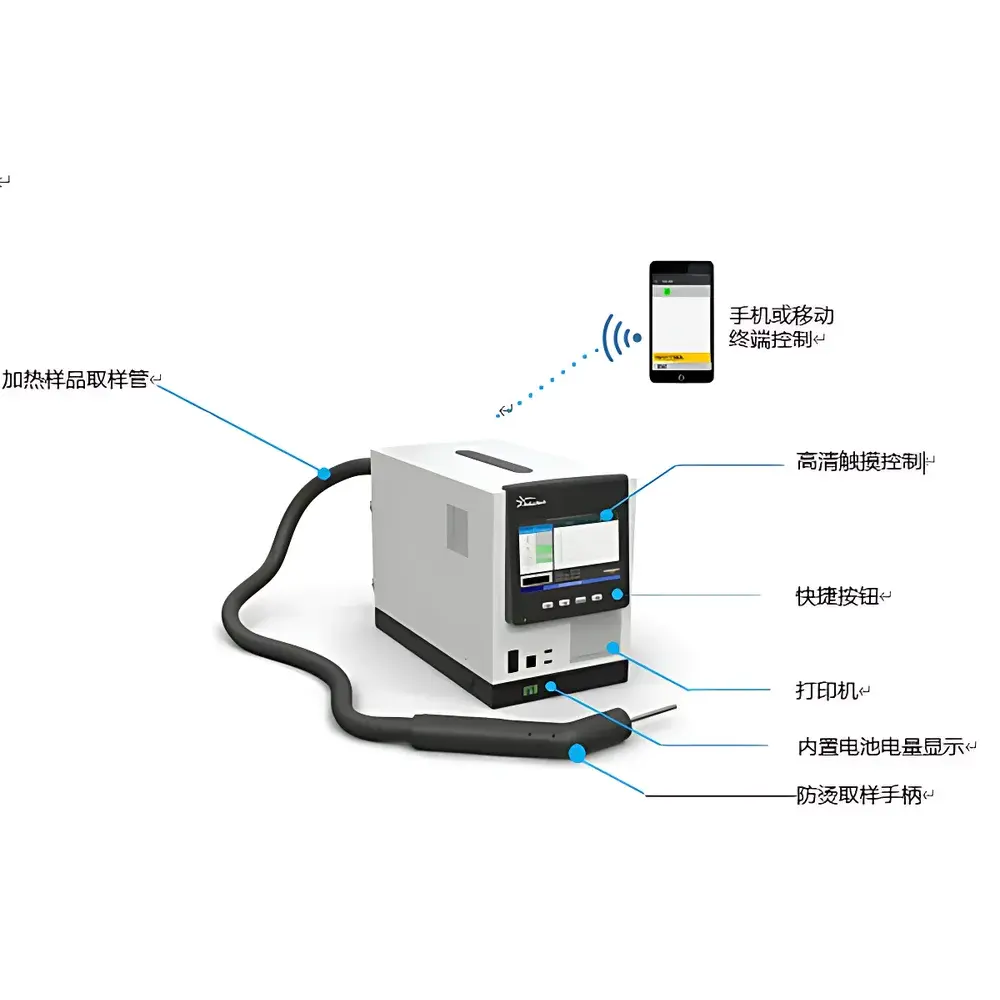
Asicotech P6000+ Portable Gas Chromatograph
| Brand | Asicotech |
|---|---|
| Origin | Shanghai, China |
| Manufacturer Type | OEM Manufacturer |
| Model | P6000+ |
| Detection Limit | ≤0.03 ppm (for target VOCs) |
| Repeatability | <1% RSD |
| Operating System | Embedded Linux |
| Power & Carrier Gas Consumption | <10% of conventional benchtop GC systems |
| Modular Interface | Standardized electrical, pneumatic, and data ports for plug-and-play detector and injector modules |
| Remote Control Capability | Full web-based instrument control and real-time data streaming via Ethernet/Wi-Fi |
Overview
The Asicotech P6000+ Portable Gas Chromatograph is a field-deployable, OEM-engineered analytical platform designed for high-fidelity gas-phase separation and quantification in non-laboratory environments. Built upon proven capillary column chromatography principles, the system employs temperature-programmed oven control, precision pressure/flow regulation, and optimized carrier gas dynamics to deliver reproducible retention time stability and peak shape fidelity under variable ambient conditions. Unlike legacy portable GCs reliant on proprietary firmware or Windows CE, the P6000+ integrates a hardened embedded Linux operating system—ensuring deterministic real-time task scheduling, memory protection, and resistance to runtime corruption. Its architecture supports dual-column configurations, multi-detector operation (FID, PID, TCD, or electrochemical variants), and seamless integration with external sample enrichment subsystems such as thermal desorption units, purge-and-trap concentrators, headspace samplers, and SPME interfaces. The system is calibrated and validated for trace-level analysis of volatile organic compounds (VOCs), light hydrocarbons (e.g., CH₄, C₂H₆), nitrogen-containing species (e.g., acrylonitrile, amines), oxygenates (e.g., acetone, phenol, alcohols), and sulfur- or chlorine-bearing analytes (e.g., H₂S, CH₃Cl) at sub-ppm concentrations.
Key Features
- Ultra-low resource footprint: Consumes ≤10% of the electrical power and carrier gas volume required by standard laboratory GC systems—enabling >8 hours of continuous operation on integrated Li-ion battery packs or 12–24 V DC vehicle supply.
- Modular hardware architecture: Standardized mechanical, electrical, and pneumatic interfaces allow rapid swapping of injectors (split/splitless liquid, high-pressure liquid, gas sampling valves, pressure-controlled loop injectors) and detectors without recalibration.
- Field-optimized thermal management: Dual-zone oven with independent PID control ensures ±0.1 °C isothermal stability and linear ramp rates from 1–30 °C/min across –10 to 300 °C range—even during ambient temperature fluctuations from –20 to +50 °C.
- Embedded Linux OS with deterministic I/O: Real-time kernel enables microsecond-level timing accuracy for valve actuation, detector signal acquisition, and data packetization—critical for compliance with ASTM D6420 and ISO 16017-1 method requirements.
- Remote operational integrity: Full bidirectional communication via encrypted HTTP/HTTPS or MQTT protocols; supports firmware updates, method deployment, live chromatogram streaming, and diagnostic telemetry—including GC column health monitoring and detector baseline drift trending.
Sample Compatibility & Compliance
The P6000+ accommodates gaseous, liquefied, and dissolved samples through configurable inlet pathways. It complies with key regulatory frameworks governing field-deployed chemical analysis: US EPA Method TO-15 (air toxics), ASTM D5504 (sulfur compounds in natural gas), ISO 11843-2 (detection limit estimation), and EN 14662 (benzene in ambient air). All calibration and performance verification procedures adhere to GLP principles, including electronic audit trails, user-access controls, and timestamped method change logs—fully compatible with FDA 21 CFR Part 11-compliant data management workflows when paired with validated third-party LIMS integrations.
Software & Data Management
Instrument control and data acquisition are managed via Asicotech’s GC Navigator™ software suite—a browser-based interface supporting Chrome, Edge, and Firefox on desktop, tablet, or smartphone. Raw chromatographic data is stored in vendor-neutral ANDI (.cdf) format compliant with ASTM E1947 and AIA standards. Peak integration algorithms apply iterative Gaussian deconvolution for co-eluting peaks, while internal standard normalization and response factor libraries support quantitative analysis per ISO 80000-9 and IUPAC Gold Book definitions. All data files include embedded metadata: instrument ID, operator credentials, environmental sensor readings (T, RH, barometric pressure), and full method parameter history.
Applications
- Mining & Petrochemical: On-site methane leakage screening, syngas composition monitoring (CO, CO₂, H₂, CH₄), methyl nitrite and acrylonitrile process off-gas analysis, and confined-space atmospheric hazard assessment.
- Semiconductor & Electronics: Ultra-high-purity (UHP) nitrogen, argon, and specialty gas certification (e.g., NH₃, PH₃, B₂H₆) at ≤100 ppt levels; electronic-grade solvent residual testing per SEMI F57.
- Environmental Monitoring: Ambient air profiling of BTEX, chlorinated solvents, and reduced sulfur compounds; stack emission testing for NMHC, formaldehyde precursors, and amine-based scrubber effluents.
- Industrial Health & Safety: Breath biomarker detection (e.g., isoprene, acetone), hydrazine derivative monitoring in rocket fuel handling, and tobacco smoke constituent field screening.
FAQ
Does the P6000+ support regulatory-compliant data archiving?
Yes—the system generates tamper-evident audit logs, enforces role-based access control, and exports raw data in ANDI/CDF format with embedded digital signatures for long-term archival per 21 CFR Part 11 Annex 11 requirements.
Can it operate unattended for extended periods?
It supports scheduled auto-calibration, remote method triggering, and low-power sleep/wake cycles—validated for 72-hour autonomous operation when connected to external solar-charged battery banks.
Is method transfer possible from lab-based GC systems?
Retention index matching, column dimension equivalence calculations, and linear velocity normalization tools are built into GC Navigator™ to facilitate robust method portability between benchtop and portable platforms.
What maintenance intervals are recommended for field use?
Injector liner replacement every 200 injections; detector cleaning every 500 runs; carrier gas filter replacement every 6 months or 1,000 operating hours—documented in the onboard maintenance scheduler.
How is calibration traceability ensured?
All factory calibrations are performed using NIST-traceable gas standards; users receive calibration certificates with uncertainty budgets aligned to ISO/IEC 17025:2017 Clause 5.10.



