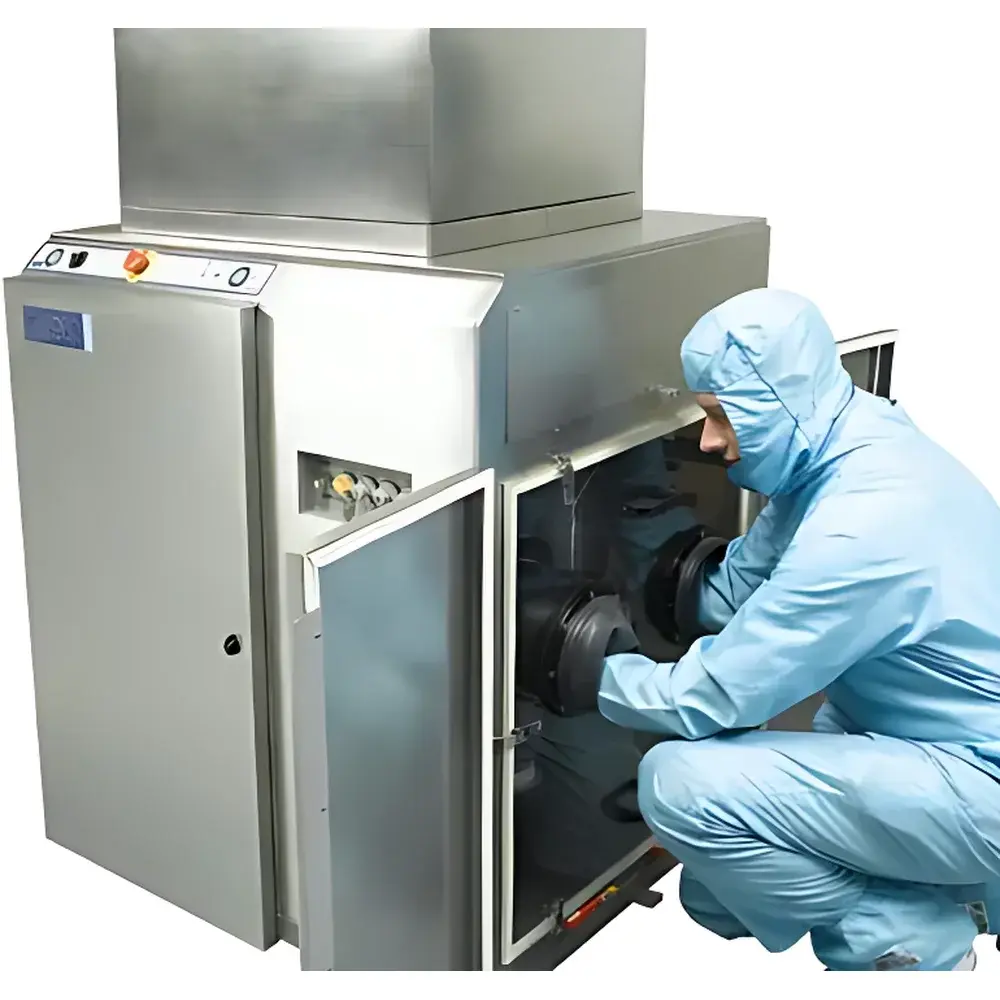
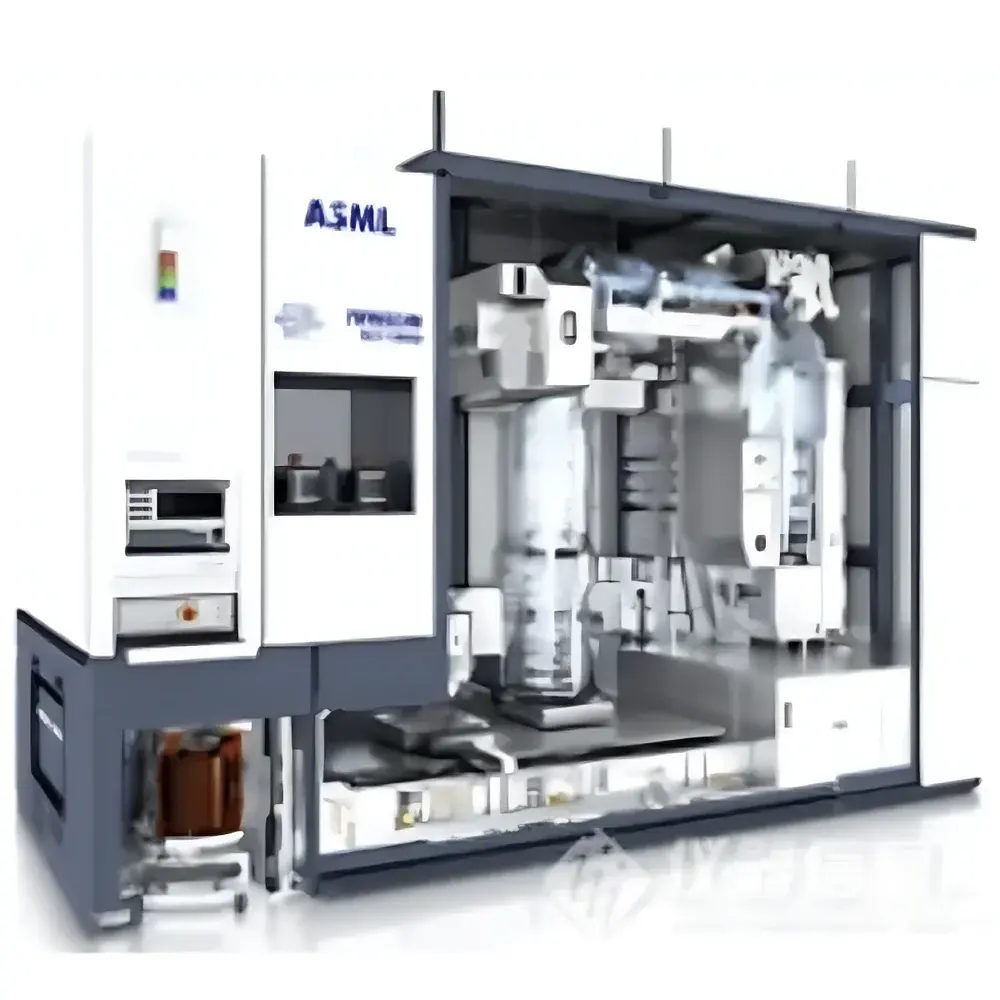
ASML Twinscan NXT:1980Di Immersion Deep Ultraviolet Lithography Scanner
| Brand | ASML |
|---|---|
| Origin | Netherlands |
| Model | Twinscan NXT:1980Di |
| Light Source | ArF Excimer Laser (193 nm) |
| Numerical Aperture (NA) | 1.35 |
| Resolution (single-exposure) | ≤38 nm |
| Overlay Accuracy | <1.5 nm (3σ) |
| Throughput | 275 wafers per hour (300 mm) |
| Platform Architecture | NXT3 |
| Immersion Technology | Water-based liquid immersion |
| Compliance | SEMI S2/S8, ISO 14644-1 Class 1 Cleanroom Compatible |
| Software Interface | TWINSCAN Control System (TCS) v5.x with integrated metrology feedback loops |
Overview
The ASML Twinscan NXT:1980Di is a production-grade immersion deep ultraviolet (iDUV) lithography scanner engineered for high-volume semiconductor manufacturing at sub-45 nm technology nodes. Operating at a 193 nm ArF excimer laser wavelength with a numerical aperture of 1.35 and water-based immersion optics, the system achieves single-exposure resolution down to 38 nm—enabling patterning of critical layers in mature logic, memory, and power device fabrication. While not an extreme ultraviolet (EUV) platform, the NXT:1980Di supports multi-patterning schemes—including double and quadruple patterning—to extend its capability to 7 nm logic node layers, as validated in early-generation 7 nm process development by leading foundries such as TSMC. Its design emphasizes thermal and mechanical stability, stage positioning repeatability (<0.3 nm), and real-time focus/overlay correction via integrated interferometric metrology and aerial image sensors.
Key Features
- Immersion-enabled optical path with high-NA (1.35) lens system delivering enhanced depth-of-focus and resolution beyond dry 193 nm limits
- Advanced wafer and reticle stages with nanometer-level motion control and active vibration damping for sub-2 nm overlay accuracy (3σ)
- Real-time focus and dose monitoring using through-the-lens (TTL) sensors and integrated CD metrology feedback channels
- NXT3 platform architecture supporting full-field illumination uniformity (<0.5% 3σ) and high-throughput operation at 275 wph for 300 mm wafers
- Modular subsystem design compliant with SEMI S2 (safety) and S8 (ergonomics) standards, facilitating integration into Class 1 cleanroom environments
- Support for advanced reticle handling including pellicle integrity monitoring and automated mask alignment with sub-50 nm precision
Sample Compatibility & Compliance
The NXT:1980Di processes standard 300 mm silicon wafers with front-side flat or notch orientation. It accommodates standard 6-inch quartz reticles with chrome or attenuated phase-shift masks (AttPSM), and supports both binary and alternating PSM configurations. The system meets ISO 14644-1 Class 1 cleanroom operational requirements and incorporates gas purge systems for oxygen and moisture control in the optical path. From a regulatory standpoint, it enables traceable process logging aligned with FDA 21 CFR Part 11 principles when integrated with qualified MES and data archiving infrastructure. All calibration procedures adhere to internal ASML Technical Specifications (TS-1980Di-Rev.F) and are compatible with ISO/IEC 17025-accredited lab verification protocols.
Software & Data Management
Control and diagnostics are managed through the TWINSCAN Control System (TCS) v5.x, a deterministic real-time operating environment built on VxWorks. TCS provides hierarchical access control, audit-trail logging of all exposure parameters (dose, focus offset, stage position, lens heating status), and configurable alarm thresholds per layer recipe. Process data—including wafer map overlays, focus drift trends, and dose uniformity histograms—is exported in SECS/GEM-compliant format for integration with factory-wide data analytics platforms. Optional modules include SmartScan for predictive maintenance scheduling and LithoMonitor for statistical process control (SPC) of CD and overlay metrics across lots, supporting ISO 9001 and IATF 16949 quality frameworks.
Applications
- Front-end-of-line (FEOL) gate and interconnect patterning for 45–28 nm planar CMOS technologies
- Memory device fabrication—including DRAM array definition and NAND flash wordline patterning—where cost-effective iDUV remains competitive versus EUV
- Power IC and analog/mixed-signal devices requiring high CD uniformity and low line-edge roughness (LER) in thick photoresist stacks
- Multi-patterning integration for 16/14 nm FinFET and early 7 nm logic nodes, particularly where EUV availability or mask cost constraints apply
- R&D pilot lines performing process window characterization, OPC model validation, and resist performance benchmarking under production-representative conditions
FAQ
Is the NXT:1980Di capable of single-exposure 7 nm patterning?
No. Single-exposure resolution is limited to approximately 38 nm. Achieving 7 nm feature sizes requires multiple patterning techniques, which increase process complexity, cycle time, and defect sensitivity.
What distinguishes the NXT:1980Di from the newer NXT:1980Fi?
The NXT:1980Di is based on the NXT3 platform, while the NXT:1980Fi utilizes the upgraded NXT4 platform featuring improved throughput (295 wph), enhanced lens thermal management, and extended upgrade pathways to 330–350 wph.
Does this system support automated reticle exchange and contamination monitoring?
Yes. It includes ASML’s Reticle Handling Module (RHM) with robotic reticle transfer, pellicle inspection via integrated dark-field imaging, and real-time particle counting in the reticle chamber.
Can the NXT:1980Di be retrofitted with newer illumination or metrology modules?
Limited retrofitting is possible within the NXT3 hardware envelope; however, major subsystem upgrades (e.g., NA >1.35 optics or EUV-compatible stages) are not supported due to fundamental platform constraints.
What level of service and technical documentation is available for legacy NXT:1980Di systems?
ASML maintains extended support contracts (ESC) for certified NXT:1980Di installations, including spare parts provisioning, firmware patches, and remote diagnostics—subject to contractual terms and regional regulatory compliance requirements.