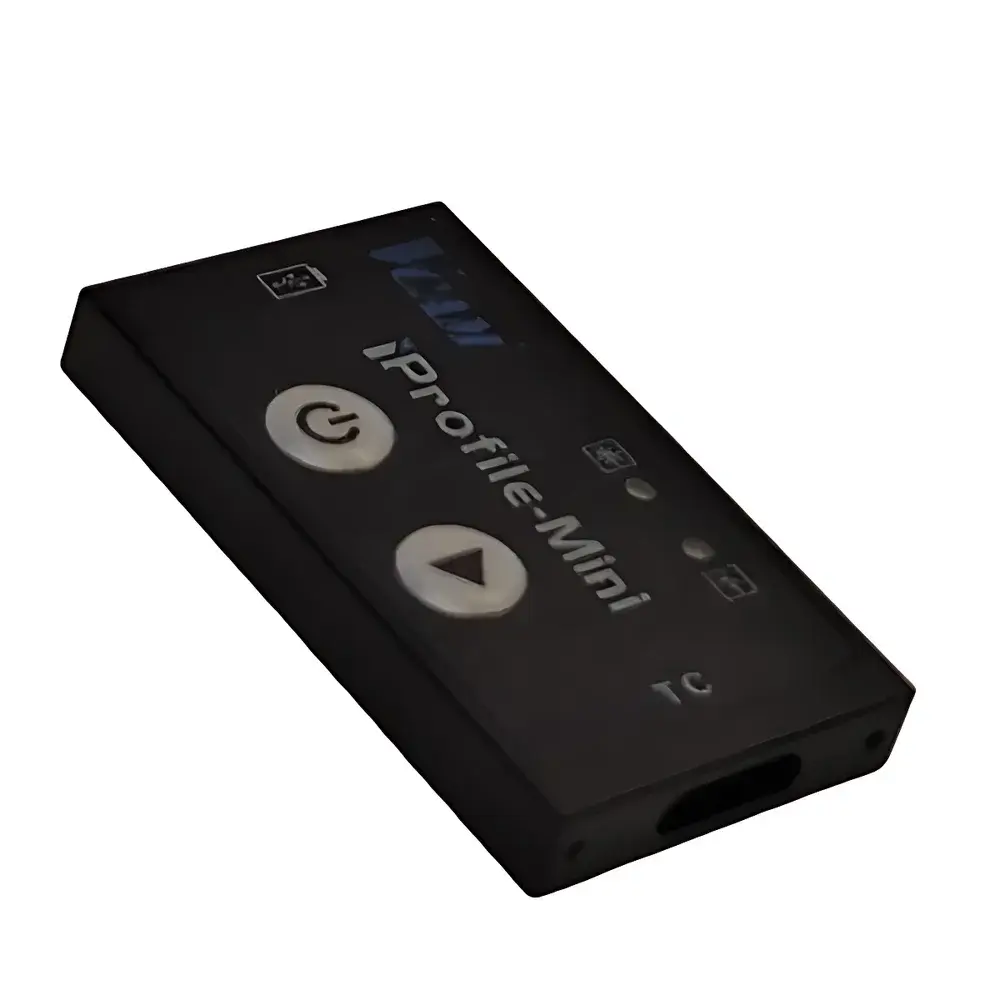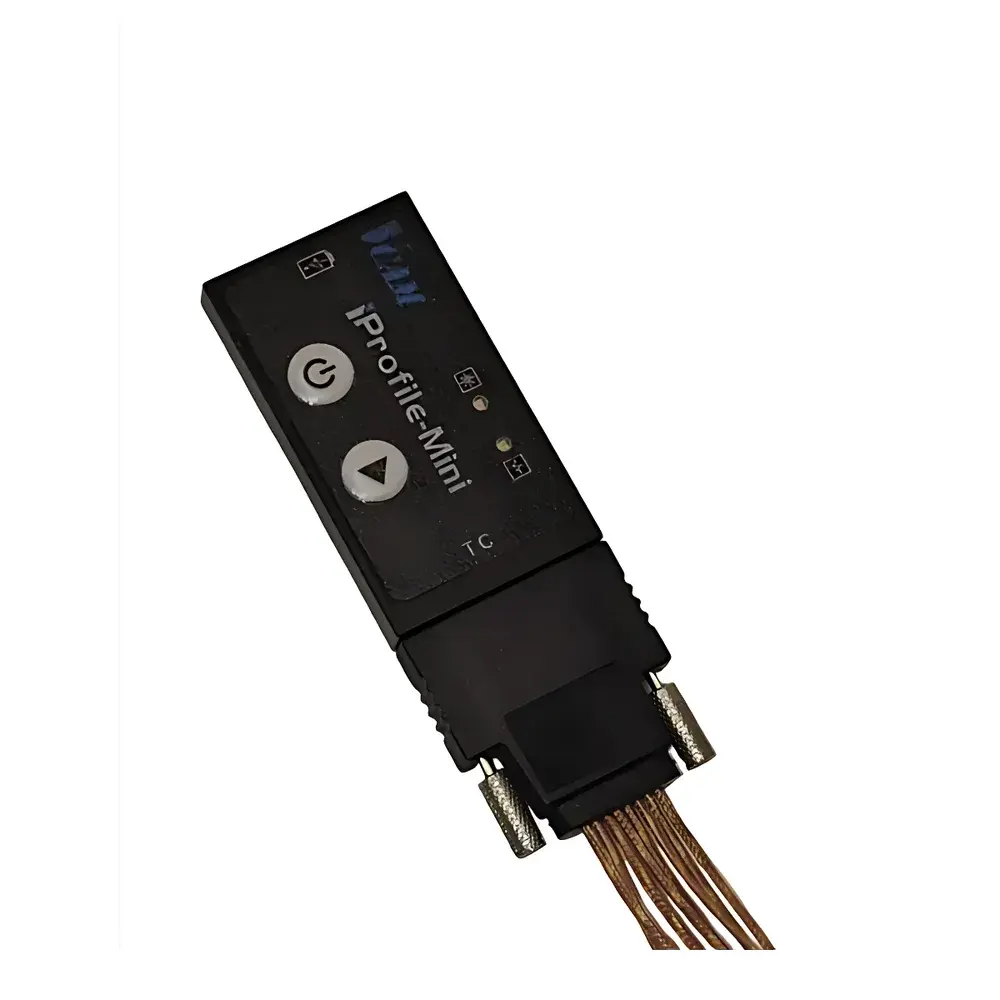
ASP YKS Series Platinum Resistance Thermometer
| Brand | ASP/Advanced Sensing Products |
|---|---|
| Origin | USA |
| Manufacturer Type | Authorized Distributor |
| Product Category | Imported Instrument |
| Model | YKS Series |
| Instrument Type | Temperature Verification and Calibration System |
| Temperature Range | -250 °C to +850 °C |
| Nominal Resistance at 0.01 °C | 25.5 Ω or 100 Ω (customizable) |
| Temperature Coefficient of Resistance (TCR) | 0.003850 Ω/Ω/°C or 0.003925 Ω/Ω/°C |
| Accuracy Class | IEC 60751 DIN Class A (±0.06 °C), Class B (±0.12 °C), or W(Ga) ≥ 1.11807 |
| Long-Term Stability | R₀ drift < 0.002 °C after 1000 h at 300 °C |
| Repeatability | R₀ deviation < 0.005 °C over repeated cycling from −196 °C to +850 °C |
| Probe Housing Material | Inconel® alloy (nickel-chromium) |
| Standard Probe Dimensions | Ø 0.188" (4.78 mm), Ø 6 mm, or Ø 0.25" (6.35 mm) |
| Vibration Resistance | Withstands 20 G acceleration across 10–2000 Hz |
Overview
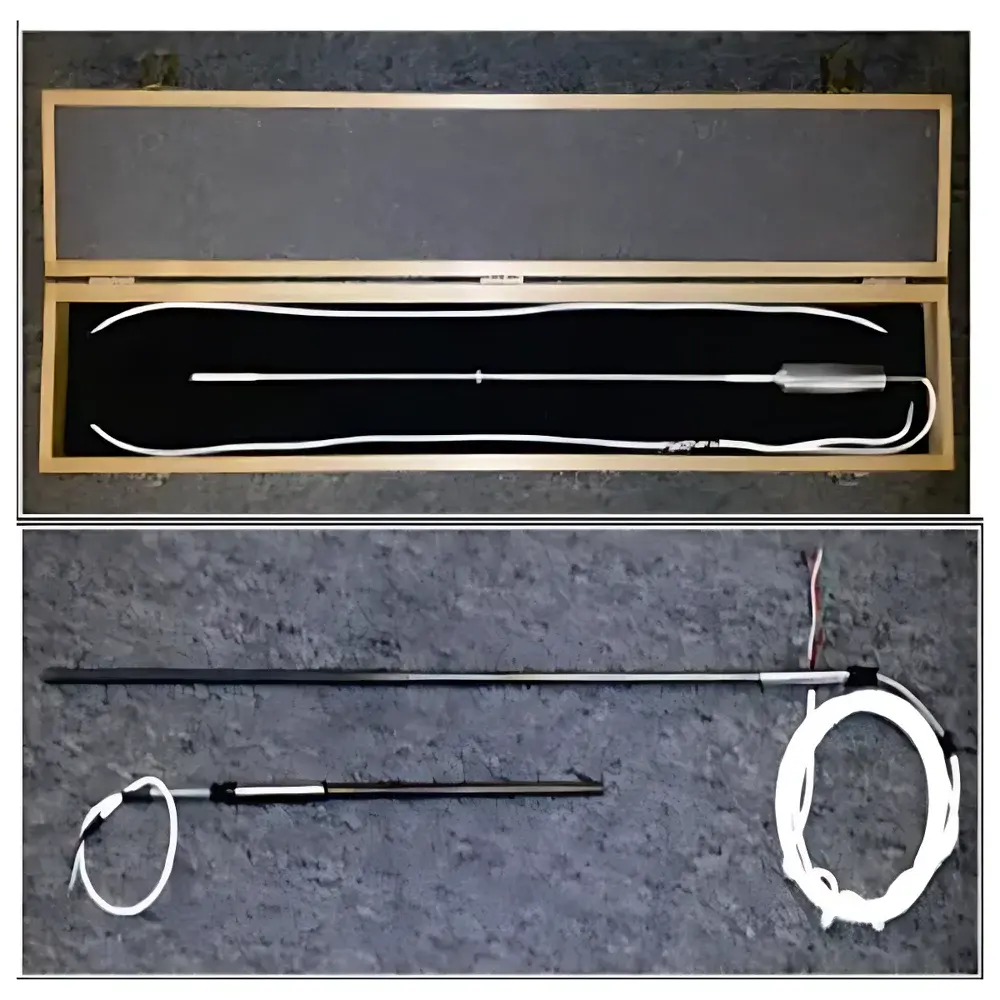
The ASP YKS Series Platinum Resistance Thermometer is a high-precision reference-grade temperature sensor engineered for metrological traceability in calibration laboratories, national standards institutes, and regulated manufacturing environments. Based on the fundamental physical principle of platinum’s predictable and highly repeatable resistivity–temperature relationship—governed by the Callendar–Van Dusen equation—the YKS series delivers long-term stability and minimal hysteresis across an extended operating range of −250 °C to +850 °C. Its design adheres to the international standard IEC 60751 (equivalent to ASTM E1137 and DIN EN 60751), supporting both standard TCR values (0.003850 Ω/Ω/°C and 0.003925 Ω/Ω/°C) and specialized characterization such as W(Ga) ≥ 1.11807 for triple-point-of-gallium verification. As a primary or secondary reference standard, the YKS series is routinely deployed in accredited temperature calibration workflows—including fixed-point cell immersion, dry-well calibrator validation, and thermocouple reference junction monitoring—where measurement uncertainty budgets demand sub-millikelvin-level reproducibility and documented drift performance.
Key Features
- Ultra-stable platinum sensing element housed in Inconel® 600 or 625 alloy sheath—resistant to thermal shock, mechanical abrasion, and oxidation up to 850 °C
- Four model variants (YKS300, YKS500, YKS660, YKS850) optimized for distinct upper-range limits while maintaining common metrological architecture
- IEC 60751-compliant accuracy classes: DIN Class A (±0.06 °C at 0 °C), Class B (±0.12 °C), and W(Ga)-qualified versions for gallium fixed-point applications
- Documented long-term stability: <0.002 °C R₀ drift after 1000 h at 300 °C; <0.030 °C after 500 h at 850 °C—verified per ISO/IEC 17025 calibration protocols
- High repeatability: <0.005 °C R₀ deviation over ≥100 thermal cycles spanning −196 °C (liquid nitrogen) to +850 °C
- Vibration resilience: Certified to withstand 20 G sinusoidal vibration across 10–2000 Hz—suitable for mobile calibration carts and industrial process environments
- Customizable geometry: Standard diameters (4.78 mm, 6 mm, 6.35 mm) and lengths (305–457 mm); OEM configurations available for integration into probe wells, furnaces, or environmental chambers
Sample Compatibility & Compliance
The YKS series is compatible with all standard temperature calibration hardware, including liquid-bath calibrators (e.g., Fluke 7320, Isotech MTS-100), dry-block calibrators (e.g., Hart Scientific 9118, Ametek 914X), and fixed-point cells (ITS-90-defined points: Ar, Ga, In, Sn, Zn, Al). Its Inconel® construction ensures chemical inertness against molten salts, reducing atmospheres, and oxidizing furnace environments. The sensor meets requirements for GLP/GMP-compliant temperature mapping (per FDA Guidance for Industry: Process Validation and ISO 14644-3), supports audit-ready documentation under 21 CFR Part 11 when paired with compliant readout systems (e.g., Keysight 34970A with DAQ module), and is routinely accepted by UKAS, DAkkS, and ANAB-accredited labs for scope extension of temperature calibration services.
Software & Data Management
While the YKS series operates as a passive resistance sensor, its metrological value is fully realized when integrated with certified resistance bridges (e.g., Hart Scientific 1590, Fluke 1595A) or high-accuracy digital multimeters (e.g., Keysight 3458A) equipped with 7½-digit resolution and low-noise current sources. Calibration data—including R₀, α, δ, β coefficients, and deviation tables—is exported in NIST-traceable .csv or .cal formats compatible with MET/CAL®, ThermoDAQ, and LabVIEW-based calibration management systems. All delivered units include a full Certificate of Calibration (traceable to NIST SRM 1750), uncertainty budget per GUM (JCGM 100:2008), and optional on-site verification reports aligned with ISO/IEC 17025 Clause 6.5.2.
Applications
- Primary reference standard for accredited temperature calibration laboratories (ISO/IEC 17025)
- Validation and routine verification of dry-well and liquid-bath temperature calibrators
- Thermal profiling of aerospace composite cure ovens and semiconductor diffusion furnaces
- Reference junction compensation in high-accuracy thermocouple calibration systems
- Long-term drift monitoring in environmental test chambers (e.g., IEC 60068-2-1, -2-2)
- Fixed-point cell characterization (Ga, In, Sn, Zn) and ITS-90 realization
- Research-grade cryogenic measurements down to liquid hydrogen temperatures (−253 °C) using YKS300 variant
FAQ
What resistance values are available at 0.01 °C?
Standard options are 25.5 Ω and 100 Ω; custom nominal resistances (e.g., 50 Ω, 500 Ω) can be specified at time of order.
Is the YKS series suitable for use in vacuum or inert gas environments?
Yes—Inconel® housing and hermetically sealed construction ensure reliable operation in vacuum (<10⁻⁴ mbar) and inert or reducing atmospheres (N₂, Ar, H₂).
How often should the YKS sensor be recalibrated?
Annual recalibration is recommended for Class A use; intervals may extend to 2 years under stable lab conditions with documented stability monitoring per ISO/IEC 17025 Clause 7.7.
Can the probe be customized for insertion depth or connector type?
Yes—standard configurations include miniature PTFE-insulated leads with miniature LEMO or Sub-D connectors; custom cable assemblies, transition fittings, and threaded housings are available upon request.
Does ASP provide uncertainty budgets with calibration certificates?
Yes—each certificate includes full GUM-compliant uncertainty analysis, identifying contributions from bridge resolution, self-heating, lead-wire resistance, and thermal EMF effects.