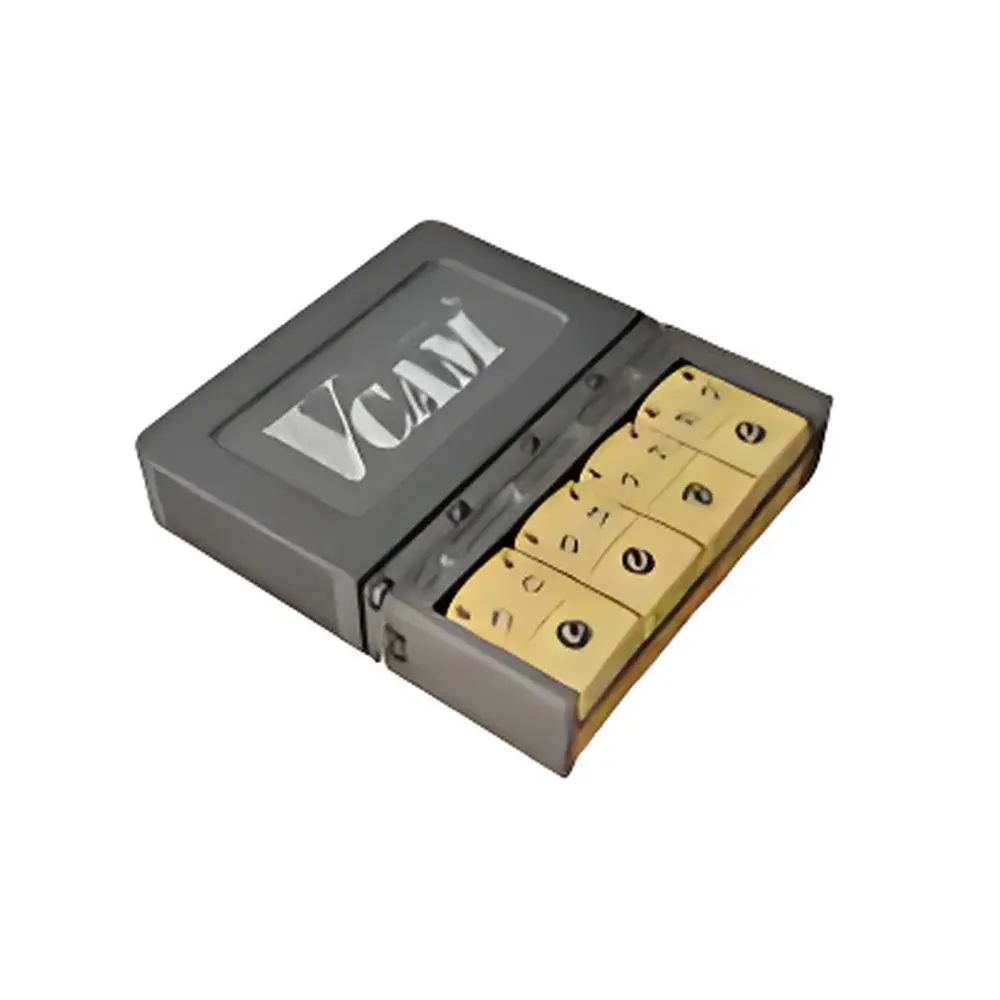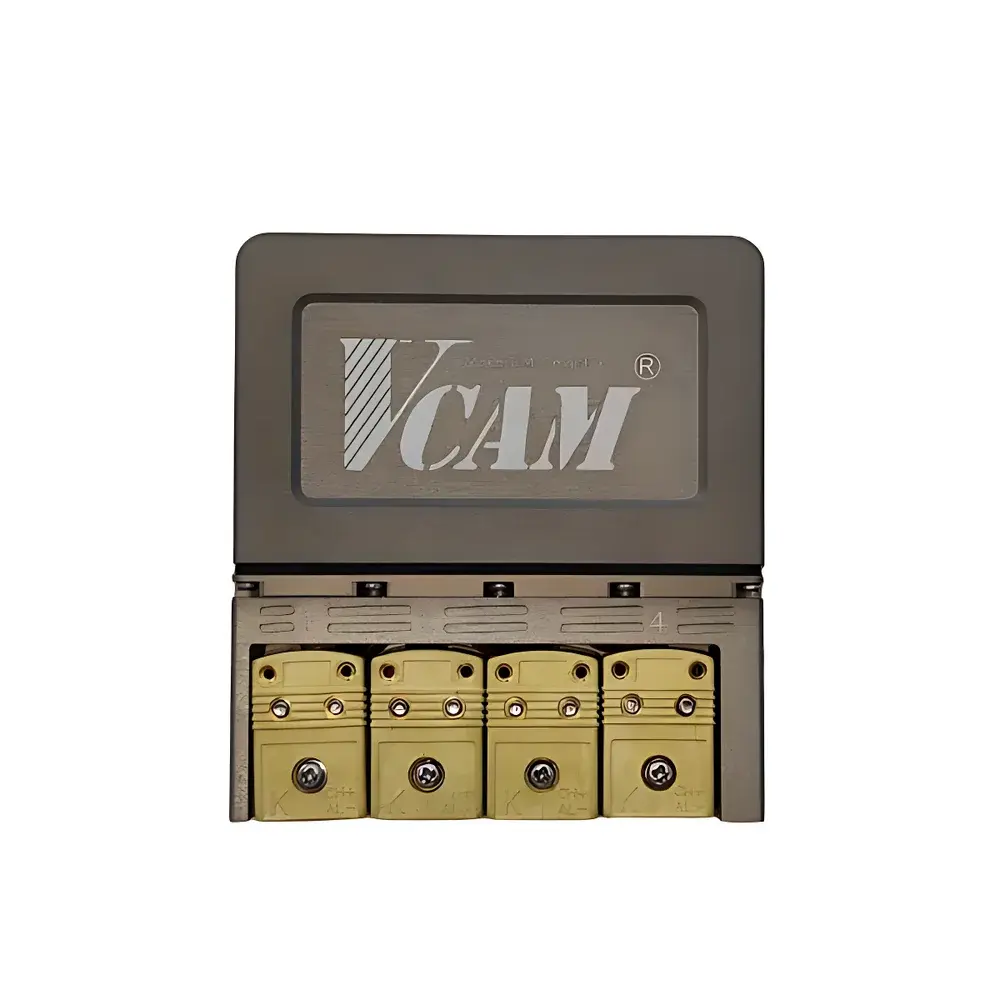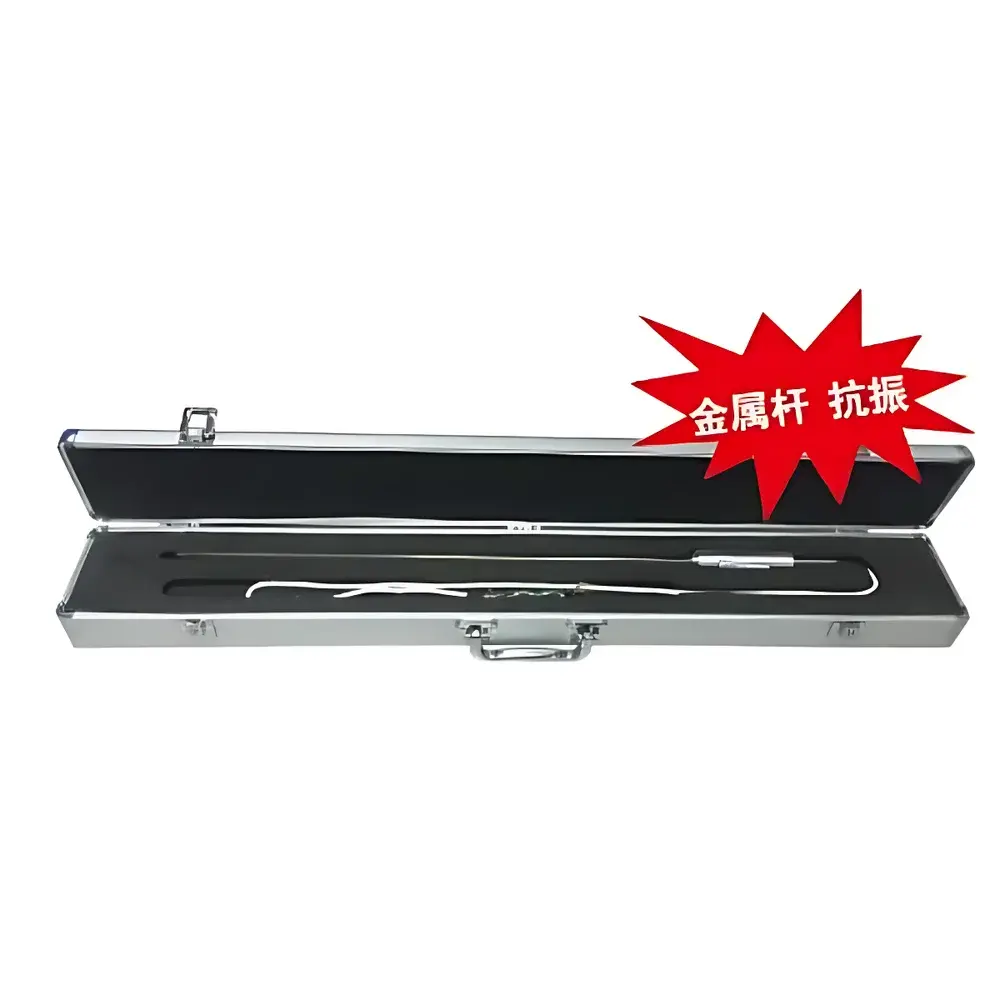
ASP YKS500 Series Standard Platinum Resistance Thermometer
| Brand | ASP/Advanced Sensing Products |
|---|---|
| Origin | USA |
| Manufacturer Type | Authorized Distributor |
| Product Origin | Imported |
| Model | YKS500 Series |
| Instrument Category | Standard Platinum Resistance Thermometer (SPRT) |
| Temperature Range | −200 °C to +500 °C |
| Nominal Resistance | 25.5 Ω or 100 Ω (customizable) |
| Temperature Coefficient | α = 0.003850 Ω/Ω/°C or 0.003925 Ω/Ω/°C (IEC 60751 / ASTM E1137 compliant) |
| Stability (25–500 °C, 100 thermal cycles) | R₀ drift < 0.008 °C |
| Repeatability (25–500 °C, 100 cycles) | R₀ deviation < 0.008 °C |
| Vibration Resistance | 20 G, 10–2000 Hz |
| Probe Diameter | 4.78 mm (0.188″) or 6.35 mm (0.25″) |
| Probe Length | 305–457 mm (12–18″), customizable |
Overview
The ASP YKS500 Series Standard Platinum Resistance Thermometer (SPRT) is a primary-standard-grade temperature sensor engineered for metrological traceability and long-term stability in calibration laboratories, national measurement institutes, and high-integrity industrial process validation environments. Based on the International Temperature Scale of 1990 (ITS-90), the YKS500 implements a high-purity, strain-free platinum sensing element wound on a low-thermal-expansion ceramic or quartz support structure—ensuring minimal hysteresis and self-heating effects during precision resistance measurements. Its design conforms to the fundamental physical definition of temperature via the platinum resistance ratio W(T) = R(T)/R(273.16 K), where R(T) is the measured resistance at temperature T and R(273.16 K) is the resistance at the triple point of water. The YKS500 operates across the full ITS-90-defined SPRT range from −200 °C to +500 °C, supporting both fixed-point calibrations (e.g., gallium, indium, zinc) and interpolation between defining fixed points.
Key Features
- Primary-standard-grade platinum wire with certified purity (>99.999% Pt) and annealed crystalline structure to minimize aging and drift
- Two standard nominal resistances: 25.5 Ω (optimized for four-wire bridge measurements with low excitation current) and 100 Ω (compatible with most commercial digital multimeters and resistance bridges)
- Compliance with multiple temperature coefficient specifications: α = 0.003850 Ω/Ω/°C (IEC 60751 Class A/AA) and α = 0.003925 Ω/Ω/°C (historical Callendar-Van Dusen SPRT reference), plus optional W(Ga) ≥ 1.11807 certification for gallium-point validation
- Proven thermal stability: <0.008 °C R₀ shift after 100 consecutive thermal cycles between 25 °C and 500 °C—meeting ISO/IEC 17025 internal verification requirements for reference standards
- Robust mechanical construction: hermetically sealed stainless-steel or Inconel sheath; vibration-rated to 20 G over 10–2000 Hz per MIL-STD-810G, suitable for transport between calibration sites
- Modular probe geometry: standard diameters of 4.78 mm (0.188″) and 6.35 mm (0.25″); lengths configurable from 305 mm to 457 mm (12–18″), with custom geometries available for specialized dewar, furnace, or fluid-bath immersion applications
Sample Compatibility & Compliance
The YKS500 is designed for direct immersion in controlled thermal environments including liquid nitrogen baths (−196 °C), stirred oil baths (−20 °C to +200 °C), fluidized sand baths, fixed-point cells (Ga, In, Sn, Zn), and high-temperature furnaces (up to 500 °C). Its low thermal mass and optimized stem conduction profile minimize measurement uncertainty due to axial heat conduction—a critical factor addressed per ASTM E747 and ISO 5725-2 guidelines. Each unit is supplied with a NIST-traceable calibration certificate (as-tested or as-designed), documenting resistance values at ≥5 ITS-90 defining fixed points and interpolation coefficients. The sensor meets the dimensional and electrical requirements for use in accredited calibration laboratories operating under ISO/IEC 17025:2017, and supports audit-ready documentation for FDA 21 CFR Part 11-compliant systems when integrated with validated data acquisition software.
Software & Data Management
The YKS500 is inherently compatible with industry-standard resistance measurement hardware—including Keysight/Keithley 24xx/37xx series source-measure units, Fluke Calibration 1595A Super-Thermometers, and Hart Scientific 1560 Black Stack. When paired with metrology-grade software such as Fluke CAL SOP, MET/TEAM, or custom LabVIEW-based calibration management systems, the YKS500 enables automated ITS-90 interpolation, uncertainty budgeting per GUM (JCGM 100:2008), and GLP/GMP-compliant electronic record generation. All calibration reports include full traceability chains to CIPM MRA signatory NMIs, with uncertainty statements expressed at k = 2 coverage factor. Firmware-upgradable bridges may support real-time W(T) calculation and automatic fixed-point recognition during multi-point calibrations.
Applications
- Primary and secondary temperature calibration in national metrology institutes (NMIs) and accredited calibration laboratories
- Validation and routine verification of industrial temperature sensors (RTDs, thermocouples, infrared pyrometers) per ISO 17025 and ANSI/NCSL Z540
- Thermal characterization of aerospace materials testing chambers and semiconductor process equipment
- Reference standard for HVAC system commissioning and pharmaceutical cleanroom environmental monitoring (per ISO 14644 and EU GMP Annex 15)
- Research-grade thermometry in cryogenic physics, superconductivity studies, and high-temperature material synthesis
FAQ
What is the difference between the 25.5 Ω and 100 Ω versions of the YKS500?
The 25.5 Ω version minimizes self-heating error (<0.001 °C at 1 mA excitation) and is preferred for ultra-high-precision bridge measurements; the 100 Ω version offers higher signal-to-noise ratio with standard DMMs and is widely used in industrial calibration workflows.
Can the YKS500 be used above 500 °C?
No. Operation beyond +500 °C risks irreversible platinum grain growth and drift. For temperatures up to 962 °C, ASP recommends the YKS700 Series SPRT with extended-range quartz encapsulation.
Is the YKS500 suitable for use in vacuum or inert gas environments?
Yes—its hermetic seal and low-outgassing construction meet ASTM E595 requirements for total mass loss (TML) <1.0% and collected volatile condensable materials (CVCM) <0.10%, making it suitable for space simulation chambers and semiconductor process tools.
How often should the YKS500 be recalibrated?
Per ISO/IEC 17025, recalibration interval is risk-based: typically annually for routine lab use; every 6 months for high-utilization or critical-path applications; and before/after each fixed-point realization campaign.