
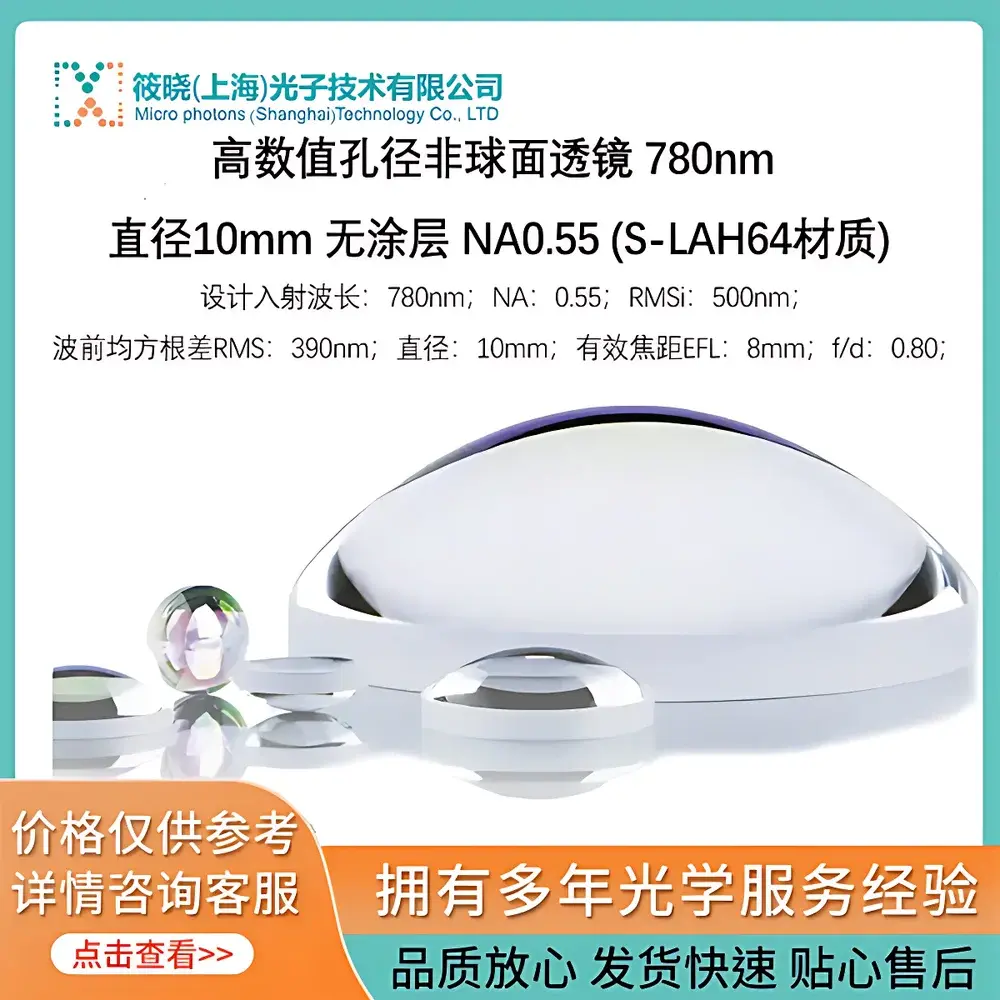
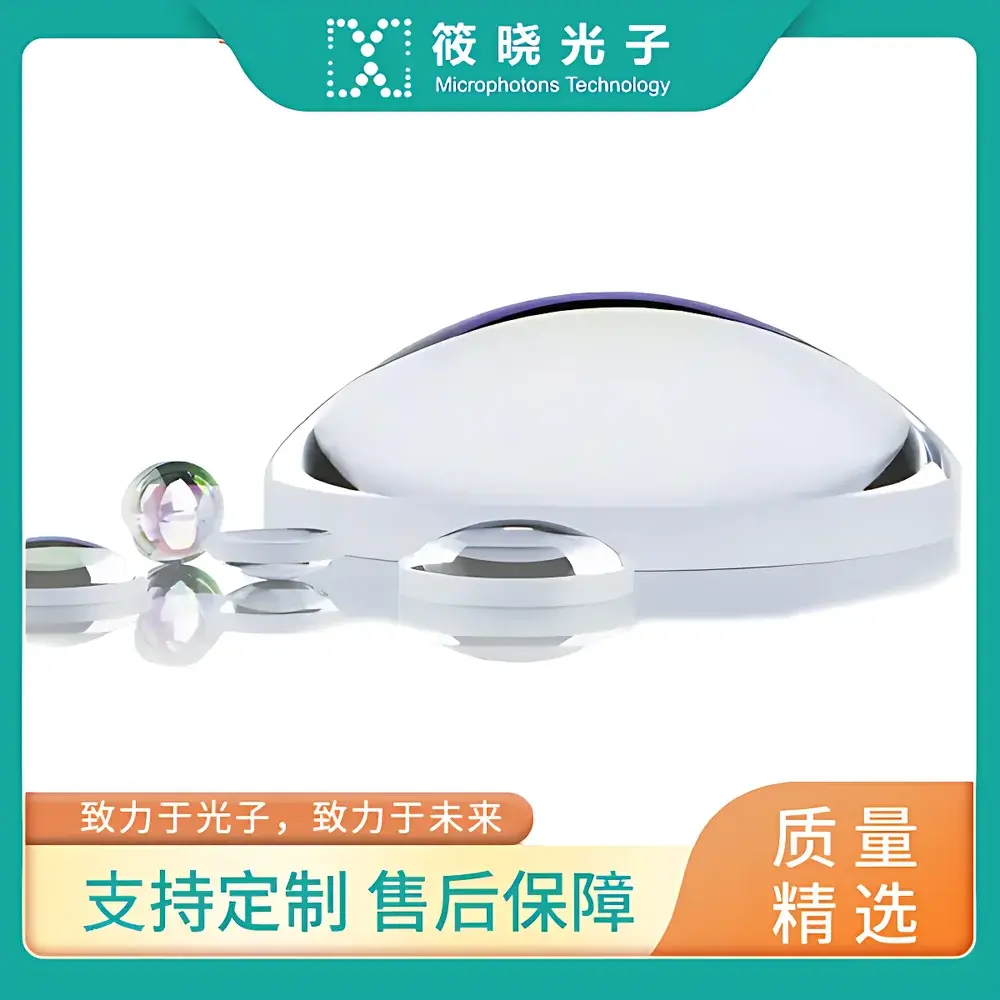
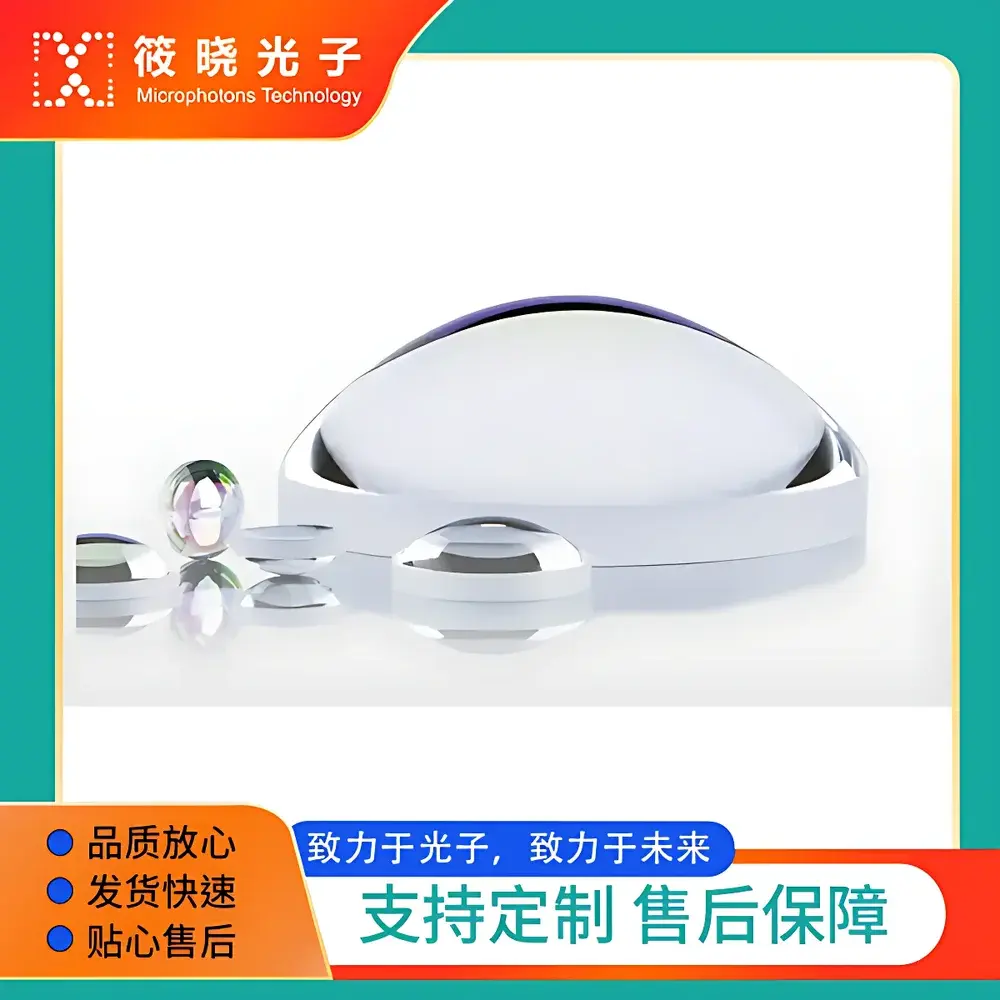
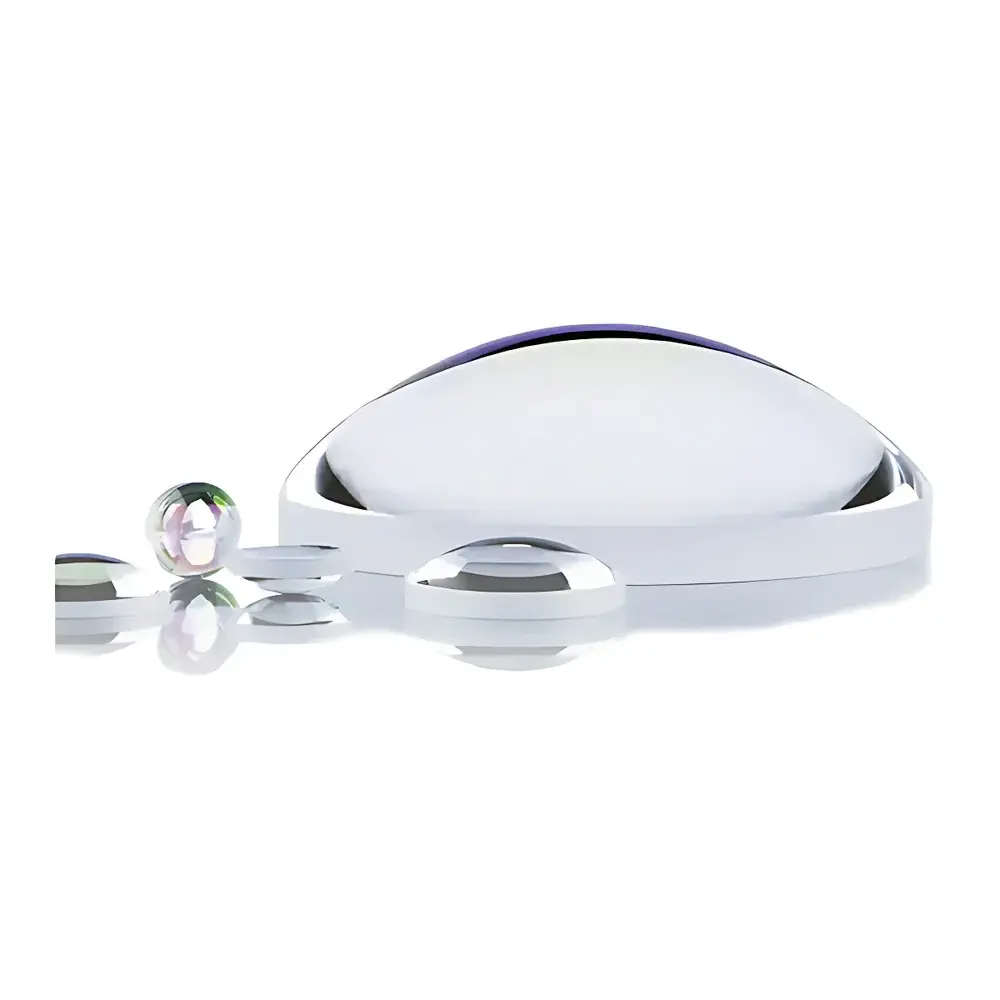
Asphericon AHL10-08-P-U High-NA Achromatic Aspheric Lens (S-LAH64), 780 nm, Ø10 mm, NA 0.55, Uncoated
| Brand | Asphericon |
|---|---|
| Origin | Germany |
| Model | AHL10-08-P-U |
| Material | S-LAH64 |
| Wavelength | 780 nm |
| Diameter | 10 mm |
| Numerical Aperture | 0.55 |
| Surface Irregularity (RMSi) | ≤0.1 µm |
| EFL Tolerance | ≤0.1% |
| Clear Aperture | ≥90% |
| Scratch-Dig | 60-40 |
| Diameter Tolerance | +0/−0.05 mm |
| Center Thickness Tolerance | ±0.05 mm |
| Laser Induced Damage Threshold | 12 J/cm² @ 100 Hz, 6 ns, 532 nm |
| Coating Options | Standard AR Coatings A (400–600 nm), B (600–1050 nm), C (1000–1600 nm) |
Overview
The Asphericon AHL10-08-P-U is a precision-engineered, high-numerical-aperture (NA 0.55) uncoated aspheric lens fabricated from low-dispersion optical glass S-LAH64. Optimized for operation at 780 nm—commonly used in Ti:sapphire lasers, quantum optics setups, and ultrafast laser beam conditioning—the lens delivers diffraction-limited performance by eliminating spherical aberration inherent in conventional spherical optics. Its aspheric surface profile is generated via deterministic single-point diamond turning and finished with magnetorheological finishing (MRF), achieving a surface irregularity of ≤0.1 µm RMSi (per ISO 10110-5). The 10 mm clear aperture and tight dimensional tolerances (±0.05 mm center thickness, +0/−0.05 mm diameter) ensure mechanical compatibility with standard optomechanical mounts and facilitate integration into compact, alignment-sensitive systems such as confocal microscopes, fiber coupling assemblies, and free-space optical interconnects.
Key Features
- High numerical aperture (NA 0.55) enables tight focusing and high light collection efficiency—critical for laser delivery, photonic integrated circuit coupling, and fluorescence excitation.
- S-LAH64 substrate offers low partial dispersion and high homogeneity, minimizing chromatic aberration across the near-infrared band (700–900 nm).
- Surface irregularity ≤0.1 µm RMSi ensures wavefront error < λ/20 @ 633 nm—suitable for applications demanding high Strehl ratio and M²-preserving beam transformation.
- Uncoated configuration provides maximum flexibility for end-user deposition of application-specific thin-film coatings—including high-LIDT V-coatings for pulsed laser systems.
- Laser-induced damage threshold of 12 J/cm² (100 Hz, 6 ns, 532 nm) establishes baseline robustness; optional V-coating increases LIDT to >25 J/cm² under equivalent conditions.
- RoHS-compliant manufacturing and traceable metrology documentation support compliance with ISO 9001, IATF 16949, and GLP-aligned laboratory procurement protocols.
Sample Compatibility & Compliance
The AHL10-08-P-U is compatible with standard kinematic lens mounts (e.g., Thorlabs SM1-threaded housings, Newport KM100 series) and supports both air-spaced and cemented doublet configurations when paired with complementary achromatic elements. Its S-LAH64 material exhibits excellent thermal stability (dn/dT ≈ −1.5 × 10⁻⁶ /K) and low birefringence (<5 nm/cm), making it suitable for polarization-sensitive interferometry and cavity stabilization. The lens conforms to ISO 10110-5 (surface form), ISO 10110-7 (surface quality), and ISO 14997 (laser damage testing) standards. Full metrology reports—including interferometric surface maps, transmitted wavefront error (TWE), and spectral transmittance curves—are provided with each unit for audit-ready traceability.
Software & Data Management
Asphericon supplies Zemax OpticStudio-compatible .ZMX and CODE V .SEQ files for the AHL10-08-P-U, including full aspheric coefficient data (up to 12th-order polynomial), refractive index dispersion (Sellmeier coefficients for S-LAH64), and coating stack definitions for all standard AR options. These models are validated against physical measurement data and support rigorous tolerance analysis (Monte Carlo, RSS, worst-case). For regulated environments, Asphericon’s quality management system complies with FDA 21 CFR Part 11 requirements for electronic records and signatures—enabling secure archiving of calibration certificates, surface metrology logs, and coating deposition process parameters within enterprise LIMS or QMS platforms.
Applications
- Laser Beam Shaping: Gaussian-to-top-hat conversion in ultrafast amplifiers; collimation of high-brightness diode lasers (e.g., 780 nm VCSEL arrays).
- Quantum Optics: Mode-matching into single-mode fibers and optical cavities for cold atom trapping and cavity QED experiments.
- Biophotonics: High-NA illumination optics in multiphoton microscopy and light-sheet fluorescence imaging (LSFM), where minimized spherical aberration preserves axial resolution.
- Industrial Metrology: Compact focusing optics in OCT systems operating at 780 nm, leveraging high NA for improved axial sensitivity and depth-of-field control.
- Aerospace Sensing: Ruggedized beam delivery for airborne LIDAR receivers requiring low wavefront distortion and stable focus under thermal cycling (−40°C to +85°C).
FAQ
What is the effective focal length (EFL) tolerance for this lens?
The EFL tolerance is specified as ≤0.1%, verified via interferometric focal plane scanning and traceable to PTB (Physikalisch-Technische Bundesanstalt) reference standards.
Can this lens be coated with a custom anti-reflection layer optimized for 780 nm?
Yes—custom V-coatings with Ravg < 0.15% over 770–790 nm are available; lead time is 4–6 weeks with full spectral verification report.
Is the S-LAH64 substrate suitable for UV exposure below 350 nm?
No—S-LAH64 exhibits strong absorption below 380 nm; for UV applications, Asphericon recommends fused silica or CaF₂-based alternatives.
Does the uncoated version include protective packaging for cleanroom handling?
Yes—all uncoated lenses ship in ISO Class 5 cleanroom-compatible containers with nitrogen-purged desiccant and individually sealed polypropylene lens cells.
How is surface irregularity measured and certified?
RMSi is measured using a Zygo Verifire™ HD interferometer with a λ/20 reference flat; raw phase maps and ISO 10110-5-compliant deviation reports are included in the certificate of conformance.




