
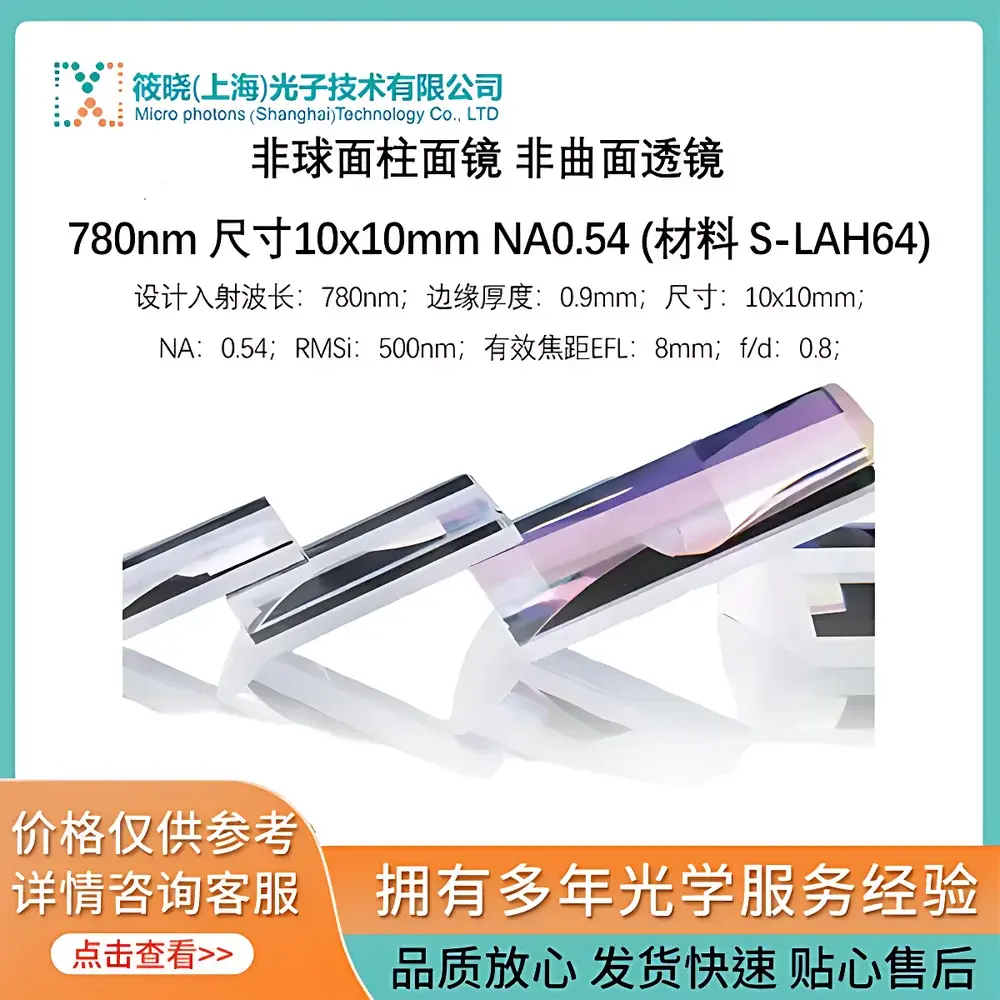
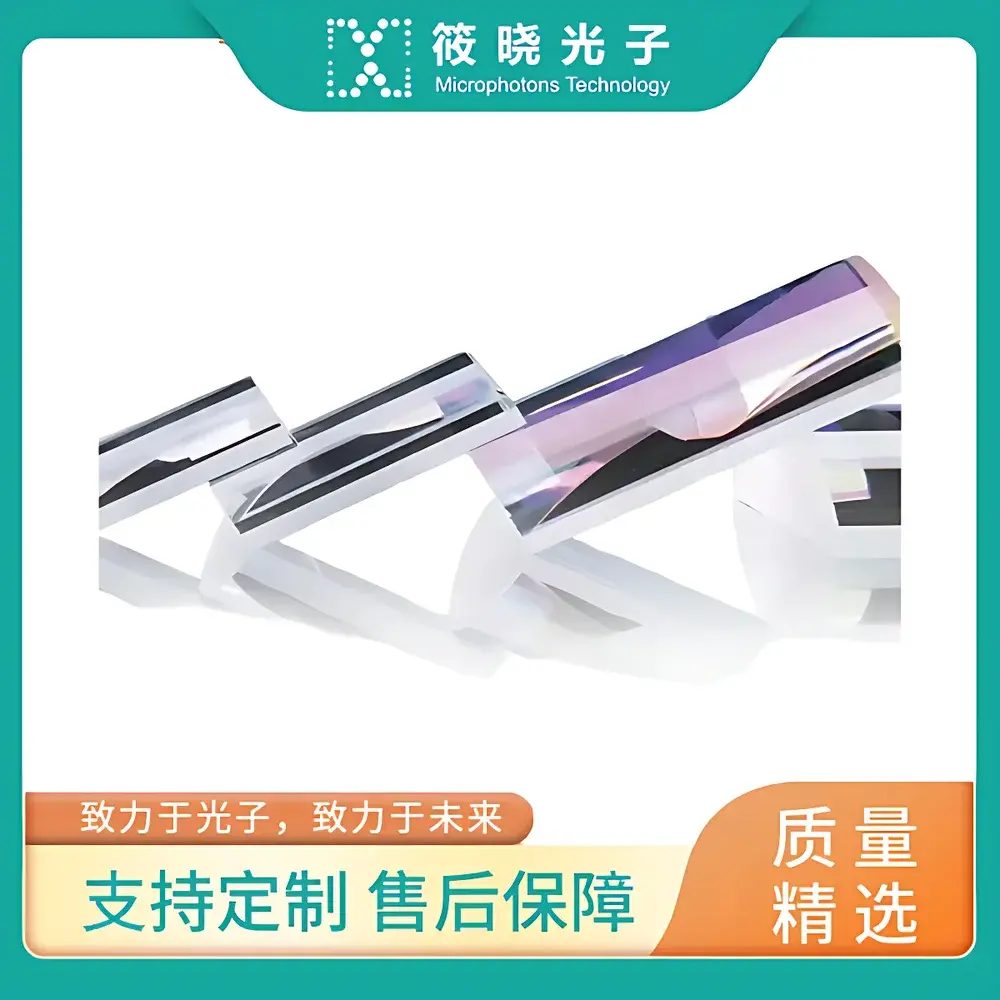
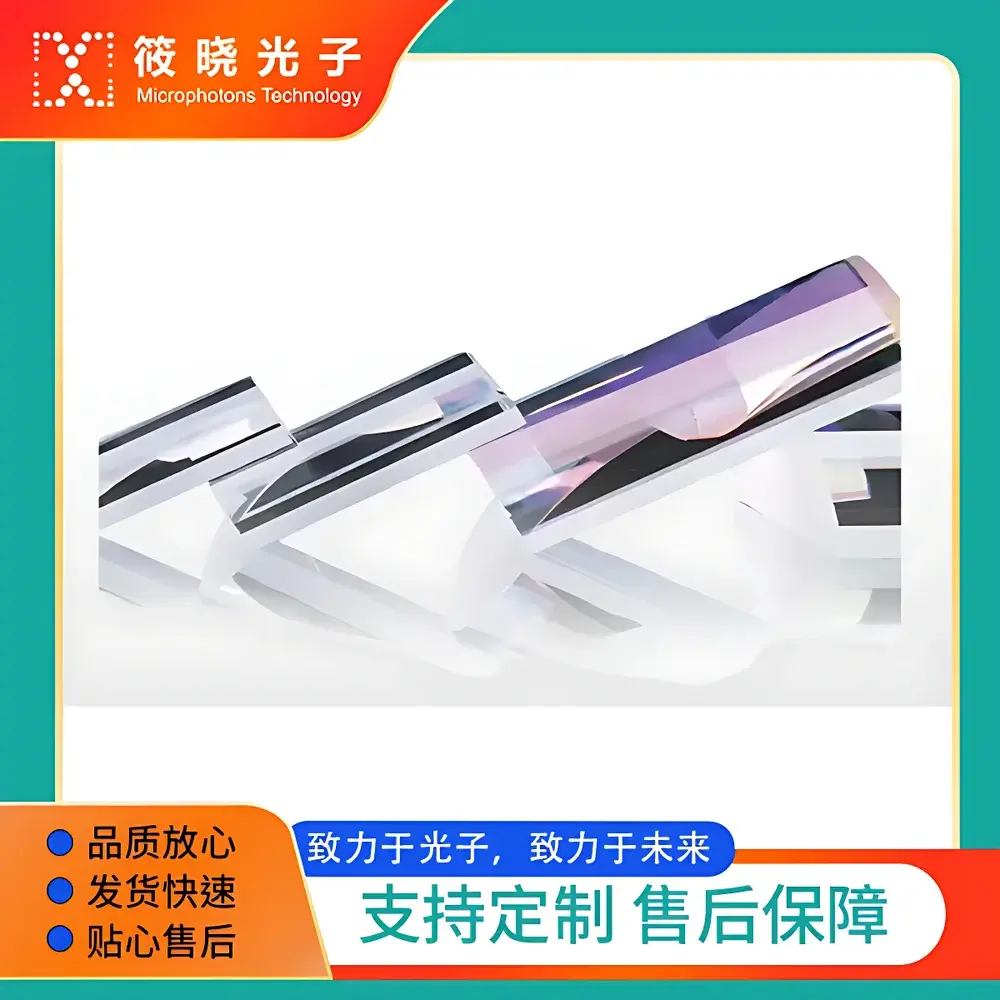
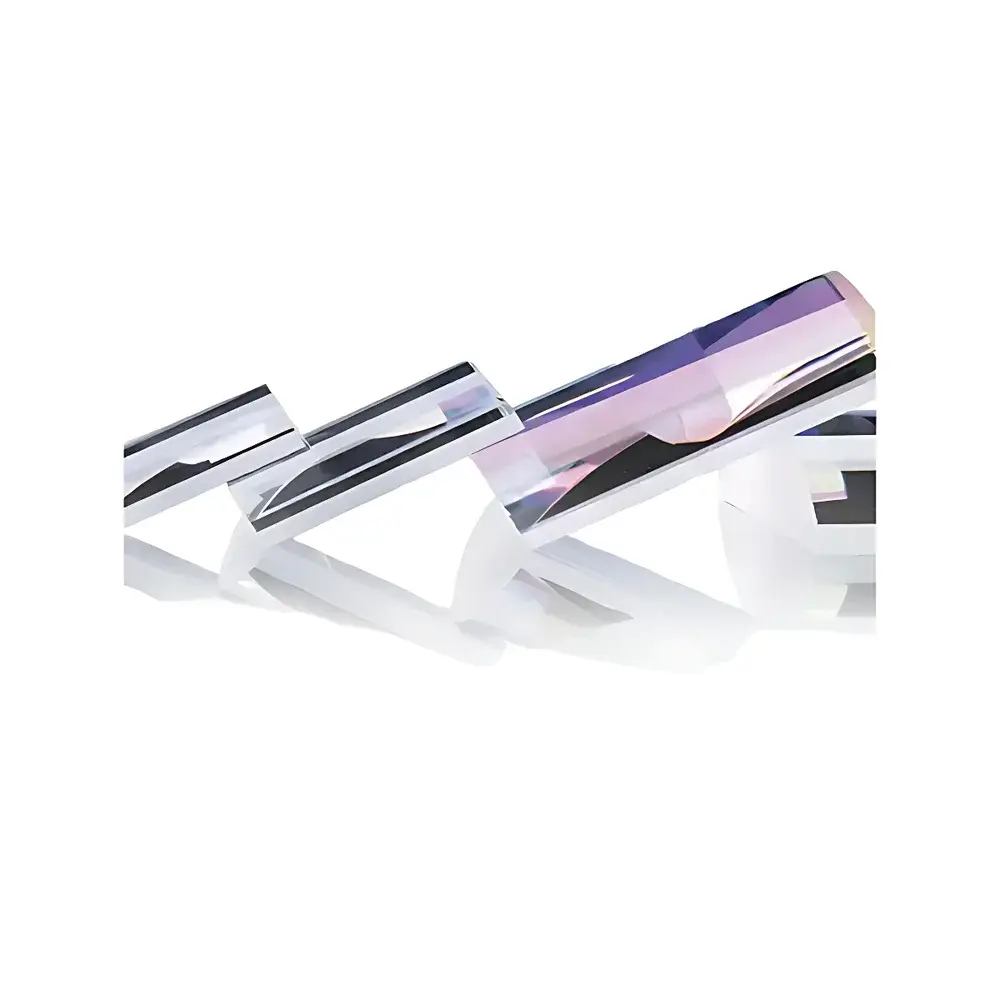
Asphericon CHL10-08-P Aspheric Cylindrical Lens (S-LAH64, 10×10 mm, NA 0.54, 780 nm Coated)
| Brand | Asphericon |
|---|---|
| Origin | Germany |
| Model | CHL10-08-P |
| Material | S-LAH64 |
| Clear Aperture | 10 × 10 mm |
| Numerical Aperture (NA) | 0.54 |
| Design Wavelength | 780 nm |
| Coating | AR for 780 nm |
| Surface Figure Accuracy (RMS) | < λ/20 @ 633 nm |
| Surface Roughness (Ra) | < 5 Å |
| Focal Length (Tangential) | 8.0 mm |
| Focal Length (Sagittal) | ∞ (Cylindrical Geometry) |
| Damage Threshold | > 5 J/cm² @ 780 nm, 10 ns, 10 Hz |
Overview
The Asphericon CHL10-08-P is a high-precision aspheric cylindrical lens engineered for demanding laser beam shaping and collimation applications in the near-infrared spectral range. Unlike conventional spherical or plano-cylindrical optics, this component features a monolithic aspheric surface in one axis and a plano surface in the orthogonal axis—enabling diffraction-limited focusing of divergent laser beams along a single meridian while preserving beam geometry in the orthogonal direction. Its optical design is based on rigorous ray-tracing optimization for minimal wavefront error at the design wavelength of 780 nm, making it particularly suitable for ultrafast Ti:sapphire laser systems, quantum optics setups, and precision interferometry where astigmatism control and M² preservation are critical. Fabricated from Schott’s S-LAH64—a dense lanthanum crown glass with high refractive index (nd = 1.805) and low dispersion (νd = 40.7)—the lens delivers superior chromatic stability and thermal homogeneity under high-power irradiation.
Key Features
- Monolithic aspheric cylindrical geometry with tangential focal length of 8.0 mm and sagittal focal length at infinity
- Surface figure accuracy better than λ/20 RMS (measured at 633 nm), verified via phase-shifting interferometry per ISO 10110-5
- Ultra-smooth surface finish with Ra < 5 Å, minimizing scatter losses in high-finesse optical cavities
- Anti-reflection coating optimized for 780 nm (R < 0.25% per surface), broadband performance across 750–810 nm
- High laser-induced damage threshold (>5 J/cm², 10 ns, 10 Hz, 780 nm), validated per ISO 21254-1
- Mounting-ready mechanical housing compatibility: 10 × 10 mm clear aperture with ±0.05 mm dimensional tolerance
Sample Compatibility & Compliance
The CHL10-08-P is fully compatible with standard optomechanical mounts (e.g., Thorlabs SM1-threaded lens tubes, Kinematic XYZ stages) and integrates seamlessly into OEM laser modules requiring astigmatic correction. All manufacturing processes comply with ISO 9001:2015 quality management standards. Optical specifications adhere to ISO 10110-1 (drawing notation), ISO 10110-7 (surface imperfections), and DIN EN 61290-1 (laser component testing). The lens is not classified as a medical device or safety-critical component; however, its performance meets requirements for Class 3B and Class 4 laser system integration under IEC 60825-1:2014.
Software & Data Management
While the CHL10-08-P is a passive optical component, Asphericon provides comprehensive digital documentation including Zemax-compatible .ZAR and Code V .SEQ files, measured interferometric surface maps (in .DAT format), and full metrology reports traceable to PTB (Physikalisch-Technische Bundesanstalt). These data packages support rigorous optical design validation, tolerance analysis, and GLP-compliant lab recordkeeping. No proprietary software is required for operation, but integration with optical simulation platforms (e.g., Zemax OpticStudio, Synopsys CODE V, FRED) is fully supported.
Applications
- Astigmatism correction in Ti:sapphire oscillator and amplifier cavities
- Line generation and anamorphic beam expansion in confocal microscopy and STED systems
- Focusing of elliptical diode laser outputs into circular symmetric profiles
- Beam conditioning for cold atom trapping (MOT, optical lattices) at 780 nm D2 line
- Interferometric alignment references in gravitational wave detector prototype setups
- Integration into fiber-coupled quantum light sources requiring mode-matching fidelity
FAQ
Is this lens suitable for femtosecond pulse applications?
Yes—the S-LAH64 substrate exhibits negligible group delay dispersion (GDD) over typical Ti:sapphire bandwidths (680–1080 nm), and the AR coating is designed for low-phase-distortion performance.
Can the lens be cleaned using standard optical protocols?
Yes—follow ISO 10110-7 cleaning guidelines: use spectroscopic-grade acetone followed by methanol, applied with lint-free wipes; avoid ultrasonic baths unless validated for coated S-LAH64.
What is the maximum incident angle before polarization-dependent loss becomes significant?
For p-polarized 780 nm light, reflectance remains below 0.3% up to 15° angle of incidence; s-polarization shows comparable performance within the same range.
Does Asphericon provide mounting solutions for this lens?
Standard kinematic mounts (e.g., KM100 series) and custom-designed lens cells are available upon request; mechanical drawings and tolerance stacks can be supplied for OEM integration.
Is calibration data included with shipment?
Each unit ships with a certificate of conformance and a full interferometric test report—including PV and RMS wavefront error, centration error (< 15 arcsec), and coating spectral reflectance curve—traceable to national metrology institutes.




