
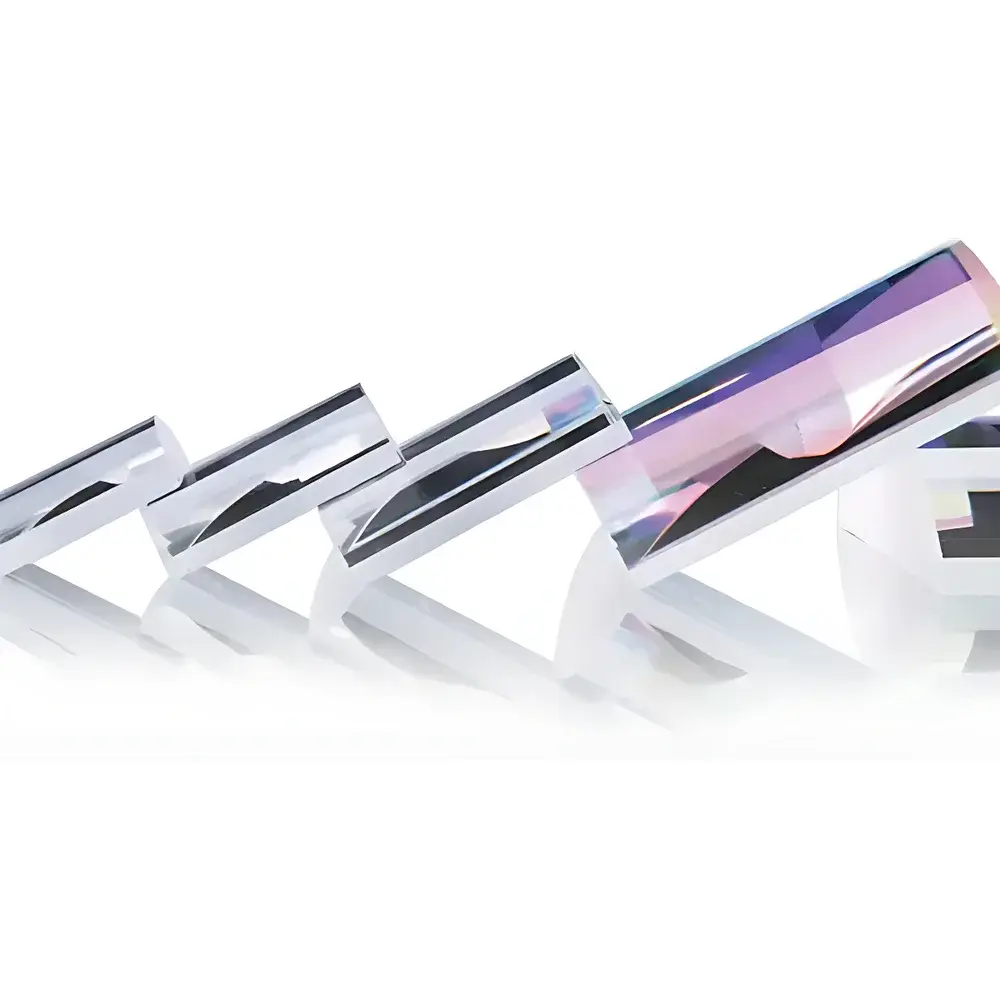
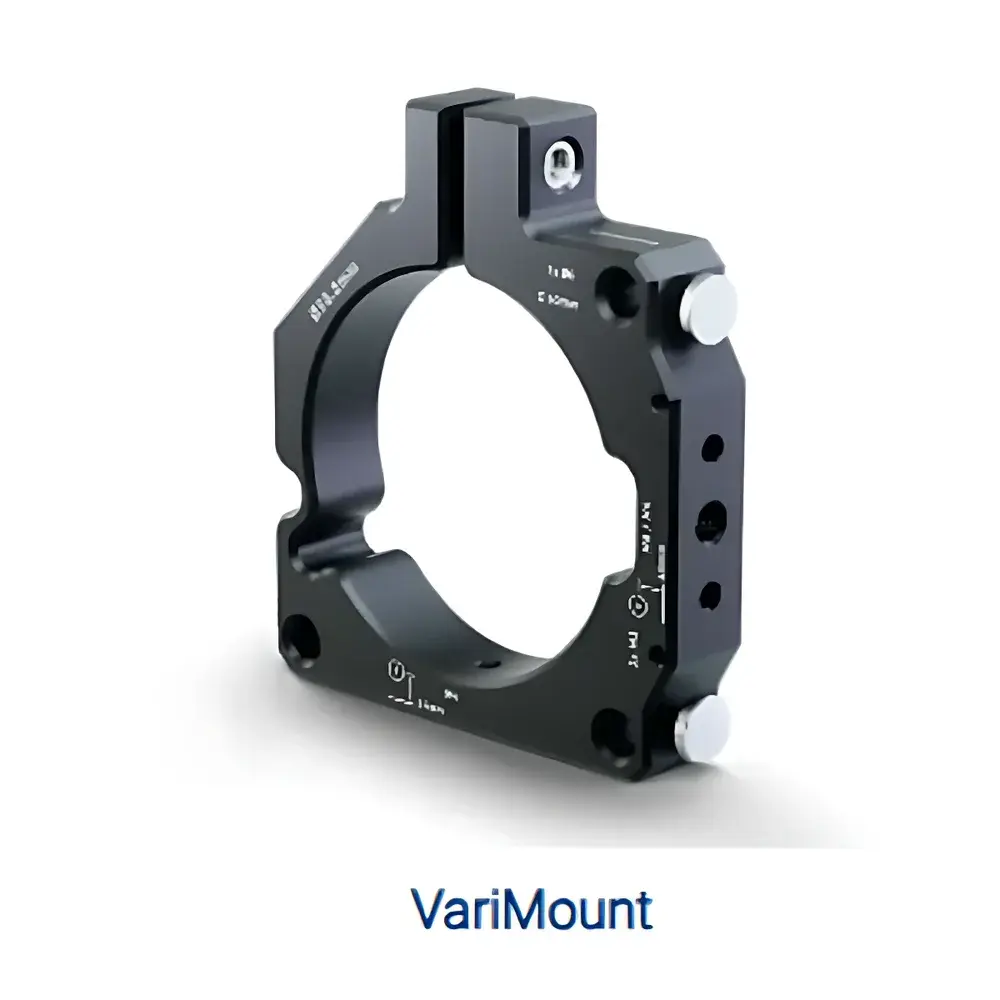
Asphericon CHL30-26-P-U Precision Aspheric Cylindrical Lens
| Brand | Asphericon (Germany) |
|---|---|
| Origin | Germany |
| Model | CHL30-26-P-U |
| Component Category | Optical Element |
| RMSi Surface Form Error | ≤500 nm |
| Size | 30 × 30 mm |
| Effective Focal Length (EFL) | 26 mm |
| Numerical Aperture (NA) | 0.52 |
| f/d Ratio | 0.87 |
| Working Distance (WD) | 21.5 mm |
| Design Wavelength | 780 nm |
| Substrate Material | S-LAH64 |
| Coating Options | AR Coating A (400–600 nm), B (600–1050 nm), or C (1000–1500 nm) |
Overview
The Asphericon CHL30-26-P-U is a high-precision aspheric cylindrical lens engineered for demanding laser beam shaping, line generation, and anamorphic correction applications. Unlike conventional spherical cylindrical optics, this lens features a non-spherical surface profile on one axis—optimized via deterministic CNC grinding and sub-aperture polishing—to eliminate spherical aberration along the cylindrical axis and deliver diffraction-limited line focus performance. Its design leverages the high refractive index (nd ≈ 1.80) and low dispersion characteristics of Schott S-LAH64 optical glass, enabling compact focal geometry and high transmission across visible to near-infrared spectral bands. The lens is manufactured to ISO 10110-5 standards and validated with interferometric metrology, achieving a root-mean-square surface irregularity (RMSi) of ≤500 nm over the clear aperture—ensuring predictable wavefront fidelity in critical alignment-sensitive systems such as ultrafast laser cavities, fiber coupling setups, and structured light projection modules.
Key Features
- Precision aspheric cylindrical geometry with RMSi ≤ 500 nm, verified by phase-shifting interferometry (PSI) and traceable to PTB calibration standards
- Optimized for diffraction-limited line focus: eliminates spherical aberration along the cylindrical axis while preserving Gaussian intensity distribution
- S-LAH64 substrate offering high Abbe number (νd ≈ 25.1), excellent thermal stability (dn/dT ≈ −1.9 × 10⁻⁶ K⁻¹), and resistance to laser-induced damage (LIDT ≥ 5 J/cm² @ 1064 nm, 10 ns, 20 Hz)
- Triple-standard anti-reflection coating options (A/B/C) with broadband performance: Rmax < 1.0%, Ravg ≤ 0.4% at normal incidence, fully compliant with ISO 9211-3 for coating durability (Class 2 per MIL-C-48497A)
- Robust mechanical specification: edge thickness of 2.2 mm, 30 × 30 mm rectangular clear aperture, chamfered edges per ISO 10110-7, and laser-grade scratch-dig (60–40) surface quality
- Ready-to-integrate form factor compatible with standard optomechanical mounts (e.g., Thorlabs SM30-series lens tubes, Newport KM100 kinematic mounts)
Sample Compatibility & Compliance
The CHL30-26-P-U is designed for integration into Class 1 and Class 4 laser systems operating under IEC 60825-1:2014 and ANSI Z136.1-2022 safety frameworks. Its S-LAH64 substrate meets RoHS Directive 2011/65/EU and REACH Regulation (EC) No. 1907/2006 requirements, with full material declarations available upon request. All coatings are deposited via ion-assisted e-beam evaporation in class-100 cleanroom environments, ensuring repeatability and long-term environmental stability (tested per ISO 9211-4:2018 for humidity, adhesion, and abrasion resistance). The lens is suitable for use in GMP-compliant optical assembly lines and qualifies for inclusion in FDA-submitted device dossiers where optical component traceability and certification are required.
Software & Data Management
Asphericon provides full digital twin support for the CHL30-26-P-U, including downloadable optical design files in industry-standard formats: Zemax (.ZAR), CODE V (.SEQ), OSLO (.LEN), VirtualLab Fusion (.vlf), and STEP (.stp) for mechanical integration. Each shipment includes a Certificate of Conformance (CoC) listing measured RMSi, transmitted wavefront error (TWE), and coating spectral reflectance data acquired on a calibrated PerkinElmer Lambda 1050+ spectrophotometer. Raw interferograms (in .MAT and .H5 formats) and surface height maps are available under NDA for customers performing in-house optical modeling or tolerance analysis in Synopsys LightTools or Ansys Speos.
Applications
- Laser line generation for machine vision inspection (e.g., triangulation-based 3D profiling of semiconductor wafers)
- Anamorphic beam expansion in ultrafast Ti:sapphire oscillator-amplifier chains
- Fiber collimator arrays in telecom DWDM transceivers requiring uniform line focus across multi-channel configurations
- Structured illumination in fluorescence microscopy (SIM) systems requiring high MTF (>60% @ 50 lp/mm) along the line axis
- Beam homogenization in excimer laser annealing tools for OLED display manufacturing
- Optical pumping of alkali vapor cells in atomic clocks and magnetometers
FAQ
What is the maximum continuous-wave (CW) laser power density this lens can withstand without thermal lensing?
For collimated 1064 nm illumination at room temperature (23 °C) and natural convection cooling, the lens maintains stable wavefront performance up to 2.5 kW/cm²—validated via finite-element thermal-optic modeling and experimental verification using a calibrated pyroelectric power sensor and Shack–Hartmann wavefront sensor.
Can this lens be mounted in vacuum environments?
Yes. The S-LAH64 substrate exhibits negligible outgassing (per ASTM E595: TML < 0.05%, CVCM < 0.01%), and the AR coatings are fully adherent under 10⁻⁶ mbar conditions. Vacuum-compatible mounting recommendations are included in the technical datasheet.
Is Zemax file support available for polarization-dependent modeling?
Yes. The provided .ZAR file includes full birefringence-aware material definitions for S-LAH64 and vector-coating models enabling Jones matrix-based polarization ray tracing.
Do you offer mounting adapters or kinematic mounts specifically designed for the CHL30-26-P-U?
Asphericon offers the optional a|Mount-CHL30 series—custom-machined aluminum holders with ±1 µm centering accuracy, integrated fiducials for alignment, and compatibility with 3-axis tip/tilt stages. Lead time: 5 business days from order confirmation.






