
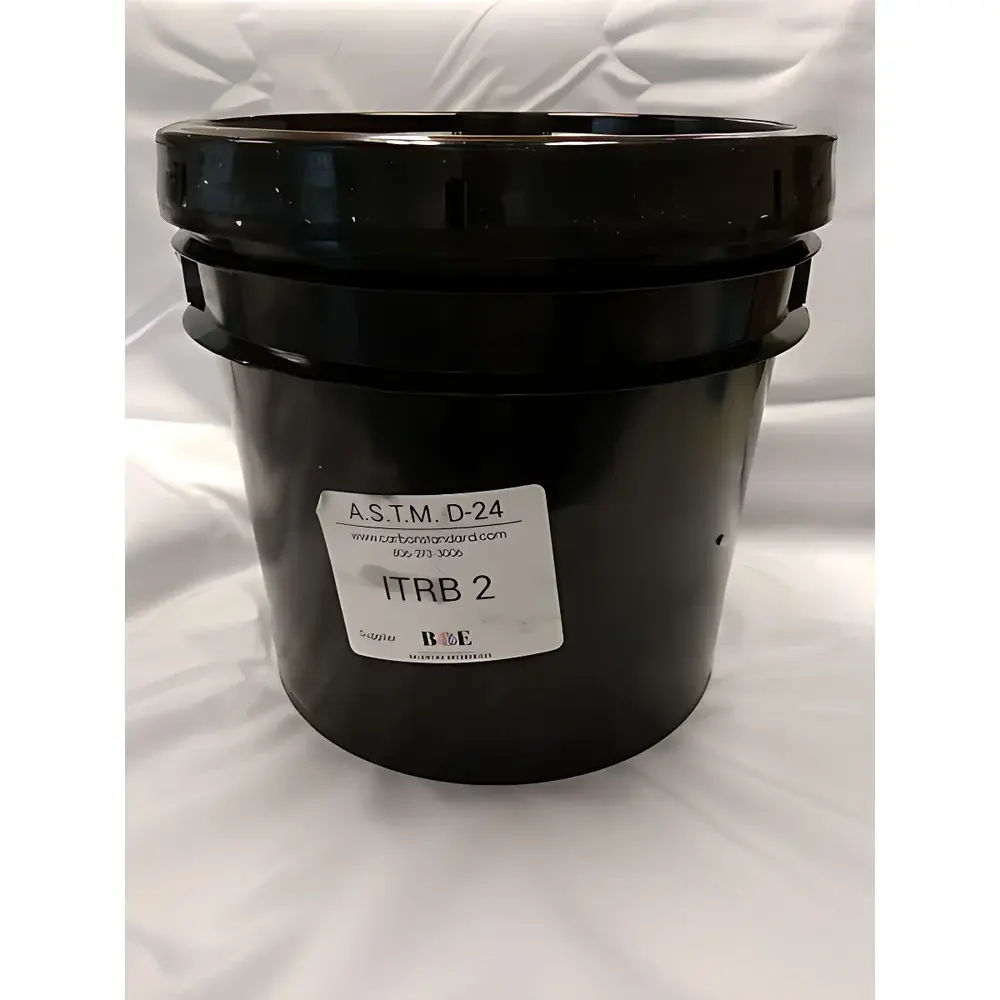
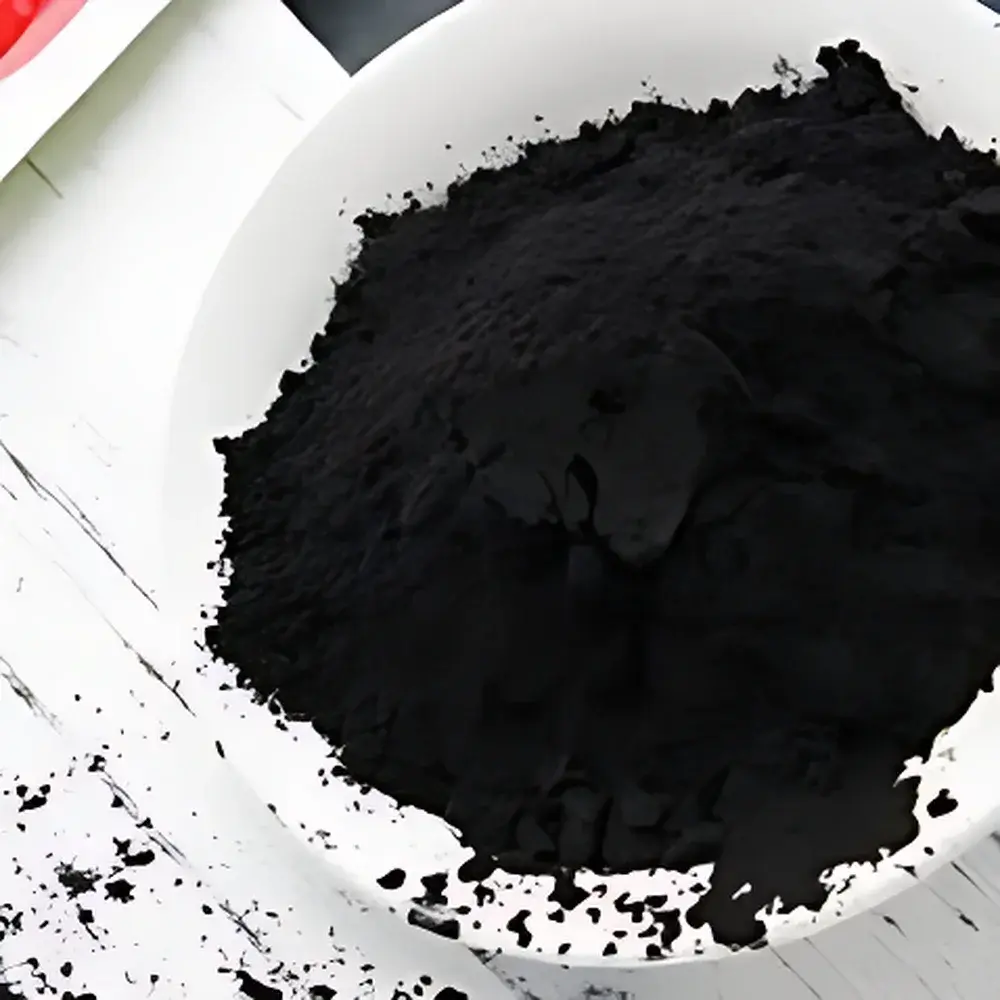
ASTM IRB9 Industrial Reference Black
| Brand | B&E / Balentine Enterprises |
|---|---|
| Origin | USA |
| Supplier Type | Authorized Distributor |
| Import Status | Imported |
| Model | ASTM IRB9 Industrial Reference Black |
| Pricing | Available Upon Request |
Overview
ASTM IRB9 Industrial Reference Black is a certified reference material (CRM) developed and standardized under the specifications of ASTM International, specifically for performance validation and method verification in rubber compounding and炭黑 (carbon black) quality control laboratories. As the latest generation in the ASTM IRB series—succeeding IRB8—IRB9 serves as a benchmark for evaluating the reinforcing efficiency, dispersion behavior, and vulcanizate mechanical property response of carbon black grades in both synthetic (e.g., SBR) and natural rubber (NR) matrices. Its physical and structural properties—including nitrogen surface area (NSA), iodine adsorption number (IAN), DBP oil absorption, and particle size distribution—are rigorously characterized and certified to ensure batch-to-batch consistency and metrological traceability to NIST-traceable measurement protocols. IRB9 is not a production-grade carbon black but a purpose-engineered reference standard intended exclusively for interlaboratory comparison, instrument calibration, and ASTM method compliance auditing.
Key Features
- Officially designated ASTM IRB9 reference material, compliant with ASTM D3182, D3191, D3192, and D412 test protocols
- Traceable certification documentation supplied with each lot, including certified values and expanded uncertainties for key performance differentials vs. IRB#7 baseline
- Stable, homogeneous powder form with controlled moisture content (<0.5% w/w) and minimal volatile matter to ensure reproducible compound mixing
- Manufactured and certified in accordance with ISO/IEC 17025-accredited procedures by Balentine Enterprises (B&E), a U.S.-based provider of reference materials for elastomer testing
- Designed for use in QC/QA workflows requiring GLP-compliant validation, including internal method transfer, equipment qualification (IQ/OQ/PQ), and regulatory audit readiness (e.g., FDA 21 CFR Part 11–aligned data integrity)
Sample Compatibility & Compliance
IRB9 is formulated for direct substitution into standard rubber formulations per ASTM D3191 (SBR) and D3192 (NR) test methods. It exhibits consistent dispersion kinetics in two-roll mills and internal mixers, enabling reliable correlation between laboratory-scale compound preparation and industrial processing conditions. Each certified lot undergoes independent verification against ASTM-defined acceptance criteria for tensile strength, 300% modulus, and ultimate elongation differentials relative to IRB#7—ensuring compatibility with legacy IRB-based historical datasets. The material complies with ASTM E691 guidelines for interlaboratory study design and meets ISO Guide 35 requirements for reference material certification. It is suitable for use in laboratories operating under ISO/IEC 17025, cGMP, or GLP frameworks where documented metrological traceability is mandatory.
Software & Data Management
While IRB9 itself is a physical reference standard, its integration into digital quality systems is supported through structured data exchange formats (CSV, PDF certificate of analysis) compatible with LIMS (Laboratory Information Management Systems) and ELN (Electronic Lab Notebook) platforms. Certificate of Analysis (CoA) includes full uncertainty budgets per ISO/IEC Guide 98-3 (GUM), enabling statistical comparison against in-house measurements using t-test or ANOVA-based equivalence testing. For laboratories implementing 21 CFR Part 11 compliance, B&E provides digitally signed CoAs with audit-trail metadata (issue date, analyst ID, instrument calibration logs, environmental monitoring records), facilitating electronic record retention and review.
Applications
- Verification of repeatability and reproducibility in ASTM D3191 (SBR) and D3192 (NR) tensile testing protocols
- Calibration of rheometers, Mooney viscometers, and curemeters used in carbon black–rubber interaction studies
- Benchmarking of new carbon black grades against industry-accepted performance baselines
- Training and proficiency testing for rubber testing personnel across multi-site manufacturing networks
- Supporting regulatory submissions requiring documented evidence of method robustness (e.g., ICH Q5, ISO 10993–17)
FAQ
What distinguishes IRB9 from IRB8?
IRB9 introduces updated differential performance targets versus IRB#7 across multiple ASTM test methods—particularly in SBR tensile stress at 300% elongation (−0.63 MPa for Method B) and NR ultimate elongation (−0.2% for Method C)—reflecting evolving industry expectations for reinforcement balance.
Is IRB9 certified for ISO/IEC 17025 laboratories?
Yes—each lot is accompanied by a certificate issued under B&E’s ISO/IEC 17025-accredited reference material production system, with full uncertainty statements and traceability to NIST SRMs.
Can IRB9 be used for ASTM D412 testing?
IRB9 is not directly tested per D412 (tensile properties of vulcanized rubber); rather, it is incorporated into compounds prepared according to D3182 and then evaluated via D412 as part of the full ASTM D3191/D3192 workflow.
How should IRB9 be stored to maintain stability?
Store in original sealed packaging at 23 ± 2°C and 50 ± 5% RH; avoid exposure to UV light, high humidity, or prolonged ambient temperature fluctuations to preserve surface chemistry integrity.
Does B&E provide technical support for IRB9 implementation?
Yes—B&E offers application notes, ASTM cross-reference guides, and on-demand consultation for method validation, uncertainty budgeting, and audit preparation.




