
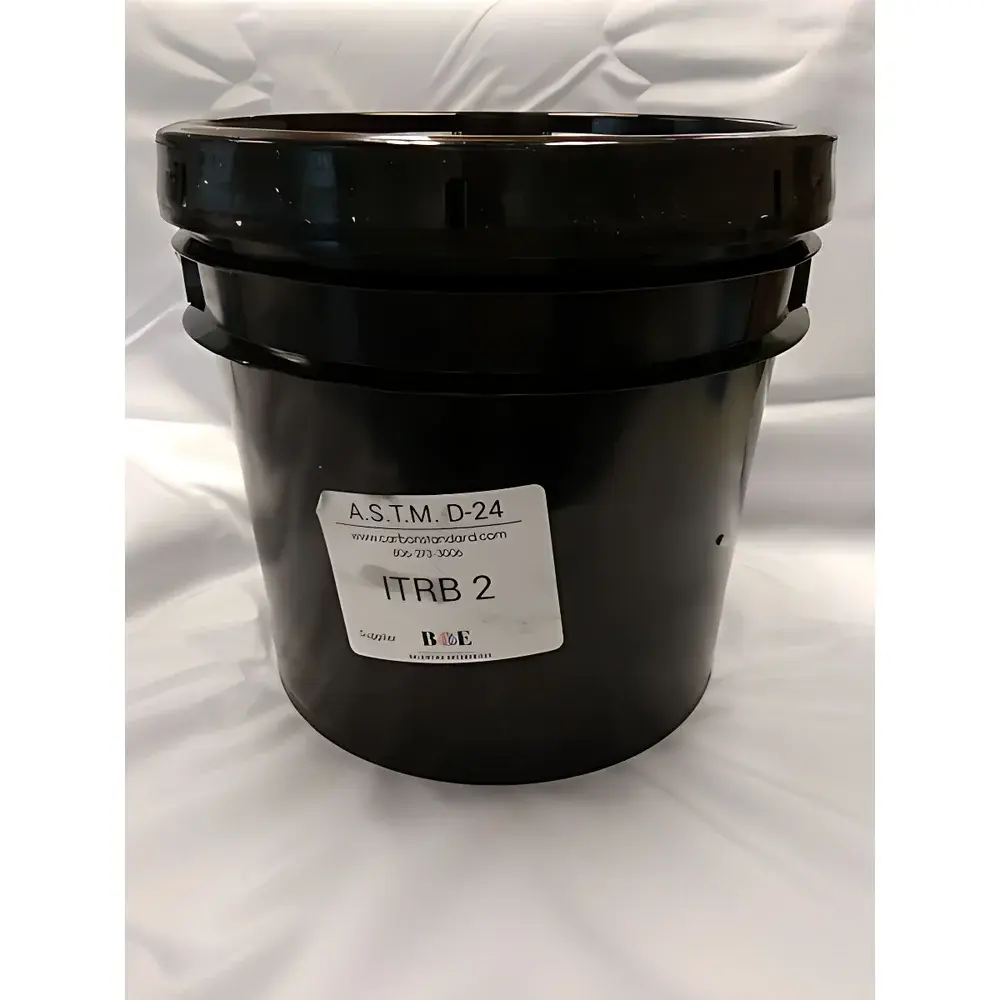
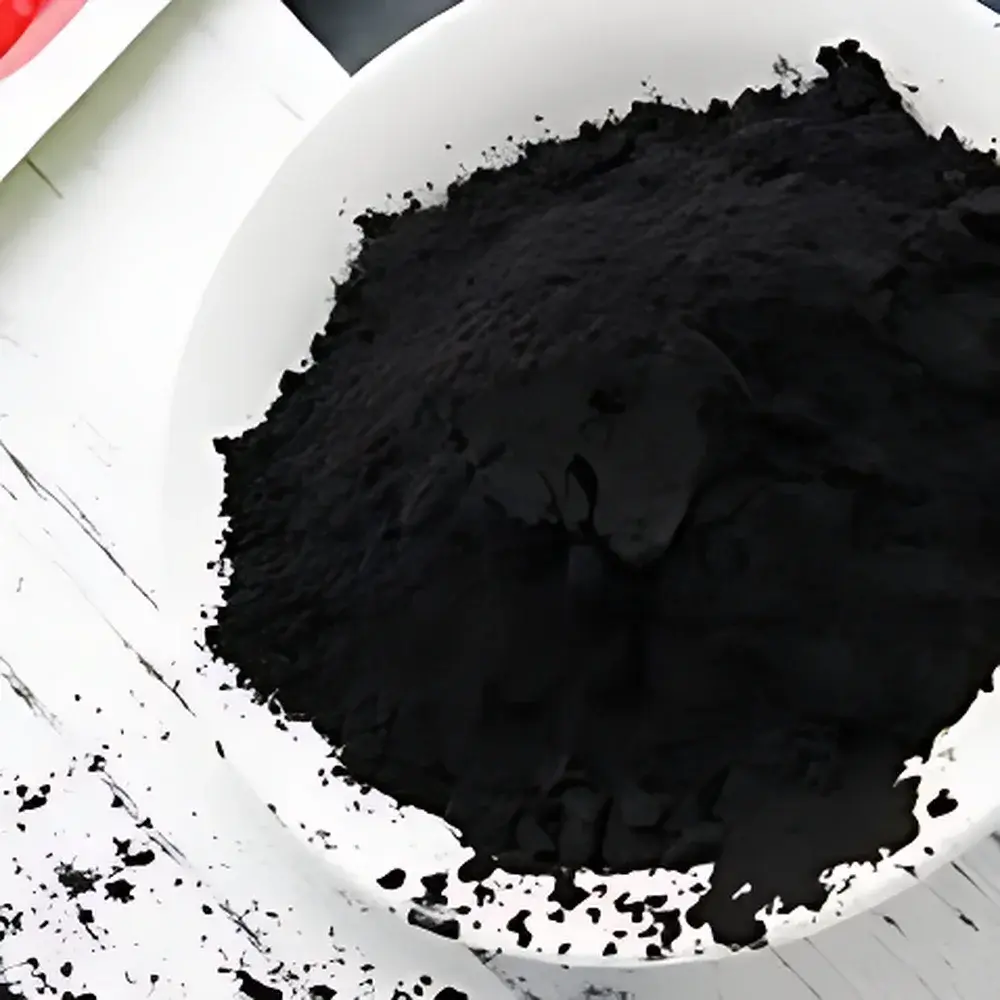
ASTM IRB9 Industry Reference Black (Carbon Black) – Certified Standard Reference Material, Imported from USA
| Brand | B&E / Balentine Enterprises |
|---|---|
| Origin | USA |
| Model | IRB9 Carbon Black |
| Regulatory Compliance | ASTM D3182, D3191, D3192, D412 |
| Certification | NIST-traceable batch documentation available |
| Packaging | Sealed, moisture-controlled HDPE container (500 g standard) |
Overview
ASTM IRB9 Industry Reference Black is a rigorously characterized, certified reference material (CRM) specifically developed for calibration, method validation, and interlaboratory performance assessment in rubber compounding and炭黑 (carbon black) quality control laboratories. Engineered to meet the stringent metrological requirements of ASTM International standards—including D3182 (Standard Practice for Rubber—Preparation of Carbon Black Dispersion), D3191 (Standard Test Methods for Rubber Property—Carbon Black in Styrene-Butadiene Rubber (SBR)), D3192 (Standard Test Methods for Rubber Property—Carbon Black in Natural Rubber (NR)), and D412 (Standard Test Methods for Vulcanized Rubber and Thermoplastic Elastomers—Tension)—IRB9 serves as the current benchmark for industrial reproducibility studies. Unlike generic carbon blacks, IRB9 is manufactured under controlled process conditions, with certified homogeneity across batches and documented traceability to primary measurement standards. Its physical and rheological behavior in compounded elastomer matrices has been validated through multi-laboratory round-robin testing coordinated by ASTM Committee D11 on Rubber, ensuring high inter-operator and inter-instrument reproducibility in tensile strength, modulus at 300% elongation, and ultimate elongation measurements.
Key Features
- Officially designated ASTM Industry Reference Black No. 9 (IRB9), superseding IRB8 for all new method validations and QC audits.
- Batch-certified performance differentials relative to IRB#7 established per ASTM D3191 (Methods B & C) and D3192 (Methods B & C), enabling quantitative bias correction in routine testing.
- Traceable certification documentation includes certified values (±expanded uncertainty) for key rubber compound properties: tensile strength (MPa), stress at 300% elongation (MPa), and ultimate elongation (%).
- Manufactured and distributed by Balentine Enterprises (B&E), an authorized ASTM CRM supplier with ISO/IEC 17025-accredited characterization protocols.
- Supplied in hermetically sealed, low-permeability HDPE containers with desiccant to prevent moisture uptake and surface oxidation—critical for maintaining surface area and aggregate structure integrity.
- Compliant with GLP (Good Laboratory Practice) requirements for reference material use in regulated environments, including FDA-regulated rubber component manufacturing (e.g., medical device seals, pharmaceutical stoppers).
Sample Compatibility & Compliance
IRB9 is formulated for use in standardized rubber formulations per ASTM D3182, including SBR (styrene-butadiene rubber) and NR (natural rubber) masterbatches. It exhibits consistent dispersion kinetics and vulcanization response across common accelerator systems (e.g., CBS, TBBS) and sulfur curing packages. The material complies with ASTM D1504 (Standard Specification for Carbon Black—Sampling and Testing) and supports full audit readiness for ISO 17025 accreditation, USP residual solvent screening (when used in pharma-grade compounds), and FDA 21 CFR Part 11–aligned electronic record retention when paired with validated LIMS or ELN platforms. Each shipment includes a Certificate of Analysis (CoA) with full uncertainty budgets, reference method citations, and storage stability data (validated ≥24 months at 23 °C / 50% RH).
Software & Data Management
While IRB9 itself is a physical reference material, its integration into digital QA workflows is supported via structured metadata templates compatible with laboratory information management systems (LIMS) and electronic lab notebooks (ELN). B&E provides downloadable ASTM-aligned data exchange files (.csv, .xlsx) containing certified property differentials versus IRB#7, enabling automated deviation flagging in statistical process control (SPC) dashboards. All CoAs are issued in PDF/A-1b format for long-term archival compliance. For laboratories operating under 21 CFR Part 11, IRB9 usage logs—including lot number, date of first opening, operator ID, and test method applied—can be electronically captured with audit-trail-enabling timestamps and digital signatures.
Applications
- Calibration verification of universal testing machines (UTMs) used in rubber tensile testing per ASTM D412.
- Reproducibility assessment across multiple shifts, operators, or instruments in rubber product QA/QC labs.
- Validation of carbon black dispersion quality in mill mixing or internal mixer processes (per ASTM D3182).
- Benchmarking of new carbon black grades against industry-standard performance baselines.
- Supporting ISO/IEC 17025 method validation documentation for rubber testing laboratories seeking accreditation.
- Reference material for proficiency testing schemes administered by R&D consortia (e.g., International Institute of Synthetic Rubber Producers, IISRP).
FAQ
What distinguishes IRB9 from IRB8?
IRB9 introduces updated certified differentials versus IRB#7 across all ASTM D3191 and D3192 test methods, reflecting tighter process control and improved interlaboratory consensus. Key updates include refined tensile strength and elongation offsets in both SBR and NR matrices—particularly in Method C formulations—enabling more precise bias correction in high-accuracy rubber compound development.
Is IRB9 suitable for FDA-regulated medical rubber applications?
Yes—when used in accordance with Good Manufacturing Practice (GMP) and documented within a validated quality system, IRB9 supports regulatory submissions requiring demonstration of measurement traceability and method robustness (e.g., 510(k) dossiers for elastomeric components).
How should IRB9 be stored to maintain integrity?
Store unopened containers at 15–25 °C, relative humidity ≤60%, away from direct sunlight and ozone sources. Once opened, reseal immediately with original cap and desiccant; use within 72 hours for critical QC applications.
Does the CoA include uncertainty budgets?
Yes—each Certificate of Analysis reports expanded uncertainties (k=2) for all certified properties, calculated per ISO/IEC Guide 98-3 (GUM) and validated through interlaboratory study data.
Can IRB9 be used for ISO 9001 internal audits?
Absolutely—its traceable certification, documented homogeneity, and ASTM alignment make it ideal for verifying measurement system analysis (MSA), gauge R&R studies, and internal audit evidence of testing consistency.





