
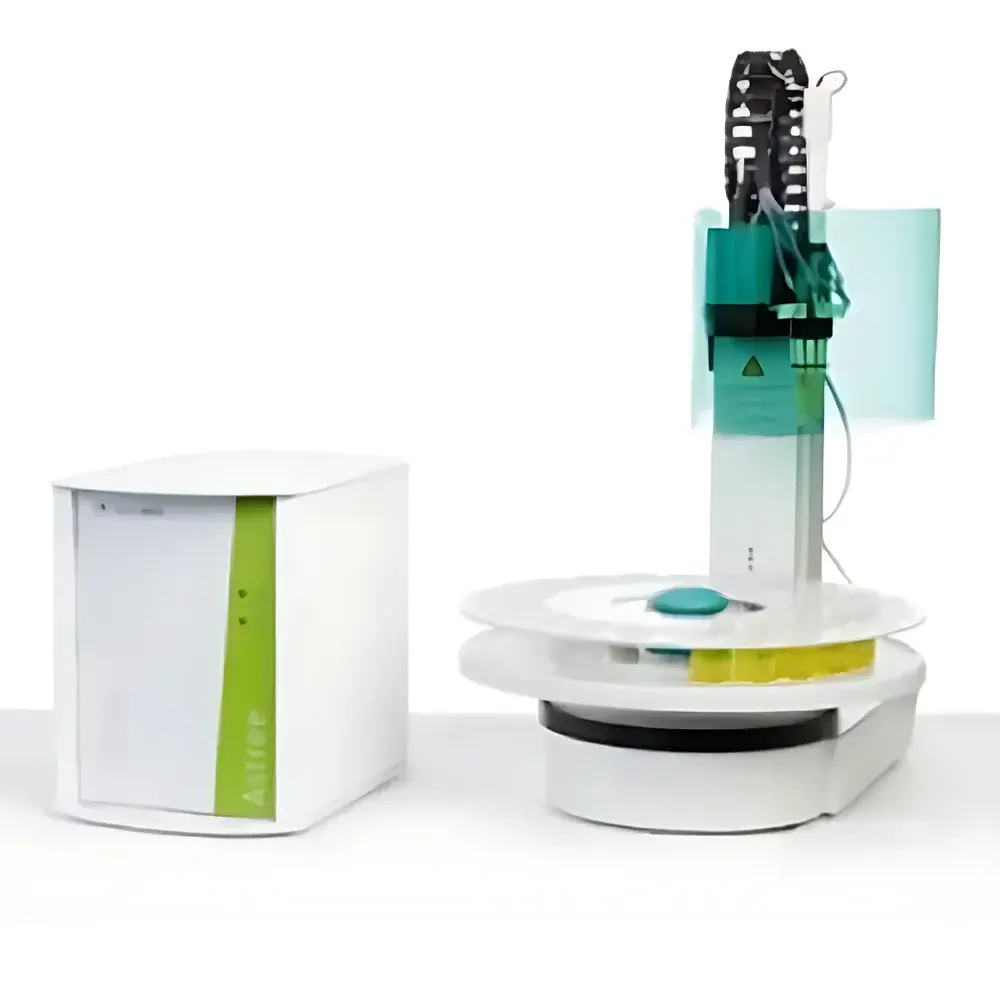
ASTREE LS16/48 Electronic Tongue – Sensory Intelligent Taste Profiling System
| Brand | Alpha MOS |
|---|---|
| Origin | France |
| Model | ASTREE LS16/48 |
| Type | Taste Analysis System |
| Sensor Technology | ChemFET-based Potentiometric Array |
| Sample Throughput | 1 sample per 3 minutes (with auto-sampler) |
| Configuration Options | 16- or 48-channel sensor array |
| Compliance | Designed for GLP/GMP-aligned laboratories, supports audit-trail-capable data management per FDA 21 CFR Part 11 requirements |
Overview
The ASTREE LS16/48 Electronic Tongue is a high-precision, potentiometric sensory analysis platform engineered for objective, reproducible taste profiling of liquid and semi-liquid samples. Developed by Alpha MOS in France, it employs an array of cross-sensitive ChemFET (Chemically Sensitive Field-Effect Transistor) sensors to generate multidimensional electrochemical response patterns—referred to as “taste fingerprints”—that reflect the combined influence of organic acids, salts, amino acids, peptides, bitter alkaloids, and other taste-active compounds. Unlike subjective human sensory panels, the ASTREE operates under strictly controlled electrochemical conditions (temperature, pH, ionic strength, immersion time), delivering quantitative, instrument-based discrimination of subtle taste differences across formulations, batches, or process variations. Its core architecture is rooted in multivariate pattern recognition applied to potentiometric response kinetics, enabling robust classification, similarity mapping, and trend monitoring without reliance on trained panelists.
Key Features
- Modular sensor arrays: Configurable 16- or 48-channel ChemFET sensor modules, each with tailored surface chemistries for differential sensitivity to sourness (H⁺), saltiness (Na⁺, K⁺), umami (glutamate, nucleotides), bitterness (alkaloids), and metallic/astringent notes.
- Automated fluid handling: Integrated peristaltic pump system and XYZ robotic autosampler support unattended sequential analysis of up to 96 samples per run, with precise rinse, equilibration, and measurement cycles.
- Standardized measurement protocol: Predefined immersion time (typically 120 s), fixed temperature control (±0.1 °C), and automatic baseline correction ensure inter-laboratory reproducibility and method transferability.
- Real-time response monitoring: Continuous acquisition of potentiometric drift and equilibrium potential for each sensor channel, enabling kinetic profiling beyond endpoint readings.
- Hardware-integrated cleaning station: On-board ultrasonic bath and chemical rinse reservoirs minimize carryover and maintain long-term sensor stability over thousands of measurements.
Sample Compatibility & Compliance
The ASTREE LS16/48 accepts aqueous solutions, beverages (juices, dairy, plant-based drinks), sauces, broths, pharmaceutical suspensions, and cosmetic emulsions—with conductivity range 0.1–20 mS/cm and pH 2.5–9.0. Samples require minimal preparation: filtration (0.45 µm), degassing (if volatile-rich), and temperature equilibration. The system complies with analytical validation frameworks outlined in ICH Q2(R2) for qualitative and quantitative methods; its data acquisition software supports ALCOA+ principles (Attributable, Legible, Contemporaneous, Original, Accurate) and full 21 CFR Part 11 compliance—including electronic signatures, role-based access control, and immutable audit trails. It is routinely deployed in R&D and QC environments operating under ISO/IEC 17025, USP , and EFSA sensory guideline frameworks.
Software & Data Management
Alpha MOS’s ASTREE software suite (v6.5+) provides integrated acquisition, preprocessing, multivariate modeling (PCA, DFA, SIMCA, PLS-DA), and visualization tools. Raw sensor signals undergo automatic baseline subtraction, normalization, and feature extraction (e.g., ΔE at t=60 s, slope from t=10–90 s). Statistical models are exportable in PMML format for enterprise LIMS integration. All raw data (.ast files), processed results (.csv, .xlsx), and model metadata are stored in a relational database with versioned backups and configurable retention policies. Remote monitoring via secure HTTPS interface enables cross-site collaboration while maintaining data sovereignty per GDPR and HIPAA-aligned storage protocols.
Applications
- Formulation optimization: Quantifying taste impact of sodium reduction, sweetener substitution, or masking agent efficacy in food, pharma, and oral care products.
- Raw material consistency: Detecting batch-to-batch variation in herbs, extracts, hydrolysates, or fermentation broths based on taste fingerprint deviation.
- Process monitoring: Tracking taste evolution during thermal treatment, enzymatic hydrolysis, or aging (e.g., cheese, soy sauce, wine).
- Shelf-life assessment: Objective quantification of off-taste development (e.g., lipid oxidation, Maillard degradation) correlated with storage time and conditions.
- Sensory correlation studies: Building predictive regression models between electronic tongue outputs and descriptive analysis scores (e.g., intensity of saltiness, bitterness) using partial least squares.
FAQ
How does the ASTREE differ from conventional pH or ion-selective electrode measurements?
Unlike single-analyte electrodes, ASTREE uses a multi-sensor array whose collective, non-specific responses are interpreted via pattern recognition—capturing synergistic and inhibitory interactions among taste compounds that cannot be resolved by discrete ion assays.
Can sensor arrays be regenerated or replaced independently?
Yes—each ChemFET sensor is housed in a disposable cartridge; arrays are field-replaceable with factory calibration certificates. Lifetime exceeds 5,000 measurements per cartridge under standard cleaning protocols.
Is method validation support available for regulatory submissions?
Alpha MOS provides IQ/OQ/PQ documentation templates, validation protocols aligned with ASTM E3006-17, and on-site qualification assistance for GxP environments.
What sample volume is required per analysis?
Typical requirement is 15 mL per sample, including rinse and equilibration volumes; low-volume kits (5 mL mode) are available for precious or restricted matrices.
Does the system support real-time monitoring of production lines?
While primarily designed for lab-based QC, optional inline flow cells and edge-computing modules enable near-real-time taste trend monitoring at pilot-scale processing nodes—subject to fluid compatibility and particulate load constraints.




