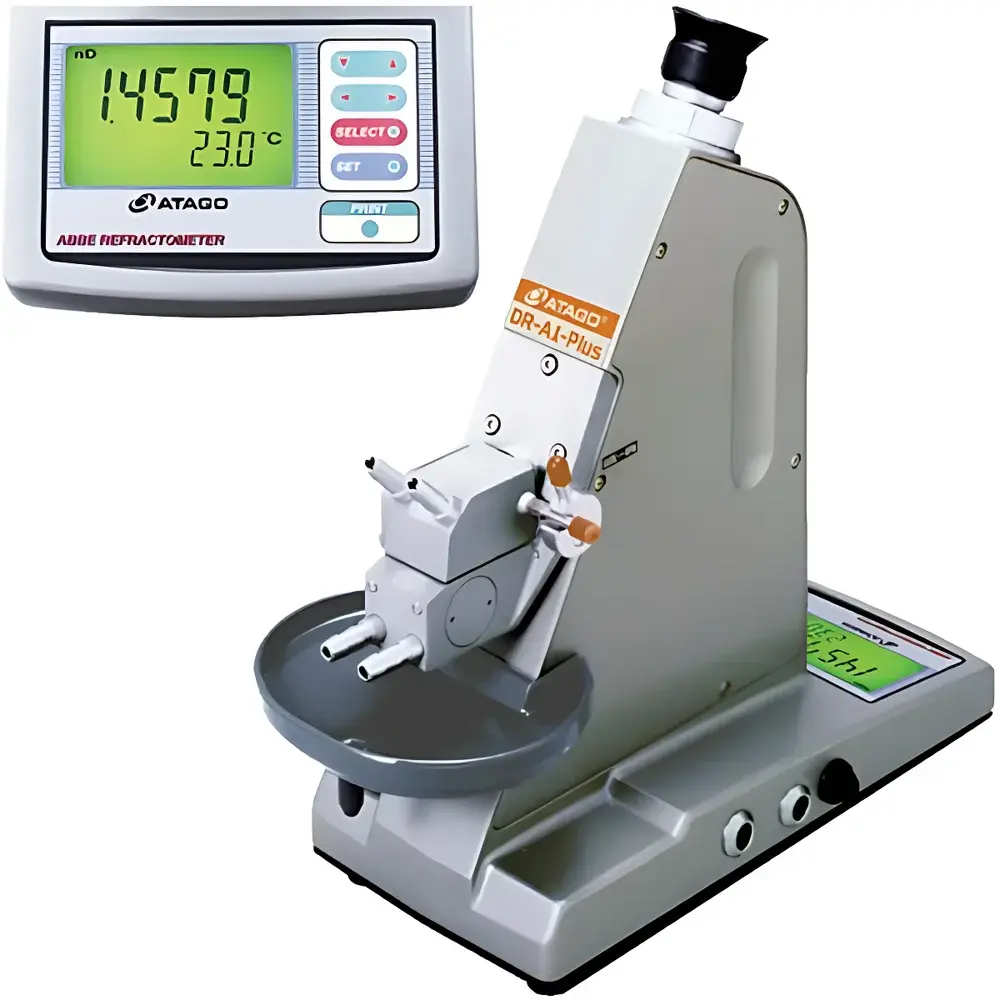
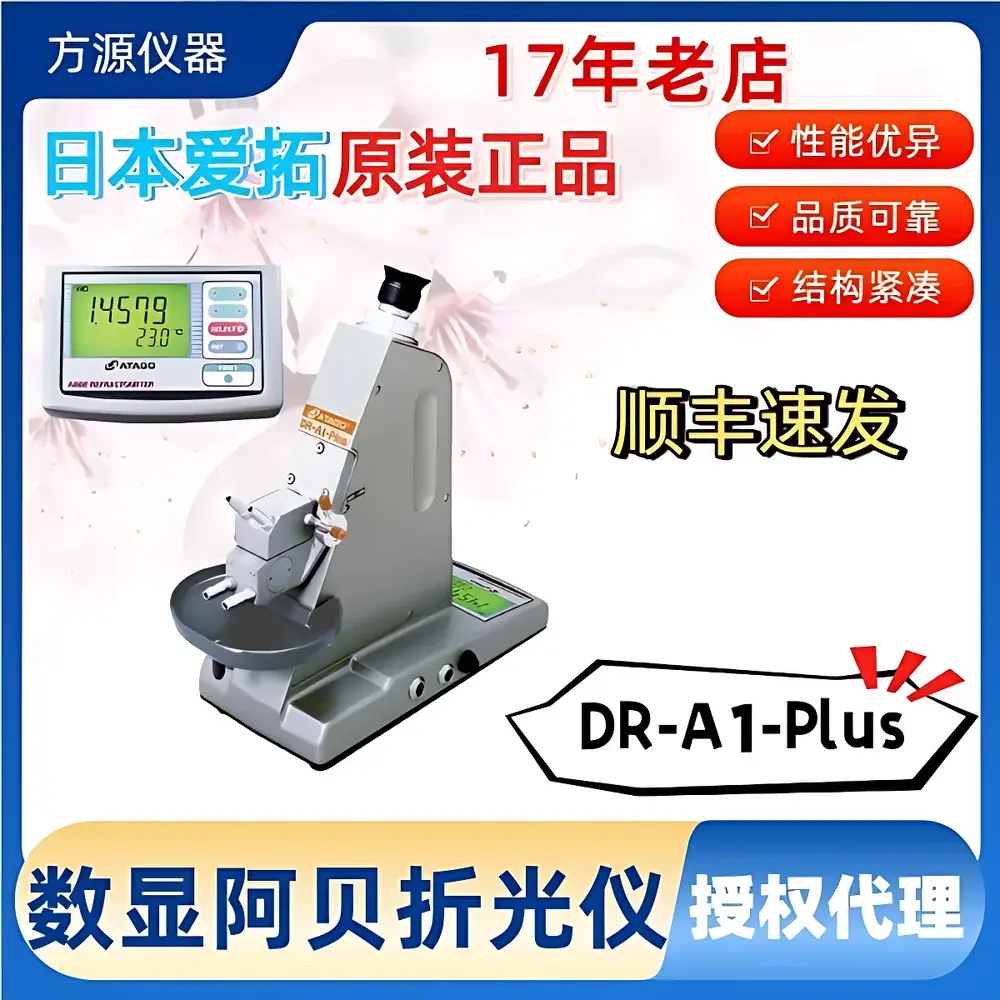
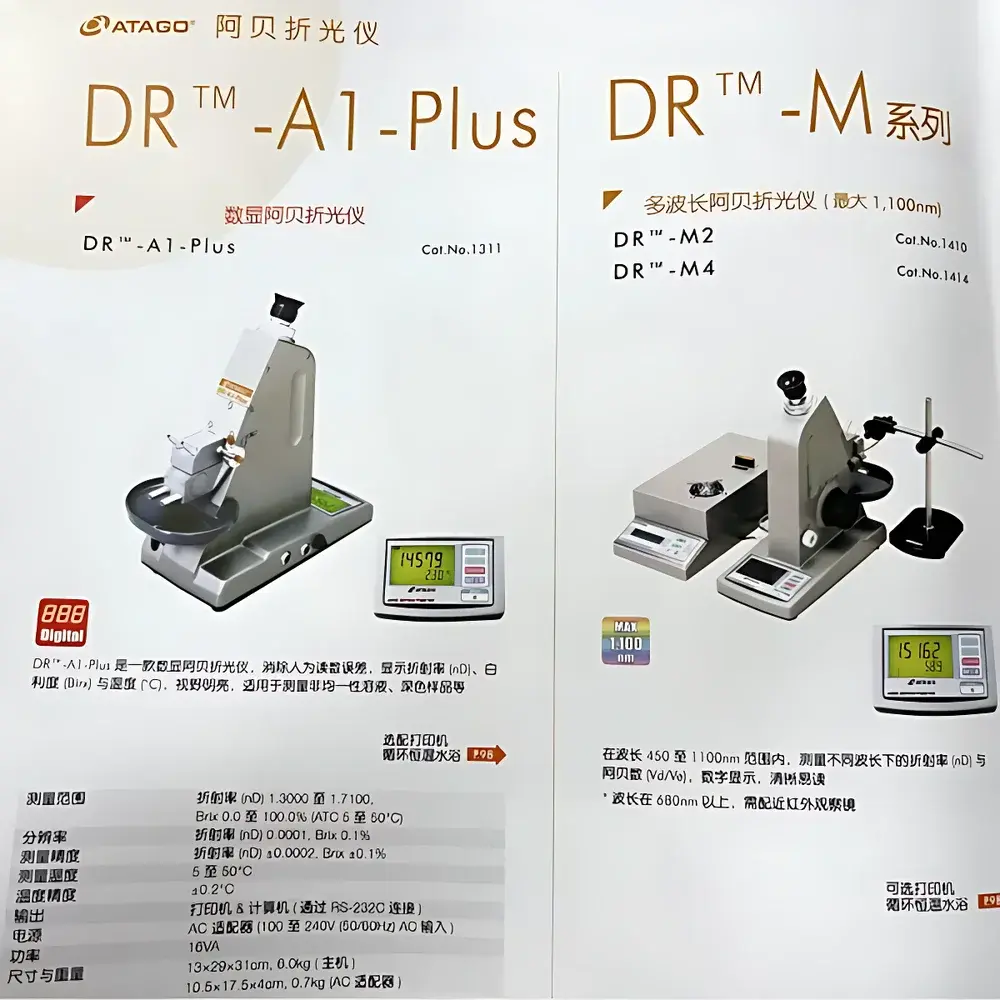
ATAGO DR-A1-Plus Desktop Digital Abbe Refractometer
| Brand | ATAGO |
|---|---|
| Origin | Japan |
| Model | DR-A1-Plus |
| Type | Benchtop Refractometer |
| Temperature Control | Yes |
| Digital Display | Yes |
| Measurement Range | 0.0–100.0% Brix (or refractive index equivalent) |
| Accuracy | ±0.1% Brix |
| Compliance | ISO 21745, ASTM D1218, JIS K0061 |
Overview
The ATAGO DR-A1-Plus is a high-precision benchtop Abbe refractometer engineered for rapid, repeatable determination of refractive index and concentration—primarily expressed as % Brix—in liquid and semi-liquid samples. Based on the fundamental optical principle of total internal reflection at the prism-sample interface, the instrument measures the critical angle of refraction to calculate refractive index (nD) with traceable metrological integrity. Its integrated Peltier temperature control system maintains sample temperature at a user-selectable setpoint (typically 20.0–30.0 °C, standard ±0.1 °C stability), eliminating thermal drift and ensuring compliance with standardized test conditions required by ISO 21745 (Refractometers — Requirements and test methods) and ASTM D1218 (Standard Test Method for Refractive Index of Hydrocarbon Liquids). Designed for routine QC/QA laboratories in food & beverage, pharmaceutical, chemical, and academic research settings, the DR-A1-Plus delivers robust architecture, intuitive operation, and long-term calibration stability without requiring operator expertise in optical alignment.
Key Features
- Peltier-based active temperature control with real-time digital readout and ±0.1 °C regulation accuracy—critical for minimizing thermal expansion artifacts in refractive index measurement.
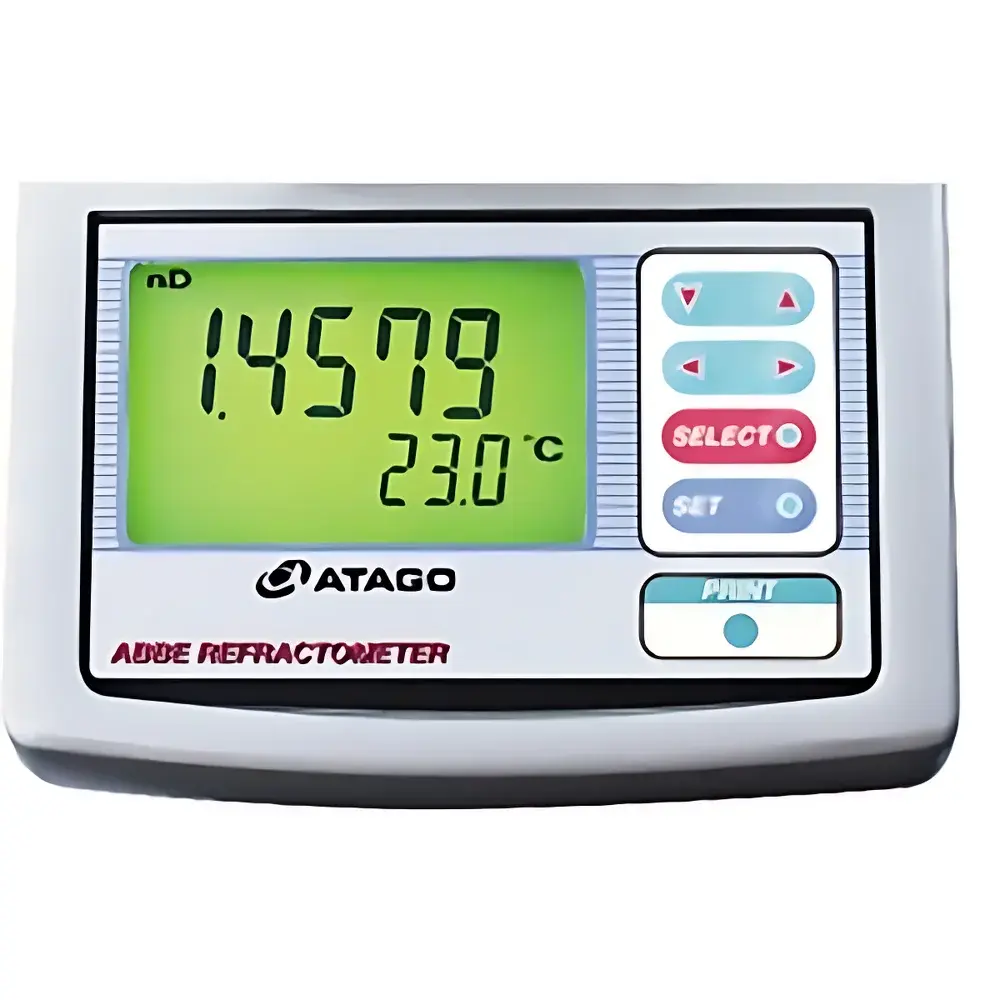
- High-resolution LCD display showing % Brix, refractive index (nD), and current sample temperature simultaneously—no manual scale interpolation or external thermometer required.
- Double-prism optical system (illuminated sodium D-line LED source, λ ≈ 589.3 nm) optimized for high signal-to-noise ratio and sharp shadow-line definition across the full 0.0–100.0% Brix range.
- Calibration verification via built-in reference mode using distilled water (nD = 1.3330 at 20 °C) or certified sucrose standards; supports multi-point calibration validation per GLP documentation requirements.
- Compact footprint (220 × 180 × 250 mm) and low power consumption (<15 W), enabling integration into constrained lab benches or mobile analytical carts without dedicated HVAC support.
- CE-marked enclosure with IP20 ingress protection, ESD-safe housing, and RoHS-compliant materials—suitable for regulated environments under ISO/IEC 17025 accreditation scope.
Sample Compatibility & Compliance
The DR-A1-Plus accommodates aqueous solutions, syrups, juices, dairy concentrates, glycol-water mixtures, pharmaceutical excipient solutions, and industrial coolants. Sample volume requirement is ≤0.2 mL, applied directly onto the sapphire-coated measuring prism. Viscosity tolerance extends up to ~500 mPa·s; higher-viscosity samples may require pre-dilution or temperature adjustment to ensure uniform film formation. The instrument conforms to international standard methodologies including ISO 21745 (general refractometer performance criteria), ASTM D1218 (hydrocarbon liquids), JIS K0061 (Japanese Industrial Standard for sugar solutions), and USP (Refractometry) for pharmaceutical applications. Temperature-controlled operation satisfies FDA 21 CFR Part 11 data integrity prerequisites when paired with validated laboratory information management systems (LIMS).
Software & Data Management
While the DR-A1-Plus operates as a standalone instrument, its RS-232 serial interface enables direct connection to PCs running ATAGO’s optional WinCT-Refracto software (v3.2+). This platform supports automated data logging, timestamped measurement records, statistical process control (SPC) charting (X-bar/R), export to CSV/Excel, and audit-trail generation—including user login, calibration history, and parameter modification logs—aligned with ALCOA+ principles (Attributable, Legible, Contemporaneous, Original, Accurate, Complete, Consistent, Enduring, Available). All stored measurements retain full metadata: date/time, operator ID, sample ID, temperature, and measurement mode—essential for GLP/GMP audit readiness.
Applications
- Food & Beverage: Brix quantification in fruit juices, soft drinks, jams, honey, and wine must for fermentation monitoring and quality grading.
- Pharmaceuticals: Excipient concentration verification (e.g., dextrose, sorbitol, PEG solutions); osmolality estimation in parenteral formulations.
- Chemicals: Glycol concentration in antifreeze/coolant blends; acid/base titration endpoint confirmation via refractive index shift.
- Agriculture: Sap solute concentration assessment in plant physiology studies; fertilizer solution strength verification.
- Academic Research: Teaching optics labs (Abbe number derivation), polymer solution characterization, and colloid stability screening via refractive index correlation with particle density.
FAQ
What standards does the DR-A1-Plus comply with for regulatory submissions?
It meets ISO 21745, ASTM D1218, JIS K0061, and USP , supporting data acceptance in FDA, EMA, and PMDA filings when operated within documented SOPs.
Can it measure non-sugar solutions like salt or ethanol?
Yes—provided appropriate calibration curves are established using certified reference materials; the instrument reports refractive index nD, from which concentration is derived via empirical or published correlations.
Is temperature calibration traceable to NIST?
The Peltier sensor is factory-calibrated against PT100 reference probes with uncertainty ≤±0.05 °C; full system verification can be performed using NIST-traceable thermostatted baths.
How often should calibration verification be performed?
Per ISO/IEC 17025, verification with distilled water or certified standard should occur before each analytical session and after any environmental disturbance or maintenance event.
Does it support automatic temperature compensation (ATC) for non-standard temperatures?
No—ATC is not implemented; instead, the instrument actively controls sample temperature to a fixed setpoint, ensuring measurement consistency per standardized test methods.