
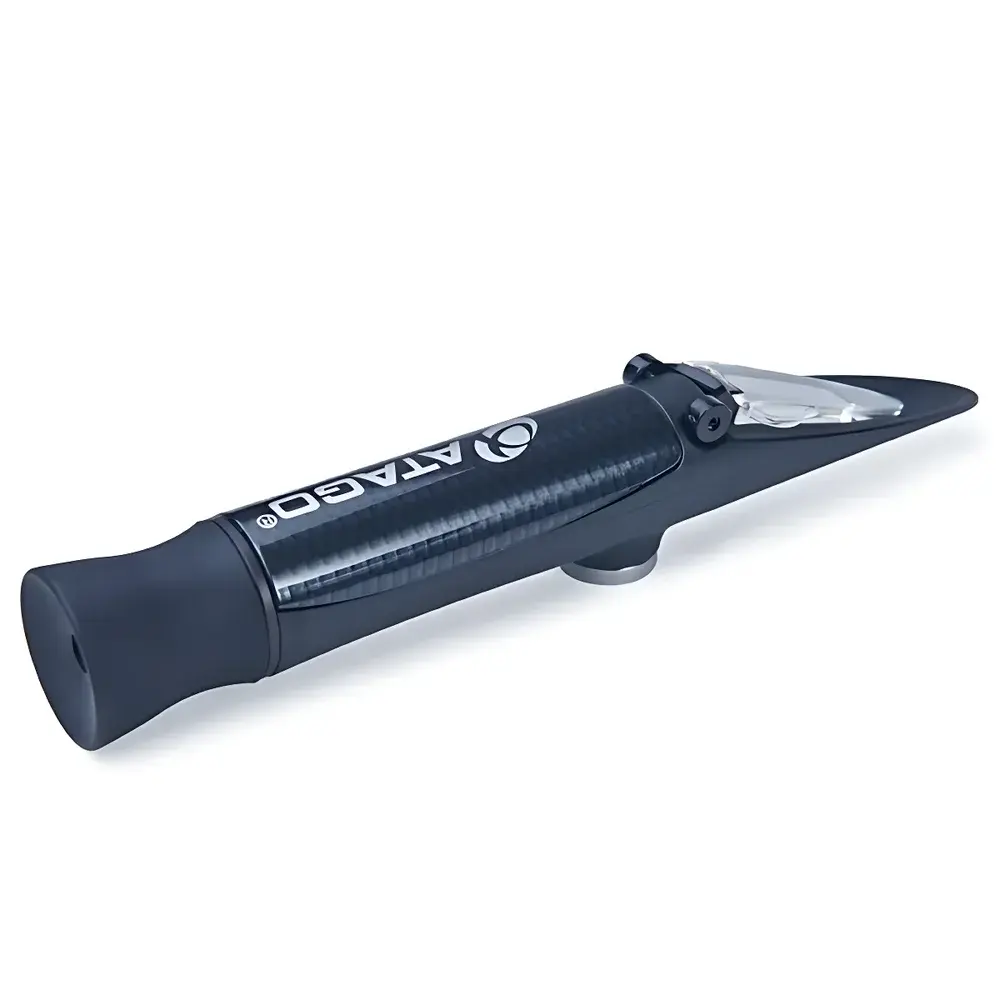
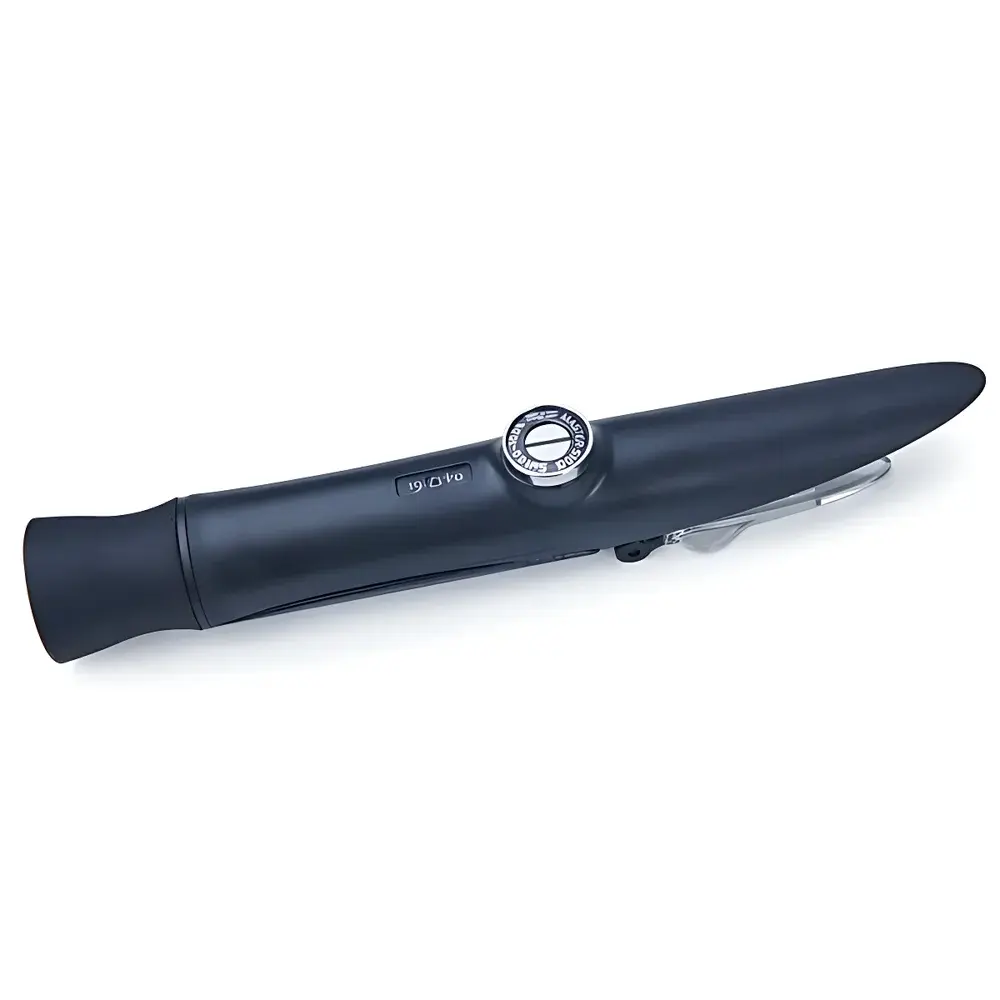
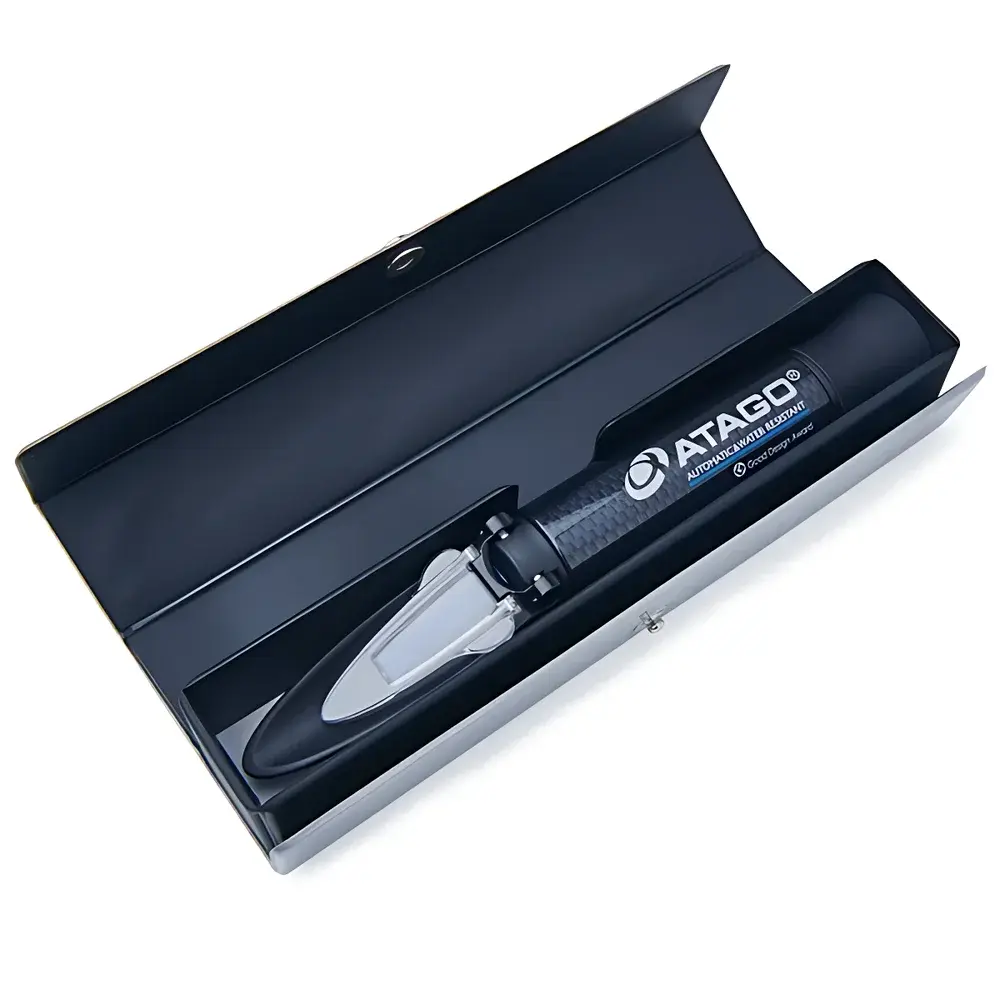
ATAGO MASTER-VET Veterinary Urine Specific Gravity & Serum Protein Refractometer (Dual-Scale, Handheld)
| Brand | ATAGO |
|---|---|
| Origin | Japan |
| Model | MASTER-VET |
| Type | Analog handheld refractometer with dual calibrated scales (urine specific gravity 1.000–1.060 and serum total protein 0–8 g/dL) |
| Optical Principle | Critical angle measurement via Abbe refractometry |
| Scale Accuracy | ±0.001 for SG, ±0.1 g/dL for TP |
| Sample Volume | ~0.3 mL |
| Temperature Compensation | Automatic (10–30°C), built-in bimetallic compensator |
| Prism Material | High-transmittance optical glass |
| Dimensions | 160 × 35 × 35 mm |
| Weight | Approx. 120 g |
Overview
The ATAGO MASTER-VET is a precision-engineered, analog handheld refractometer specifically designed for rapid, on-site assessment of urine specific gravity (USG) and serum total protein (TP) in companion animal clinical practice. Based on the fundamental optical principle of critical-angle refractometry—where light refraction at the prism-sample interface is quantified to determine solute concentration—the MASTER-VET delivers immediate, instrument-free quantitative results without external power or calibration fluids. Its dual-scale optical eyepiece simultaneously displays two clinically essential parameters: urine specific gravity across a tightly optimized range of 1.000 to 1.060 (with 0.001 resolution), and serum total protein from 0 to 8.0 g/dL (with 0.1 g/dL graduation). This configuration aligns directly with veterinary diagnostic guidelines established by the American College of Veterinary Internal Medicine (ACVIM) and the World Small Animal Veterinary Association (WSAVA), supporting accurate evaluation of renal concentrating ability and plasma oncotic status in dogs and cats.
Key Features
- Optically calibrated dual-scale reticle enables concurrent reading of USG and serum TP without scale switching or recalibration.
- Integrated automatic temperature compensation (ATC) via bimetallic mechanism ensures consistent accuracy across ambient operating temperatures from 10°C to 30°C—covering typical clinic, ward, and field conditions.
- Robust all-metal body housing and scratch-resistant optical glass prism provide long-term mechanical stability and resistance to repeated disinfection protocols.
- No batteries, software, or firmware required—ensures operational reliability during power outages, transport, or high-humidity environments.
- Ergonomic, pocket-sized form factor (160 × 35 × 35 mm) and lightweight construction (~120 g) facilitate one-handed use during patient handling or mobile veterinary services.
- Factory-calibrated using NIST-traceable reference solutions; user verification possible with distilled water (SG = 1.000) and standard 5.0 g/dL bovine serum albumin solution.
Sample Compatibility & Compliance
The MASTER-VET is validated for use with fresh, uncentrifuged canine and feline urine specimens and whole blood serum or plasma samples. It accepts minimal sample volumes (≈0.3 mL), reducing stress during collection from small or fractious patients. The instrument complies with ISO 7937:2022 (Refractometers — Requirements and test methods) for mechanical and optical performance. While not a regulated medical device under FDA 21 CFR Part 820 or EU MDR, its measurement methodology supports adherence to CLIA-waived testing criteria when used within defined veterinary laboratory quality control frameworks. Routine verification against control materials satisfies internal QA requirements aligned with AAHA Laboratory Standards and GLP-aligned documentation practices.
Software & Data Management
As an analog optical instrument, the MASTER-VET does not incorporate digital electronics, connectivity, or embedded software. All measurements are visually interpreted and manually recorded—eliminating risks associated with data corruption, firmware failure, or cybersecurity vulnerabilities. This architecture inherently supports audit-ready workflows: each result is contemporaneously documented in paper-based or LIMS-integrated logbooks with operator initials, time stamp, and sample ID. For laboratories maintaining electronic records, manual entry into validated systems satisfies FDA 21 CFR Part 11 requirements when paired with appropriate procedural controls (e.g., dual-signature verification, change logs).
Applications
- Point-of-care evaluation of renal tubular function via serial USG monitoring in acute kidney injury or chronic kidney disease staging.
- Differentiation of prerenal azotemia (elevated USG) from renal azotemia (isosthenuria) in dehydrated or polyuric patients.
- Rapid estimation of hypoalbuminemia severity through serum TP screening prior to electrophoresis or immunoassay.
- Pre-anesthetic assessment of hydration status and colloid oncotic pressure in geriatric or critically ill animals.
- Field diagnostics during shelter intake exams or disaster response deployments where infrastructure is limited.
- Teaching tool in DVM curricula for demonstrating core principles of optical density and solute concentration relationships.
FAQ
Does the MASTER-VET require periodic factory recalibration?
No scheduled factory recalibration is mandated; however, ATAGO recommends annual verification against certified reference standards if used in accredited laboratory settings.
Can it measure urine glucose or ketones?
No—this instrument measures only total solute concentration via refractive index. Glucose and ketones require enzymatic or dipstick methods.
Is the prism resistant to common veterinary disinfectants?
Yes—the optical glass prism and stainless-steel frame withstand routine cleaning with 70% isopropyl alcohol, quaternary ammonium compounds, and diluted sodium hypochlorite (≤0.5%).
What is the expected service life under daily clinical use?
With proper cleaning and storage in the supplied protective case, functional longevity exceeds 10 years based on ATAGO’s field reliability data from global veterinary practices.
How does temperature compensation affect measurement traceability?
The bimetallic ATC system maintains optical path integrity across the specified range but does not alter the fundamental refractive index relationship; values remain directly comparable to reference methods performed at 20°C per ISO 7937.



