
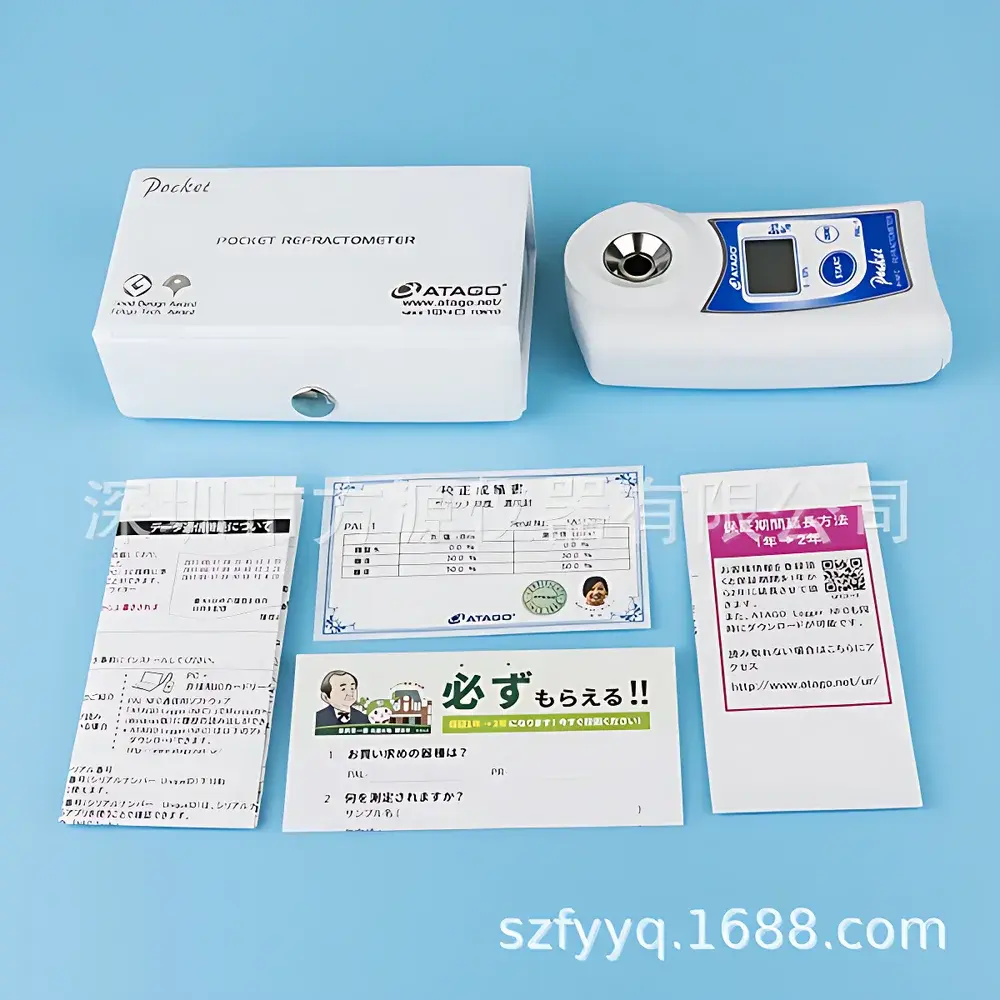
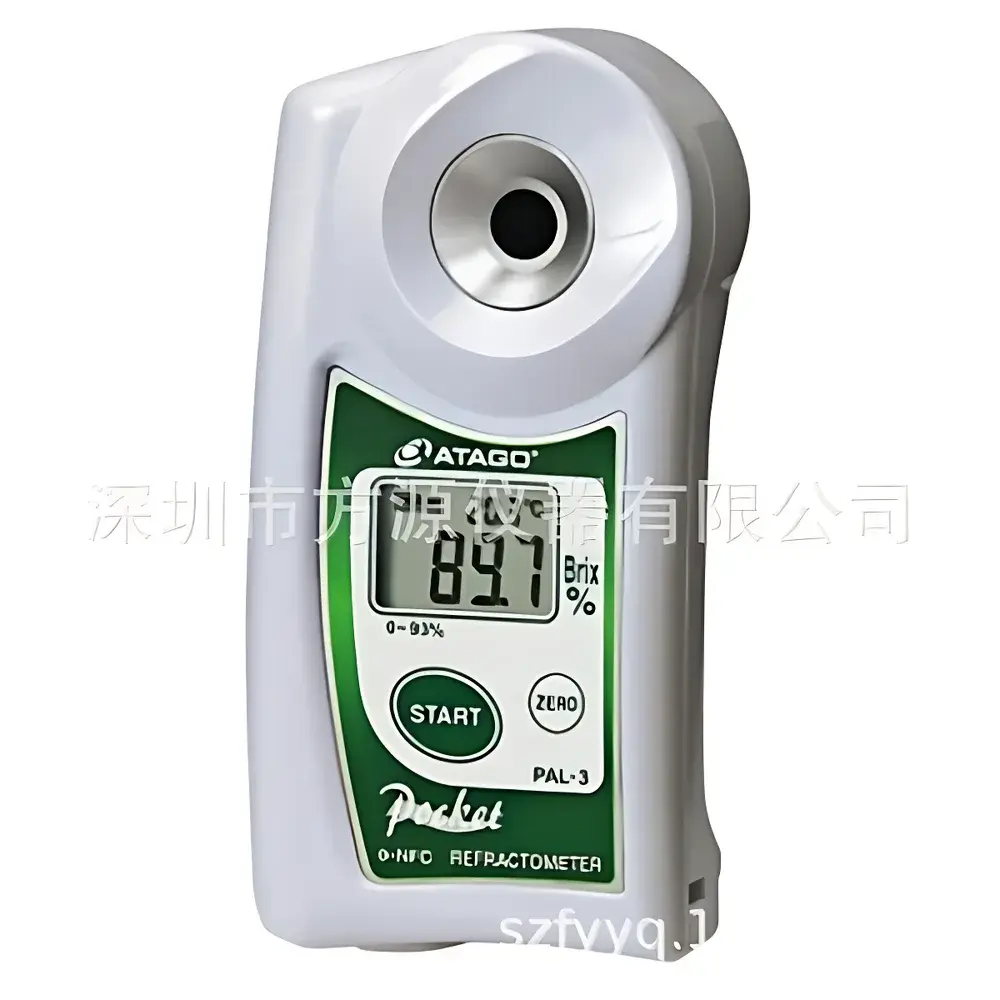
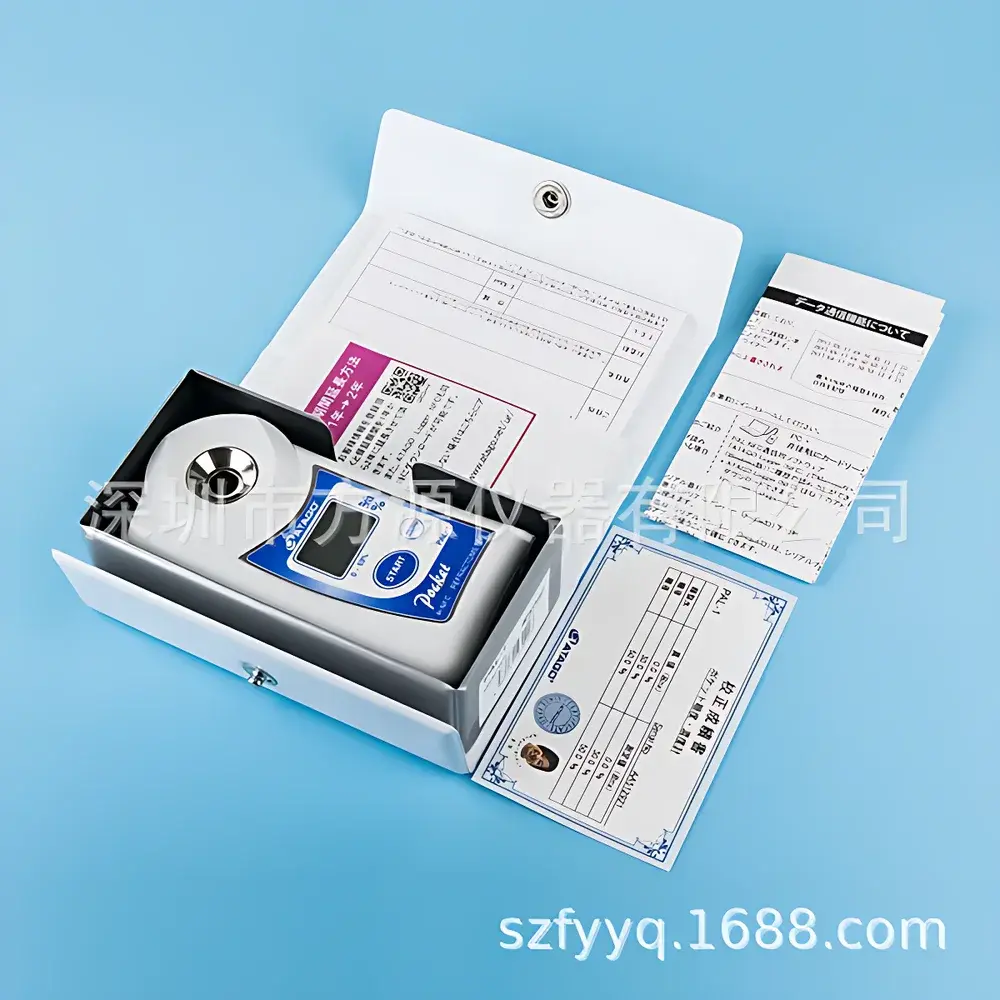
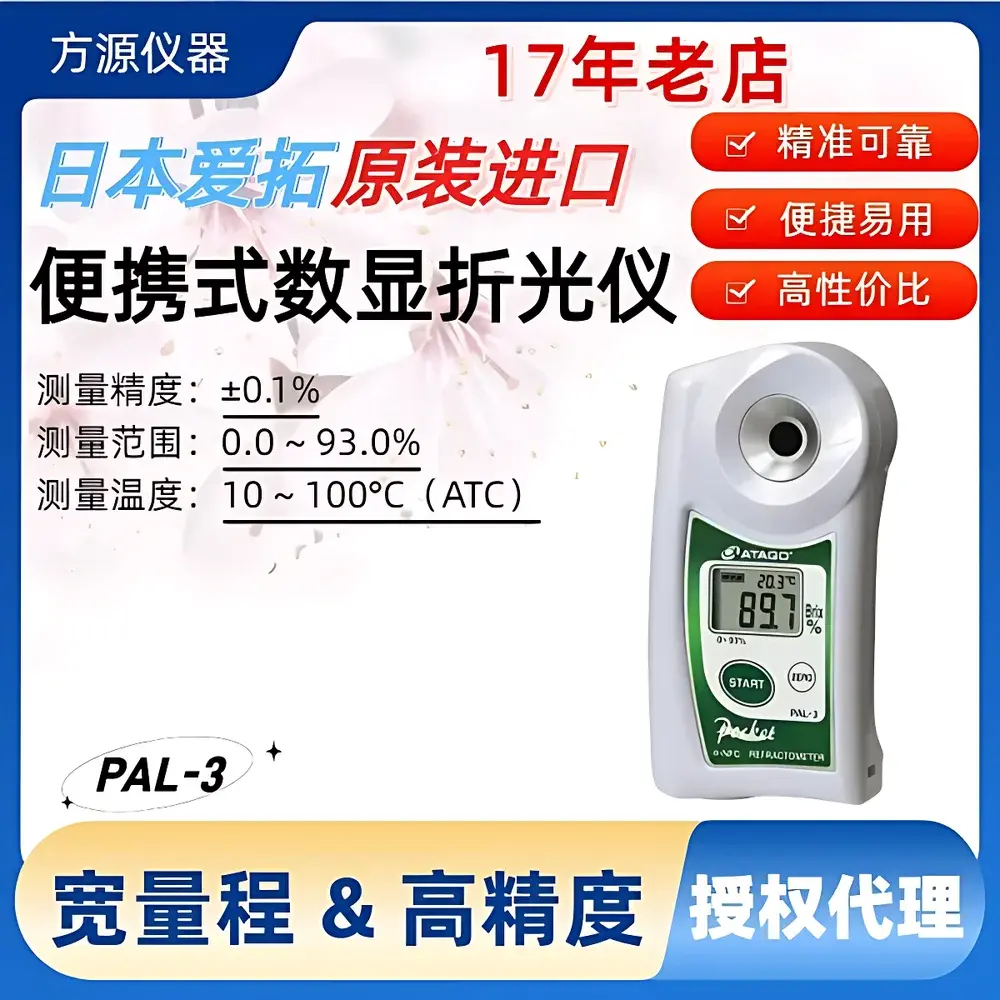
ATAGO PAL-3 Wide-Range High-Precision Digital Portable Refractometer
| Brand | ATAGO |
|---|---|
| Origin | Japan |
| Model | PAL-3 (Wide-Range & High-Precision) |
| Measurement Range | 0.0–93.0% Brix (or equivalent concentration scales) |
| Accuracy | ±0.1% |
| Display | Digital LCD |
| Temperature Compensation | Automatic (ATC, 10–40°C) |
| Instrument Type | Handheld Refractometer |
| Compliance | ISO 21748, ASTM D1218, JIS K0061 |
Overview
The ATAGO PAL-3 Wide-Range High-Precision Digital Portable Refractometer is an engineered optical measurement instrument designed for rapid, field-deployable quantification of solute concentration in liquid samples via the principle of refractive index measurement. Based on Snell’s Law and calibrated against internationally accepted reference standards, the PAL-3 determines concentration by measuring the critical angle of total internal reflection at the prism-sample interface. Its optical path incorporates a high-stability LED light source, precision-ground sapphire prism (hardness 9 Mohs), and a temperature-compensated photodiode array—enabling direct readout in % Brix, % w/w, % w/v, specific gravity, or application-specific scales (e.g., NaCl, ethanol, urea, TDS, or clinical urine SG). Unlike benchtop Abbe refractometers, the PAL-3 eliminates manual scale interpolation and ambient lighting dependency through its integrated digital signal processing and auto-zeroing algorithm. It operates within a sample temperature range of 10–40°C with built-in Automatic Temperature Compensation (ATC), ensuring metrological consistency without external thermostatic control.
Key Features
- Wide dynamic measurement range: 0.0–93.0% Brix (equivalent to 0–93 g/100g sucrose solution), supporting high-concentration applications such as honey, molasses, syrups, and industrial brines.
- High-precision optical detection with ±0.1% accuracy (at 20°C), traceable to NIST-traceable sucrose standards per ISO/IEC 17025-accredited calibration protocols.
- Sapphire prism surface ensures long-term abrasion resistance and chemical inertness—even when measuring viscous, acidic, alkaline, or particulate-laden samples.
- Digital LCD display with backlight enables legible readings under low-light field conditions; unit switching (Brix / %NaCl / °Bé / SG / RI) is software-selectable via intuitive button interface.
- Battery-powered operation (2 × AAA, ~10,000 measurements per set) with auto-power-off after 3 minutes of inactivity—optimized for mobile QA/QC, agricultural scouting, and on-site process verification.
- No user calibration required beyond routine verification with ATAGO-certified standard solutions (e.g., 5.0%, 10.0%, 30.0% Brix); factory calibration is retained across operating temperatures via embedded thermistor network.
Sample Compatibility & Compliance
The PAL-3 accommodates aqueous solutions, emulsions, suspensions, and low-viscosity organic liquids—including food matrices (fruit juices, dairy whey, soy milk), clinical specimens (urine, serum), industrial coolants (ethylene glycol, propylene glycol), pharmaceutical excipients (glycerol, dextrose), and agrochemical formulations (urea, NaCl, CaCl₂ de-icing agents). It complies with measurement principles referenced in ASTM D1218 (refractive index of hydrocarbon liquids), ISO 21748 (guidance for repeatability and reproducibility of refractometric methods), and JIS K0061 (Japanese Industrial Standard for sugar content determination). While not a GLP/GMP-certified instrument per se, its documented calibration history, ATC stability, and audit-ready output support use in regulated environments where raw data integrity is maintained per internal SOPs. For FDA-regulated applications (e.g., beverage QC), users must validate the instrument against product-specific reference materials per 21 CFR Part 11 requirements for electronic records.
Software & Data Management
The PAL-3 operates as a standalone measurement device with no onboard data logging or PC connectivity. All results are displayed in real time and intended for immediate transcription or visual verification. For traceability, users are advised to record measurements manually in bound lab notebooks or LIMS-integrated spreadsheets. ATAGO provides downloadable calibration certificates and traceable standard solution datasheets (Cat. No. 4400–4499 series) with certified uncertainty values (k=2). Optional accessories include protective carrying cases, cleaning kits with lens-grade tissue and isopropyl alcohol, and certified Brix reference standards traceable to NMIJ/AIST. Firmware updates are not applicable—the optical-electronic architecture is fixed at manufacture to ensure long-term metrological stability.
Applications
- Fruit & vegetable cultivation: Rapid Brix screening of citrus, tomato, maple sap, and coffee cherry to guide harvest timing and post-harvest sorting.
- Food & beverage manufacturing: In-line verification of syrup concentration, jam solids, soy sauce salinity, miso density, and dairy lactose content.
- Clinical point-of-care: Urine specific gravity assessment in veterinary practice (canine, feline, rabbit) and human hydration monitoring.
- Industrial maintenance: Glycol-based antifreeze concentration checks in HVAC and automotive cooling systems; battery electrolyte density estimation.
- Pharmaceutical excipient QC: Quantification of glycerin, dextrose, mannitol, and sodium bicarbonate solutions during formulation preparation.
- Alcohol production & distillation: Ethanol content estimation in spirits (whiskey, vodka, rum) and fermentation monitoring via Brix-to-alcohol conversion models.
FAQ
Does the PAL-3 require manual temperature correction?
No. The instrument features Automatic Temperature Compensation (ATC) across 10–40°C using an integrated thermistor, eliminating need for correction tables or external thermostats.
Can it measure non-sugar solutions like sodium chloride or ethanol accurately?
Yes—provided the correct scale is selected. PAL-3 supports over 100 pre-programmed scales (e.g., %NaCl, %EtOH, urine SG), each calibrated against primary reference materials per ISO 5725 validation guidelines.
Is the sapphire prism resistant to corrosion from strong acids or alkalis?
Sapphire is chemically inert to most common reagents including acetic acid, phosphoric acid, sodium hydroxide (up to 10%), and saline solutions. Avoid prolonged exposure to hydrofluoric acid or molten alkali metals.
How often should I verify calibration?
ATAGO recommends daily verification with a certified standard before first use and after any significant temperature shift; full recalibration is typically required only annually or after physical impact.
What is the minimum sample volume required?
Only 0.3 mL is needed to cover the prism surface fully—ideal for precious or limited-volume samples such as clinical urine or micro-batch formulations.



