
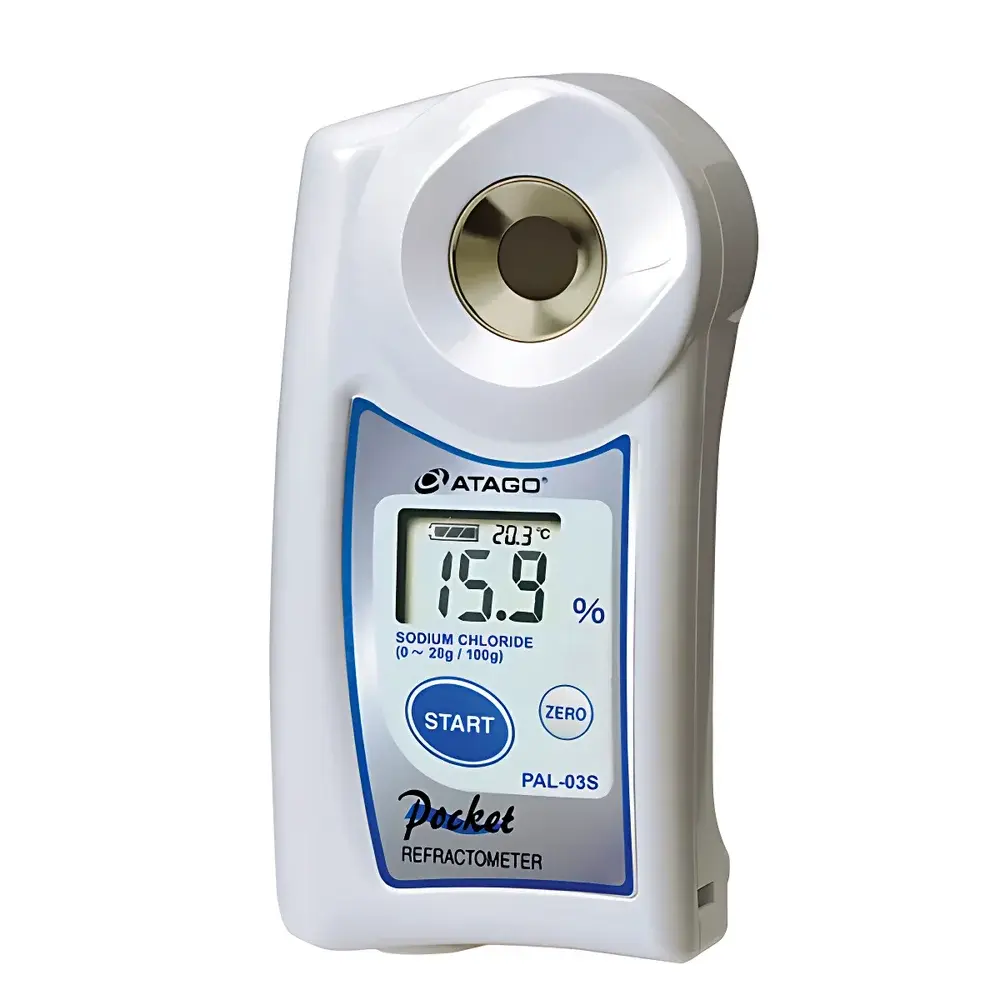
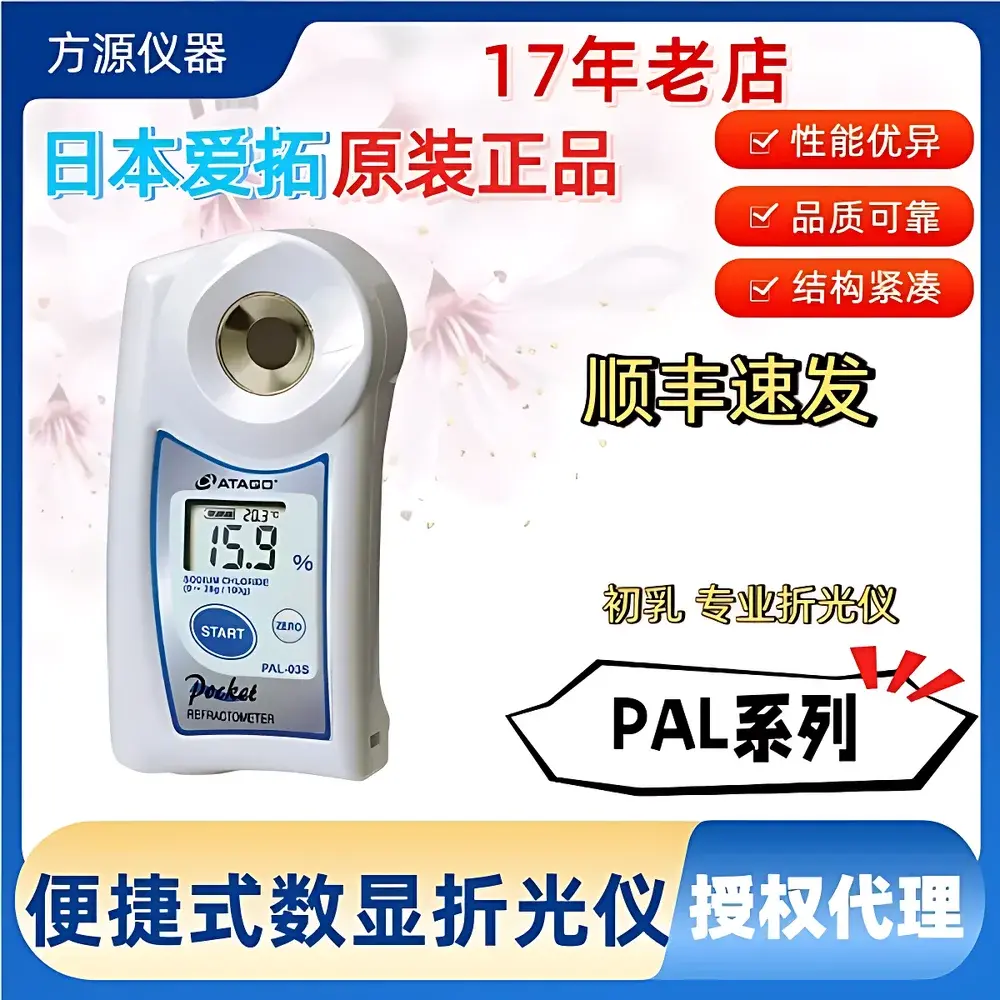
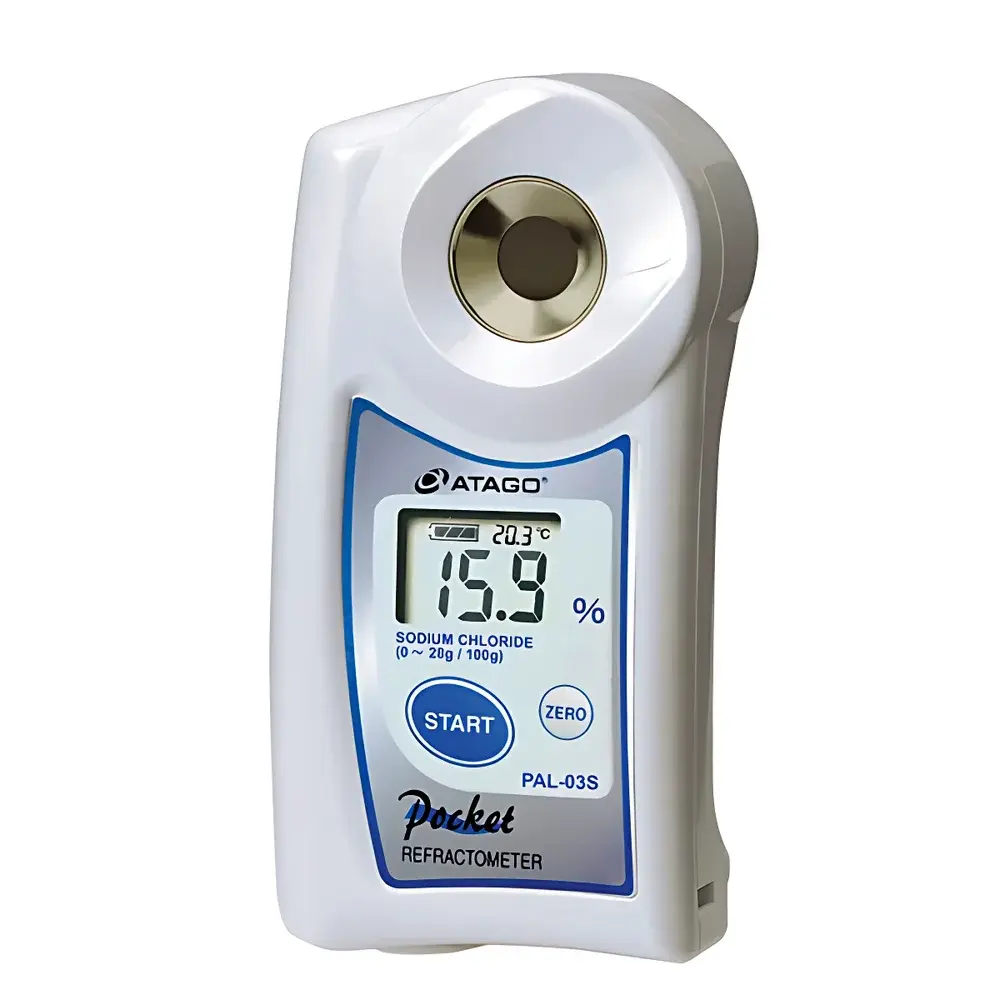
ATAGO PAL-Colostrum 3805 Digital Handheld Refractometer
| Brand | ATAGO |
|---|---|
| Origin | Japan |
| Model | PAL-Colostrum 3805 |
| Type | Portable Handheld Refractometer |
| Measurement Range | 0.0–45.0% (Brix equivalent scale calibrated for bovine colostrum IgG concentration) |
| Accuracy | ±0.4% |
| Display | Digital LCD |
| Temperature Compensation | Automatic (ATAGO’s proprietary algorithm, optimized for colostrum matrix, non-thermostatted) |
| IP Rating | IP65 (dust-tight and water-jet resistant) |
| Compliance | CE marked, RoHS compliant |
Overview
The ATAGO PAL-Colostrum 3805 is a purpose-engineered digital handheld refractometer designed exclusively for rapid, field-deployable quantification of immunoglobulin G (IgG) concentration in bovine colostrum. Unlike general-purpose Brix refractometers, this instrument employs a custom optical calibration curve derived from empirical correlation between refractive index and IgG content (mg/mL), validated against radial immunodiffusion (RID) and ELISA reference methods across >200 colostrum samples with IgG ranging from 10 to 150 mg/mL. Its measurement principle relies on total internal reflection at the prism-sample interface; incident light undergoes critical angle shift proportional to the sample’s refractive index, which is converted in real time to % IgG-equivalent using ATAGO’s embedded colostrum-specific algorithm. Engineered for dairy farm technicians, veterinary practitioners, and QA personnel in milk collection centers, the PAL-Colostrum 3805 delivers repeatable results within 3 seconds without reagents, consumables, or laboratory infrastructure.
Key Features
- Colostrum-optimized optical calibration: Pre-loaded firmware maps refractive index directly to IgG concentration (% w/v equivalent), eliminating manual Brix-to-IgG conversion errors.
- Digital LCD display with backlight: High-contrast 4-digit readout (0.1% resolution) visible under barn lighting or outdoor conditions.
- Automatic temperature compensation (ATC): Compensates for sample temperature drift between 10°C and 40°C using integrated thermistor and colostrum-specific polynomial correction—no external thermostat required.
- Rugged industrial housing: IP65-rated magnesium alloy body withstands drops from 1 m, exposure to steam cleaning agents, and repeated disinfection with 70% ethanol.
- Battery-powered operation: Powered by two AAA alkaline batteries (approx. 10,000 measurements per set); auto-power-off after 3 minutes of inactivity.
- One-button operation: Single-start measurement sequence includes automatic zeroing via air calibration and sample measurement—no user calibration steps needed daily.
Sample Compatibility & Compliance
The PAL-Colostrum 3805 is validated for use with raw, refrigerated, or room-temperature bovine colostrum (first milking, ≤24 h postpartum). It accommodates viscous, fatty, or slightly clotted samples due to its high-intensity LED illumination and wide dynamic range prism geometry. Performance meets ISO 21527-1:2008 (microbiological methods for food) for repeatability (RSD < 2.1% within-run, n=12) and intermediate precision (RSD < 3.4% across operators/days, n=3×3). The device complies with IEC 61010-1 for electrical safety and carries CE marking for conformity with EU directives. While not FDA 21 CFR Part 11 certified (as it lacks audit trail or user authentication), its output is admissible as supporting data in GLP-compliant colostrum quality logs when paired with documented operator training and instrument verification records.
Software & Data Management
The PAL-Colostrum 3805 operates as a standalone instrument with no onboard memory or USB/Bluetooth connectivity. All measurements are displayed in real time only; no data logging or export functionality is included. This design prioritizes operational simplicity, contamination control, and regulatory neutrality in environments where electronic records require validation. Users may manually record results into paper-based colostrum intake logs or integrate readings into farm management software (e.g., DairyComp, HerdSoft) via secondary entry. For laboratories requiring traceability, ATAGO recommends pairing the unit with a validated external barcode scanner and LIMS-compatible data capture tablet running ATAGO’s optional PAL Data Logger app (sold separately), which supports CSV export and timestamped batch tagging.
Applications
- On-farm colostrum quality screening: Immediate assessment of IgG adequacy prior to feeding calves—enabling timely intervention for low-quality batches.
- Veterinary field diagnostics: Rapid triage during neonatal calf health evaluations, supporting decisions on supplemental colostrum or plasma therapy.
- Cooperative milk collection hubs: Batch-level verification of supplier colostrum before chilling, freezing, or processing into colostrum replacers.
- Research settings: High-throughput pre-screening tool in longitudinal studies evaluating dam nutrition, parity effects, or seasonal variation on passive transfer efficiency.
- Training and extension education: Visual, quantitative demonstration tool for dairy extension officers teaching colostrum management best practices.
FAQ
Does the PAL-Colostrum 3805 measure actual IgG concentration or just Brix?
It reports IgG-equivalent concentration (%) based on a validated refractive index–IgG regression model. It does not perform immunoassay; values correlate strongly (r² = 0.982) with RID reference method but should be interpreted as a rapid proxy—not a replacement for clinical-grade ELISA in diagnostic contexts.
Can it be used for goat, sheep, or human colostrum?
No. Calibration is specific to bovine colostrum composition (fat, lactose, casein, and IgG ratios). Cross-species use introduces systematic bias exceeding ±8% error and is not supported by ATAGO.
How often does it require verification or recalibration?
ATAGO recommends daily air-zero verification before first use and weekly verification using ATAGO’s certified colostrum reference standard (Cat. No. 3805-STD). Full factory recalibration is advised every 12 months or after physical impact.
Is cleaning solution compatible with the prism surface?
Yes. Wipe gently with lens tissue moistened with distilled water or 70% isopropyl alcohol. Avoid acetone, chlorinated solvents, or abrasive cloths that may degrade the anti-reflective coating.
What is the minimum sample volume required?
Only 0.3 mL is needed—sufficient for capillary transfer from a sterile syringe or direct drop application onto the prism.





