
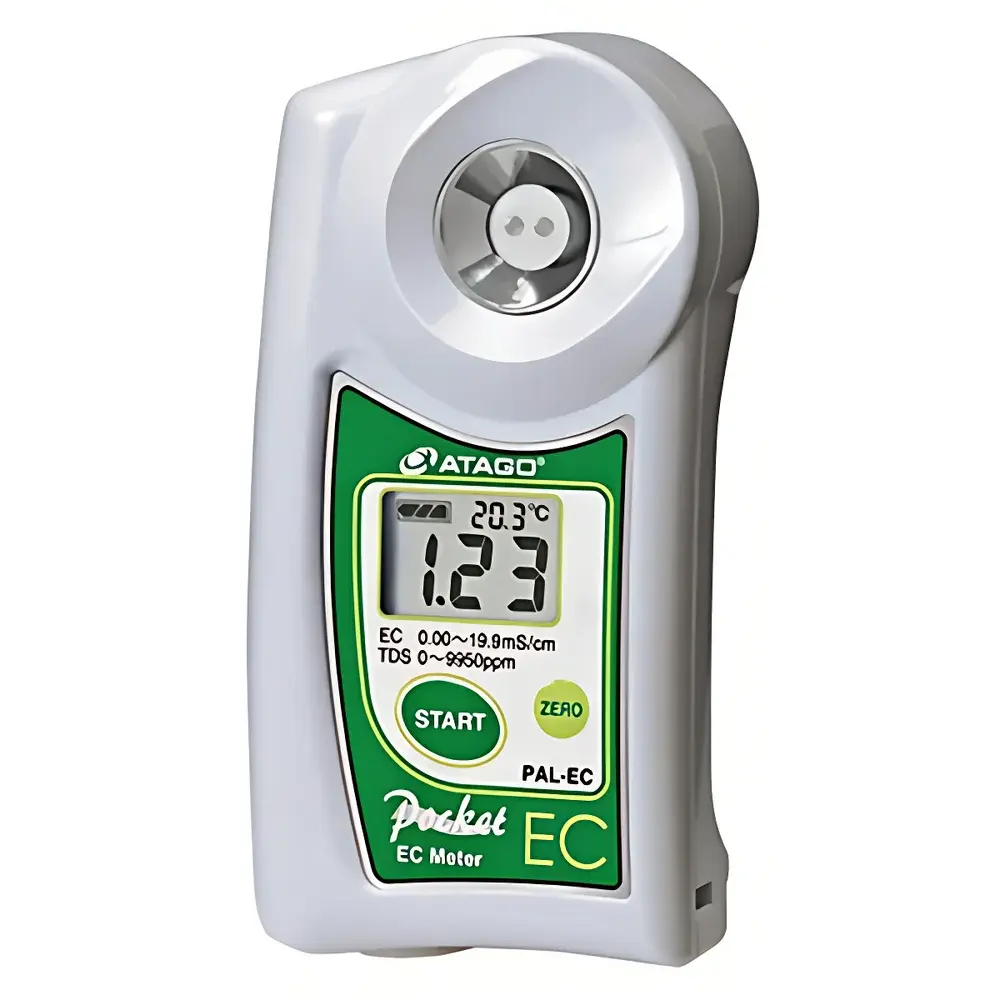
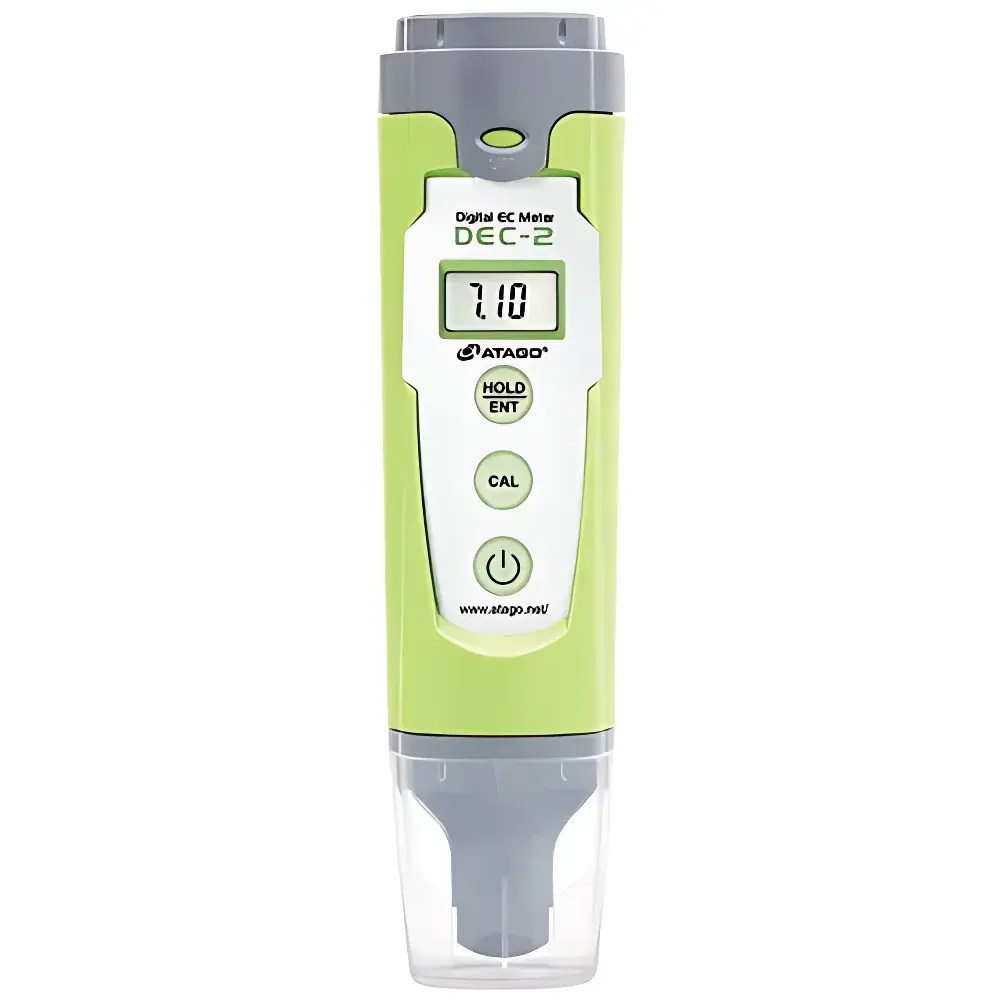
ATAGO PAL-EC DEC-2 Series Digital Conductivity Meter for Rapid Liquid Conductivity Measurement
| Brand | ATAGO |
|---|---|
| Origin | Japan |
| Manufacturer Type | Authorized Distributor |
| Product Origin | Imported |
| Model | PAL-EC DEC-2 Series |
| Price Range | USD 310 – 440 (FOB) |
| Measurement Range | 0–19.9 mS/cm |
| Resolution | 0.1 mS/cm |
| Accuracy | ±0.2 mS/cm |
| Measurement Method | Drop-in (Contact Electrode) |
Overview
The ATAGO PAL-EC DEC-2 Series is a handheld, battery-powered digital conductivity meter engineered for rapid, on-site assessment of aqueous and polar liquid samples—specifically optimized for monitoring frying oil degradation in food service and industrial frying operations. Unlike surface tensiometers—which measure interfacial energy via Wilhelmy plate or du Noüy ring methods—the PAL-EC DEC-2 operates on the principle of two-electrode contact conductivity measurement: an applied AC voltage induces ionic current flow between platinum electrodes immersed in the sample, and the resulting conductance is converted to electrical conductivity (mS/cm) using temperature-compensated calibration algorithms. Its design targets real-time process control rather than fundamental surface thermodynamics; therefore, it is classified under Physical Property Testing Instruments—not Surface Tensiometers—despite occasional misclassification in third-party directories. The instrument complies with the functional intent of GB/T 7102.1–2003, which correlates rising conductivity with accumulation of polar degradation products (e.g., free fatty acids, dimers, oxidized triglycerides) during thermal stress.
Key Features
- Compact, ergonomic housing with IP65-rated dust/water resistance for kitchen, factory floor, and mobile inspection use.
- Integrated automatic temperature compensation (ATC) using a built-in NTC thermistor (range: 10–40 °C), referenced to 25 °C per ISO 7888.
- Single-button operation with auto-power-off after 10 minutes of inactivity to extend battery life (CR2032 × 2, typical lifespan: 10,000 measurements).
- Non-corrosive stainless-steel and platinum-coated electrodes designed for repeated exposure to hot oils and acidic aqueous extracts.
- Calibration verification via included 12.88 mS/cm KCl standard solution (traceable to NIST SRM 3601); field recalibration supported with one-point adjustment.
- No sample heating, dilution, or solvent extraction required—direct drop-in measurement of cooled (≤50 °C) or ambient-temperature oil extracts.
Sample Compatibility & Compliance
The PAL-EC DEC-2 is validated for use with edible vegetable oils (soybean, palm, sunflower, canola), frying oil mixtures, and their aqueous extracts prepared per GB/T 7102.1–2003 Annex A (water extraction ratio: 1:1 v/v). It is not suitable for non-polar solvents (e.g., hexane), highly viscous polymer melts, or solid-phase samples. While not certified to ISO/IEC 17025 as a standalone testing device, its measurement protocol aligns with the empirical correlation framework specified in GB/T 7102.1–2003 and supports compliance-driven workflows in HACCP, ISO 22000, and BRCGS Food Safety Standard audits. Data output is manual (visual readout only); no electronic records are generated—thus, it falls outside FDA 21 CFR Part 11 requirements but remains fully compatible with paper-based GLP documentation systems.
Software & Data Management
The PAL-EC DEC-2 operates without embedded software, firmware updates, or connectivity interfaces (no Bluetooth, USB, or Wi-Fi). All measurement data are displayed on a high-contrast LCD and must be manually recorded. This architecture eliminates cybersecurity risks, reduces validation burden in regulated environments, and ensures long-term operational consistency across shifts and locations. For laboratories requiring digital traceability, ATAGO recommends pairing the DEC-2 with its optional PAL-ES series extractors and external logging solutions (e.g., LIMS-integrated barcode scanners or dedicated QC tablets running validated CSV capture applications).
Applications
- Routine quality assurance in commercial kitchens, school cafeterias, and quick-service restaurant chains performing daily fryer oil screening.
- In-process monitoring at edible oil refineries and frying oil reclamation facilities to determine optimal filtration or replacement cycles.
- Training and education in food science programs where students correlate conductivity trends with acid value (AV), peroxide value (PV), and total polar compounds (TPC) via parallel titration or FTIR analysis.
- Third-party food safety auditors verifying adherence to national frying oil discard thresholds (e.g., ≤19.9 mS/cm as a surrogate indicator for ≤27% polar compounds per GB/T 7102.1–2003).
- Pre-screening tool prior to confirmatory laboratory testing—reducing submission volume and analytical cost by >60% in high-turnover establishments.
FAQ
Does the PAL-EC DEC-2 measure total polar compounds directly?
No. It measures electrical conductivity of aqueous extracts, which correlates empirically with polar compound concentration. Confirmatory quantification requires GC-FID, HPLC, or standardized titration methods.
Can it be used for fresh, unheated cooking oil?
Yes—but baseline readings will be near zero (typically <0.1 mS/cm). Significant deviation from this baseline indicates pre-use contamination or hydrolytic rancidity.
Is temperature correction mandatory for accurate results?
Yes. Conductivity is highly temperature-dependent. The built-in ATC ensures comparability across ambient conditions, but samples must be cooled to ≤50 °C before extraction to prevent electrode damage and vapor interference.
How often should calibration be performed?
Before each shift in high-volume operations; at minimum, once per day in low-frequency use. Verification with the supplied KCl standard is required prior to any critical measurement.
Does ATAGO provide metrological certification for the DEC-2?
The unit ships with a manufacturer’s calibration certificate (non-accredited). For ISO/IEC 17025-compliant calibration, users must engage an accredited third-party lab using traceable KCl standards and documented uncertainty budgets.



