
ATAGO PRM-100α DX High-Precision In-Line Refractometer for New Energy Liquid Process Monitoring
| Brand | ATAGO |
|---|---|
| Origin | Japan |
| Model | PRM-100α DX |
| Product Type | In-line Refractometer |
| Temperature Control | Yes |
| Digital Display | Yes |
| Refractive Index Range | 1.32000–1.55700 |
| Brix Range | 0.00–100.00% |
| Refractive Index Accuracy | ±0.00010 |
| Brix Accuracy | ±0.05% |
| ATC Range | 5–100°C |
| Temperature Measurement Range | −5.0–160.0°C |
| Output Options | 4–20 mA, RS-232C |
| IP Rating | IP67 |
| Pressure Rating | 0.98 MPa |
| Prism Material | Sapphire |
| Sample Cell Material | SUS316L |
| Display | 7-segment LED |
| Measurement Interval | ~1 second |
Overview
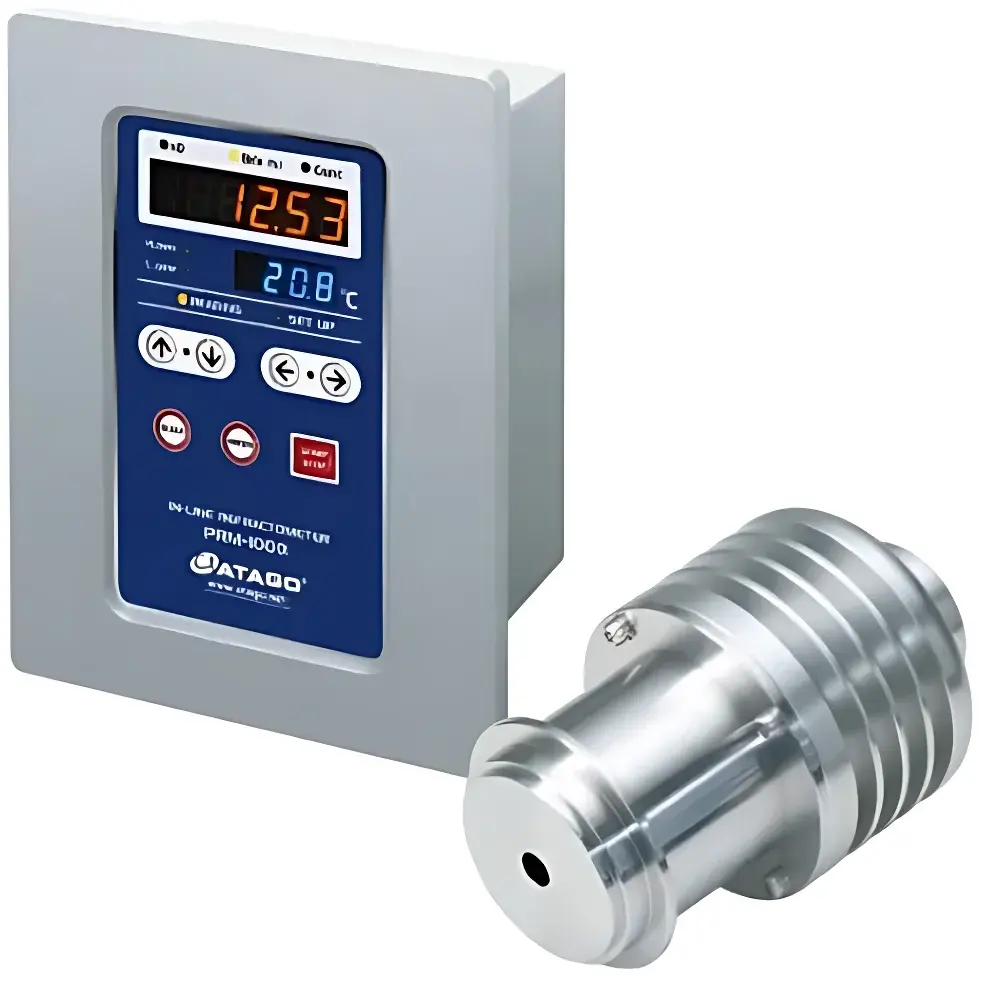
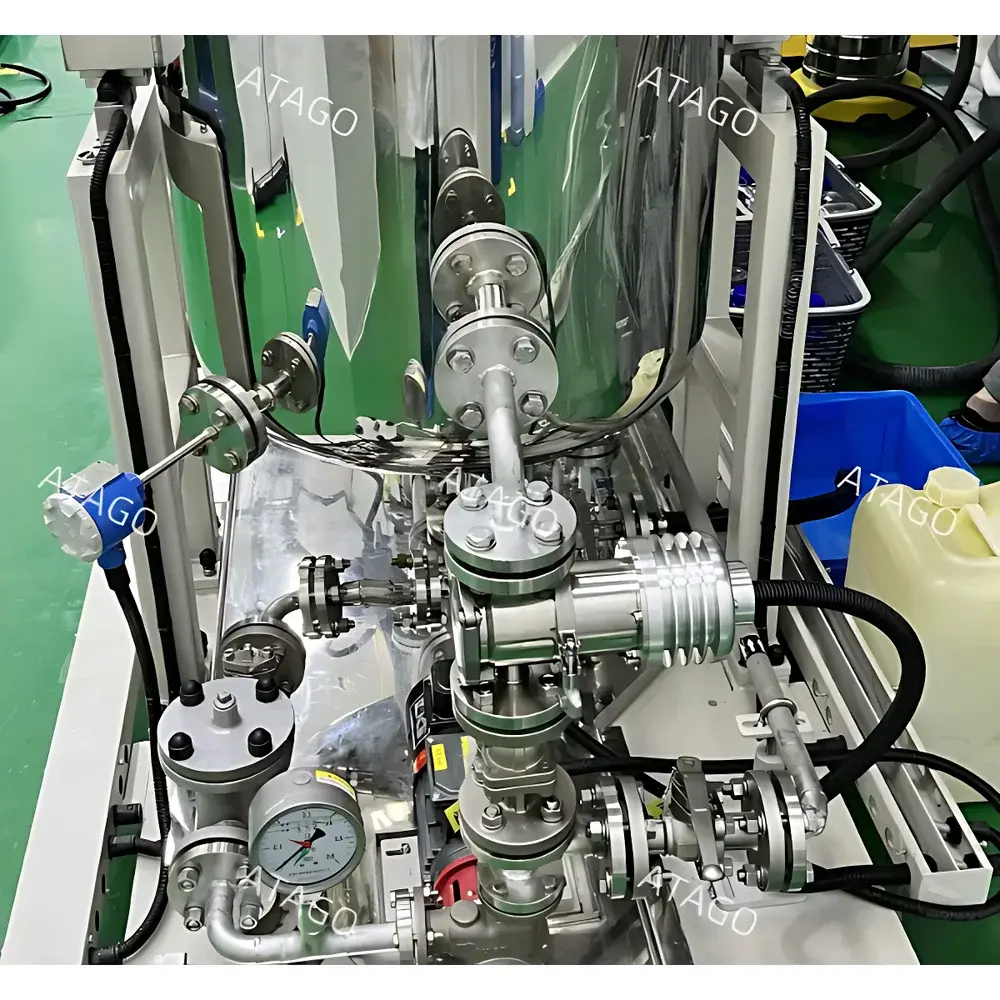
The ATAGO PRM-100α DX is a high-precision in-line refractometer engineered for continuous, real-time monitoring of liquid concentration in industrial process streams—specifically optimized for applications in the new energy sector, including battery electrolyte formulation, coolant blending, and lithium-ion precursor solution management. Based on the fundamental optical principle of critical-angle refractometry, the instrument measures the refractive index (nD) of process liquids flowing directly through its sapphire-prism flow cell. This measurement is then converted to concentration units—including Brix (% w/w sucrose-equivalent), mass fraction, or user-defined calibration curves—using built-in algorithms with automatic temperature compensation (ATC) across 5–100°C. Unlike benchtop or handheld refractometers, the PRM-100α DX integrates seamlessly into sanitary or industrial piping systems (e.g., DN25–DN50 flanged or tri-clamp configurations), enabling non-invasive, maintenance-free operation without sampling delays, flow diversion, or reagent consumption. Its robust optical architecture ensures long-term stability under thermal cycling, vibration, and chemical exposure typical in continuous manufacturing environments.
Key Features
- High-resolution refractive index detection with ±0.00010 accuracy and 0.00001 resolution (selectable), supporting trace-level concentration control in electrolyte and solvent blends.
- Sapphire prism and SUS316L wetted parts provide exceptional resistance to corrosion, abrasion, and high-pH/low-pH electrolytes—critical for battery-grade LiPF6, KOH, H2SO4, and organic carbonate solutions.
- Integrated ATC (Automatic Temperature Compensation) algorithm compliant with ISO 21745 and ASTM D1218 standards, eliminating manual correction and ensuring metrological traceability across wide operating temperatures (−5.0 to 160.0°C sensor range).
- IP67-rated display unit with large-format 7-segment LED display—designed for visibility in high-noise, high-ambient-light production floors, even at distances exceeding 10 meters.
- Process-rated pressure tolerance up to 0.98 MPa (10 bar), validated per ASME B31.3 process piping requirements, enabling direct installation on pressurized recirculation loops.
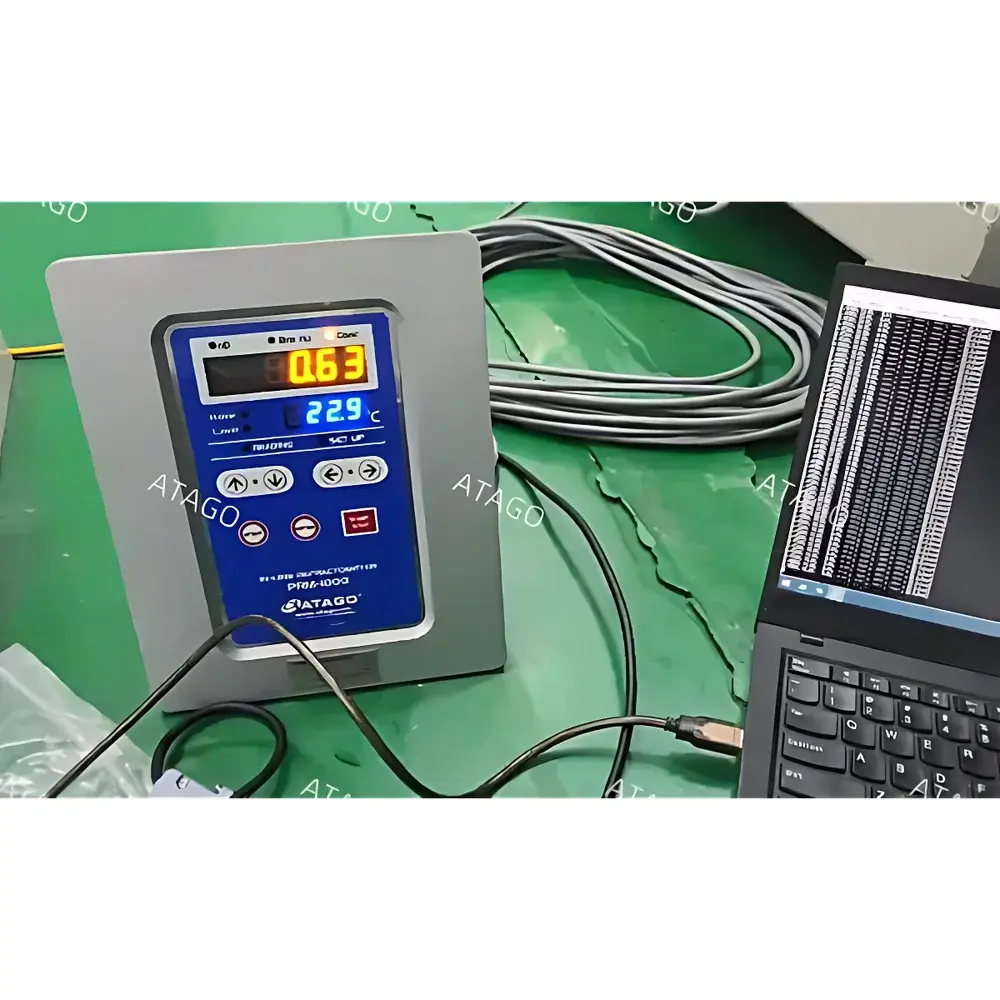
- Dual analog (4–20 mA) and digital (RS-232C) outputs support integration with DCS, SCADA, and MES platforms—enabling closed-loop concentration feedback control and automated batch reconciliation.
Sample Compatibility & Compliance
The PRM-100α DX is compatible with transparent to mildly turbid aqueous and organic liquid streams exhibiting low suspended solids (<5 ppm) and minimal air entrainment. It is routinely deployed for real-time monitoring of lithium hexafluorophosphate (LiPF6) in ethylene carbonate/dimethyl carbonate (EC/DMC) blends, potassium hydroxide (KOH) electrolytes, glycol-based coolants, and aqueous polymer dispersions. The device conforms to IEC 61000-6-2 (EMC immunity) and IEC 61000-6-4 (EMC emissions). Its construction meets FDA-relevant material compliance (21 CFR 177.2400 for food-contact polymers where applicable) and supports GLP/GMP documentation workflows via audit-trail-capable data logging when paired with ATAGO’s optional PC interface software. While not intrinsically safe, it may be installed in Zone 2/Class I Div 2 areas when housed in appropriate enclosures per NEC 500.
Software & Data Management
The PRM-100α DX operates autonomously but interfaces with ATAGO’s optional “RefractoLink” PC software (Windows-based) for configuration, calibration validation, and trend analysis. Software features include user-defined calibration tables (up to 20 multi-point curves), time-stamped data export (CSV/Excel), real-time graphing of nD, Brix, and temperature, and configurable alarm thresholds with relay output triggering. All measurement events—including zero/span calibrations, parameter changes, and system errors—are logged with timestamps and operator IDs, satisfying basic FDA 21 CFR Part 11 requirements for electronic records when deployed with Windows domain authentication and audit log retention policies. Raw sensor output (nD, °C) is available via RS-232C for third-party SCADA ingestion using Modbus RTU protocol (via optional converter).
Applications
- Real-time concentration control during mixing and dilution of cathode/anode slurry solvents and electrolyte formulations in lithium-ion battery production lines.
- Continuous verification of water/glycol ratios in thermal management system coolants for EV battery packs and power electronics.
- In-process monitoring of acid/base concentration in electrode cleaning and surface treatment baths (e.g., sulfuric acid etching, sodium hydroxide passivation).
- End-of-line verification of purity and consistency in recycled electrolyte recovery processes—supporting circular economy initiatives in battery recycling facilities.
- Concentration trending during ultrafiltration and nanofiltration steps in cathode active material synthesis, where osmotic pressure correlates with dissolved ion load.
FAQ
Can the PRM-100α DX measure highly viscous or particle-laden electrolytes?
No—it requires optically clear, low-turbidity fluids. Suspended particles >5 µm or viscosity >200 mPa·s may cause signal attenuation or prism fouling; inline filtration (5 µm) and temperature stabilization are recommended prerequisites.
Is factory calibration traceable to NIST or JCSS standards?
Yes—each unit ships with a calibration certificate referencing ATAGO’s internal JCSS-accredited master refractometer (JCSS Registration No. 0226), with uncertainty budgets documented per ISO/IEC 17025.
What maintenance intervals are recommended for continuous operation?
Prism cleaning every 72–168 hours depending on fluid aggressiveness; full verification against certified sucrose standards every 3 months or after process upset events.
Does the device support custom concentration units beyond Brix?
Yes—users can input polynomial or tabular conversion functions for NaCl%, LiPF6 wt%, KOH g/L, or proprietary solute models via the RS-232C interface.
Can multiple PRM-100α DX units be daisy-chained on one RS-232C line?
No—RS-232C is point-to-point; however, up to 32 units may be networked via optional RS-485 gateway (ATAGO part #PRM-RS485-GW) with Modbus RTU addressing.




