
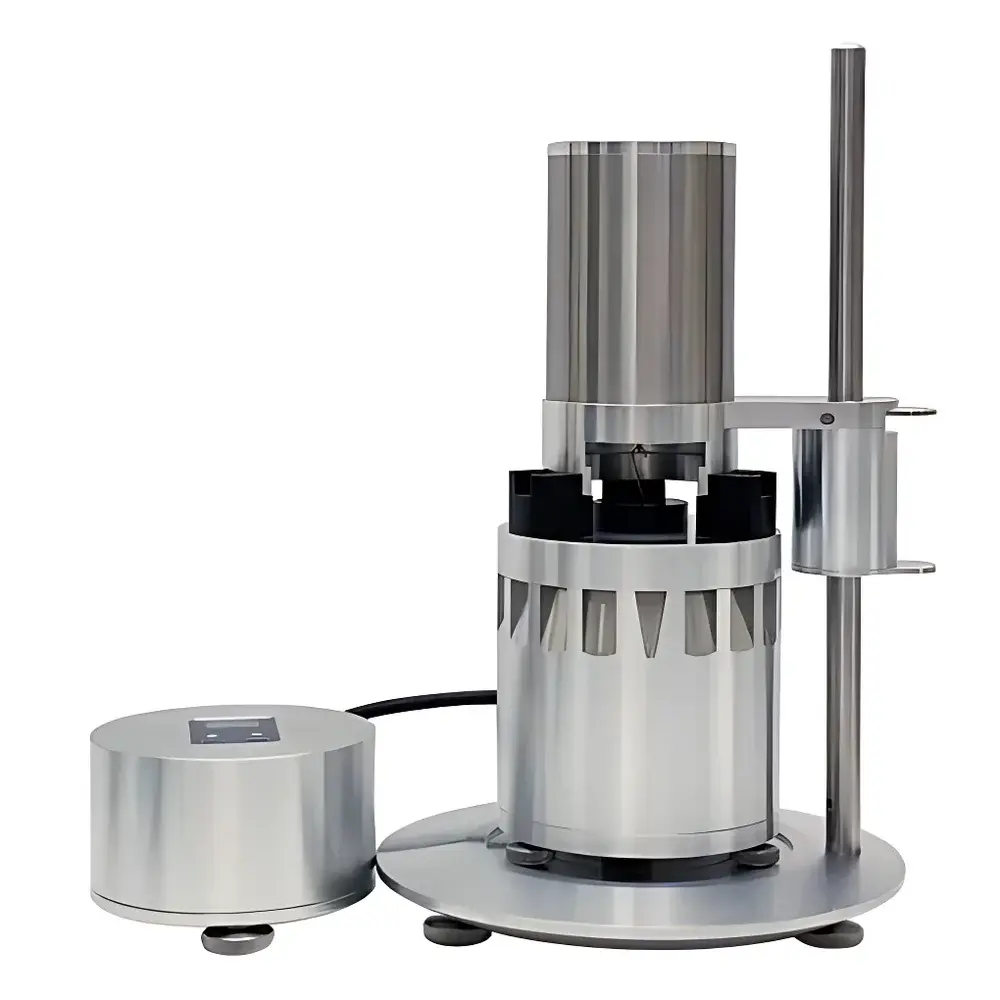
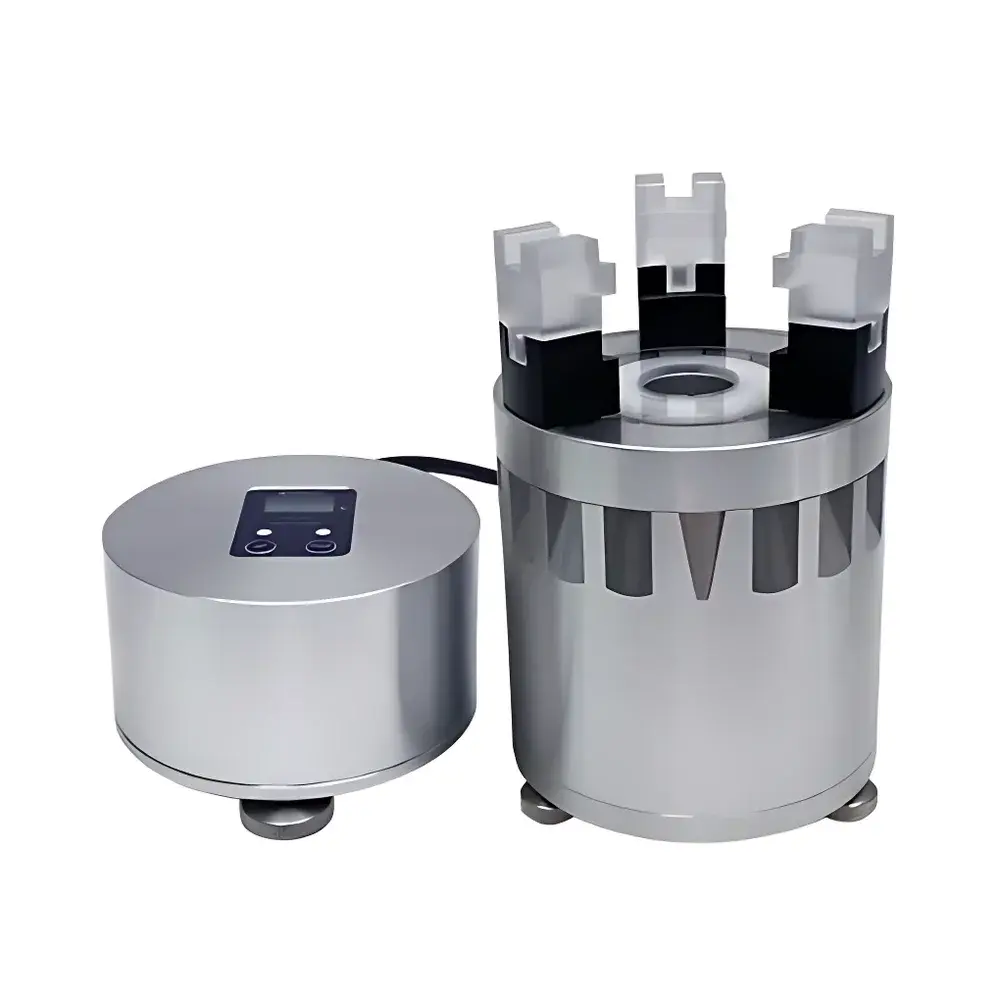
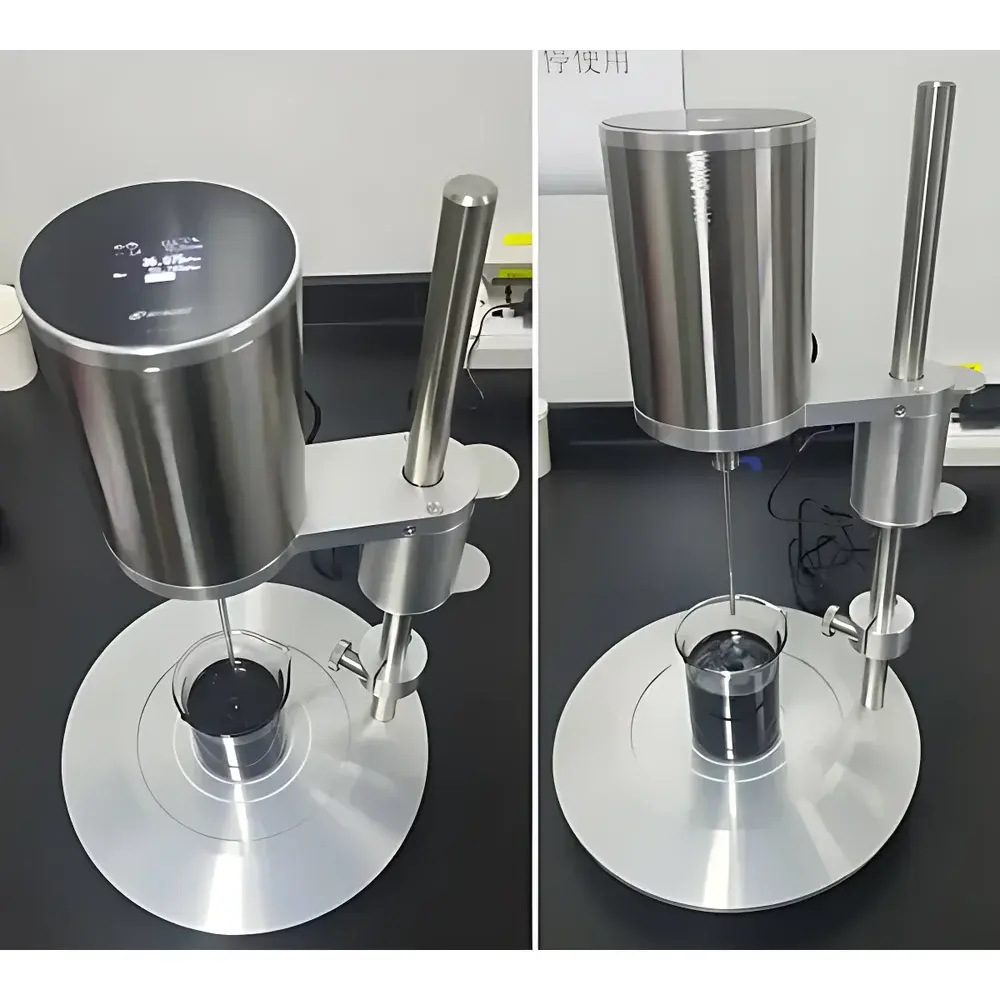
ATAGO VISCO B(L) Temperature-Controlled Rotational Viscometer
| Brand | ATAGO |
|---|---|
| Origin | Japan |
| Model | VISCO B(L) |
| Instrument Type | Portable Rotational Viscometer |
| Viscosity Range | 12–60,000,000 mPa·s |
| Temperature Range | 5.0–90.0 °C |
| Temperature Resolution | 0.1 °C |
| Temperature Accuracy | ±0.2 °C |
| Torque Range | 10.0–100.0% (recommended) |
| Speed Range | 0.01–250 rpm (28 selectable speeds) |
| Viscosity Accuracy | ±1% |
| Standard Spindles | L1, L2, L3, L4 |
| Power Supply | 4× AA alkaline batteries or AC adapter |
| Interface | USB to PC |
| Dimensions (main unit) | 178 × 86 × 194 mm |
| Weight (main unit) | 1.2 kg |
Overview
The ATAGO VISCO B(L) is a compact, integrated temperature-controlled rotational viscometer engineered for precision viscosity measurement across a broad dynamic range—from low-viscosity solvents to highly viscous polymer melts and lubricants. Based on the classical Couette principle, it measures torque exerted on a rotating spindle immersed in a sample under controlled shear conditions. Unlike conventional benchtop viscometers requiring external water baths, the VISCO B(L) incorporates an internal Peltier-based temperature control system, enabling rapid, stable thermal regulation from 5.0 °C to 90.0 °C without auxiliary equipment. This self-contained architecture ensures high reproducibility in routine QC environments—especially critical for industries where viscosity directly correlates with functional performance, stability, and regulatory compliance (e.g., ISO 2555, ASTM D2196, USP ). Its portable form factor and battery-powered operation support flexible deployment in production lines, field labs, and teaching laboratories.
Key Features
- Integrated Peltier temperature control with ±0.2 °C accuracy and 0.1 °C resolution—eliminates dependency on external circulators
- Four standardized low-shear spindles (L1–L4) optimized for extended viscosity coverage: 12–60,000,000 mPa·s
- 28 discrete rotational speeds (0.01–250 rpm), enabling precise shear rate selection per ISO 3219 and ASTM D1092 protocols
- Real-time torque monitoring (10.0–100.0% full scale) with ±1% viscosity accuracy traceable to NIST-traceable standards
- USB interface for direct data logging to Windows-based PCs; compatible with ATAGO’s proprietary VISCO-PC software for automated report generation
- Robust mechanical design: aluminum alloy housing, IP20-rated enclosure, and vibration-dampened base assembly (φ240 × 398 mm)
Sample Compatibility & Compliance
The VISCO B(L) accommodates samples ranging from Newtonian fluids (e.g., mineral oils, ethanol, glycerol) to structured non-Newtonian systems including shear-thinning gels, thixotropic suspensions, and viscoelastic polymer solutions. Its L-series spindles are calibrated for low-torque applications, making it suitable for sensitive biological formulations (e.g., protein therapeutics, plasma derivatives) and low-viscosity industrial fluids (e.g., cutting oils, surfactant solutions). The instrument meets essential requirements for GLP-compliant environments: audit-trail-capable software logging (via optional VISCO-PC with 21 CFR Part 11 mode), timestamped measurements, and user-access-level configuration controls. It supports method validation per ICH Q5C and ISO/IEC 17025 for accredited testing laboratories.
Software & Data Management
VISCO-PC software provides comprehensive data acquisition, visualization, and reporting functionality. Users can define multi-step test protocols—including ramped temperature profiles, timed viscosity sweeps, and yield point estimation via controlled stress ramping. All raw data (viscosity, temperature, torque, RPM, time) are stored in CSV and XML formats for integration with LIMS or statistical process control (SPC) platforms. The software includes built-in calibration verification tools, automatic outlier detection, and customizable pass/fail thresholds aligned with internal specifications or industry benchmarks (e.g., SAE J300 for engine oils). Exported reports include instrument ID, operator name, environmental conditions, and uncertainty estimates per GUM (JCGM 100:2008).
Applications
- Pharmaceutical & Biotech: Viscosity profiling of injectables, monoclonal antibody formulations, hydrogels, and excipient blends under physiologically relevant temperatures
- Chemical Manufacturing: QC of industrial lubricants, adhesives, resins, and surfactant concentrates; monitoring thermal degradation during accelerated aging studies
- Food & Beverage: Texture assessment of sauces, dressings, dairy emulsions, and hydrocolloid-based stabilizers (e.g., xanthan, carrageenan) across refrigerated to pasteurization temperatures
- Personal Care: Rheological screening of shampoos, conditioners, and cosmetic emulsions to ensure pumpability, spreadability, and sensory consistency
- Academic & Regulatory Labs: Teaching rheological fundamentals, method development for ISO/ASTM standard adoption, and third-party certification testing
FAQ
Does the VISCO B(L) comply with ISO/IEC 17025 requirements for accredited testing?
Yes—when used with VISCO-PC software in audit-trail mode, it supports documented calibration history, user authentication, and immutable data records required by ISO/IEC 17025:2017 Clause 7.7.
Can the instrument measure yield stress?
It does not perform direct yield stress determination via controlled-stress mode; however, apparent yield points may be estimated using torque onset analysis during low-speed ramp tests.
Is external cooling or heating required for operation below 5 °C or above 90 °C?
No—the built-in Peltier system operates exclusively within the specified 5.0–90.0 °C range; operation outside this window requires alternative instrumentation.
How often must the spindles be recalibrated?
ATAGO recommends annual spindle calibration using certified reference oils (e.g., Cannon-Manning series) traceable to NIST SRMs, or after mechanical impact or exposure to corrosive media.
Is the battery life sufficient for continuous field use?
With four AA alkaline cells, typical runtime exceeds 20 hours at 25 °C and 60 rpm; AC adapter operation is recommended for extended lab-based sessions.



