
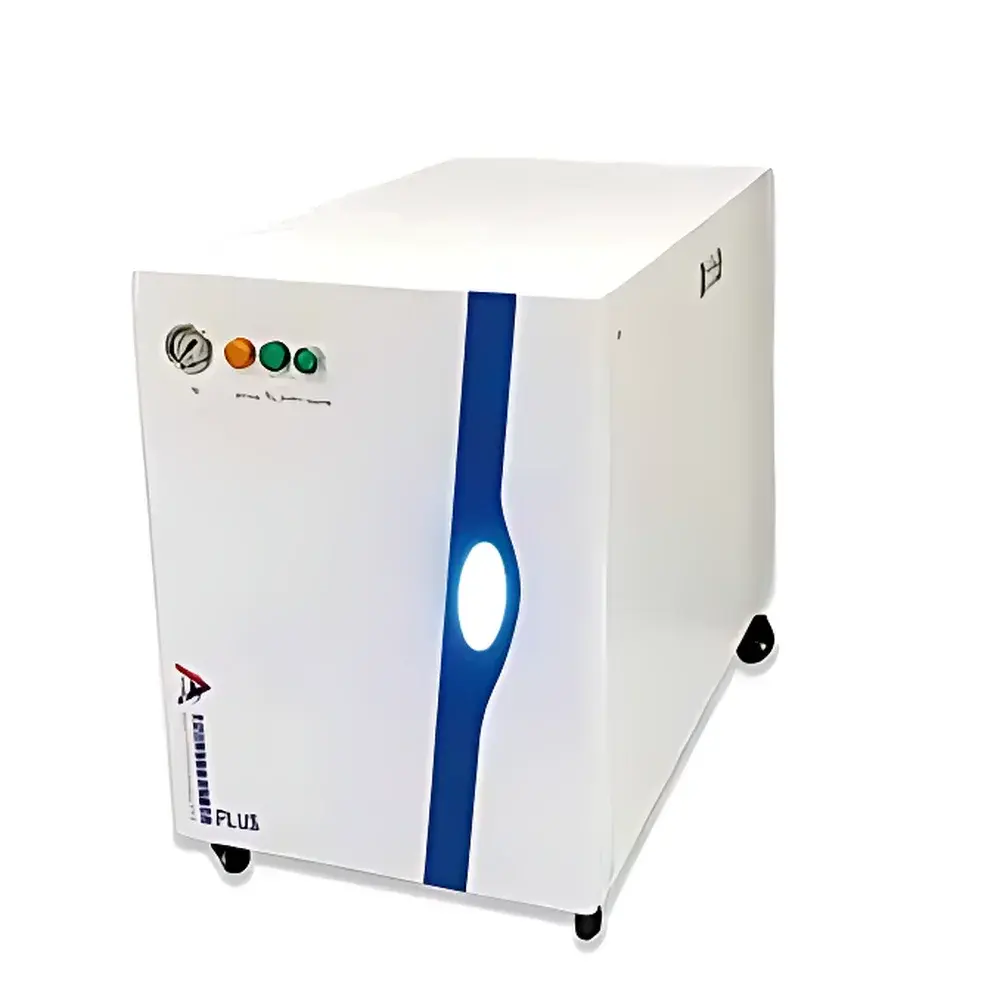
ATARICO ATEN-60 Advanced PSA Nitrogen Generator for LC-MS and High-Performance Analytical Applications
| [Brand | ATARICO |
|---|---|
| Origin | Beijing, China |
| Manufacturer Type | OEM Manufacturer |
| Model | ATEN-60 |
| Nitrogen Generation Principle | Pressure Swing Adsorption (PSA) with Zeolite Molecular Sieves |
| Output Flow Rate | 60–70 L/min |
| Output Pressure Range | 0.1–0.7 MPa (14.5–101 psi), adjustable |
| Nitrogen Purity | 95–99.5% (N₂ vol%) |
| Dew Point | −40 °C to −45 °C |
| Particle Size Retention | < 0.01 µm |
| Noise Level | 58 dB(A) |
| Power Requirement | 230 V, 50/60 Hz |
| Rated Power Consumption | 3.3 kW |
| Dimensions (L×W×H) | 1060 × 650 × 1150 mm |
| Weight | 260 kg] |
Overview
The ATARICO ATEN-60 is a high-capacity, laboratory-grade pressure swing adsorption (PSA) nitrogen generator engineered specifically for continuous, mission-critical gas supply in liquid chromatography–mass spectrometry (LC-MS), electrospray ionization (ESI), atmospheric pressure chemical ionization (APCI), and other high-sensitivity analytical platforms. Unlike membrane-based systems, the ATEN-60 employs dual-bed zeolite molecular sieve technology combined with integrated deep-drying membranes and multi-stage filtration to deliver stable, oil-free nitrogen at precisely controlled flow and pressure. Its design prioritizes long-term reliability under 24/7 operation—validated for >10,000 hours of uninterrupted service—and meets the stringent purity and moisture specifications required by modern mass spectrometers, including low-oxygen (<500 ppm O₂), ultra-low dew point (−40 °C to −45 °C), and sub-0.01 µm particulate removal. The system operates within ambient conditions of 5–35 °C and ≤80% relative humidity, with altitude-rated performance up to 1500 m above sea level.
Key Features
- Optimized dual-tower PSA architecture with proprietary zeolite molecular sieves, delivering 25–40% higher separation efficiency versus equivalent-flow membrane generators
- Integrated Japanese SMC hydrophobic depth-drying membrane module, ensuring consistent dew point ≤−45 °C and protecting ESI sources, capillaries, and cone orifices from moisture-induced degradation
- Custom aluminum alloy adsorption vessels and buffer tanks—designed for zero leakage and elimination of secondary contamination
- High-efficiency heat exchanger and five-stage filtration system (coalescing, activated carbon, ultra-fine particulate, catalytic oxygen scavenging, and final sterile-grade membrane) for oil-free, particle-free, and chemically inert output
- Siemens SIMATIC S7-1200 central control unit with multi-channel analog/digital I/O, enabling real-time pressure, flow, purity, and temperature monitoring with programmable alarm thresholds
- Low-noise (<58 dB[A]) operation and compact footprint (1060 × 650 × 1150 mm), allowing under-bench installation adjacent to LC-MS instruments without compromising lab ergonomics
- Pre-integrated high-reliability air compressor (rated to 1.0 MPa) with imported components, eliminating need for external compressed air infrastructure
Sample Compatibility & Compliance
The ATEN-60 is validated for use with all major LC-MS platforms requiring nitrogen as nebulizing, drying, or collision gas—including Thermo Fisher Scientific, Waters, Agilent, Shimadzu, and Sciex instruments. Its nitrogen output complies with ASTM D8272-22 (Standard Specification for Nitrogen Gas for Analytical Instrumentation) and aligns with ISO 8573-1:2010 Class 1.2.1 for particulates, water, and oil content. While not certified to FDA 21 CFR Part 11 out-of-the-box, the Siemens-based control architecture supports audit trail logging, user access levels, and electronic signature integration when deployed within GLP/GMP-compliant laboratories using validated software extensions. All wetted materials meet USP Class VI biocompatibility standards; no stainless steel 316L or elastomer leachables are introduced into the gas stream.
Software & Data Management
The ATEN-60 features embedded web-server functionality accessible via Ethernet or Wi-Fi, supporting remote monitoring through a secure HTTPS interface. Real-time operational parameters—including inlet pressure, tower cycle status, outlet dew point, cumulative runtime, and maintenance countdown timers—are logged at 1-second intervals and exportable in CSV format. Optional OPC UA server integration enables seamless data ingestion into LabVantage, STARLIMS, or custom LIMS environments. Firmware updates are performed over-the-air (OTA) with cryptographic signature verification. For regulated environments, optional 21 CFR Part 11-compliant add-on modules provide electronic signatures, role-based access control, and immutable audit trails—all independently validated per IQ/OQ protocols.
Applications
- LC-MS/MS mobile phase gas (nebulizer, desolvation, curtain, and collision gases)
- GC-MS auxiliary make-up gas and detector purge
- ICP-MS plasma stabilization and interface cooling
- Proteomics and metabolomics sample preparation under inert atmosphere
- Long-duration unattended analysis requiring >30 days of uninterrupted gas supply
- Centralized nitrogen distribution for multi-instrument labs with demand-based load balancing
FAQ
What is the expected service life of the molecular sieve beds?
Typical bed lifetime exceeds 30,000 operating hours (≥3.5 years at 24/7 operation) under recommended maintenance intervals; regeneration cycles are fully automated and require no operator intervention.
Can the ATEN-60 be integrated with existing lab infrastructure?
Yes—the unit includes standard 6 mm push-to-connect nitrogen outlet and 10 mm condensate drain ports, compatible with common PTFE, SS316, or copper tubing; analog 4–20 mA and digital Modbus RTU interfaces support PLC-level integration.
Does it meet ISO 8573-1 Class 1 requirements for analytical nitrogen?
It achieves Class 1.2.1 (particles ≤0.1 µm, dew point ≤−40 °C, oil content ≤0.01 mg/m³), exceeding minimum Class 1 requirements for critical instrumentation applications.
Is preventive maintenance required, and what does it entail?
Annual filter replacement and dew point sensor calibration are recommended; full service kits include coalescing, carbon, particulate, and membrane elements—no specialized tools or external technicians needed.
How does power consumption compare to competing PSA systems?
At 3.3 kW full-load, the ATEN-60 consumes 18–22% less energy than legacy PSA units of comparable capacity due to optimized compressor staging, thermal recovery, and adaptive cycling algorithms.



