
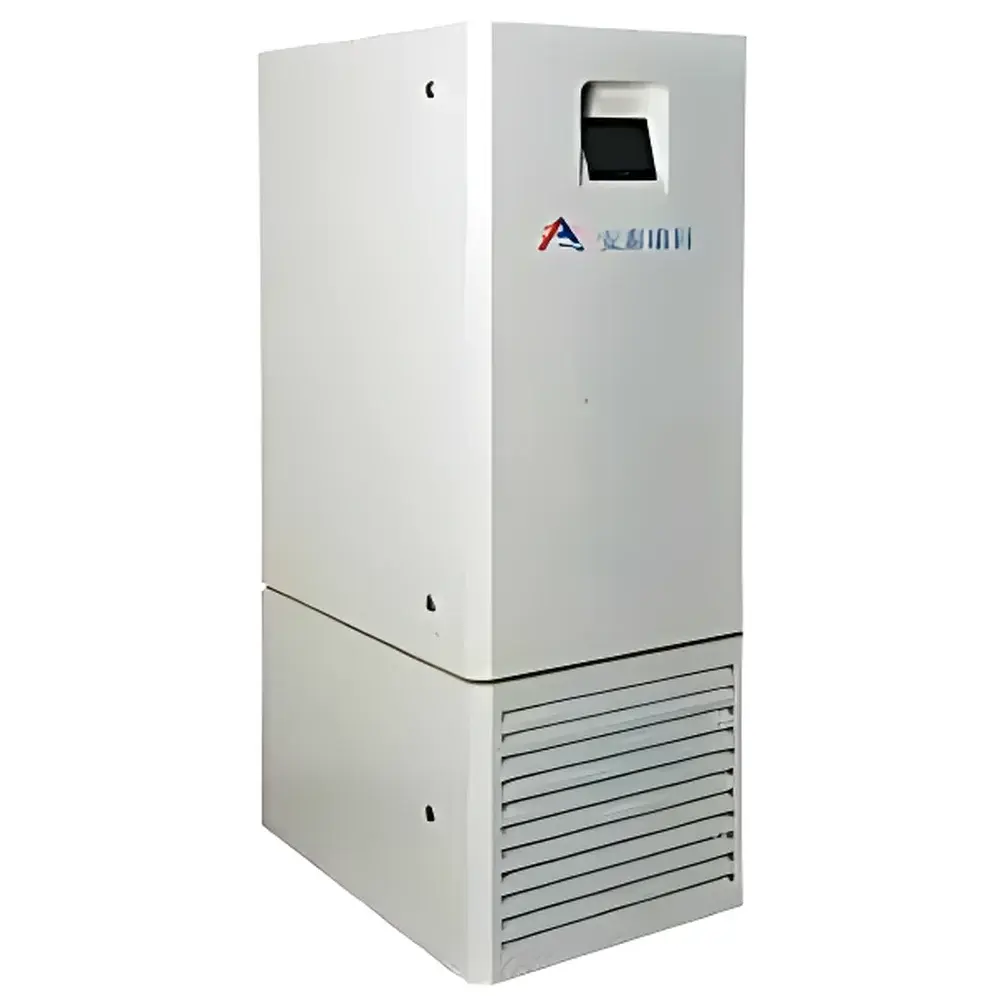
ATARICO ATLN120-A Compact Nitrogen Liquefier with Integrated PSA Nitrogen Generator
| Brand | ATARICO |
|---|---|
| Origin | Beijing, China |
| Manufacturer Type | Direct Manufacturer |
| Product Category | Domestic |
| Model | ATLN120-A |
| Instrument Type | Integrated Nitrogen Generator & Liquefier |
| Nitrogen Generation Principle | Pressure Swing Adsorption (PSA) |
| Liquid Nitrogen Output | 120 L/day |
| Output Pressure | Up to 7 bar |
| Nitrogen Purity | ≥99% (at 7 bar, –65°C dew point) |
| Dew Point | ≤ –65°C |
| Cooling Method | Air-cooled |
| Refrigeration System | Mixed-Refirgerant Joule–Thomson Liquefaction |
| Ambient Temperature Range | 5–30°C |
| Electrical Requirement | 380 V, 50 Hz |
| Installed Power | 8.5 kW |
| Dimensions (W×L×H) | 1400 × 1000 × 2000 mm |
| Weight | 580 kg |
| Cool-down Time | 30–90 min |
| Compliance | Designed for GLP-compliant laboratory environments |
| Software Interface | Local HMI with real-time status monitoring (no remote control or data export capability) |
Overview
The ATARICO ATLN120-A is an integrated, bench-to-floor-scale nitrogen supply system engineered for laboratories requiring on-demand liquid nitrogen (LN₂) without reliance on bulk deliveries or cryogenic dewars. Unlike conventional nitrogen generators that produce only gaseous N₂, the ATLN120-A combines a high-efficiency pressure swing adsorption (PSA) nitrogen generator with a self-contained mixed-refrigerant Joule–Thomson liquefaction module. This dual-stage architecture enables continuous conversion of compressed air into ≥99% pure nitrogen gas, followed by deep cooling to –180°C and phase transition into liquid nitrogen at a rated output of 120 liters per day. The system operates autonomously under ambient conditions (5–30°C), delivering LN₂ directly into a standard 7-bar-rated dewar. Its design addresses critical operational constraints in biopharma R&D, vaccine cold-chain validation, cryopreservation of primary cells and tissue samples, and low-temperature materials testing—where temporal consistency, purity integrity, and supply continuity are non-negotiable.
Key Features
- Integrated PSA + JT liquefaction architecture eliminates dependency on external nitrogen sources or third-party liquid nitrogen logistics.
- Air-cooled mixed-refrigerant Joule–Thomson cycle ensures stable liquefaction performance without water chiller infrastructure or external coolant loops.
- Modular mechanical layout with industrial-grade commercial compressors and brazed-plate heat exchangers—designed for field serviceability and long-term reliability (MTBF > 15,000 hours).
- Compact footprint (1400 × 1000 × 2000 mm) and wheeled base enable repositioning within ISO Class 7/8 cleanrooms or controlled lab environments without structural modification.
- Local HMI panel provides real-time monitoring of inlet air pressure, PSA bed status, refrigerant loop temperature gradients, dewar fill level estimation, and system fault codes.
- Compliance-ready mechanical design supports integration into GMP-aligned workflows; all wetted surfaces are electropolished stainless steel (SS316L), with traceable material certifications available upon request.
Sample Compatibility & Compliance
The ATLN120-A produces nitrogen meeting ISO 8573-1:2010 Class 2:2:2 for particulate, water, and oil content—validated at point-of-use via integrated coalescing filters and carbon polishing beds. The resulting liquid nitrogen exhibits ≤ –65°C dew point at 7 bar, ensuring compatibility with cryogenic storage systems requiring strict moisture control (e.g., vapor-phase LN₂ freezers, automated cell banking platforms). While not certified to FDA 21 CFR Part 11 out-of-the-box, the system’s deterministic operational logic, non-volatile event logging, and absence of user-modifiable firmware align with ALCOA+ data integrity principles. It is routinely deployed in GLP-regulated preclinical labs and QC release testing suites where audit trails for LN₂ sourcing must be demonstrable and reproducible.
Software & Data Management
The ATLN120-A utilizes a dedicated embedded controller with a 7-inch resistive touchscreen HMI. No external PC or network connectivity is required. All operational parameters—including runtime hours, cumulative LN₂ output, compressor cycle count, and alarm history—are stored locally in non-volatile memory with timestamping (RTC-backed). Export functionality is not provided; however, maintenance logs and fault records can be retrieved via USB port using vendor-supplied diagnostic utility (Windows-compatible). For regulated environments, users may implement periodic manual log transcription into validated electronic lab notebooks (ELN) or LIMS as part of their SOP-defined instrument qualification process.
Applications
- Cryopreservation of sensitive biologicals: primary hepatocytes, dendritic cells, CAR-T intermediates, and ovarian tissue—where batch-to-batch LN₂ quality directly impacts post-thaw viability.
- Vaccine formulation development: supporting ultra-low-temperature stability studies (–80°C to –196°C) under ICH Q5C guidelines.
- Materials science: controlled thermal cycling of superconductors, polymers, and battery electrode composites requiring precise cryogenic ramp rates.
- Mass spectrometry support: provision of high-purity LN₂ for cryo-cooling of detectors and ion optics in HRAM-MS platforms.
- On-site backup for central LN₂ plants: mitigating single-point failure risk during facility maintenance or supply chain disruption.
FAQ
Does the ATLN120-A require external cooling water or glycol circulation?
No. It is fully air-cooled and designed for operation in standard laboratory HVAC environments (5–30°C ambient, ≤60% RH).
Can the system be validated for GMP manufacturing use?
Yes—though it lacks built-in 21 CFR Part 11 features, its mechanical determinism, SS316L fluid path, and documented IQ/OQ protocols (available from ATARICO) support qualification in non-sterile API or intermediate manufacturing settings.
What maintenance intervals are recommended?
PSA pre-filters: every 500 operating hours. Carbon polishing bed: annually or after 8,000 hours. Refrigerant charge verification: biennially by authorized technician.
Is remote monitoring or Ethernet connectivity supported?
Not natively. Optional RS-485 Modbus RTU interface is available for integration into building management systems (BMS) or SCADA networks, subject to custom configuration.
How does altitude affect performance?
Above 1,500 m elevation, air density reduction lowers PSA throughput and increases compressor work; derating of LN₂ output by ~0.8% per 100 m is observed above sea level—consult technical datasheet for site-specific correction factors.



