
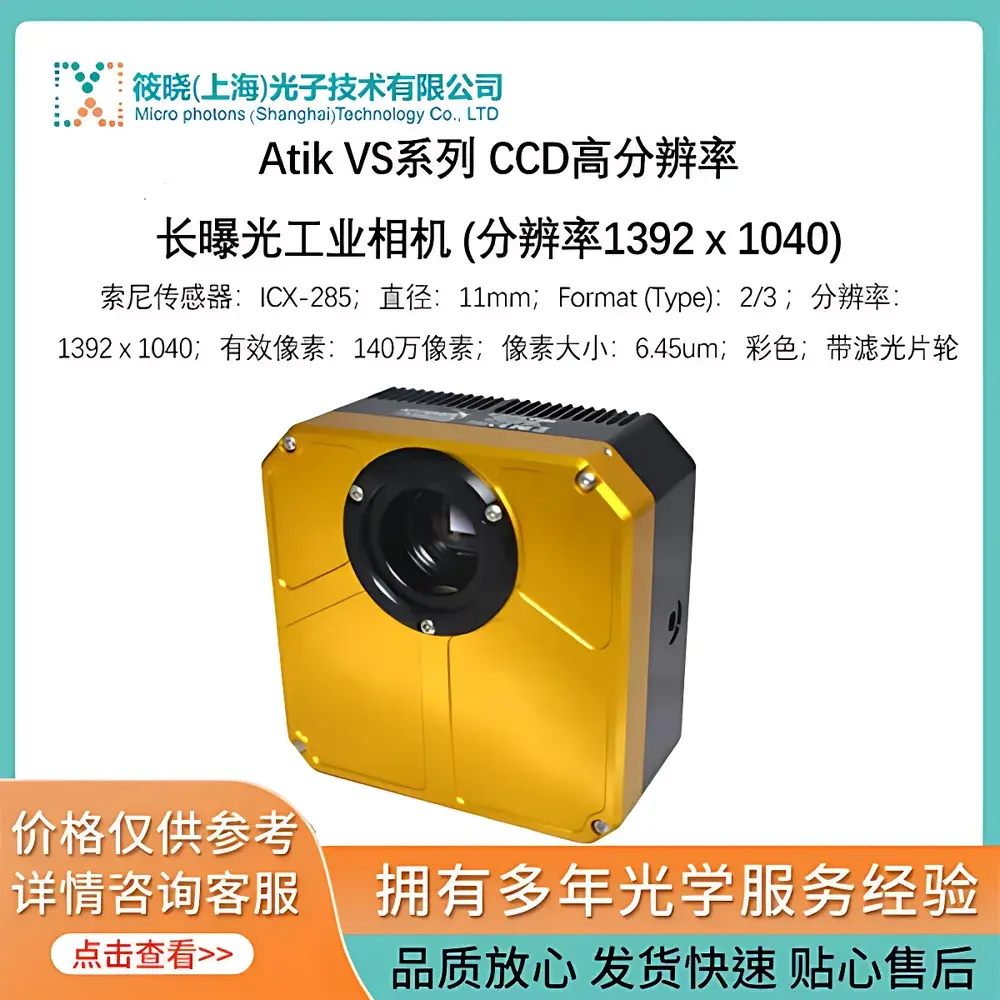
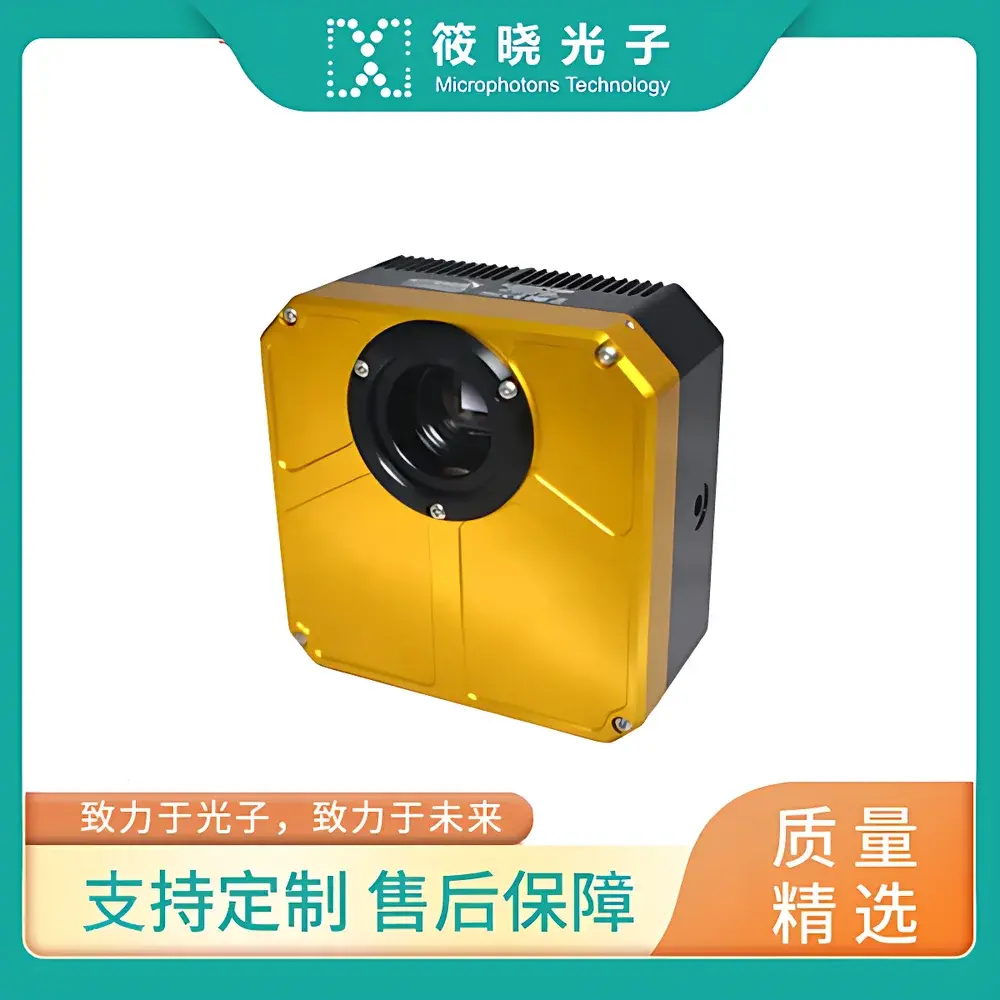
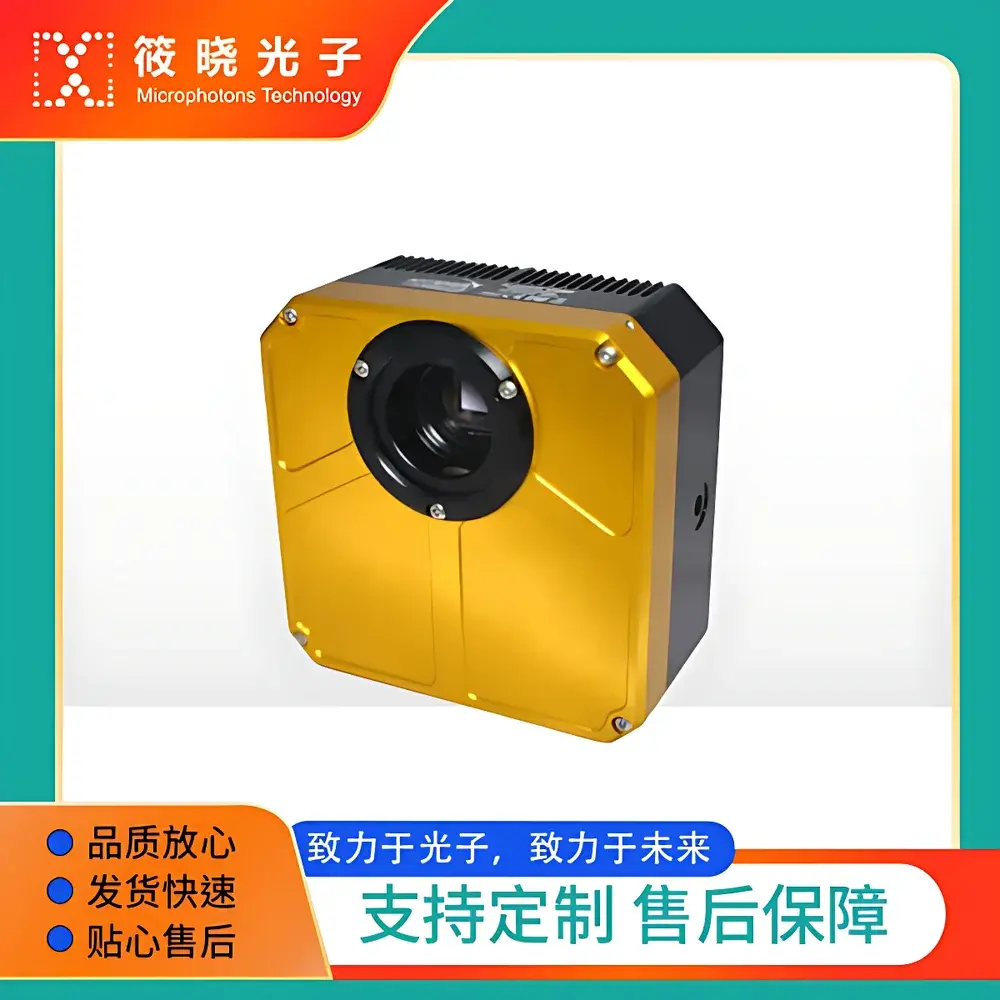
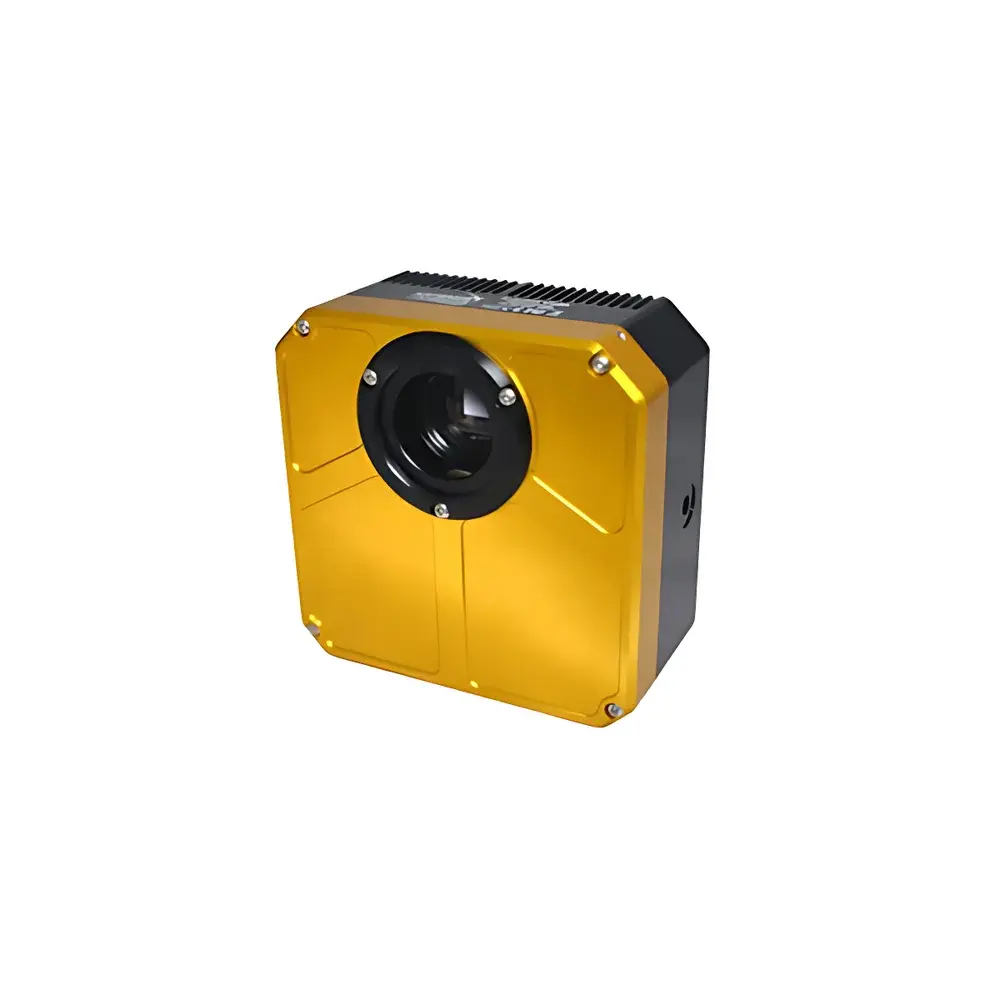
Atik VS14-C-F High-Resolution, Long-Exposure Scientific CCD Camera (1392 × 1040)
| Brand | Atik Cameras |
|---|---|
| Sensor | Sony ICX-285 |
| Format | 2/3" |
| Resolution | 1392 × 1040 |
| Effective Pixels | 1.4 MP |
| Pixel Size | 6.45 µm |
| Cooling | Integrated Thermoelectric (TE) to −35 °C |
| Bit Depth | 16-bit |
| Interface | USB 2.0 |
| Filter Wheel Option | Built-in 5-position motorized filter wheel (F-model) |
| Compliance | ISO 9001-certified manufacturing |
| SDK | Full C++ API, .NET wrappers, ImageJ plugin, LabVIEW VIs, Linux & VB drivers |
Overview
The Atik VS14-C-F is a high-sensitivity, thermoelectrically cooled scientific CCD camera engineered for low-light quantitative imaging in demanding industrial, biomedical, and research applications. Based on the proven Sony ICX-285AL progressive-scan interline CCD sensor, it delivers 1392 × 1040 pixel resolution with large 6.45 µm pixels—optimized for photon collection efficiency and dynamic range in long-exposure scenarios. Its integrated Peltier cooling system stabilizes the sensor at up to 35 °C below ambient, suppressing dark current to <0.001 e⁻/pix/sec at −20 °C—critical for extended integration times in fluorescence microscopy, spectroscopy, astronomy instrumentation, and OEM machine vision systems requiring high signal-to-noise ratio (SNR) and photometric linearity. Designed and assembled in an ISO 9001-certified European facility, the VS14-C-F adheres to rigorous quality control protocols throughout production, ensuring batch-to-batch consistency and long-term operational reliability under continuous duty cycles.
Key Features
- 16-bit analog-to-digital conversion with correlated double sampling (CDS) for ultra-low read noise (<10 e⁻ RMS typical)
- Thermoelectric cooling to −35 °C with real-time temperature monitoring and PID-controlled stabilization
- Integrated 5-position motorized filter wheel (F-model variant), enabling automated multi-channel acquisition without mechanical intervention or vacuum break
- Rugged aluminum housing with passive heat dissipation and EMI-shielded electronics for stable operation in electromagnetically noisy environments
- OEM-ready design: available as board-level module (no enclosure) with customizable I/O triggers, GPIO pins, and firmware configuration options
- USB 2.0 interface with guaranteed isochronous bandwidth allocation—ensuring deterministic frame timing and zero packet loss in synchronized multi-camera deployments
Sample Compatibility & Compliance
The VS14-C-F supports both monochrome and color variants (C-model), with the latter incorporating a precision-aligned Bayer mosaic filter for quantitative RGB imaging. Its 2/3″ optical format ensures compatibility with standard C-mount and F-mount lenses, as well as microscope trinocular ports via optional adapters. The camera meets CE, FCC, and RoHS directives, and its firmware architecture supports audit-ready metadata logging—including exposure time, sensor temperature, gain setting, and timestamp (UTC-synchronized via host system). For regulated environments, raw image data output complies with DICOM Supplement 145 (for medical imaging R&D) and supports optional GLP/GMP-compliant acquisition logs when used with validated third-party software platforms. All units undergo full dark-frame characterization and flat-field calibration prior to shipment.
Software & Data Management
Atik provides a comprehensive, royalty-free Software Development Kit (SDK) supporting cross-platform integration. The native C++ library exposes full hardware control—including programmable ROI, binning modes (1×1 to 4×4), asynchronous exposure sequencing, and hardware-triggered acquisition—with thread-safe callbacks for real-time streaming. Prebuilt wrappers are supplied for .NET (C#/VB), Python (via ctypes), MATLAB, LabVIEW (32/64-bit), and ImageJ/Fiji. Linux kernel modules and systemd-compatible udev rules enable seamless deployment on embedded ARM or x86-64 industrial PCs. All drivers enforce strict memory-mapped I/O and support DMA-based zero-copy frame transfers—minimizing CPU overhead during sustained 5 fps acquisition at full resolution. Metadata is embedded in FITS, TIFF, and PNG headers per IAU/STScI conventions.
Applications
- Fluorescence lifetime imaging (FLIM) and widefield epifluorescence microscopy requiring high quantum efficiency (>55% peak QE) and low temporal noise
- Spectroscopic imaging in process analytical technology (PAT) systems—especially UV-Vis-NIR reflectance and emission analysis of pharmaceutical granules or thin-film coatings
- Automated defect inspection in semiconductor wafer metrology, where pixel-level uniformity and radiometric stability over >10⁶ frames are mandatory
- OEM integration into confocal scanning units, digital holography rigs, and laser-induced breakdown spectroscopy (LIBS) detectors
- Astronomical guiding and planetary imaging—leveraging the ICX-285’s high full-well capacity (25,000 e⁻) and anti-blooming gate for saturated star field handling
FAQ
Does the VS14-C-F support hardware triggering and external synchronization?
Yes—it features TTL-compatible trigger input and output lines with configurable polarity, latency compensation, and pulse width modulation for precise coordination with lasers, shutters, or motion stages.
Can I operate the camera without the included software?
Absolutely—the SDK enables complete control from custom applications; no proprietary GUI is required for production deployment.
Is dark frame subtraction handled in-camera or in software?
Dark frames are acquired externally via SDK commands; real-time on-the-fly subtraction is performed in host software to preserve bit-depth fidelity and avoid pipeline artifacts.
What is the maximum sustained frame rate at full resolution?
At 16-bit depth and USB 2.0 bandwidth, the VS14-C-F achieves 4.8 fps continuously with full-frame readout and no binning; higher rates are attainable using region-of-interest (ROI) modes.
Are calibration files (flat field, dark frame, pixel response non-uniformity) provided with each unit?
Yes—each camera ships with factory-acquired master darks and flats at multiple temperatures and exposure durations, traceable to NIST-traceable photometric standards.





