
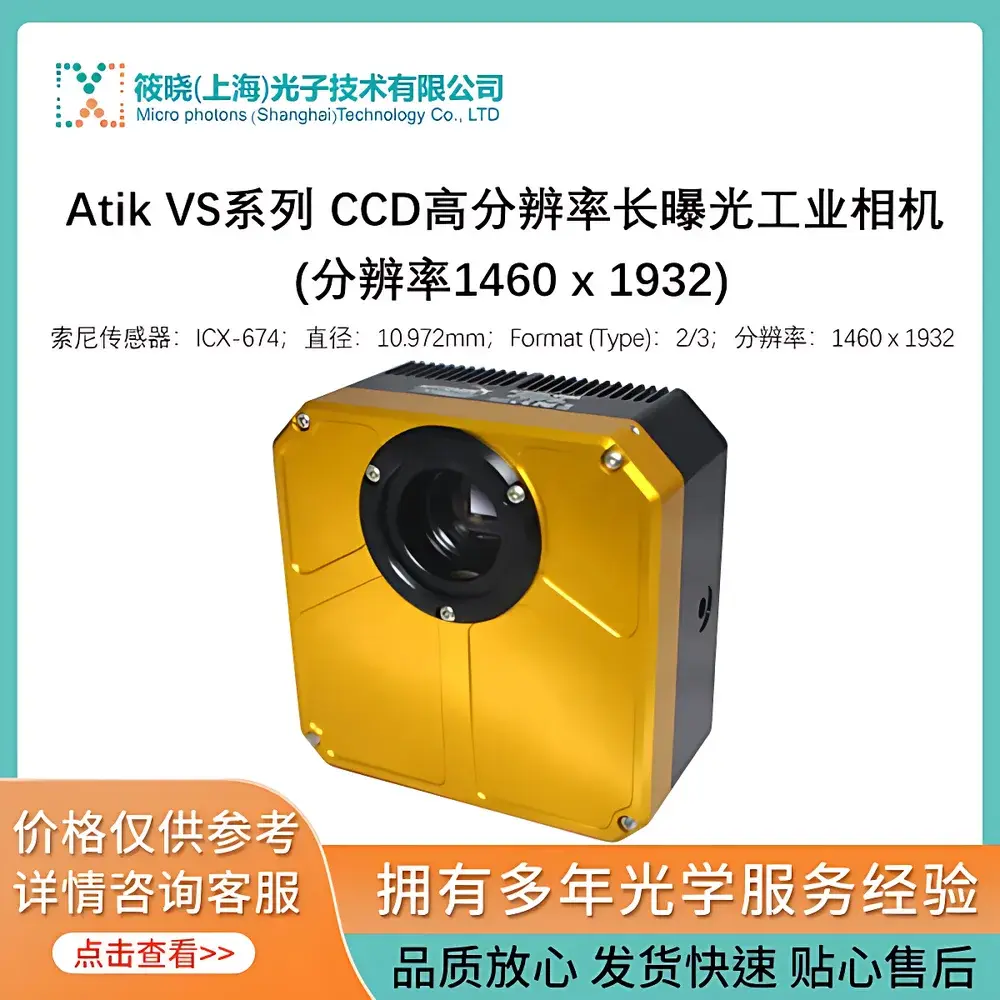
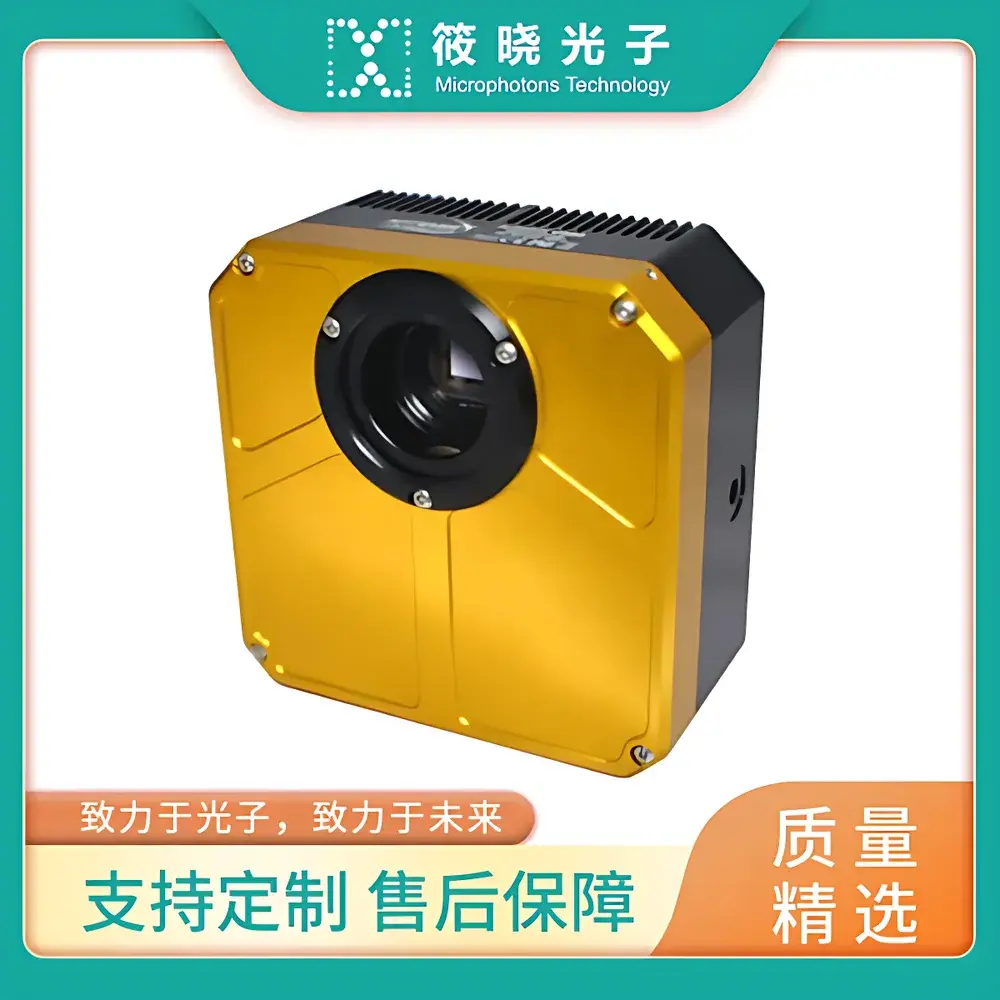
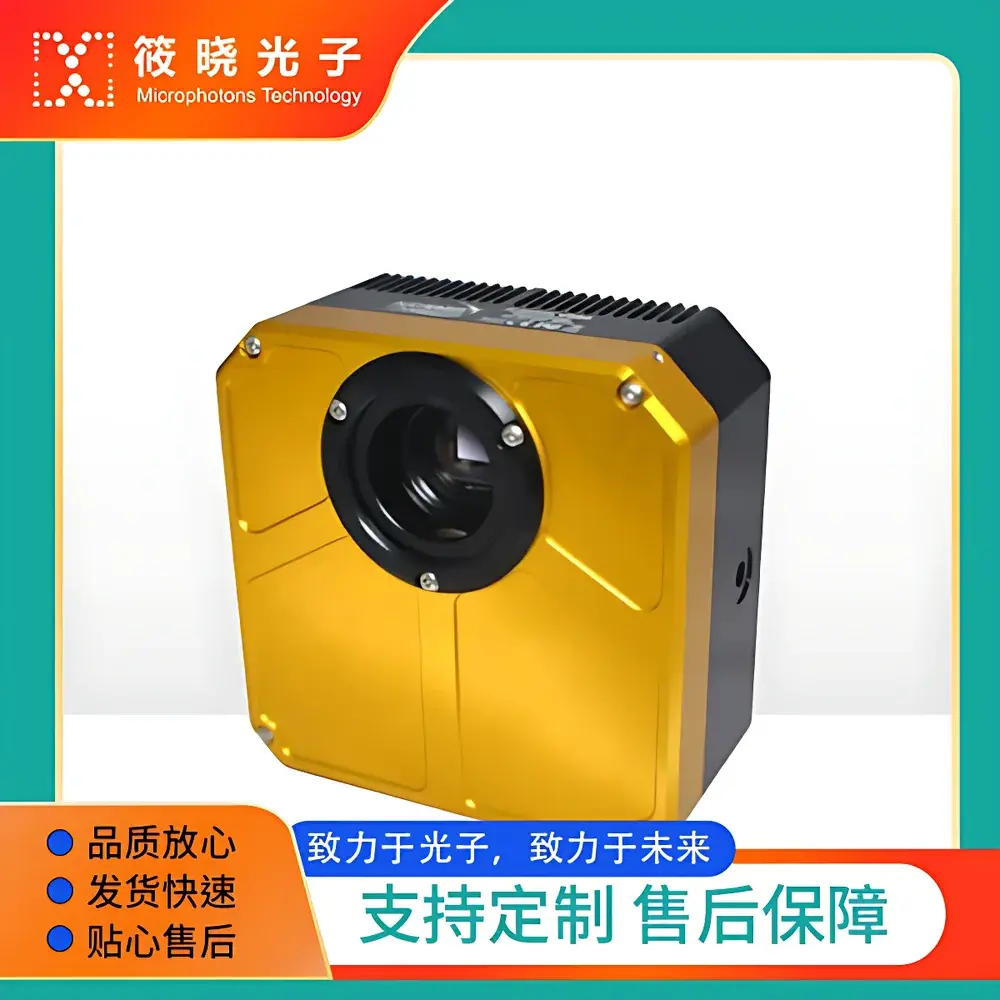
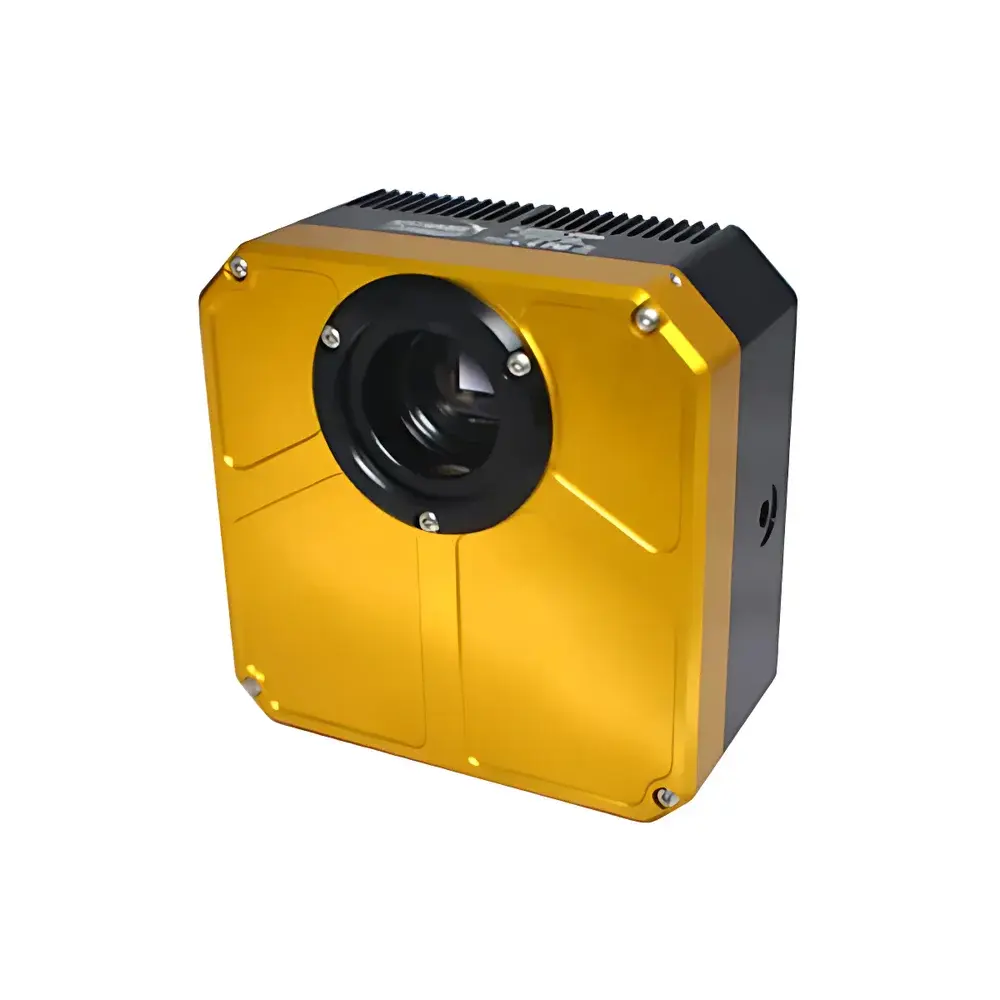
Atik VS28-C-F High-Resolution, Long-Exposure Scientific CCD Camera
| Brand | Atik Instruments |
|---|---|
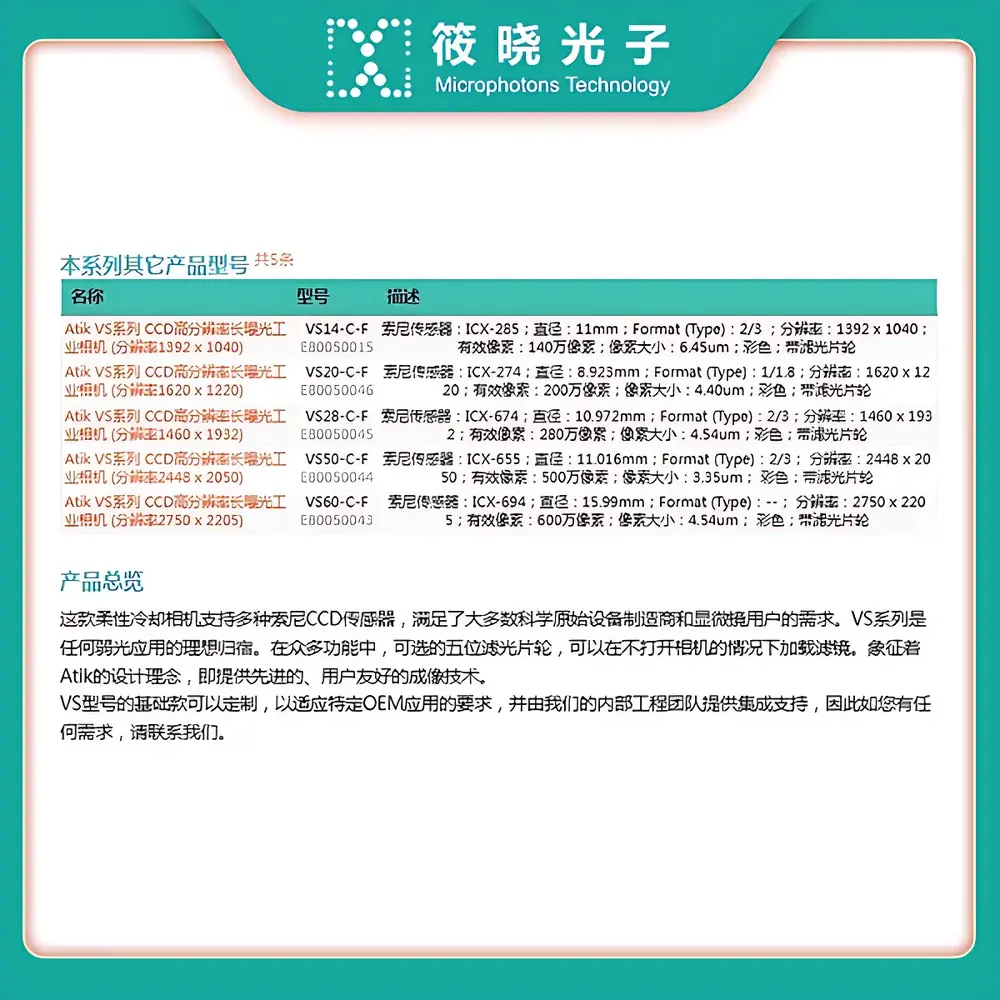
| Sensor Resolution | 1460 × 1932 pixels |
| Sensor Type | Monochrome Back-Illuminated CCD |
| Pixel Size | 6.45 µm × 6.45 µm |
| Full Well Capacity | ~100,000 e⁻ |
| Read Noise | < 10 e⁻ (at slow readout) |
| Dark Current | < 0.001 e⁻/pixel/sec @ −20 °C |
| Cooling | Thermoelectric (TEC), regulated to ΔT ≤ −45 °C below ambient |
| Interface | USB 2.0 with proprietary low-noise controller |
| Shutter | Electronic Rolling Shutter (global reset capable) |
| Compliance | CE, RoHS, FCC Class B |
Overview
The Atik VS28-C-F is a high-sensitivity, thermoelectrically cooled scientific CCD camera engineered for demanding low-light applications in analytical instrumentation and physical sciences. Built around a monochrome, back-illuminated CCD sensor with 1460 × 1932 active pixels and 6.45 µm square pixels, it delivers exceptional quantum efficiency (>90% peak QE at 600 nm) and ultra-low noise performance—critical for long-exposure spectral imaging, Raman spectroscopy, fluorescence lifetime mapping, and time-resolved luminescence detection. Unlike consumer-grade sensors, the VS28-C-F employs deep depletion architecture and precision clocking to minimize etaloning and fringing in NIR wavelengths (700–1000 nm), ensuring quantitative fidelity across UV-Vis-NIR spectral domains. Its regulated TEC cooling achieves stable sensor temperatures up to 45 °C below ambient, suppressing dark current to sub-millielectron levels per pixel per second—enabling integration times from 100 ms to >1 hour without significant thermal noise accumulation.
Key Features
- Back-illuminated CCD sensor with 1460 × 1932 resolution and 6.45 µm pixels—optimized for spatial resolution and photon collection efficiency
- Thermoelectric cooling system with closed-loop temperature regulation (±0.1 °C stability) and user-selectable setpoints down to −45 °C relative to ambient
- Low-noise analog signal chain featuring correlated double sampling (CDS) and programmable gain stages to balance dynamic range and read noise
- USB 2.0 interface with custom firmware enabling hardware-triggered acquisition, precise exposure synchronization, and real-time frame buffering
- Global reset capability supporting synchronized multi-camera setups and shutterless exposure control for pulsed light sources (e.g., lasers, LEDs)
- Robust mechanical housing with M42 and C-mount options, integrated mounting holes, and EMI-shielded electronics compliant with laboratory electromagnetic environments
Sample Compatibility & Compliance
The VS28-C-F is designed for integration into OEM analytical platforms—including spectrometers, microplate readers, and custom optical benches—where quantitative intensity linearity, pixel-to-pixel uniformity, and temporal repeatability are essential. It supports standard calibration workflows using NIST-traceable neutral density filters and uniform LED illumination sources. The camera complies with CE marking requirements under Directive 2014/30/EU (EMC) and 2011/65/EU (RoHS), and meets FCC Part 15 Class B emission limits for use in non-residential laboratory settings. While not certified for IEC 61000-4 immunity testing out-of-box, its shielded design and grounded chassis facilitate successful integration into ISO/IEC 17025-accredited laboratories when installed per manufacturer grounding guidelines.
Software & Data Management
Atik provides native SDKs for Windows (C/C++, .NET, Python) and Linux (C/C++), enabling full control of exposure, gain, offset, cooling, and ROI selection via API-level commands. Third-party compatibility includes ASCOM Platform v6.5+, LabVIEW NI-IMAQdx drivers, and MATLAB Image Acquisition Toolbox (via DirectShow or vendor-specific adaptor). All acquired frames are saved in FITS (Flexible Image Transport System) format by default—preserving calibrated ADU values, exposure metadata, temperature logs, and WCS-compatible header keywords required for spectral data reduction pipelines. Audit trails for acquisition parameters are automatically embedded; raw frame timestamps are synchronized to system clock with sub-millisecond precision, supporting GLP-compliant record retention when paired with timestamped storage systems.
Applications
- Raman spectroscopy: High-resolution spectral line profiling with minimal read noise contribution during 5–30 minute integrations
- Fluorescence correlation spectroscopy (FCS): Sub-millisecond temporal binning enabled by fast readout modes and hardware triggering
- Chemiluminescence and bioluminescence imaging: Single-photon detection capability in ultra-low-background configurations
- UV-Vis absorption kinetics: Linear response over 4-decade intensity range (10⁰–10⁴ photons/pixel) validated per ASTM E275-22
- OEM integration into automated QC systems for pharmaceutical dissolution testing or catalyst characterization rigs
- Astronomical spectrograph calibration via thorium-argon lamp line mapping (wavelength accuracy ≤ ±0.05 nm RMS)
FAQ
Is the VS28-C-F compatible with third-party spectroscopy software such as OceanView or SpectraSuite?
Yes—the camera supports standard DCAM-compliant drivers and includes a dedicated OceanInsight plugin for seamless integration.
What is the maximum recommended continuous exposure duration before dark current becomes dominant?
At −20 °C sensor temperature and 1× gain, exposures up to 3,600 seconds maintain SNR > 100:1 for typical Raman signals (≥100 photons/pixel/sec); extended cooling further extends this limit.
Does the camera support hardware triggering with TTL input/output for synchronization with pulsed lasers?
Yes—dedicated SMA connectors provide programmable trigger-in, trigger-out, and exposure-gate signals with configurable polarity and delay (1 µs resolution).
Can the VS28-C-F be operated in vacuum or controlled-atmosphere enclosures?
The standard model is rated for operation at ambient pressure and humidity ≤ 80% RH non-condensing; optional hermetic variants with fused silica windows are available for inert-gas purged housings.
Is firmware update capability provided, and how is version control managed?
Firmware updates are distributed via Atik’s secure customer portal and applied through the Atik Control Center utility; each build includes SHA-256 checksums and revision-locked configuration profiles for auditability.





