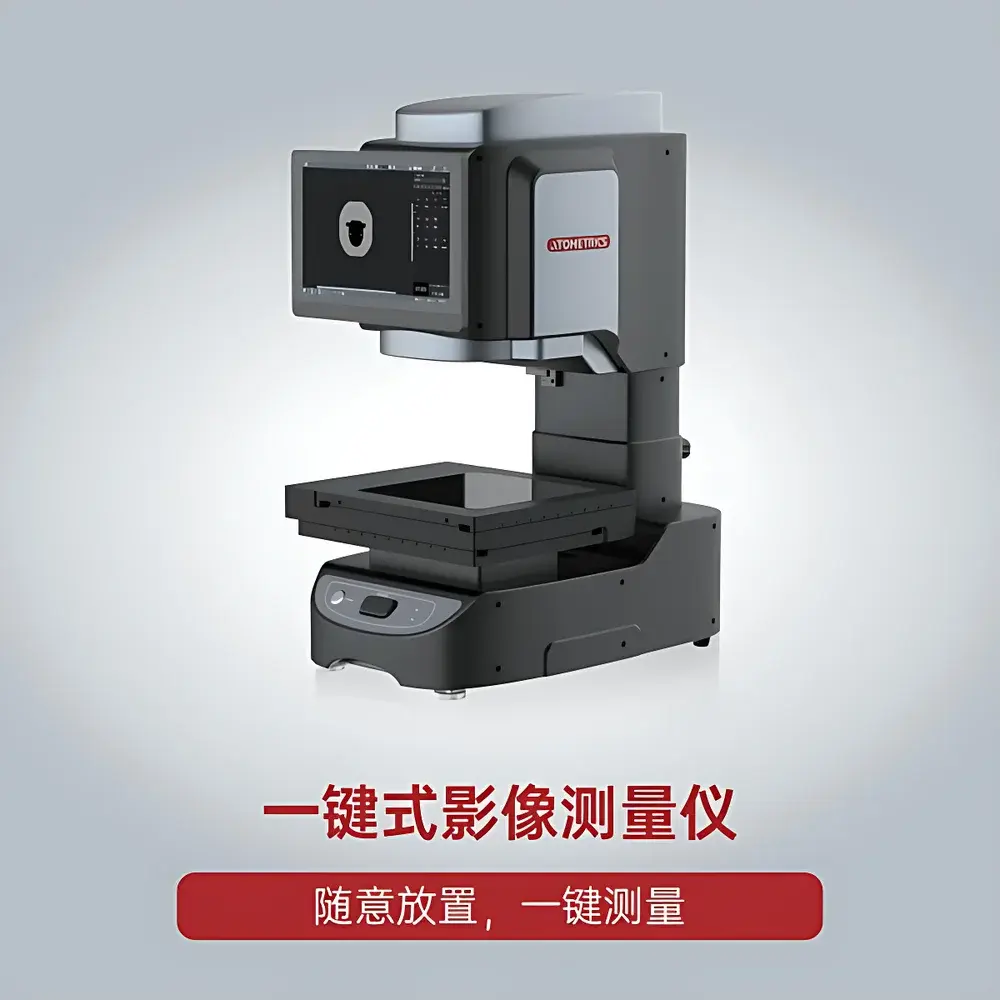
Atometrics FM9000 Series 9030 One-Touch Flash Vision Measuring System
| Brand | Atometrics |
|---|---|
| Origin | Guangdong, China |
| Manufacturer Type | Manufacturer |
| Product Origin | Domestic (China) |
| Model | FM9000 Series 9030 |
| Operation Mode | Fully Automatic |
| Measurement Accuracy | ±1.5 µm |
| Encoder Resolution | 50 nm |
| Camera | 20 MP Monochrome CMOS |
| Illumination | Transmission Light, Ring Light, Movable Profile Light, Slit Ring Light |
Overview
The Atometrics FM9000 Series 9030 is a fully automated one-touch flash vision measuring system engineered for high-throughput, high-reproducibility geometric metrology in precision manufacturing environments. Unlike conventional coordinate measuring machines (CMMs), projection systems, or manual optical comparators, the FM9000 employs a dual-telecentric optical architecture combined with sub-pixel edge detection algorithms and a nanometer-resolution motorized stage to eliminate dependency on operator skill, mechanical alignment, or iterative focusing. Its measurement principle relies on calibrated image-based dimensional analysis: a high-numerical-aperture (NA), low-distortion dual-telecentric lens captures distortion-free images across the entire field of view (FOV), while proprietary edge-fitting algorithms reconstruct part boundaries at <0.005-pixel resolution—effectively achieving sub-micron localization accuracy beyond native sensor pixel pitch. This architecture ensures traceable, repeatable measurements without requiring part datum setup, manual lighting adjustment, or user-defined feature selection.
Key Features
- Dual-telecentric optical system with high NA and ultra-low geometric distortion—ensures uniform magnification and measurement fidelity across full FOV, delivering up to 36% larger usable field vs. standard telecentric lenses.
- Simultaneous dual-FOV imaging: integrates wide-field overview and high-magnification detail capture within a single acquisition cycle for rapid global-to-local inspection.
- 20-megapixel monochrome CMOS sensor optimized for contrast-sensitive edge detection under controlled illumination conditions.
- Nanometer-grade motion control: motorized XY stage with 50 nm encoder resolution and 80 mm/s maximum traverse speed; supports cross-field and multi-lens stitching for large-part or multi-feature workflows.
- Fully automated optical calibration: real-time auto-focus, adaptive illumination sequencing (transmission, ring, profile, and slit ring), and intelligent exposure control eliminate manual intervention.
- Sub-pixel edge extraction algorithm: partitions each pixel into ≤0.005 units via iterative curve fitting; incorporates noise suppression, outlier rejection (e.g., burrs or surface defects), and robust contour reconstruction.
Sample Compatibility & Compliance
The FM9000 Series 9030 accommodates a broad range of manufactured components—including stamped metal parts, CNC-machined shafts, powder metallurgy sintered components, injection-molded plastic housings, die-cut gaskets, and micro-precision machined features—with no requirement for fixturing, datuming, or rotational indexing. Its non-contact measurement modality complies with ISO 10360-7 (acceptance and verification of coordinate measuring systems), and its automated reporting structure supports audit-ready documentation aligned with ISO 9001, IATF 16949, and GLP/GMP quality management frameworks. While not FDA-cleared as a medical device, its data integrity controls—including timestamped measurement logs, user-access tracking, and immutable report generation—facilitate compliance with 21 CFR Part 11 requirements when deployed in regulated production settings.
Software & Data Management
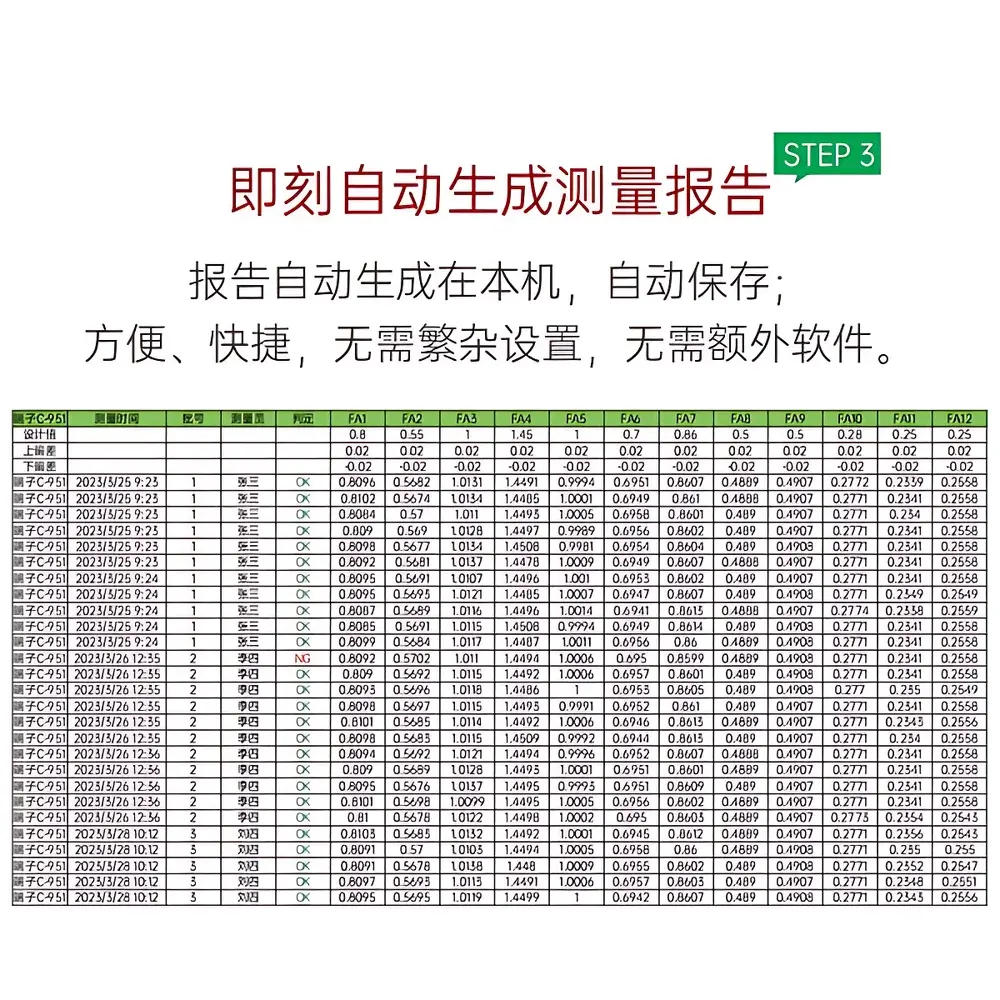
The embedded measurement software provides scriptable, template-driven inspection programming with drag-and-drop feature definition, batch measurement sequencing, and real-time SPC charting. All measurement routines are stored as version-controlled XML-based protocols, enabling traceability and re-execution across shifts or sites. Reports export in PDF, CSV, and XML formats with embedded metrological metadata (lens calibration ID, illumination parameters, algorithm version, stage position logs). Audit trails record operator login, program execution, parameter modification, and report generation events—supporting internal quality audits and external regulatory reviews. Optional API integration allows bidirectional data exchange with MES, QMS, or PLM platforms via RESTful web services.
Applications
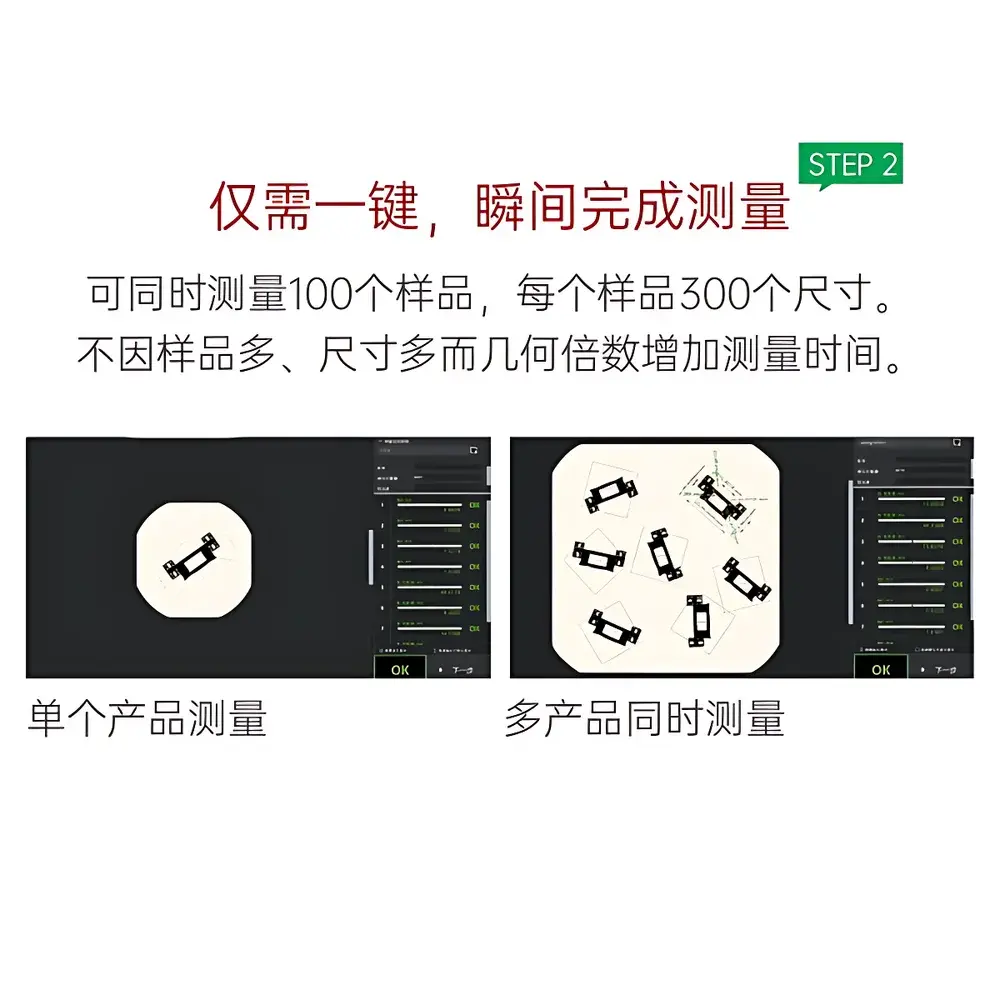
This system is routinely deployed in Tier-1 automotive suppliers for 100% in-line inspection of stamped bracket dimensions; in medical device contract manufacturers verifying tolerance-critical features on laser-cut stainless steel components; in electronics assembly facilities measuring solder paste deposit geometry and PCB fiducial alignment; and in precision optics fabrication for verifying lens mount concentricity and aperture diameter consistency. Its ability to measure multiple parts per cycle—without repositioning or refocusing—makes it especially suited for high-volume production cells where cycle time reduction directly impacts OEE. Typical use cases include GD&T evaluation (position, concentricity, parallelism), profile deviation analysis, true position verification, and statistical process monitoring of critical-to-quality (CTQ) characteristics.
FAQ
Does the FM9000 require part fixturing or datum alignment before measurement?
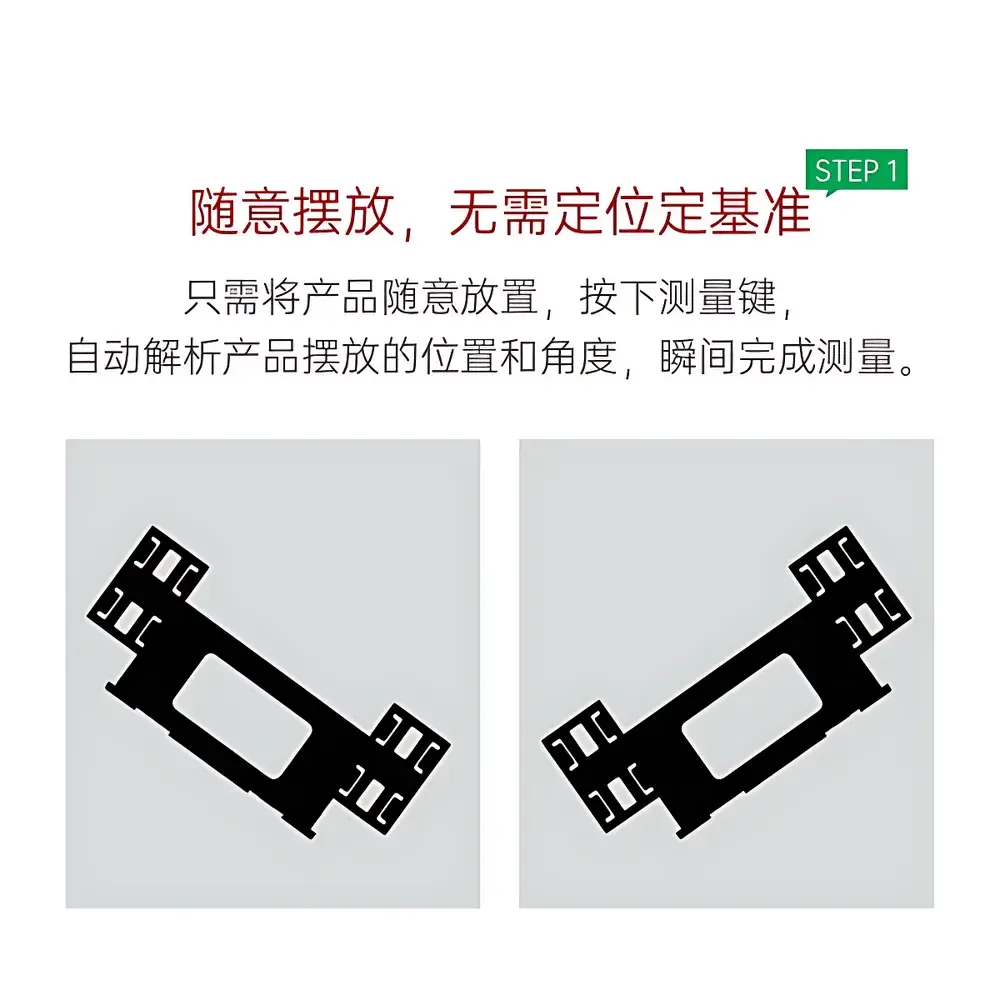
No. The system uses distortion-corrected telecentric imaging and automated edge detection to measure parts placed freely within the field of view.
How is measurement traceability ensured across different operators and shifts?
All optical calibrations are digitally stored and automatically reapplied per measurement; software enforces standardized protocols, eliminating subjective interpretation.
Can the system measure features smaller than the camera’s pixel pitch?
Yes—via sub-pixel edge fitting algorithms that resolve boundaries to ≤0.005-pixel precision, effectively extending resolution beyond hardware limits.
Is the platform compatible with industry-standard metrology software interfaces?
Yes—supports data export in ASTM E57, STEP AP242, and ISO 10303-21 formats; optional OPC UA and REST API modules enable factory-wide system integration.
What maintenance is required to sustain specified measurement accuracy?
Annual optical recalibration (lens distortion mapping, stage linearity verification) and biannual validation using NIST-traceable gauge blocks or step gauges are recommended per ISO/IEC 17025 guidelines.