
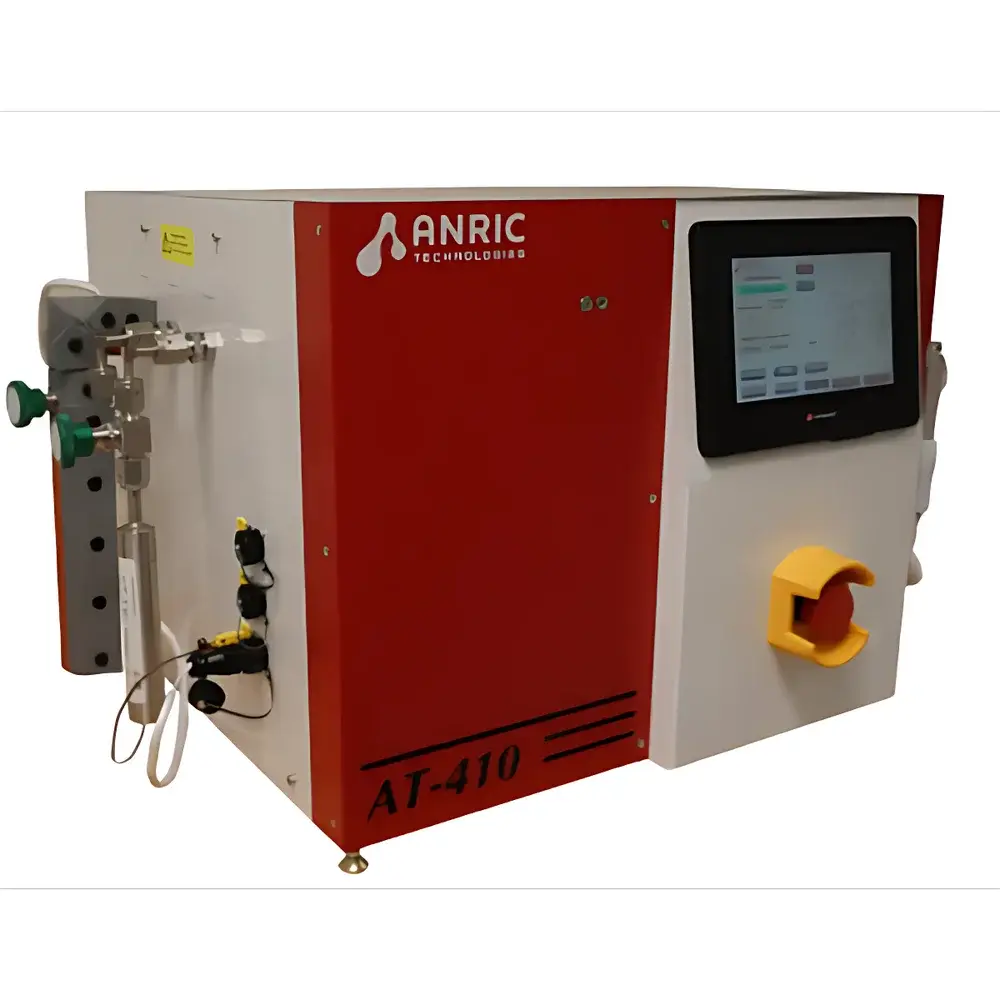
Atomic Layer Deposition System AT650T / AT650P / AT200M with Integrated 300 W Remote ICP Source
| Brand | — |
|---|---|
| Origin | Imported |
| Manufacturer Type | Authorized Distributor |
| Model | AT650T / AT-Ozone Generator / AT650P / AT200M |
| Pricing | Upon Request |
Overview
The AT650T, AT650P, and AT200M series represent a family of benchtop atomic layer deposition (ALD) systems engineered for precision thin-film synthesis in research laboratories and pilot-scale process development. These systems implement thermal and plasma-enhanced ALD (PE-ALD) via sequential, self-limiting surface reactions—each cycle depositing sub-nanometer-thick, conformal, and stoichiometrically controlled films on substrates up to 150 mm (6-inch) diameter. Integration of a 300 W remote inductively coupled plasma (ICP) source enables low-damage, high-reactivity radical generation without direct substrate exposure to ion bombardment—critical for temperature-sensitive or high-k dielectric applications. The warm-wall aluminum process chamber operates from 40 °C to 400 °C, supporting both thermal ALD of metal oxides (e.g., Al₂O₃, HfO₂), nitrides (e.g., TiN), and sulfides, as well as plasma-assisted processes using O₂, N₂, NH₃, or H₂ plasmas generated either internally or via an optional ozone generator module.
Key Features
- Benchtop footprint: 38.1 cm (15″) width—optimized for space-constrained cleanroom environments and glovebox-integrated workflows.
- Integrated 300 W remote ICP source with automatic impedance-matching network, enabling stable plasma operation across variable gas compositions and pressures (1–100 mTorr range).
- Heated sample stage with precise ±1 °C temperature uniformity over 150 mm wafers; compatible with electrostatic or mechanical clamping (customizable chuck options available).
- Four independently controlled precursor delivery lines: three heated lines (up to 185 °C) for volatile organometallics (e.g., TMA, TEMAHf, DEZ), and one ambient-temperature line for corrosive or thermally labile reagents (e.g., WF₆, BCl₃).
- Four ultra-fast mass flow controllers (MFCs)—two standard and two optional—for oxidant/reductant gases (O₂, O₃, H₂, NH₃, N₂/H₂ mixtures), ensuring pulse rise/fall times < 100 ms and reproducible dose control.
- High-temperature-compatible ALD valve manifold with integrated inert-gas purge capability, minimizing cross-contamination between cycles and enabling rapid transition between thermal and plasma modes.
- Static processing mode: supports extended precursor or plasma exposure for surface modification, passivation, or low-rate functionalization without substrate rotation.
Sample Compatibility & Compliance
The system accommodates rigid planar substrates including silicon, quartz, sapphire, glass, and flexible metal foils (with appropriate chuck adaptation). Substrate thickness ranges from 0.1 mm to 4 mm are supported. Chamber materials—6061-T6 aluminum with hard-anodized interior—and all wetted components (VCR fittings, stainless-steel lines, ceramic-insulated heaters) comply with semiconductor-grade cleanliness requirements. Process documentation and parameter logging support GLP-compliant recordkeeping. While not certified as GMP equipment, the architecture is fully compatible with 21 CFR Part 11–compliant software extensions for electronic signatures and audit trails when paired with validated third-party data acquisition platforms.
Software & Data Management
A Windows-based control interface provides full sequencing of temperature ramps, gas pulsing, plasma ignition timing, and pressure regulation. Each recipe stores metadata including timestamp, operator ID, chamber history, and real-time sensor logs (temperature, pressure, RF forward/reflected power). Export formats include CSV and HDF5 for post-processing in MATLAB, Python (Pandas/NumPy), or JMP. Optional OPC UA integration enables connectivity to MES or SCADA systems. All system events—including valve actuation, MFC setpoint changes, and plasma fault conditions—are time-stamped with microsecond resolution and retained for ≥90 days unless archived externally.
Applications
- Growth of ultrathin gate dielectrics (Al₂O₃, La₂O₃, Y₂O₃) and interfacial layers for advanced CMOS and memory devices.
- Conformal coating of high-aspect-ratio nanostructures—including nanowires, porous templates, and MOF scaffolds—for catalysis, sensing, and energy storage.
- Surface functionalization of biomedical implants (e.g., TiO₂ on titanium alloys) to enhance biocompatibility and corrosion resistance.
- Deposition of solid-state electrolyte layers (LiPON, LiNbO₃) in all-solid-state battery R&D.
- Passivation of perovskite solar cell interfaces to suppress non-radiative recombination and improve operational stability.
FAQ
What is the maximum substrate temperature during plasma-enhanced ALD?
The heated stage reaches 400 °C under vacuum; however, plasma-induced heating is actively compensated by closed-loop temperature control—ensuring substrate surface temperature remains within ±2 °C of setpoint even during sustained 300 W ICP operation.
Can the system be upgraded to support in situ ellipsometry or QCM monitoring?
Yes—standard optical viewports (KF40 and CF35) allow integration of spectroscopic ellipsometers or quartz crystal microbalances without chamber modification. Custom flange adapters are available upon request.
Is ozone generation included or optional?
The AT-Ozone Generator is a field-installable module; it is not bundled by default but is fully compatible with all AT-series models and shares the same MFC and purge architecture.
What level of vacuum performance does the system achieve?
Base pressure ≤5×10⁻⁷ Torr with turbomolecular pumping; typical operating pressure during ALD cycles ranges from 5 to 50 mTorr, adjustable per step via throttle valve control.
Are service contracts and remote diagnostics available?
Comprehensive annual maintenance plans—including preventive calibration, MFC verification, RF matching network tuning, and software updates—are offered through authorized regional service partners. Remote access is enabled via TLS-secured VNC with customer-configurable authentication policies.



